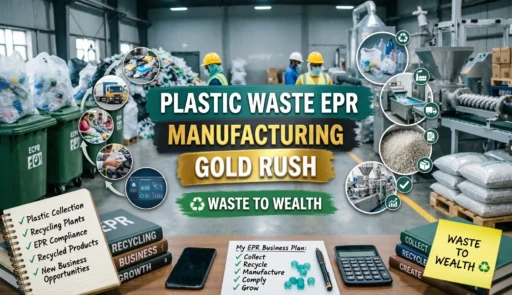
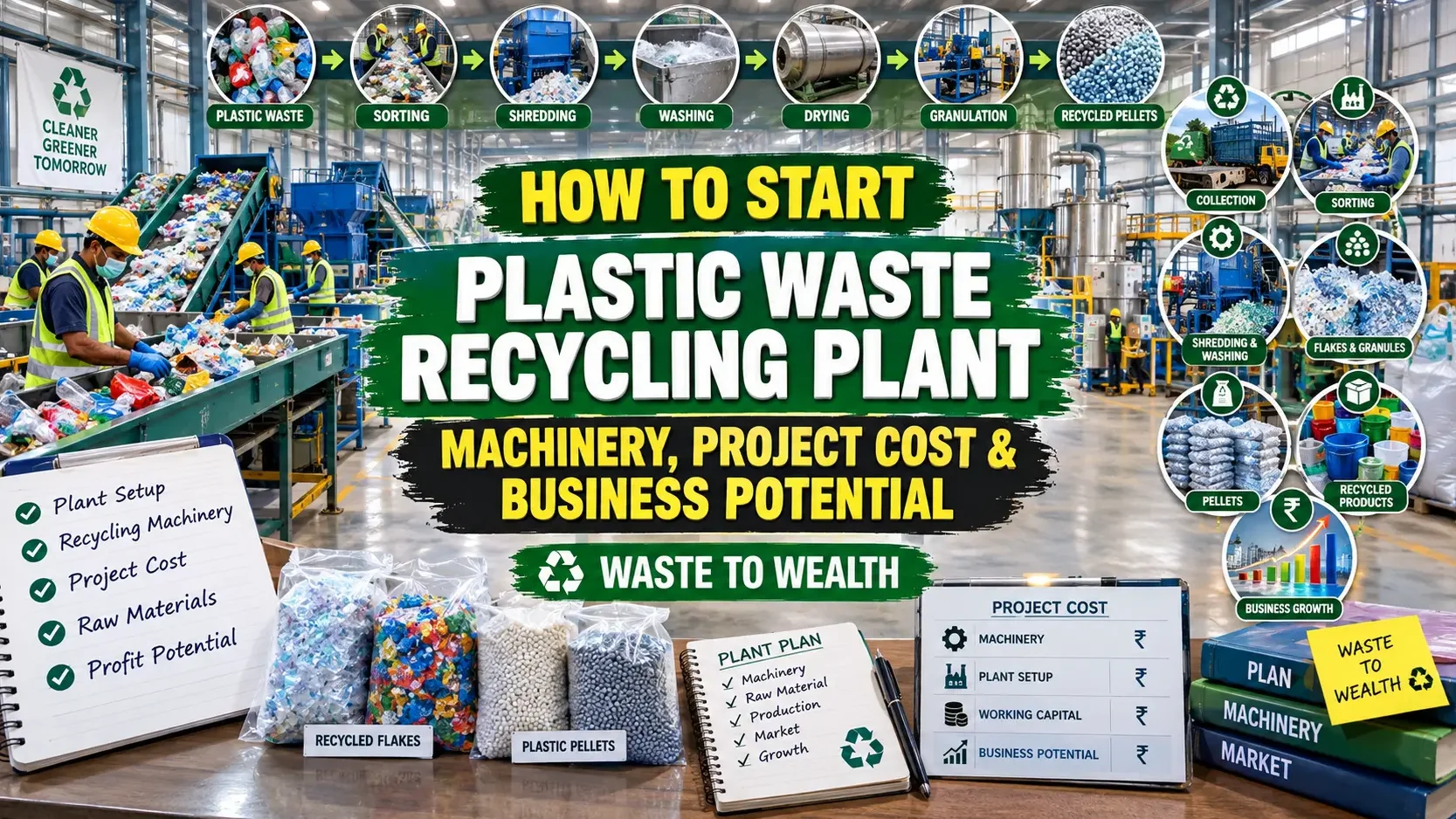

The Extended Producer Responsibility guidelines have created a reliable business opportunity in the market in India with regard to the recycling of plastic wastes. With such regulations, the FMCG industry and packaging companies must prove that they recycle a specific percentage of plastic used for production, which they mostly do not have their own facilities to achieve. Such business may be able to create a sustainable source of income from both selling and EPR credits.
Why Plastic Waste Recycling Plant Is a Smart Business Idea Right Now
The growing consumption of plastic in packaging and in the FMCG industry in general has made the latter responsible for a specific percentage of its recycling. The companies prefer to outsource the task to recycling processing units instead of incorporating new methods and technologies into their manufacturing plants, which creates a reliable source of demand. Additionally, such plants may be able to sell their products for use in packaging and other applications apart from the waste processing facilities.
Government Policies & Incentives
The Extended Producer Responsibility Act, implemented by the Central Pollution Control Board, stipulates that every registered recycler should provide EPR certificates to producers, who purchase them to fulfill their obligations. The Ministry of Environment, Forest and Climate Change provides the legal framework, whereas the Ministry of MSME offers credit support in the form of collateral-free credit rules. In some states, the pollution boards offer registration facilitation for recyclers who meet specific EPR targets.
Multiple Manufacturing Business Ideas for Startups
PET Bottle Recycling to Food-Grade Flakes
Processing PET bottles into food-grade flakes and pellets is a lucrative business, as the demand for them comes not only from the need to fulfill EPR requirements but also from FMCG companies’ interest in using recycled materials for their packaging. Such a facility may command a higher selling price due to the specific nature of the product.
Multi-Layer Plastic (MLP) Waste Processing
MLP is one of the trickiest types of plastic waste to process, and there are few facilities capable of doing so. It is a sought-after item for recyclers who wish to provide EPR services within the FMCG industry. Processing such waste into granules or fuel may be an interesting alternative.
Recycled Plastic Granule to Finished Product Manufacturing
Creating products out of recycled granules and flakes makes economic sense, as it can generate higher margins compared to the sale of raw materials. It also reduces the dependence on the fluctuating price of recycled plastic granules and flakes.
EPR Compliance & Waste Aggregation Services
The waste aggregation business caters directly to the needs of EPR-compliant brand owners, and it does not require significant investment into processing facilities. It focuses on waste collection and recycling services provided to EPR-compliant recyclers, which makes it a viable option for those who wish to enter the market without significant investment.
Recycled Content Verification & Compliance Documentation Services
As brand owners seek to document the content of their packaging, they may be interested in obtaining such verification and documentation services. Providing such documentation for a consistent supply of recycled contents of a specific grade and proportion has the potential to be a lucrative business opportunity.
Recycled Content Certification Consulting
With more brands pledging to use a specific percentage of recycled content in their packaging, a small-scale consultancy service that assists recyclers and brand owners in navigating the certification and documentation maze can be viable and profitable.

Import–Export Opportunity Analysis
Despite being both an importer and exporter of plastic scrap, India has a policy that promotes the processing of waste rather than the export of raw materials. As such, the market for recycled content and products, as well as the documentary export of EPR credits, may be of interest to recyclers with the interest in diversifying their sales.
Market Outlook & Scaling Roadmap
As more and more categories of plastic packaging become subject to EPR regulations, the demand for EPR-compliant recyclers will continue to grow. Those who understand the nature of the demand and can position themselves as a sustainable supplier of food-grade PET flakes and pellets with reliable EPR documentation will find themselves in a stronger position than those who seek to compete on the lower end of the market.
Skills, Manpower & Quality Control
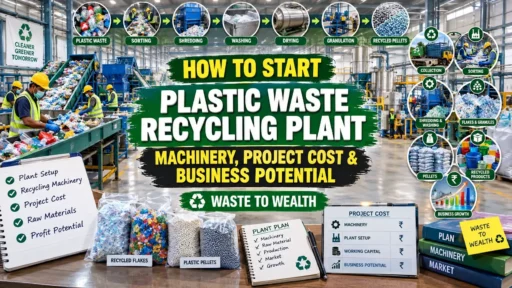
Recycling facilities require workers that are both capable of sorting plastic waste manually and operating machinery such as shredders, washers, and pelletisers. A small-scale processing facility usually employs between 20 and 25 workers. The first worker to hire should be a plant supervisor, as their primary function is to ensure that the quality of incoming waste matches the agreed-upon standards. As the facility grows to process food-grade materials, quality assurance becomes a priority, requiring additional employees to ensure that the recycled product is not contaminated.
Indian MSME Success Stories
Banyan Nation — Mani Vajipey and Raj Madangopal
The Banyan Nation was founded by Mani Vajipey and Raj Madangopal. Their main focus is to provide traceable and high-quality recycled plastic to FMCG companies.
Nepra Resource Management — Sandeep Patel
Nepra Resource Management, a recycling company, was founded by Sandeep Patel. He focused on the collection and sorting of recyclable materials, and his company continues to provide such services.
How NPCS Can Help Entrepreneurs Evaluate the Opportunity
Niir Project Consultancy Services (NPCS) offers professional assistance and provides detailed Market Survey cum Detailed Techno-Economic Feasibility Reports (DPR), which include a comprehensive scope of manufacturing processes, market survey and demand analysis, process flow diagram, product mix/plant capacity, machinery and material requirements, and financial aspects of the project, such as capital and working costs, income, expenditure, and profitability. These reports assist entrepreneurs in their decision-making regarding the viability and profitability of a project, which reduces the risks involved in setting up a new venture.
For evaluating a Plastic Waste Recycling Plant, such thorough research is vital before any expenses are made: NPCS conducts such studies regarding machinery, equipment, materials, manpower, and finances and prepares a techno-economic report with the full breakdown of costs, income, and profitability of the enterprise. Usually, financial institutions require such reports when considering a loan application, as they may only approve funds once the project proves its feasibility. Additionally, entrepreneurs who have no experience in the field will be able to benefit from the experts’ experience, as it significantly reduces the risks involved in starting a new business.
NPCS has published a comprehensive printed reference book on Plastic Waste Recycling Plant, which details all aspects of the technology, market analysis, investment, and manufacturing processes – the printed book: Recycling Business Handbook: Industrial and Agricultural Waste Processing.
For a detailed techno-economic Project Report on setting up a manufacturing business in this sector — including plant economics, machinery lists, financial projections, and applicable government incentives — the NPCS Project Report: Plastic Waste Recycling Plant – Manufacturing Plant, Detailed Project Report.
Common Pitfalls to Avoid
As a newcomer to the market, one may fail to consider the necessary amount of manpower to sort the waste, resulting in low quality of materials and, subsequently, rejected sales. Another major pitfall is the lack of documentation at the time of EPR certification.
Conclusion
With the introduction of the Extended Producer Responsibility guidelines and the corresponding EPR credits system, waste recycling facilities have become a reliable source of income with a steady demand. Entrepreneurs who seek to enter the market now, by coordinating with the Haryana State Industrial & Infrastructure Development Corporation (HSIIDC) and other similar agencies, stand to benefit from this emerging source of demand in the coming years.
Your Investment Deserves the Right Opportunity
Every serious investment begins with choosing the right sector and the right business model. With hundreds of industrial opportunities available across India’s manufacturing and clean-energy landscape, making the most informed choice is critical. NPCS Startup Selector tool helps entrepreneurs, MSMEs, and investors identify the most suitable business opportunities based on their investment capacity, location, and interests — so your capital is directed toward a venture with the strongest fit and potential.