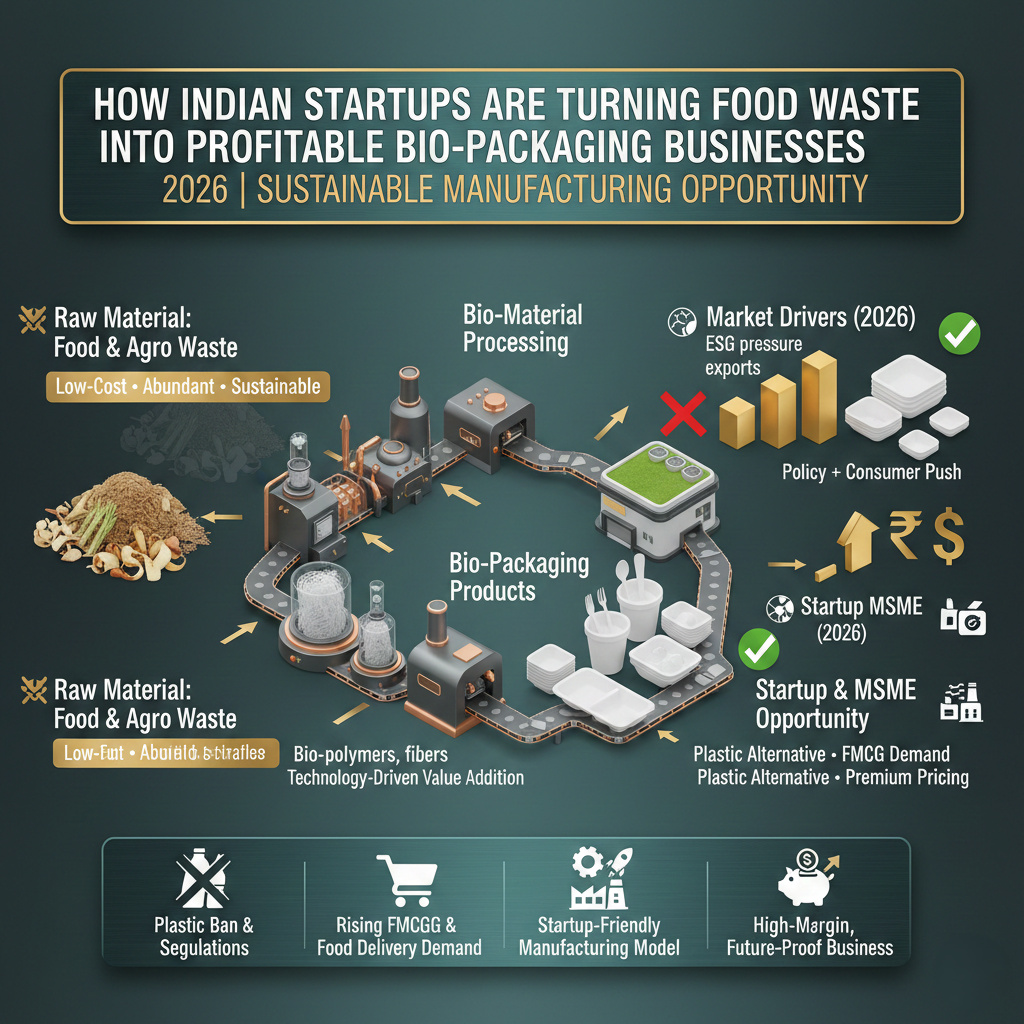
Food Waste Packaging India is no longer considered a just environmental or disposal problem. Worldwide it is quickly becoming one of the most useful raw materials for industries of the future. From bio-extracts and natural polymers, to edible packaging and antimicrobial films, food waste is being turned into high margin, innovation-driven products.
India with its massive agricultural production, thriving food processing industry, a robust seafood industry, and burgeoning biotechnology ecosystem is uniquely placed to spearhead this transformation. As we look toward 2026, it is expected that startups working on food waste valorization will play a critical role in the circular economy, sustainable manufacture, and import substitution.
This Article contains a practical and business-focused overview of how food waste can be turned into profitable business ventures, the industries that are driving demand, and what entrepreneurs need to consider building next.
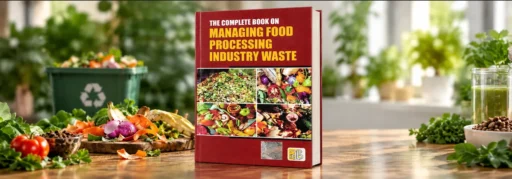
Read More: The Complete Book on Managing Food Processing Industry Waste
Why Food Waste Valorization Is Big Opportunity in India
The country of India produces millions of tonnes of food waste annually from farms, food-processing units, seafood industries, dairy plants, breweries, hotels and households. Traditionally, this waste has had serious environmental and disposal problems. Today, it is a low-cost input to high-value bio-based products.
Several industries are heavily moving towards natural, biodegradable and sustainable materials and they include:
- Food and beverage manufacturing
- Nutraceuticals and Functional Foods
- Pharmaceuticals and Healthcare
- Cosmetics and personal care
- Packaging, logistics and e-Commerce
Plastic bans, ESG compliance requirements, export regulations, and growing consumer awareness are driving this change. As a result, food-waste-based industries are witnessing good and steady demand, both within the country and internationally.
Rapidly Growing Sustainable Packaging and Bio-based Materials
Sustainable packaging is among the fastest growing areas of the global materials market. Companies are increasingly replacing traditional plastics with biodegradable and functional alternatives that have a smaller environmental footprint along with enhanced food safety.
Key packaging trends that are gaining traction include:
- Biodegradable and Compostable Films
- The Coatings for Fresh Produce page reads, “Edible coatings are being explored for fresh produce.”
- Antimicrobial packaging – Antioxidant packaging
- Active and intelligent packaging systems
Food-waste-derived polymers and extracts are emerging as key inputs for these types of next-generation packaging solutions. The global bioplastics and bio-polymers market is expanding at double digits and the potential for Indian manufacturers and startups is huge.
Read More: The Complete Book on Biological Waste Treatment and their Utilization
Chitin and Chitosan from Seafood Waste: a High-Value Polymer Business
Seafood waste like shrimp shells and crab shells and fish scales all contain high amounts of chitin. Controlled processing converts chitin into chitosan, a natural polymer with antimicrobial, biodegradable, and film-forming properties.
Chitosan has many uses, such as food packaging, pharmaceuticals, agriculture, cosmetics, water treatment and bioplastics. In the area of food packaging, films and coatings based on chitosan contribute to the reduction of microbial growth, as well as spoilage and prolonging the shelf life of food products.
Business advantages of chitin and chitosan extraction are:
- Extremely low raw material cost
- Good domestic and export demand
- Biodegradable and biocompatibility
- Several industrial applications
Coastal states of India produce huge amounts of seafood waste, and hence sourcing of raw material is quite easy and cheap. This makes chitin-based packaging and materials one of the most profitable food waste start-up opportunities for 2026.
Paper Water Bottles, Bioplastics & Biodegradable Products Manufacturing Handbook
Edible Packaging from Fruit and Vegetable Waste
Edible packaging is one of the most innovative things in the food industry all over the world. It is about making films or coatings that would be safe to eat, biodegradable and have the capacity to extend the life of food.(Food Waste Packaging India)
Manufacturers can convert fruit and vegetable wastes—such as banana peel, mango peel, citrus peel, apple pomace, potato starch waste, and tomato peel—into edible films and coatings. These are widely used in fresh fruits and vegetables, bakery products, and confectionary and ready-to-eat foods.
Read More: Bioplastics & Biodegradable Products Manufacturing Handbook
Main benefits of Edible packaging are as follows:
- Complete elimination of plastic packaging
- Reduce moisture loss and oxidation
- Natural shelf-life extension
- Compliance with clean label requirements
For exporters of fresh produce and high-end food brands, edible coatings are becoming a more popular fix. This sector presents great scalability, export potential and long-term growth for startups.
Bioactive and Antimicrobial Packaging Films
Bioactive packaging is not just a means of protecting but also actively maintaining food quality. These films use natural antimicrobial and antioxidant compounds extracted from food waste.
Few general waste-derived bioactive ingredients include:
- For example, “Polyphenols from grape skins.”
- Antioxidants in pomegranate peels are
- Essential oils (citrus waste)
- Natural pigments of beetroot waste
When incorporated into biodegradable films, these compounds slow the growth of microbes and oxidation, thereby lessening the need for synthetic preservatives.
Researchers and food industries widely use bioactive packaging.:
- Organic and clean label food brands
- Premium bakery and dairy manufacturers
- Meat, seafood and ready to eat food producers
- E-Commerce Grocery and Cold Chain platforms
Modified Atmosphere Packaging (MAP) & Controlled Atmosphere Packaging (CAP)
The present-day food supply chains depend on MAP and CAP technologies as their essential components. These systems alter the composition of the gas inside packaging to reduce respiration, spoilage and microbial activity.
Food-waste-derived materials contribute in a significant way to such systems in the form of bio-polymer films, chitin-based antimicrobial films and natural barrier coatings. The materials provide better oxygen barrier protection, which they achieve without damaging their sustainable properties.(Food Waste Packaging India)
The combination of cold chain expansion with increasing food exports and online grocery shopping in India will drive up the demand for sustainable MAP and CAP solutions until 2026.
Read More: From Waste Tobacco to Global Markets: Profitable Nicotine Extraction and Refining Business Ideas
Natural Polymers and Bioplastics From Food Wastes
Food Waste is an important source of natural polymers in biodegradable plastics. Starch from potato waste, pectin from fruit pomace, cellulose from vegetable fibers, protein residues from food processing are widely used in the manufacture of bioplastics.
These materials are turned into products such as:
- Biodegradable carry bags
- Cutlery and straws
- Food delivery packaging
- Containers with cosmetic and personal care products
India still imports a number of advanced bio-polymer materials. Domestic production based on food waste provide good opportunities for import substitution, cost reduction and long term scalability.
High-Value Bio-Extracts from Food Waste
Food waste is rich in bioactive compounds that find high prices in the world markets. Lycopene from tomato peels, pectin from citrus waste, polyphenols from grape and apple waste, beta-carotene from carrot waste and essential oils from herb waste are used in large-scale nutraceuticals, cosmetics and functional foods.
As raw material costs are low and demand is high, manufacturing bio-extract is a great source of excellent margins and export potential, even at small to mid-scale production levels.
Read More: From Seed to Success: A Startup’s Guide to Dominating India’s Vegetable Seed Market
Import-Export Potential for Waste Based Bio-Industries
India currently imports specialty biodegradable films, antimicrobial packaging materials and high grade bio-polymers. Startups that produce these products in country are able to seize both cost and market advantages.
At the same time, there is an increasing demand for sustainable packaging and natural extracts in exports from Europe, North America, the Middle East and East Asia. These products have a high The products deliver high export value because they maintain low export costs per tonne of goods.
Conclusion: Why 2026 is the Right Time to Enter
Food waste is no longer a disposal issue – it is a great industrial resource. From chitosan-based antimicrobial film, edible packaging, to natural polymers, premium bio-extracts the opportunities are diverse, scalable and fast-growing.(Food Waste Packaging India)
Entrepreneurs who enter this sector before 2026 can benefit from the early mover advantage, high global demand, supportive sustainability policies and India’s abundance of raw material base. With the proper technology, compliance, and market focus, food waste valorization can be one of the most lucrative and game-changing start-up sectors of the next decade.
Frequently Asked Questions (FAQ)
Q1. Is food waste based startup profitable in India?
Yes. Low costs of raw materials, increasing demand for sustainable products and export opportunities make it highly profitable.
Q2. The food waste with the highest commercial value?
Waste from seafood, peels of citrus fruits, tomato peels, and fruit pomace have the best industrial value.
Q3. Is edible packaging safe for the consumer?
Yes. If produced according to food-grade and regulatory standards, edible packaging is safe and popular.
Q4. What is the normal investment needed?
Small units can begin from a range of Rs 25-50 lakhs whereas large-scale plants can be of the order of Rs 2-5 crores and more.
Q5. Any possibility of export for waste-based bio-products?
Yes. Sustainable packaging materials and natural bio-extracts are in high demand across the world.