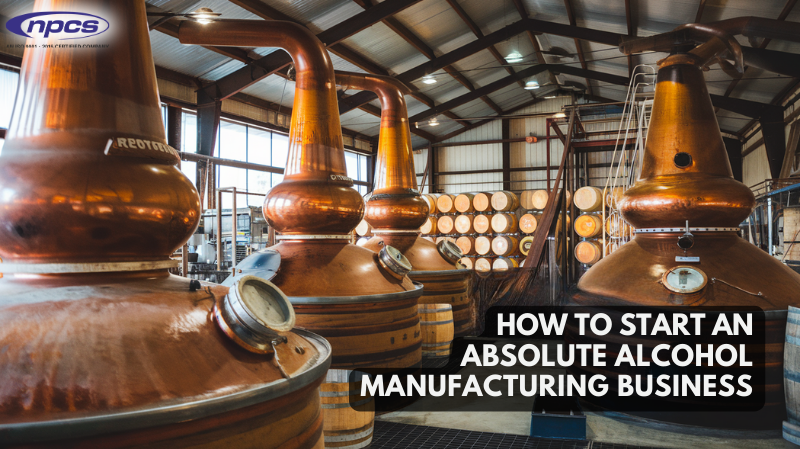

Absolute alcohol, or ethanol, is an important chemical for many sectors of the economy. Its usefulness spans different remedies, outs of treatment, drinks, and even a fuel booster. Ventures involving absolute alcohol may be appealing to investors in chemical engineering.
The company aims to meet the rising demand for energy and pharmaceuticals. This guide combines the concepts of alcohol production and entrepreneurship. It breaks down the stages of alcohol making thoroughly. The handbook defines the product clearly at the beginning. It explains how to make absolute alcohol effectively. The guide covers the product’s relevancy and market position. It describes relevant marketing strategies for industry success.
What is Absolute Alcohol?
Absolute alcohol, often referred to as pure ethanol, is a clear, colorless, and odorless liquid. It is at least 99% pure ethanol by weight and contains only a trace of water. Fermented sugars are distilled to produce the product. Corn and other hybrid food crops are the primary source of sugars. Production also uses other plant materials, such as sugarcane. The manufacturing of wine and spirits is the main use for absolute alcohol. Pharmaceutical products employ it as an active solvent. Absolute alcohol is another essential component used in cosmetic products. It effectively contributes to the generation of bio-ethanol fuel.
Why Start an Absolute Alcohol Manufacturing Business?
Due to high product demand, the absolute alcohol production business has great potential. There are some thoughts that support the idea as a good business opportunity:
- High Demand: Absolute alcohol is incorporated in various manufacturing industries like medicine, cosmetics, fuel, and even in the production of alcoholic drinks.
- Environmentally Friendly: With the concerns regarding pollution caused by fossil fuels and the search for more efficient forms of energy, there is a rise in the use of fuels made from Ethanol. Therefore, businesses like these that involve the production of absolute alcohols are the businesses of the future.
- World Market: Absolute alcohol is a product with a global value chain and workable market in almost all the countries that are promoting alternative sources of energy and health care products.
- Flexible Commodity:Absolute alcohol is a versatile product with many applications. Businesspeople looking for a variety of investment alternatives are drawn to it. Fuels, beverages, and cosmetics can all use it. Because of its adaptability, it is desirable for investment in a variety of fields. Opportunities in a variety of market areas are made possible by this flexibility.
- Scalability: There is a possibility to start small in this business and grow in accordance with the demand that is available.
Join Us : Niir Projects Consultancy Services
Niir Projects Consultancy Services
Benefits of Starting an Absolute Alcohol Business
- Positive outlook: The absolute market, in particular, is witnessing growth due to innovations and its uses in biofuel, pharmaceutical and beauty sectors, among other uses.
- Diverse Applications: Be it beverages, paints or cosmetics, ethanol is all over the place and so there will always be customers for your company.
- Make Money outside Local Market: Since Ethanol is traded in the international market, business owners can further increase their business in different countries where Ethanol is sold.
- Ecological: Producing absolute alcohol is in accordance with the current tendency all over the world to develop renewable resources and sustainable energy.
Top Applications of Absolute Alcohol
Using preparations that contain absolute alcohol is common in:
- Medicinal Field: It is used both as a carrier of substances in drugs and as a bearing cleaning agent within pharmaceutical devices.
- Personal Hygiene and Beauty: It is a major constituent of perfumes, body creams, and other related products.
- Alcoholic Beverages Production: When Ethanol is one of the main ingredients in the manufacturing of any alcoholic drink.
- Bioenergetics: Industries are gradually substituting fossil fuels with ethanol for environmental protection purposes
- Dilute Solutions: Manufacturing industries, such as the paints and varnishes industry, use alcohol extensively as a dissolver.
Production Methods
The production of absolute ethanol takes a sequential process, and some of the steps include:
- Raw Material Procurement: The stage starts with the collection of raw materials such as sugarcane, corn, or any other biomass containing sugars that can be fermented.
- Fermentation: Yeast is put to use in converting sugar substrates via the fermentation process into ethanol. This process is quite important as it allows the manufacture of the raw ethanol that manufacturers will further distill into pure alcohol in line with some quality norms … possible better nem used in industries.
- Distillation: The aqueous phase containing fermented broths is distilled in order to remove ethanol and other contaminants. This process is conducted several times in order to purify the ethanol obtained.
- Dehydration: The last operational step after distillation is the dehydration of the ethanol in order to get rid of all the evapo … esp for absolute alcohol wiping.
- Cooling and Storage: The product of the manufacturing process is cooled and placed in special storage tanks ready for market.
Project Report on: Start Malic Acid (Powder) Production Business
Essential Machinery for Absolute Alcohol Manufacturing
Development of the technology and the processes of manufacturing absolute alcohol is complicated by the issues of production economics and design of specific equipment. The key elements of the design include:
- Fermentation tanks: devices designed to carry out the fermentation process where carbohydrates are transformed into ethanol. These tanks must be resistant to corrosion and capable of performing fermentation on a large scale.
- Distillation columns: A unit separating liquids in a mixture of liquids, e.g. removing ethanol from its aqueous solutions or from other impurities. Several units are needed if you desire high purity of distillate.
- Dehydrators: Manufacturers install equipment to enhance the alcohol drying process, enabling ethanol to attain the 99% level of perfection necessary for absolute alcohol.
- Chillers: Producers require these to lower the temperature of the finished product before storing or transporting it.
- Silos: Manufacturers must avail special containers designed to keep a certain level of raw materials as well as the finished product.
Starting Your Absolute Alcohol Manufacturing Business
- Conduct Market Research: To run any successful business, knowing your customers is very crucial. List down potential customers including suppliers such as pharmaceutical industries, cosmetic industry, and fuel suppliers and analyze the competitors among them.
- Develop Business Strategizing: A detailed business outline must also articulate …. production targets, financial forecasts, marketing plans and operational strategies. This is important to have a business structure and for attracting funds.
- Acquire Licenses & Permits: Because several jurisdictions treat complete ethanol as a narcotic, you must seek appropriate production or distribution authorities.
- Create Capital and Distillery Plants: Check that the production plant meets all factory-fitted machine requirements and observes all health and safety measures, including installing fire control equipment and ensuring proper wearing of safety gear.
- Obtain Biomass Raw Materials: Invest in biomass switchgrass, corn, sugar cane or any other similar biomass introducing reliable suppliers and establishing long term contracts for smooth supply of materials.
- Establish Quality control: Introduce quality checks and enforcement from the very beginning of the production process so as to safeguard the quality and hygiene of your product.
- Create a Sales & Marketing Strategy: Seek prospects members at appropriate trade forums, conference summits and incorporate other means of reaching them such as within the internet. Such strategies will also assist in winning foreign clients who will require their services to be rendered online.
- Research & Development: A constant focus needs to go on r&d for improved methods of production, cost effective measures. And the introduction of new products within the business line so as to keep ahead with the customers of today.
Conclusion
Starting an absolute alcohol manufacturing business presents a profitable opportunity, especially in today’s global market where ethanol’s applications are growing. By following the right steps, from market research and compliance to production and quality control. You can build a successful business in this thriving industry. Continuous innovation and an eye on market trends. It will help you stay ahead of the competition and capitalize on emerging opportunities.