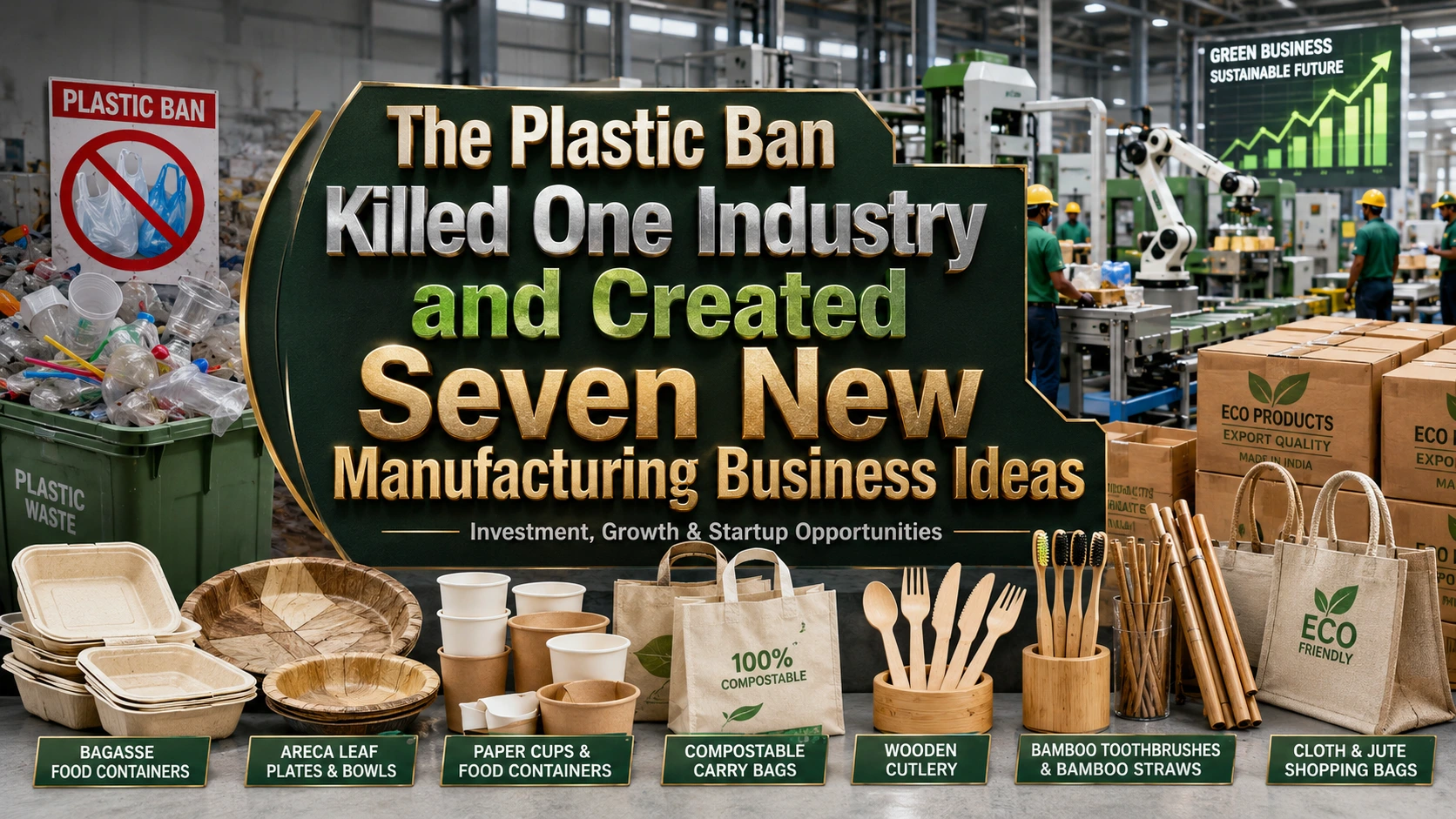

Plastic Ban Manufacturing Business Ideas
The ban on single-use plastics in India didn’t simply put an end to a segment. It revolutionised an entire industrial economy. There are seven entrepreneurs for everyone who considers regulatory changes as the greatest danger for their business, who will see it as the best venture opportunity of the decade. The list of manufacturing companies that have sprung up in the wake of the crisis is not a collection of those that were on the fringe of the economy. They are capital productive, export oriented and have active government support. The plastic ban has created a peculiar situation for those who are considering sustainable materials, green packaging or even agri-waste processing related ideas: if you have an idea in these areas, you most likely found that there is very little competition for you!
Why the Plastic Ban Was a Market-Creation Event
Since the introduction of the Plastic Waste Management Rules, 2016 on single use plastics ban in India from 1st July 2022, approximately 88,000 manufacturing units got affected at once. Almost 90% of these were MSMEs. The plastic industry had been contributing to the FMCG, food service, logistics and retail packaging value chains, employing some one million people already.
This disruption, however, also simultaneously created an immediate and unmet demand. According to industry estimates, domestic biodegradable packaging market is pegged at nearly 10,000 crores. The analysts predict that it will be growing at the compound annual rate of 15% percent or above. The worldwide biodegradable packaging market is already worth hundreds of billions of dollars. India, where agricultural surplus exists, production is low and manufacturing is in place, is well positioned to meet that demand.
The demand-supply gap is still huge. There are no reliable, certified and consistent suppliers for compostable packaging, paper alternatives, and agri-fibre based products in most domestic markets. It’s the perfect place for new manufacturing companies to get in — and get the victory.
Related Article: How to Start a Biodegradable Packaging Business in India: Cost, Profit & Manufacturing Guide
Government Policies and Incentives Supporting Green Manufacturing
The Government of India has taken bold steps to boost the shift towards sustainable production by businesses. Multiple policy instruments are in use that are positively impacting new actors within this space.
The Ministry of MSME has been organizing the capacity building workshops with Central Pollution Control Board (CPCB) and Central Institute of Petrochemicals Engineering and Technology (CIPET) to support small manufacturers to use alternatives to plastic. These programmes offer technical assistance which helps to drastically shorten the learning curve for the first-generation entrepreneurs.
The advanced materials and specialty chemicals are included in the priority manufacturing sectors under Make in India by DPIIT, with an emphasis on bioplastics manufacturing. Production Linked Incentive (PLI) scheme is available for biplastic manufacturers. The Union Budget 2024 continued support for bio-manufacturing infrastructure and development of bio-foundry, and biodegradable polymer (polymers) was identified as a new financing area for industries. The BioE3 Policy, a brainchild of the Department of Biotechnology, aims to encourage and facilitate high-performance bio-based manufacturing through the use of agricultural residues.
Furthermore, the Plastic Industry Subsidy framework for MSME offers a subsidy of Rs. 25–30 Lakhs per unit for plants moving towards eco-friendly manufacturing. Entrepreneurs can also avail of PMEGP grants, CGTMSE credit guarantee and MUDRA working capital loan in addition to these incentives.
For more information, visit the Ministry of MSME, and the Central Pollution Control Board for EPR and compliance guidelines.
Seven Manufacturing Business Ideas Born from the Plastic Ban
1. Sugarcane Bagasse Tableware Manufacturing
The fibrous material remaining after juice extraction (bagasse) from sugarcane has proved to be the most commercially viable raw material for disposable table ware. Bagasse plates, bowls, clamshells, food trays and take-out containers are 100% compostable, food safe and are structurally better than thin plastic plates. India is one of the largest growers of sugarcane in the world, which provides a raw material cost advantage to domestic manufacturers. Domestic manufacturers benefit from near-permanent raw material cost advantage due to the fact that India is one of the largest producers of sugarcane in the world.
Typical initial investment in an MSME-scale bagasse tableware plant: ranging between 40-80 lakh comprising investment in the machinery, moulds and fundamental processing infrastructure. Constant, large volume buying by institutions like airlines, hospitals, corporate canteens, railway caterers, fast-food restaurant chains, would facilitate better cash flow initially. Entrepreneurs who obtain BIS certification and IS 17088 composability approval will get premium pricing for domestic and export market.
The technological barrier to entry for manufacturing is also very low and machine suppliers and process consultants are easily available in industrial clusters of Maharashtra, Uttar Pradesh and Tamil Nadu. Food Packaging Safety Standards are available on the Food Safety and Standards Authority of India.
View Full Project Details: Get This Sugar Industry Guide
2. Paper Straw and Wheat Straw Manufacturing
Prior to the ban on plastics in June 2020, India was estimated to be using around 6 billion plastic straws each year. This meant straws had to be sold with juice packs, flavoured milk cartons and cold drink containers, and domestic production of paper straws was essentially nil when the ban was introduced. This has left an immediate reliance on imports, which manufacturers are trying to meet with a change.
The investment in paper straw manufacturing ranges from ₹30 lakh to ₹60 lakh depending upon the degree of automation and the size of production. Wheat straw is also becoming popular with those who want products that are completely natural and contain only one ingredient. Long-term supply contracts with established brands can be obtained from the early production stages in the beverage FMCG sector, which is the main buyer. This segment is volume driven, with focused buying communities, so if a manufacturer can productively supply them a product that meets dimensional tolerances and moisture, they can establish good relationships with the suppliers in a short period of time.
The Bureau of Indian Standards has quality standards for paper straws.
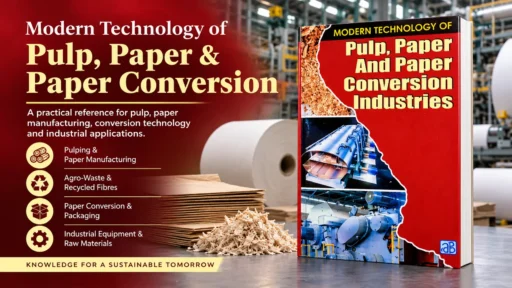
Explore This Book: Modern Technology of Pulp, Paper and Paper Conversion Industries
3. Areca Leaf Plate Manufacturing
The leaves of the areca tree fall off by themselves and can be harvested without destroying the plant. When used for heat pressing into plates, bowls and trays, this leaves makes a waterproof, natural, long-lasting product, which breaks down within 60 days. It is a raw material which is available in plenty in Karnataka, Assam, Kerala and other palm-growing states at low cost.
The investment cost of a basic areca leaf plate is one of the lowest in green packaging industry which is from ₹10 to ₹25 lakh depending on the number of press and variety of plates. The business also has an excellent fit with co-operative and cluster manufacturing, and hence is also applicable to rural areas, which provides it an opportunity of getting support from the SFURTI scheme under the Ministry of MSME. The market demand for areca leaf plates is robust, and the demand is increasing especially in Europe, North America and the Middle East where consumers are eager to purchase certified compostable plates.
Tamul Plates Marketing Private Limited has pioneered the cluster-manufacturing approach in Northeast India, demonstrating how this model scales while supporting local economies. Details on the SFURTI scheme are available at the Ministry of MSME.
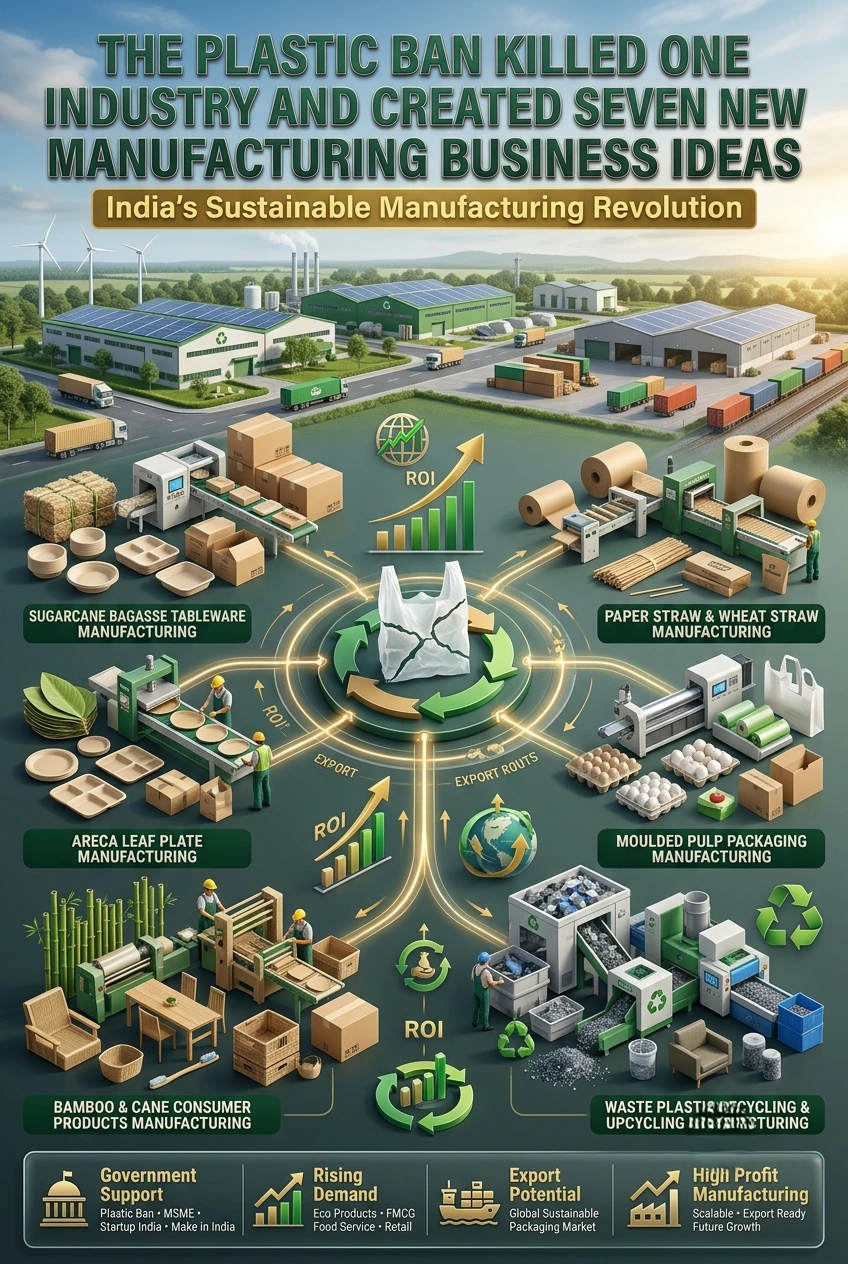
4. Bioplastic Film and Compostable Bag Manufacturing
Conventional polythene bags remain the most visible casualty of the plastic ban. The replacement market — compostable carry bags made from PLA, corn starch, or cassava — is still heavily underpenetrated. Retailers, supermarkets, kirana stores, vegetable markets, and online delivery companies all need compliant alternatives.
A mid-scale compostable bag manufacturing unit with extruder and printing infrastructure costs between ₹75 lakh and ₹1.5 crore. The technology is accessible through domestic machinery suppliers, and several CIPET centres offer process training. Cassava-based bags are gaining particular attention because they dissolve in warm water without releasing toxins — favourites among premium supermarkets and restaurant chains.
Manufacturers who achieve IS 17088 and IS 17899T certification from BIS gain automatic access to large retail procurement contracts. For certification requirements, visit the Bureau of Indian Standards.
Get Detailed Insights from This Book: Bioplastics & Biodegradable Products Manufacturing Handbook
5. Moulded Pulp Packaging for Electronics and E-Commerce
With a steep increase in India’s e-commerce volume, interest has been sparked for alternatives that can protect items like their polystyrene foam equivalents, the consumption and disposal of which has been forbidden by the SUP rules. The molded pulp made from discarded newspapers, sugarcane bagasse, or wheat straw is able to absorb shock and protect products, at the same time is compostable at home.
Who is this aimed at (companies involved in electronics manufacturing, appliance brands, e-commerce fulfilment centres)? How much investment is typically expected (1 crore to 2.5 crore, depending on the mould complexity)? What is the market growth of this sector currently (CAGR of 9.5%, in part due to regulatory pressure and ESG pressures on global brands that export from India)?
For meeting standards on packaging as part of a green supply chain; entrepreneurs may reach out to the Quality Council of India
View Full Project Details: Bioplastics & Compostable Packaging
6. Bamboo and Cane-Based Consumer Products Manufacturing
Since bamboo is not a tree but a grass, it happens to be the strongest natural-material with the highest rate of growth. Moreover, one can harvest it within three to five years and not twenty plus years as trees require for timber. It is used in the making of toothbrushes, cutleries, straws, utensils, pen and other writing equipment, food containers, packaging film, furniture. Many items are made using bamboo as a substitute for plastic materials.
Bamboo processing units in North East of India are advantage from the availability ofraw material and supplied the product to domestic markets as well as export to international market. Financial supports are also provided by National Bamboo Mission, which it is channeled through Ministry of Agriculture & Farmers Welfare for the entrepreneur engaged in bamboo cultivation, processing and value addition.
Check out further information on the National Bamboo Mission. High volume manufacturing units of certified bamboo products can have access to the high value retail sectors of European and American markets where consumers are willing to pay a substantially higher price for sustainable products.
Access Complete Business Plan: Cane & Bamboo Handicraft Manufacturing Business
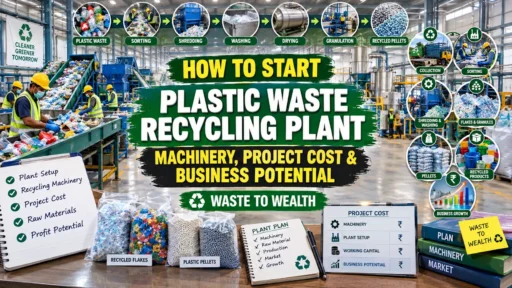
7. Waste Plastic Recycling and Upcycling Manufacturing
Even as the ban on SUPs shrinks the volume of new plastic entering circulation, enormous quantities of legacy plastic waste remain in the system. Recycling and upcycling this material into pavement tiles, park benches, road construction inputs, construction boards, and industrial containers represents a growing manufacturing segment.
Small-scale plastic recycling units require investments from ₹20 to ₹60 lakh and operate efficiently in Tier-2 industrial clusters. Government mandates on plastic waste processing give these units a built-in compliance buyer in municipal bodies and road construction agencies. The Extended Producer Responsibility (EPR) framework mandated by CPCB also directs plastic waste collection and processing through formal channels, creating consistent feedstock supply.
More policy details are available on the Central Pollution Control Board portal.
Import–Export Opportunity Analysis
The global shift away from single-use plastics is not an Indian regulatory event alone. It is a global policy consensus. The European Union has already banned multiple categories of single-use plastics, and the US market is following with state-by-state restrictions. Consequently, export demand for certified biodegradable packaging from India is not speculative — it is already active and growing.
Pakka Limited, listed on the NSE, exports compostable tableware to over 20 countries and serves global quick service restaurant chains. Ecoware holds a USDA Bio-based certification, enabling export access to premium US retail channels. For new manufacturers, the export route is achievable from the first year of operations if products carry IS 17088, EN 13432 (the European compostability standard), or ASTM D6400 certification.
The Indian Institute of Foreign Trade provides trade intelligence and export development support for emerging manufacturers. FIEO — Federation of Indian Export Organisations also assists MSMEs in finding export buyers and understanding compliance requirements. MSME exports grew from ₹3.95 lakh crore to ₹12.39 lakh crore in just four years, demonstrating the scale of opportunity available to focused manufacturers.
Indian MSME Success Stories Worth Studying
Ecoware — Rhea Mazumdar Singhal, New Delhi
Ecoware is India’s first and largest consumer brand for sustainable food packaging. Rhea Mazumdar Singhal built the company before the plastic ban made it commercially obvious, driven by research linking plastic food packaging to health risks she encountered during her pharmaceutical career. Ecoware’s products are made from sugarcane and wheat residue, and the company has earned USDA Bio-based certification — the only Indian manufacturer with this distinction.
Their institutional selling model — supplying hospitals, airlines, and the Delhi Metro Rail Corporation — created stable, high-volume revenue streams that de-risked early growth. Within six months of supplying Delhi Metro, over five tonnes of plastic waste were avoided across food courts. New entrepreneurs should study Ecoware’s early focus on channel discipline rather than premature product breadth.
Pakka Limited — Ayush Thapar, Ayodhya
Formerly known as Yash Papers, Pakka Limited undertook a bold manufacturing transformation under Ayush Thapar’s leadership. Pakka has invested in unique pulp and molding technology, set up its Chuk range of export grade products, and decided to target international QSR brands over vying for commodity pricing domestically. Pakka today exports to 20+ countries and has offset over 2000 tonnes of plastic usage worldwide. Their learning: vertically specialize and seek international certification, than act as a commodity supplier.
Pappco Greenware — Abhishek Agarwal, Mumbai
Founded in Mumbai, Pappco Greenware grew into India’s largest eco-friendly food packaging brand by product breadth, offering over 200 certified compostable packaging designs. The company serves over 1,000 restaurants and cafes through both B2B channels and e-commerce platforms including Amazon and Nature’s Basket. Their cluster model — from a single city to national distribution — is directly replicable by MSME founders with strong quality management systems and early BIS certification in place.
Discover business ideas that actually make money
About Niir Project Consultancy Services (NPCS)
At Niir Project Consultancy Services (NPCS), we provide professional consulting for preparing Market Survey cum Detailed Techno-Economic Feasibility Reports (DPRs) for setting up new industries or businesses in the green packaging, bioplastics, agri-waste processing, and sustainable manufacturing segments. Our reports include detailed manufacturing processes, market research and demand analysis, process flow diagrams, product mix and capacity planning, machinery and raw material source details, and complete project financials with profitability analysis.
Our objective is to help entrepreneurs evaluate feasibility, profitability, and long-term scalability before committing investment. If you are planning to enter any of the manufacturing business ideas discussed in this article, a professionally prepared DPR is one of the most valuable planning tools available to you. We also assist in PLI applications and government subsidy documentation relevant to eco-friendly manufacturing ventures.
Market Snapshot: India Green Packaging & Alternatives Manufacturing
| Segment | Est. Market Size | CAGR | Entry Investment Range | Key Raw Material |
| Bagasse Tableware | ₹3,500 Cr+ | 12–15% | ₹40–80 Lakh | Sugarcane bagasse |
| Compostable Bags / Films | ₹2,200 Cr+ | 18–20% | ₹75 L – ₹1.5 Cr | PLA / Corn starch |
| Paper Straws | ₹900 Cr+ | 14–16% | ₹30–60 Lakh | Food-grade paper |
| Areca Leaf Products | ₹600 Cr+ | 16–18% | ₹10–25 Lakh | Areca palm leaf |
| Moulded Pulp Packaging | ₹1,800 Cr+ | 9–10% | ₹1–2.5 Crore | Recycled pulp / bagasse |
| Bamboo Products | ₹1,200 Cr+ | 11–13% | ₹25–60 Lakh | Bamboo culms |
| Plastic Recycling / Upcycling | ₹2,500 Cr+ | 10–12% | ₹20–60 Lakh | Post-consumer plastic |
Source: Industry reports, MSME ministry data, and NPCS research compilation.
Frequently Asked Questions (FAQ)
Q1. Is the plastic ban still in force and actively enforced?
Yes. As of July 2022, India’s ban on single-use plastics is in effect. In addition to CPCB and state pollution control boards, the enforcement is ongoing, with over 5.8 crore penalty amount realized in as many as 7,75,999 kilograms of banned plastic confiscated in nationwide drives.
Q2. What is the minimum investment to start a biodegradable packaging business?
Areca leaf plate units can start from ₹10–25 lakh. Sugarcane bagasse tableware units typically need ₹40–80 lakh. Bioplastic bag manufacturing starts around ₹75 lakh. Moulded pulp packaging units need ₹1 crore or more depending on product complexity.
Q3. What certifications do I need to sell eco-friendly packaging in India?
As far as Indian market is concerned you will at the minimum need BIS Certification which are IS 17088 & IS 17899T. For Export to Europe; you need EN 13432 compliance. And for North America it is ASTM D6400.
Q4. What government subsidy is available for setting up a green packaging manufacturing unit?
The Plastic Industry Subsidy under MSME provides 25–30% capital subsidy on plant and machinery. PMEGP provides margin money grants. CGTMSE offers collateral-free credit guarantees. The BioE3 Policy supports bio-based manufacturing hubs. These can be stacked together to significantly reduce effective investment.
Q5. Can I export eco-friendly packaging products from India?
Yes, Indian manufacturers are exporting to Europe, USA, Middle East and Australia. EN 13432 and ASTM D6400 are the compulsory standards in these markets for export of this material. FIEO helps MSMEs access export buyers and compliances.
Q6. Who are the main buyers of biodegradable packaging in India?
The main institutional buyers are Airlines, Hospitals, Corporate Canteens, QSR chains, cloud kitchens, hotel chains, railways, and FMCG companies with EPR responsibilities. E-commerce companies are also emerging as a customer for moulded pulp and protective biodegradable packaging.
Q7. How long does it take to recover investment in a bagasse tableware manufacturing unit?
Industry practitioners estimate a recovery period of 3–4 years for well-managed units that secure institutional contracts early and maintain BIS certification throughout operations.
Q8. Is there export demand for areca leaf plates outside India?
Yes. Active import demand exists for certified compostable natural material table wares in the Europe & North America market. Natural and Chemical free Areca leaf plates fetch a handsome premium price in those Export Markets.
Q9. What raw materials does bioplastic bag manufacturing require?
These raw materials primarily encompass: PLApellets, corns starch, casava starch and L-lactic acid produced by sugarcane. The abundance of raw materials like agricultural surplus offers natural price advantage in terms of obtaining raw materials in India due to surplus Indian availability of these products.
Q10. Can a small-town MSME compete in this sector?
Yes. Many leading manufacturers — including Pakka Limited in Ayodhya — operate successfully from Tier-2 locations where raw materials and labour costs are lower. Industrial cluster support from SFURTI and DPIIT also benefits rural manufacturers significantly.
Q11. Where can I get a project report or feasibility study for green packaging manufacturing?
Niir Project Consultancy Services (NPCS) is in the process to prepare the Detailed Project Reports and Techno-Economic Feasibility Studies for setting up sustainable packaging or bioplastic manufacturing industries that includes machinery selection, sources of raw material, projected figures, and documentation for compliance.
Conclusion
The plastic ban is not an obstacle to manufacturing entrepreneurship. It is a restructuring event that has systematically created demand and cleared the field for entrepreneurs willing to build in sustainable materials. The demand is real, the government support is active, the export channels are open, and the technology is accessible.
From bagasse tableware and paper straws to moulded pulp packaging and bioplastic films, the business ideas available today carry both social purpose and commercial logic. These are not niche experiments. They are mainstream industrial opportunities backed by regulatory tailwinds, institutional buyers, and export markets hungry for certified Indian supply.
The entrepreneurs who move early, get certified, and secure institutional buyers will build defensible positions in a market growing at double-digit rates. Therefore, the plastic industry’s disruption was not the end of a story. It was the opening paragraph of a new manufacturing chapter for India’s MSME sector.
Key References:
- Ministry of MSME • Central Pollution Control Board • Bureau of Indian Standards
- Food Safety and Standards Authority of India • Indian Institute of Foreign Trade • FIEO
- National Bamboo Mission • Quality Council of India • Press Information Bureau (DPIIT)