
What is a low carbon ferro chrome project report?
A low carbon ferro chrome project report is a detailed project report (DPR) for a plant that makes ferro chrome with very little carbon. The plant reduces chrome ore with ferro silico chrome in an arc furnace. The report sets out the process, machinery, raw materials, market, project cost, means of finance, five-year projections, DSCR and break-even.
Promoters and ferro alloy companies use it to size the plant and raise a term loan; lenders and investors use it to judge whether the plant can repay.
Also known as: LC ferro chrome project report, low carbon ferrochrome DPR, LC FeCr plant feasibility report, low carbon ferro chrome business plan.
Low carbon ferro chrome plant cost and economics
Our sample report models a 4.6 metric tonnes per day (MT per day) unit that buys ferro silico chrome and runs 330 days a year, giving 1,518 MT per year at full capacity. It starts at 60% utilisation, reaches 70% in Year 3 and 80% in Year 5, and sells at ₹2,45,000 per MT before GST.
| Land and site development | 119.01 |
|---|---|
| Building and civil works | 278.78 |
| Plant and machinery | 526.11 |
| Other fixed assets | 45.30 |
| Contingencies | 40.24 |
| Preliminary and pre-operative | 25.24 |
| Working capital margin | 91.74 |
| Total | 1,126.42 |
| Promoter's contribution (25%) | 281.60 |
|---|---|
| Term loan from bank (75%) | 844.82 |
| Cash credit limit (separate) | 275.20 |
| Total project cost | 1,126.42 |
DSCR, the debt service coverage ratio, shows how many times the cash from operations covers each year's loan instalments. In the sample it is lowest at 1.51 in Year 2, when full principal repayment begins. Trade receivables are the largest part of working capital, because steel plants buy on 45 days of credit.
Term loan at 10.5% with a 6-month moratorium and 54 monthly instalments. All figures are illustrative.
Low carbon ferro chrome manufacturing process
Low carbon ferro chrome is made by silicothermic reduction: silicon, not carbon, takes the oxygen out of chromium oxide. That is why the plant uses ferro silico chrome as its reductant and keeps coke away from the furnace charge.
- Raw material preparation
Chrome ore, burnt lime and ferro silico chrome are checked for size and moisture, because damp lime and fines cause violent reactions and dust losses.
- Slag melting
Chrome ore and lime are melted together in a tilting arc furnace to make a fluid, chromium-rich lime slag.
- Silicothermic reduction
Ferro silico chrome is added to the melt, and its silicon reduces chromium oxide to metal while turning into calcium silicate slag.
- Ladle refining
Metal and slag are poured between refractory-lined reaction ladles so the leftover silicon recovers more chromium and the final slag runs lean.
- Tapping and casting
The alloy is cast into beds or moulds and the spent slag is drawn off and taken to a covered yard.
- Crushing and testing
Cooled cakes are crushed to the lump size buyers order, and every heat is analysed for chromium, carbon and silicon.
- Packing
Sized lumps are packed in jumbo bags or drums, marked with the heat number and test certificate.
Which process route suits a new low carbon ferro chrome plant?
Three routes are used worldwide, and the choice decides your machinery, power load and raw material list. The sample report takes the simplest one for a new promoter: buy ferro silico chrome and run one arc furnace with ladles.
| Silicothermic, bought-in reductant | One arc furnace melts ore and lime; purchased ferro silico chrome is the reductant. Lowest capital cost, but margins depend on the reductant price. |
|---|---|
| Silicothermic with own reductant (Perrin or duplex) | A second, submerged arc furnace makes ferro silico chrome from ore, quartz and coke on site. More capital and power, more control over cost. |
| Aluminothermic | Aluminium powder reduces chrome ore in a batch reaction. Very low carbon but costly reductant; suits small, high-purity orders. |
| Decarburising high carbon alloy | Carbon is removed from high carbon ferro chrome by oxidation or vacuum treatment. Needs access to cheap high carbon alloy and special equipment. |
Raw materials for low carbon ferro chrome
Raw materials take 61.3% of sales in the sample, and ferro silico chrome alone is more than half of that bill. Chrome ore comes mainly from the Sukinda belt in Odisha, while lime must be freshly burnt and low in moisture and sulphur.
| Raw material | Share of cost | Year 3 (₹ lakh) |
|---|---|---|
| Ferro silico chrome | 58% | 925.21 |
| Chrome ore | 28% | 446.65 |
| Burnt lime | 10% | 159.52 |
| Fluorspar and silica flux | 4% | 63.81 |
| Total | 100% | 1,595.19 |
Your margin is a spread: the plant earns the gap between the low carbon alloy price and the ferro silico chrome price. A report should test both prices moving against you at once.
Machinery for a low carbon ferro chrome plant
The tilting arc furnace is the largest item in the sample, at about a third of the machinery cost. Pollution control is not optional here: fume extraction and the bag filter cost more than the crane.
| Machine | What it does | Sample cost (₹ lakh) |
|---|---|---|
| Tilting electric arc furnace | Melts ore and lime and carries out the reduction | 168.35 |
| Furnace transformer and HT switchgear | Steps down grid power for the electrodes | 94.70 |
| Fume extraction and bag filter | Captures furnace dust and fumes | 63.13 |
| EOT crane for ladle handling | Lifts and pours ladles of metal and slag | 52.61 |
| Refractory lined reaction ladles | Hold the metal and slag mixing step | 42.09 |
| Raw material batching and charging system | Weighs and feeds each charge | 42.09 |
| Jaw crusher and screening unit | Crushes cast cakes to buyer lump size | 36.83 |
| Spectrometer and carbon sulphur analyser | Tests every heat before dispatch | 26.31 |
| Total plant and machinery | 526.11 | |
Costs are the sample report's estimates for a 4.6 MT per day unit. Get current quotations before you finalise.
Power and manpower for the plant
Power and fuel cost ₹226.70 lakh in Year 3 of the sample, about 8.7% of sales. The share stays modest because the electricity that made the bought-in ferro silico chrome is already in its price. A plant that makes its own reductant carries a far larger power bill, since ferro alloys use 3,000 to 12,000 kWh per tonne according to the Indian Bureau of Mines.
The furnace needs a high-tension connection with enough contract demand for full load, and a shift team that can run around the clock.
| Category | Number | Annual cost (₹ lakh) |
|---|---|---|
| Management, supervision and administration | 9 | 32.94 |
| Skilled workers and operators | 20 | 46.80 |
| Semi-skilled and unskilled workers | 28 | 43.68 |
| Total | 57 | 123.42 |
Licences and approvals for a ferro chrome plant
Two approvals take the longest: environmental clearance and the BIS licence. Start both before you order the furnace, as of October 2026.
| BIS certification | Ferrochromium to IS 1170 is under mandatory BIS certification through the Steel and Steel Products Quality Control Order, implemented 8 November 2024. IS 1170 was revised in 2026 |
|---|---|
| Environmental clearance | Ferro alloy furnace plants are appraised under item 3(a), metallurgical industries, of the EIA Notification 2006; larger plants have been appraised as Category A by the environment ministry's expert committee |
| Pollution board consent | Consent to establish and consent to operate from the State Pollution Control Board, with conditions on stack dust and slag storage |
| Power | High-tension connection and electrical inspectorate approval for the furnace transformer |
| Factory and business registration | Factory licence under the Factories Act, Udyam registration and GST registration |
Who buys low carbon ferro chrome?
Demand follows stainless and alloy steel. Each tonne of stainless steel needs 17 to 23% chromium, according to the Indian Bureau of Mines. Melt shops use the low carbon grade for late additions, where carbon from high carbon alloy would spoil the heat.
Buyers order by chromium, carbon and silicon limits and by lump size. A new unit wins repeat orders through steady analysis and on-time supply more than through price alone.
- Stainless steel melt shops with AOD or ladle refining
- Induction furnace stainless and alloy steel makers
- Alloy, tool and heat-resisting steel producers
- Welding electrode and flux makers
- Ferro alloy traders and exporters
Mistakes that weaken a low carbon ferro chrome project report
- Pricing one raw material at a time
The alloy and ferro silico chrome prices often move together. Testing them separately hides the real risk to DSCR.
- Assuming full chromium recovery
Some chromium always stays in the slag. Yield per tonne of ore must allow for it, or output and sales come out too high.
- Leaving out refractory and electrode costs
Furnace linings, ladle linings and electrodes wear fast in a lime-rich slag and must be budgeted as running costs.
- No plan for the slag
The high-lime slag crumbles into fine dust as it cools. It needs covered storage and a disposal or reuse route in the consent application.
- Ignoring the approval timeline
Sales cannot start before the BIS licence and pollution consent, so the construction schedule and interest during construction must include them.
How NPCS helps you plan a low carbon ferro chrome plant
- Route and capacityCompare bought-in reductant with an own ferro silico chrome furnace for your budget and power tariff.
- Furnace and suppliersSize the arc furnace, transformer and ladles and collect quotations.
- Bank-ready project reportA project report on low carbon ferro chrome with projections, price sensitivity, DSCR and working capital in the format your lender wants.
- Approvals and layoutPlant layout, slag yard, power load and the clearance and BIS steps for your state.
NPCS's client list shows 116 assignments in metal products, one of them for low carbon ferro chrome. The NPCS project team, led by founder Ajay Kumar Gupta, has prepared industrial project reports since 1994.
What's inside the low carbon ferro chrome sample report
- Introduction
- Uses and applications
- Market potential
- Manufacturing process
- Raw materials
- Plant and machinery
- Land, building and utilities
- Manpower
- Licences and approvals
- Project cost and means of finance
- Working capital
- Projected profitability
- Cash flow statement
- Projected balance sheet
- Depreciation
- Term loan repayment
- Debt service coverage
- Break-even analysis
- Financial ratios
- Key assumptions
- Conclusion
- Monthly loan repayment schedule
19 pages, five-year projections, illustrative figures.
Open sample reportFree sample or a report for your project?
| What you get | Free sample | NPCS report for your project |
|---|---|---|
| Capacity and location | Typical unit | Your capacity, site and state |
| Figures | Illustrative | Built on current prices and quotations |
| Machinery suppliers and quotations | No | Yes |
| Market survey for your region | No | Yes |
| Bank or scheme format (PMEGP, term loan) | No | Yes |
| Use for a loan application | No | Yes |
Real NPCS low carbon ferro chrome project reports
These are low carbon ferro chrome project reports NPCS has prepared, with the plant capacity, total capital investment, rate of return and break-even worked out in each. Costs have moved since some were written, so we bring any of them up to date for your capacity and location.
| Project report | Plant capacity | Total investment | Rate of return | Break-even | Action |
|---|---|---|---|---|---|
| Low Carbon Ferro Manganese and Ferro Chrome (Through Alumina Thermic Process) | 24 MT/Day | ₹26.95 crore | 56% | 52% | Get this report |
Figures as worked out in each NPCS report. Total investment includes plant and machinery, land and building, and working capital.
What clients say about NPCS
4.7
264 Google reviews, as of 20 Oct 2026
Clients most often mention
- feasibility reports 18
- project report 16
- helpful for startups 15
- detailed reports 8
-
Excellent experience with Niir Project Consultancy Services. Their Techno-Economic Feasibility Reports are incredibly detailed and backed by solid market data.
Piyush Singh, Google review, 2026
-
Niir Project Consultancy Services offers excellent guidance for business setup. Their market survey and feasibility reports saved us a lot of time and helped us make informed decisions. Highly recommended
Saroj Yadav, Google review, 2026 View on Google
-
In an era of information overload, NIIR stands out for its precision. Their technical consultancy and market feasibility studies are world-class.
Shrishti Gautam, Google review, 2026
-
NIIR Project Consultancy Services provides useful books and reports for students, entrepreneurs, and small businesses. Their content is easy to understand and focuses on practical ideas for starting and managing industries. Overall, NIIR is helpful for learning about business and project planning.
Raj Yadav, Google review, 2026
Low Carbon Ferro Chrome project report: frequently asked questions
What is the cost of a low carbon ferro chrome manufacturing plant in India?
Our sample report models a 4.6 MT per day silicothermic unit at ₹1,126 lakh, including ₹526 lakh of plant and machinery and ₹119 lakh for land and site development. A plant that also makes its own ferro silico chrome needs a second furnace and costs much more. Treat the sample as illustrative; your report prices land, power and machinery for your site.
What is the difference between low carbon and high carbon ferro chrome?
The difference is carbon content and how carbon is kept out. High carbon ferro chrome is made by reducing chrome ore with coke, so it carries several per cent carbon. Low carbon ferro chrome is reduced with silicon instead, so carbon stays at a fraction of one per cent. Stainless steel makers use it where added carbon would spoil the grade.
What raw materials are used to make low carbon ferro chrome?
The main inputs are ferro silico chrome as the reductant, chrome ore as the chromium source, burnt lime to form the slag, and small amounts of fluorspar and silica flux. In our sample report ferro silico chrome is 58% of raw material cost and chrome ore 28%, so the price of the reductant matters most.
Is low carbon ferro chrome manufacturing profitable?
In our illustrative sample, a 4.6 MT per day unit earns a 20% return on investment in Year 3. It breaks even at 39% of capacity and pays back in about 3.8 years. Real results depend on the spread between the alloy price and ferro silico chrome, power tariff, chromium recovery from slag and how well each heat meets buyer specifications.
Is BIS certification mandatory for ferro chrome?
Yes. BIS lists ferrochromium to IS 1170 under mandatory certification through the Steel and Steel Products Quality Control Order, implemented on 8 November 2024. BIS has also published a third revision, IS 1170:2026. A new plant should plan its BIS licence, testing laboratory and sampling routine before the first sale, and confirm the current requirement with BIS.
Does a low carbon ferro chrome plant need environmental clearance?
Usually yes. Ferro alloy furnace plants are appraised under item 3(a), metallurgical industries, of the EIA Notification 2006. The expert committee of the environment ministry has appraised larger plants as Category A. You will also need consent to establish and operate from the State Pollution Control Board. Confirm the category for your capacity before buying land.
Is the sample report free and can I use it for a loan?
The sample is free to view and download. It is an illustrative report that shows the format and depth of an NPCS report; its figures are representative and not based on a real project, so it should not be submitted to a bank. For a loan, NPCS prepares a report for your own capacity, location and lender.
Sources and references
- Indian Minerals Yearbook 2022: Ferro AlloysIndian Bureau of Mines, Ministry of Mines, checked Oct 2026
- IS 1170:1992 Ferrochromium: Specification (QCO and certification status)Bureau of Indian Standards, checked Oct 2026
- IS 1170:2026 Ferrochromium: Specification (third revision)Bureau of Indian Standards, checked Oct 2026
- Quality control ordersMinistry of Steel, Government of India, checked Oct 2026
- Minutes of the 30th EAC (Industry-1) meeting, 15 May 2023Ministry of Environment, Forest and Climate Change, checked Oct 2026
Recommended reading on low carbon ferro chrome
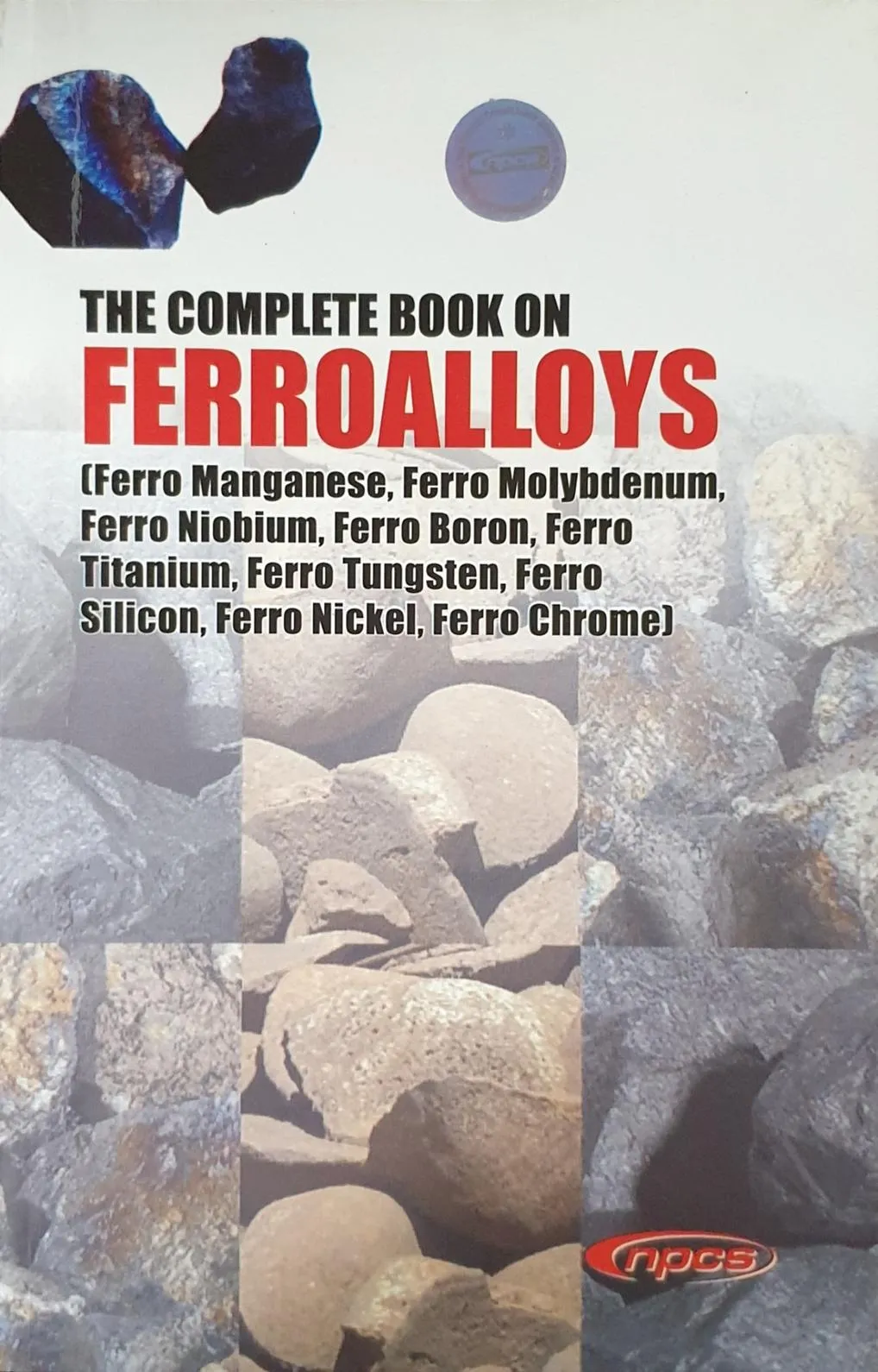

The NPCS project team, led by Ajay Kumar Gupta
This page and its sample report are prepared and reviewed by the NPCS project team, which has written techno-economic feasibility studies and detailed project reports since 1994.
Ajay Kumar Gupta founded Niir Project Consultancy Services (NPCS) and leads the organisation. With 40 years of experience in MSME project consulting, he has built the team that has delivered more than 28,000 project reports for clients worldwide, helping entrepreneurs plan and finance profitable manufacturing businesses.
- Published
- Last updated
- Next review
- Oct 2027
- Reviewed by
- NPCS project team
This page is reviewed every 12 months, or sooner when scheme limits, GST rates, BIS rules or pollution categories change. The sample report is illustrative: its figures are generated from industry-typical ratios for a unit of this size, checked so every statement balances, and are not taken from any client project.