
What is a ferro molybdenum project report?
A ferro molybdenum project report is a detailed project report (DPR) for a plant that converts roasted molybdenum concentrate into a 60 to 70% molybdenum alloy by aluminothermic reduction. It sets out the process, machinery, raw material sourcing, approvals, project cost, means of finance, five-year projections, DSCR and break-even.
Promoters and ferro alloy makers use it to size a converter and raise a term loan. Banks use it to judge whether the plant can carry its large working capital and still repay.
Also known as: ferromolybdenum, FeMo.
Ferro molybdenum plant economics in our sample report
The sample models a converter of 330 kg per day working 330 days a year, or 1,08,900 kg at full capacity. It starts at 60% utilisation and reaches 80% in Year 5, selling at ₹3,460 per kg ex-factory.
| Land and site development | 38.78 |
|---|---|
| Building and civil works | 78.15 |
| Plant and machinery | 189.90 |
| Other fixed assets | 23.83 |
| Contingencies | 13.40 |
| Preliminary and pre-operative | 8.60 |
| Working capital margin | 96.38 |
| Total | 449.04 |
| Promoter's contribution (25%) | 112.26 |
|---|---|
| Term loan from bank (75%) | 336.78 |
| Cash credit limit (separate) | 289.14 |
| Total project cost | 449.04 |
Term loan at 10.5% with a 6-month moratorium and 54 monthly instalments; lowest yearly DSCR 1.37. All figures are illustrative.
How much does a ferro molybdenum plant cost?
Cost rises with annual output, but working capital rises fastest. A tonne of alloy sells for lakhs of rupees, so every month of oxide stock and buyer credit ties up far more cash than the machines do.
Small converter
₹449 lakh
330 kg per day, 1,08,900 kg per year
- Plant and machinery₹190 lakh
- Land and building₹117 lakh
- Working capital margin₹96 lakh
Term loan ₹337 lakh (75%), promoter ₹112 lakh
Mid-size plant
₹10–18 crore
About 300–500 MT per year
- Plant and machinery₹3–5 crore
- Land and building₹1.5–3 crore
- Working capital margin₹5–10 crore
Term loan plus a large cash credit limit
Multi-alloy plant
₹25–50 crore
About 1,000–1,500 MT per year
- Plant and machinery₹7–12 crore
- Land and building₹4–7 crore
- Working capital margin₹15–30 crore
Often also makes ferro vanadium or ferro titanium
Mid-size and multi-alloy ranges are indicative. A 1,200 MT per year aluminothermic plant in Maharashtra was appraised at ₹19 crore before working capital.
Ferro molybdenum manufacturing process
Most ferro molybdenum is made by aluminothermic, or thermite, reduction. The reaction gives off enough heat to melt the charge by itself, so the plant runs in batches without an electric furnace.
- Drying the inputs
Molybdenum oxide, mill scale and fluxes are dried, because moisture in the charge makes the reaction spit and lowers metal recovery.
- Charge calculation
Each batch is weighed to a recipe worked out from the oxide's molybdenum content, so the alloy lands in the 60 to 70% molybdenum band the buyer ordered.
- Blending
Oxide, aluminium powder, ferro silicon, iron oxide and lime are mixed to a uniform charge; poor mixing leaves unreduced oxide in the slag.
- Firing the charge
The charge is placed in a refractory lined vessel or sand bed under a fume hood and ignited; the reaction is over within minutes.
- Cooling and slag removal
The alloy settles below the alumina slag and is left to cool, then the slag is knocked off and set aside for reuse or sale.
- Crushing and sizing
The metal block is broken, jaw crushed and screened to the lump size agreed with the steel plant, and fines are returned to later batches.
- Testing and packing
Every lot is analysed for molybdenum, carbon, sulphur, phosphorus and copper, then packed in steel drums or jumbo bags with a test certificate.
Raw materials for ferro molybdenum
India has no regular molybdenum concentrate output, so converters import roasted concentrate and price it against the international molybdenum price. The Indian Bureau of Mines reports 9,114 tonnes of molybdenum ores and concentrates imported in 2021-22, nearly half of it from Chile.
| Raw material | Share of cost | Year 3 (₹ lakh) |
|---|---|---|
| Roasted molybdenum concentrate | 86% | 1,601.94 |
| Aluminium powder and granules | 6% | 111.76 |
| Ferro silicon 75 | 4% | 74.51 |
| Mill scale and iron ore fines | 2% | 37.26 |
| Lime and fluorspar flux | 2% | 37.25 |
| Total | 100% | 1,862.72 |
Oxide is paid for in foreign currency, so a weaker rupee raises cost even when the world molybdenum price is flat.
Machinery for a ferro molybdenum plant
The process needs little power, so the machinery list is short. In our sample the fume extraction system with bag filter is the largest single item, ahead of the reaction vessels.
| Machine | What it does | Sample cost (₹ lakh) |
|---|---|---|
| Fume extraction system with bag filter | Captures oxide dust and fumes from firing | 37.98 |
| Refractory lined reaction vessels and sand beds | Hold the charge while it reacts and cools | 34.18 |
| Weigh batching and blending system | Weighs and mixes each charge to recipe | 26.59 |
| EOT crane and material handling | Moves vessels, blocks and drums | 26.58 |
| Jaw crusher and vibrating screen | Breaks the block and sizes the lumps | 22.79 |
| Raw material dryer | Removes moisture from oxide and fluxes | 18.99 |
| XRF and spectrometer laboratory | Checks oxide on arrival and alloy before dispatch | 15.19 |
| Drum filling and weighing station | Packs and weighs finished lots | 7.60 |
| Total plant and machinery | 189.90 | |
Costs are the sample report's estimates for a 330 kg per day plant. Get current quotations before you finalise.
BIS licence and approvals for a ferro molybdenum plant
The BIS licence and the environment approval take the longest, so start them while the plant is being designed. Status below is as of October 2026.
| Product standard | IS 1469:1993, Ferromolybdenum, specification (fourth revision) |
|---|---|
| BIS certification | Listed by BIS as mandatory under a Ministry of Steel Quality Control Order, implementation date 1 March 2025 |
| Trade classification | ITC (HS) 7202 70 00, ferro-molybdenum, as named in the Steel and Steel Products QCO schedule |
| Environment | Consent to establish and operate from the State Pollution Control Board; a 1,200 MT per year plant in Maharashtra was treated as Category A under item 3(a) of the EIA Notification, 2006 |
| Storage and safety | Fire NOC and safe storage for aluminium powder, which is a fire hazard when damp or dusty |
| Business registration | Udyam (MSME) registration, GST registration and factory licence under the Factories Act |
Rules and categories change and vary by state. Confirm with BIS and your State Pollution Control Board before applying.
Who buys ferro molybdenum in India?
Demand comes from steel makers that add molybdenum for strength, hardness and corrosion resistance. Stainless grades such as 316, alloy and tool steels, and pipe and boiler steels use the most. The Indian Bureau of Mines put domestic ferro molybdenum output at 435 tonnes in 2021-22, a small base served by a handful of converters and by imports.
- Alloy and special steel plants
- Stainless steel melt shops
- Steel foundries and alloy cast iron units
- Tool, die and high speed steel producers
- Ferro alloy traders and exporters
How converters compete: buyers pay for assured molybdenum content, low carbon, sulphur and copper, the right lump size and quick delivery. Price is set off the world molybdenum price, so the converter's real margin is the conversion spread.
Mistakes that weaken a ferro molybdenum project report
- Fixing oxide and alloy prices separately
Both move with the world molybdenum price. A report that holds the selling price while oxide rises, or the reverse, shows a margin that cannot exist.
- Assuming full molybdenum recovery
Some molybdenum is lost to slag, fumes and fines. Recovery should be stated and tested, because each lost percent comes straight out of profit.
- Under-sizing working capital
Import lead time, oxide stock and 45 days of buyer credit need a large cash credit limit. Too small a limit stalls production in the first year.
- Leaving out BIS and fume control
Without a BIS licence the alloy cannot be sold, and without a sized bag filter consent to operate is at risk. Both must be in the cost and the timeline.
How NPCS helps you plan a ferro molybdenum plant
- Capacity and alloy gradeSize the plant and grade mix to your buyers, oxide supply and budget.
- Process and recovery normsCharge balance, consumption norms and metal recovery used in the projections.
- Bank-ready project reportProjections, DSCR and a working capital plan that reflects imported oxide.
- Approvals and layoutPlant layout, fume control and the BIS and pollution approvals list for your state.
NPCS has prepared project reports and feasibility studies for steel and metal product units since 1994, and its published client list shows 116 assignments in this sector.
What's inside the ferro molybdenum sample report
- Introduction
- Uses and applications
- Market potential
- Manufacturing process
- Raw materials
- Plant and machinery
- Land, building and utilities
- Manpower
- Licences and approvals
- Project cost and means of finance
- Working capital
- Projected profitability
- Cash flow statement
- Projected balance sheet
- Depreciation
- Term loan repayment
- Debt service coverage
- Break-even analysis
- Financial ratios
- Key assumptions
- Conclusion
- Monthly loan repayment schedule
19 pages, five-year projections, illustrative figures.
Open sample reportFree sample or a report for your project?
| What you get | Free sample | NPCS report for your project |
|---|---|---|
| Capacity and location | Typical unit | Your capacity, site and state |
| Figures | Illustrative | Built on current prices and quotations |
| Machinery suppliers and quotations | No | Yes |
| Market survey for your region | No | Yes |
| Bank or scheme format (PMEGP, term loan) | No | Yes |
| Use for a loan application | No | Yes |
Real NPCS ferro molybdenum project reports
These are ferro molybdenum project reports NPCS has prepared, with the plant capacity, total capital investment, rate of return and break-even worked out in each. Costs have moved since some were written, so we bring any of them up to date for your capacity and location.
| Project report | Plant capacity | Total investment | Rate of return | Break-even | Action |
|---|---|---|---|---|---|
| Ferro Alloys OF Niobium, Molybdenum, Titanium, Tungsten AND Vanadium | 5 MT/Day | ₹5 crore | 50% | 41% | Get this report |
| Ferro Molybdenum | Ferro Molybdenum: 10 MT/Day | ₹7.76 crore | 31% | 68% | Get this report |
| Ferro Alloys (Low Carbon Ferrochrome (LCFC), Ferro Molybdenum (FeMo), Ferro Vanadium (FeV), Ferro Titanium… | Low Carbon Ferrochrome (LCFC), 20 MT Per Day Ferro Molybdenum (FeMo), 40 MT Per Day Ferro Vanadium (FeV), 20 MT Per Day Ferro Titanium, 20 M… | ₹97.75 crore | 30% | 71% | Get this report |
Figures as worked out in each NPCS report. Total investment includes plant and machinery, land and building, and working capital.
What clients say about NPCS
4.7
264 Google reviews, as of 20 Oct 2026
Clients most often mention
- feasibility reports 18
- project report 16
- helpful for startups 15
- detailed reports 8
-
Excellent experience with Niir Project Consultancy Services. Their Techno-Economic Feasibility Reports are incredibly detailed and backed by solid market data.
Piyush Singh, Google review, 2026
-
Niir Project Consultancy Services offers excellent guidance for business setup. Their market survey and feasibility reports saved us a lot of time and helped us make informed decisions. Highly recommended
Saroj Yadav, Google review, 2026 View on Google
-
In an era of information overload, NIIR stands out for its precision. Their technical consultancy and market feasibility studies are world-class.
Shrishti Gautam, Google review, 2026
-
NIIR Project Consultancy Services provides useful books and reports for students, entrepreneurs, and small businesses. Their content is easy to understand and focuses on practical ideas for starting and managing industries. Overall, NIIR is helpful for learning about business and project planning.
Raj Yadav, Google review, 2026
Ferro Molybdenum project report: frequently asked questions
What is the ferro molybdenum manufacturing plant cost in India?
A small converter making about 100 MT a year needs roughly ₹4–6 crore, while plants of 300–500 MT a year need about ₹10–18 crore. These are indicative figures. Our sample report models a 330 kg per day plant at ₹449 lakh. Working capital is a large part of the total, because molybdenum oxide is costly and is bought in advance.
What raw materials are used to make ferro molybdenum?
The main input is roasted molybdenum concentrate, also called technical molybdic oxide. Aluminium powder and ferro silicon act as reducing agents, iron comes from mill scale or iron ore, and lime with fluorspar forms the slag. In our sample report the oxide makes up 86% of raw material cost, so its price decides profit.
How is ferro molybdenum made?
Most ferro molybdenum is made by the aluminothermic, or thermite, process. A dried and weighed charge of molybdenum oxide, aluminium, ferro silicon and iron oxide is ignited in a refractory lined vessel. The reaction melts the charge in minutes, the alloy settles below the slag, and the cooled block is broken, crushed, sized and tested.
Does ferro molybdenum need BIS certification?
Yes. Ferromolybdenum is covered by IS 1469:1993. The BIS portal lists it under mandatory certification through a Ministry of Steel Quality Control Order, with an implementation date of 1 March 2025. A plant should plan for a BIS licence and an in-house laboratory before it starts selling. Confirm current status with BIS.
Is ferro molybdenum manufacturing profitable?
It can be, but the margin is a thin spread over a costly raw material. In our illustrative sample, the plant earns a 19% return on investment in Year 3, breaks even at 52% of capacity and pays back in about 4.1 years. Real results depend on oxide buying, metal recovery, the rupee and how quickly steel buyers pay.
What is ferro molybdenum used for?
Steel plants and foundries add it to steel and cast iron to raise strength, hardness, heat resistance and corrosion resistance. Typical uses are alloy and stainless steels, tool and high speed steels, and grades for pipelines and boilers. It is preferred to pure molybdenum because it dissolves easily in molten steel.
Is the sample report free and can I use it for a loan?
The sample is free to view and download. It is an illustrative report that shows the format and depth of an NPCS report; its figures are representative and not based on a real project, so it should not be submitted to a bank. For a loan, NPCS prepares a report for your own capacity, location and sourcing plan.
Sources and references
- IS 1469:1993 Ferromolybdenum, specification (Know your standards)Bureau of Indian Standards, checked Oct 2026
- Steel and Steel Products (Quality Control) Order, 2024, Schedule 1Ministry of Steel, Government of India, checked Oct 2026
- Indian Minerals Yearbook 2022: Molybdenum (advance release, December 2023)Indian Bureau of Mines, Ministry of Mines, checked Oct 2026
- Executive summary, ferro alloys plant at Butibori MIDC, Nagpur (public hearing)Maharashtra Pollution Control Board, checked Oct 2026
Recommended reading on ferro molybdenum
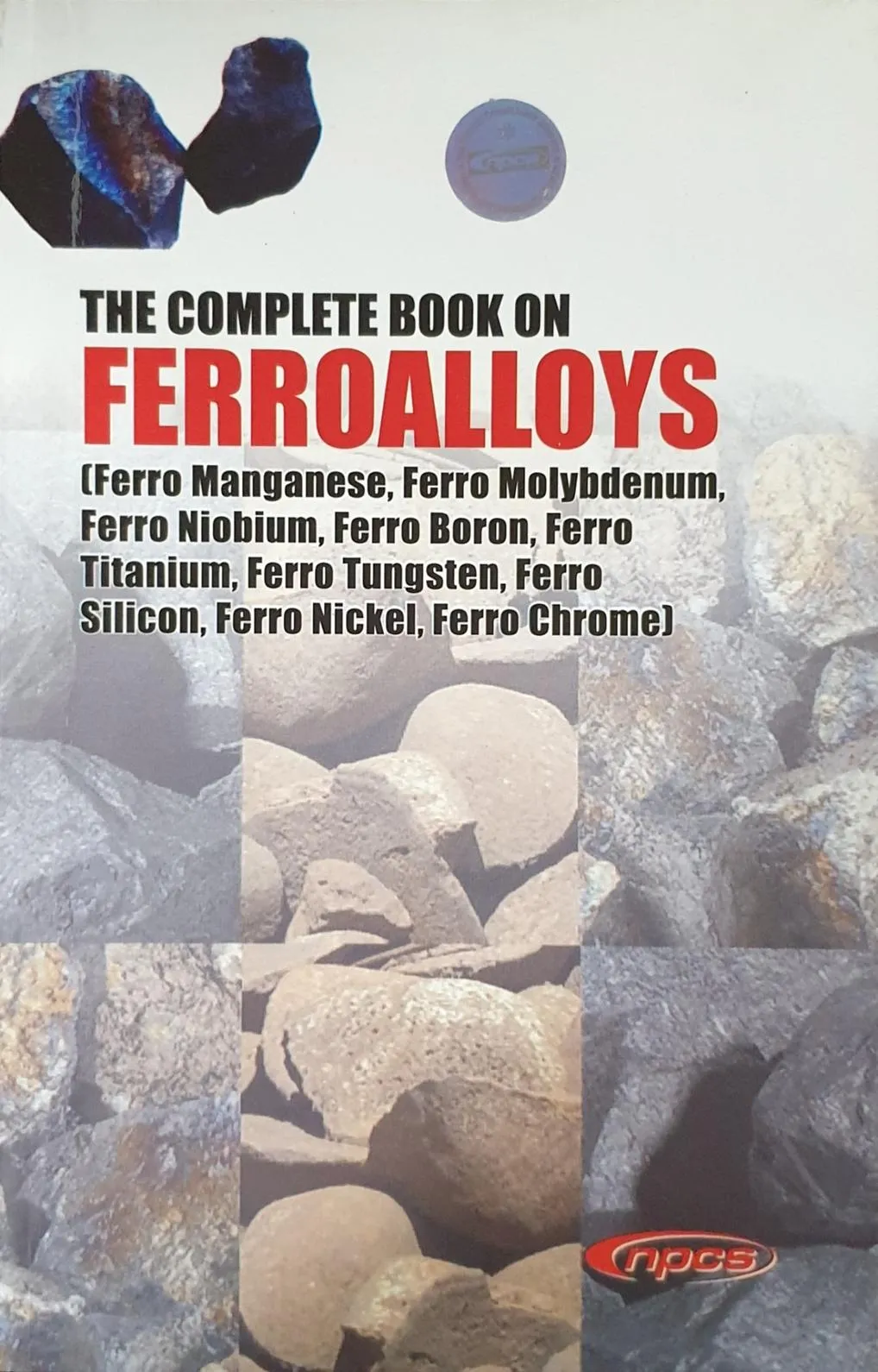

The NPCS project team, led by Ajay Kumar Gupta
This page and its sample report are prepared and reviewed by the NPCS project team, which has written techno-economic feasibility studies and detailed project reports since 1994.
Ajay Kumar Gupta founded Niir Project Consultancy Services (NPCS) and leads the organisation. With 40 years of experience in MSME project consulting, he has built the team that has delivered more than 28,000 project reports for clients worldwide, helping entrepreneurs plan and finance profitable manufacturing businesses.
- Published
- Last updated
- Next review
- Oct 2027
- Reviewed by
- NPCS project team
This page is reviewed every 12 months, or sooner when scheme limits, GST rates, BIS rules or pollution categories change. The sample report is illustrative: its figures are generated from industry-typical ratios for a unit of this size, checked so every statement balances, and are not taken from any client project.