
What is a alloy steel casting project report?
An alloy steel casting project report is a detailed project report (DPR) for a steel foundry. The foundry melts scrap with chromium, nickel and molybdenum additions and pours it into sand moulds. The report sets out the melting and moulding route, heat treatment, testing, machinery, raw materials, project cost, five-year projections, DSCR and break-even that a lender or investor checks.
Promoters use it to size the foundry and raise a term loan; banks and investors use it to judge whether the plant can carry its debt.
Also known as: alloy steel casting business plan, project report on alloy steel casting, steel foundry project report, DPR for alloy steel castings.
Alloy steel casting manufacturing plant cost in India
Our sample report models a 7.8 MT per day foundry working 330 days a year, or 2,574 MT of finished castings a year at full capacity. It starts at 60% capacity, reaches 80% in Year 5 and sells at an average ₹1,95,000 per MT before GST.
| Land and site development | 130.97 |
|---|---|
| Building and civil works | 284.11 |
| Plant and machinery | 635.45 |
| Other fixed assets | 60.11 |
| Contingencies | 45.98 |
| Preliminary and pre-operative | 28.92 |
| Working capital margin | 122.48 |
| Total | 1,308.02 |
| Promoter's contribution (25%) | 327.00 |
|---|---|
| Term loan from bank (75%) | 981.02 |
| Cash credit limit (separate) | 367.42 |
| Total project cost | 1,308.02 |
Plant and machinery is nearly half the project cost. DSCR (debt service coverage ratio) is the cash available to repay the loan divided by the instalments due. Its lowest value in the sample is 2.01 in Year 2, the first full year of repayment.
Term loan at 10.5% with a 6-month moratorium and 54 monthly instalments. All figures are illustrative.
Alloy steel casting manufacturing process
A steel foundry makes castings to the buyer's drawing and grade, so every order passes through the same seven stages. Heat treatment and testing are what separate alloy steel castings from plain carbon steel work.
- Pattern and mould making
Wooden or metal patterns, often supplied or paid for by the buyer, are used to ram resin-bonded sand moulds and cores, with risers placed to feed shrinkage.
- Melting
Graded steel scrap and the foundry's own returns are melted in a medium frequency induction furnace at about 1,600 °C.
- Alloying and chemistry check
Ferro chrome, ferro molybdenum, nickel and other additions are made, and a spectrometer sample confirms the grade before the heat is tapped.
- Pouring
Metal is tapped into a ladle, deoxidised with aluminium and poured quickly so the last mould still fills at the right temperature.
- Knockout and fettling
Cooled castings are shaken out, risers and gates are cut off and returned to the melt, and surfaces are shot blasted and ground.
- Heat treatment
Castings are normalised, or hardened and tempered, in batch furnaces to reach the strength and hardness the grade calls for.
- Testing and dispatch
Each heat is checked for chemistry and tensile and hardness values, castings are inspected for size and defects, and test certificates go with the dispatch.
Choosing the melting and moulding route for a steel foundry
The choice of furnace and moulding system fixes much of the machinery cost, the grades you can make and the casting weights you can offer. The sample report assumes the most common route for a mid-size Indian alloy steel foundry.
| Melting furnace | Medium frequency induction furnaces suit heats of a few tonnes and accurate alloy additions. Arc furnaces suit larger heats and can refine poorer scrap, at a higher capital and electrode cost. |
|---|---|
| Refining | An induction furnace remelts rather than refines, so sulphur and phosphorus in the scrap stay in the steel. Low-carbon stainless grades often need a separate refining vessel such as AOD. |
| Moulding | No-bake resin sand gives good surface finish and size accuracy for medium and heavy castings and allows sand reclamation. Green sand is cheaper but suits smaller, repeat castings. |
| Heat treatment | Batch furnaces for normalising, hardening and tempering, with a water or polymer quench tank sized for the heaviest casting you plan to make. |
| Testing | A spectrometer for every heat, plus tensile, impact and hardness testing. Radiography or ultrasonic testing can be outsourced at first if pressure-part buyers ask for it. |
What decides the route: fix the grades and the heaviest single casting first. Furnace size, crane capacity, quench tank size and building height all follow from that one number.
Raw materials for alloy steel castings
Raw materials are 56.1% of sales in our sample report. Scrap is bought by grade from scrap processors and steel plants, and risers, gates and rejected castings go back into the furnace as returns.
| Raw material | Share of cost | Year 3 (₹ lakh) |
|---|---|---|
| Steel scrap and returns | 60% | 1,183.47 |
| Ferro alloys and nickel | 26% | 512.84 |
| Moulding sand, resin and binders | 8% | 157.79 |
| Refractories and foundry consumables | 6% | 118.35 |
| Total | 100% | 1,972.45 |
Nickel and molybdenum prices move with world metal markets. A real report prices ferro alloys for your actual grade mix and tests a price rise.
Machinery for an alloy steel casting plant
The induction melting furnace with its power panel is the largest single item, at about 30% of the machinery cost in the sample.
| Machine | What it does | Sample cost (₹ lakh) |
|---|---|---|
| Induction melting furnace with power panel | Melts scrap and alloys to steel | 190.64 |
| No-bake sand moulding and reclamation plant | Mixes resin sand, makes moulds, reuses sand | 114.38 |
| Heat treatment furnaces with quench tank | Normalises, hardens and tempers castings | 88.96 |
| EOT cranes and pouring ladles | Moves moulds, ladles and castings | 63.54 |
| Shot blasting machine | Cleans sand and scale off castings | 38.13 |
| Fettling, cutting and grinding equipment | Removes risers and gates, finishes surfaces | 44.48 |
| Spectrometer and mechanical testing lab | Checks chemistry, strength and hardness | 50.84 |
| Fume extraction and dust collection | Captures furnace fume and sand dust | 44.48 |
| Total plant and machinery | 635.45 | |
Costs are the sample report's estimates for a 7.8 MT per day foundry. Get current quotations before you finalise.
Power and manpower for an alloy steel foundry
Power and fuel cost ₹298.96 lakh in Year 3 of the sample, or 8.5% of sales, most of it for melting and heat treatment. The furnace load usually calls for a high tension connection, so the power tariff and supply reliability at your site matter as much as land price.
A foundry is labour-heavy because moulding, fettling and inspection are hard to automate fully. The sample plant employs 104 people.
| Category | Number | Monthly wage (₹) | Annual cost (₹ lakh) |
|---|---|---|---|
| Management, supervision and administration | 16 | 30,500 | 58.56 |
| Skilled workers and operators | 36 | 19,500 | 84.24 |
| Semi-skilled and unskilled workers | 52 | 13,000 | 81.12 |
| Total | 104 | 223.92 |
Wages rise 5% a year in the sample projections. Skilled melters, moulders and a qualified metallurgist are the hardest posts to fill.
Approvals and standards for alloy steel castings
| Business registration | Udyam (MSME) registration and GST registration |
|---|---|
| Pollution board consent | Consent to establish and operate from the State Pollution Control Board. The CPCB list puts foundry operations under 5 tonnes per hour (coal use under 500 kg per hour) in the Orange category. Steel making in induction or arc furnaces is also Orange. A foundry above those limits must confirm its category with the board |
| Factory and fire | Factory licence under the Factories Act and a fire NOC; rules and thresholds vary by state |
| Power | High tension connection sanctioned by the state power utility for the furnace and heat treatment load |
| Casting grades | Buyers name the grade. Common Indian Standards include IS 2644 (high strength steel castings), IS 4522 (heat-resistant alloy castings), IS 3444 (corrosion-resistant castings) and IS 7899 (alloy castings for pressure service). ASTM grades are common for export |
| Inspection standards | IS 12938 for radiographic acceptance and IS 11732 for liquid penetrant acceptance, where the order asks for them |
CPCB issued directions to harmonise the categories in February 2025. Confirm your foundry's category with your State Pollution Control Board, as of October 2026.
Market and buyers for alloy steel castings
India produced about 15.16 million tonnes of castings in 2023-24, according to The Institute of Indian Foundrymen, and grey iron makes up about 68% of that. Steel and alloy steel castings are a smaller, more technical share, made to drawing in small batches for buyers who need wear, heat or pressure resistance.
- Earthmoving and mining equipment makers (teeth, adapters, track parts)
- Valve and pump manufacturers (bodies and bonnets)
- Cement, steel and power plant maintenance departments (wear and heat-resistant parts)
- Railway and heavy engineering companies
- Exporters and overseas engineering buyers
Where a new foundry wins: large buyers approve a foundry part by part, through sample castings and test reports, so it takes time. Replacement wear parts for cement plants and mines are often the quickest first orders while those approvals come through.
Mistakes that weaken an alloy steel casting project report
- Treating melted metal as saleable output
A large share of every heat goes into risers and gates. Melting capacity must be sized on the yield of good castings, or sales come out too high.
- One price for every grade
A high-nickel heat-resistant casting and a low-alloy wear part sell at very different rates per kg. Revenue should follow the planned grade mix.
- No allowance for rejections and rework
Shrinkage, porosity and cracks found at inspection mean repair welding or remelting. Leaving this out understates cost and overstates DSCR.
- Assuming full orders from Year 1
Buyer approvals take months. A realistic report ramps up capacity use and keeps enough working capital for the 45 days of credit buyers expect.
- Leaving out heat treatment and testing
Furnace fuel, quench tank, spectrometer and outside radiography are real running costs for alloy grades, not optional extras.
How NPCS helps you plan an alloy steel foundry
- Grades and capacityMatch grades, casting weights and daily melt to the buyers in your region.
- Furnace and moulding routeCompare induction furnace sizes and moulding systems and collect quotations.
- Bank-ready project reportProjections, DSCR, yield and working capital in the format your lender expects.
- Layout and approvalsMelt shop, crane and heat treatment layout, power load and the approvals list for your state.
NPCS's published client list includes 116 assignments for metal products units, and the NPCS project team, led by founder Ajay Kumar Gupta, has prepared project reports since 1994.
What's inside the alloy steel casting sample report
- Introduction
- Uses and applications
- Market potential
- Manufacturing process
- Raw materials
- Plant and machinery
- Land, building and utilities
- Manpower
- Licences and approvals
- Project cost and means of finance
- Working capital
- Projected profitability
- Cash flow statement
- Projected balance sheet
- Depreciation
- Term loan repayment
- Debt service coverage
- Break-even analysis
- Financial ratios
- Key assumptions
- Conclusion
- Monthly loan repayment schedule
19 pages, five-year projections, illustrative figures.
Open sample reportFree sample or a report for your project?
| What you get | Free sample | NPCS report for your project |
|---|---|---|
| Capacity and location | Typical unit | Your capacity, site and state |
| Figures | Illustrative | Built on current prices and quotations |
| Machinery suppliers and quotations | No | Yes |
| Market survey for your region | No | Yes |
| Bank or scheme format (PMEGP, term loan) | No | Yes |
| Use for a loan application | No | Yes |
Find NPCS project reports in your budget
What clients say about NPCS
4.7
264 Google reviews, as of 20 Oct 2026
Clients most often mention
- feasibility reports 18
- project report 16
- helpful for startups 15
- detailed reports 8
-
Excellent experience with Niir Project Consultancy Services. Their Techno-Economic Feasibility Reports are incredibly detailed and backed by solid market data.
Piyush Singh, Google review, 2026
-
Niir Project Consultancy Services offers excellent guidance for business setup. Their market survey and feasibility reports saved us a lot of time and helped us make informed decisions. Highly recommended
Saroj Yadav, Google review, 2026 View on Google
-
In an era of information overload, NIIR stands out for its precision. Their technical consultancy and market feasibility studies are world-class.
Shrishti Gautam, Google review, 2026
-
NIIR Project Consultancy Services provides useful books and reports for students, entrepreneurs, and small businesses. Their content is easy to understand and focuses on practical ideas for starting and managing industries. Overall, NIIR is helpful for learning about business and project planning.
Raj Yadav, Google review, 2026
Alloy Steel Casting project report: frequently asked questions
What is the cost of an alloy steel casting manufacturing plant in India?
Our sample report models a 7.8 MT per day foundry at ₹1,308 lakh, including land, building, machinery and working capital margin. As indicative ranges, a 1–2 MT per day foundry with one induction furnace needs about ₹3–6 crore and a 3–5 MT per day unit about ₹7–10 crore. Your report fixes the cost for your grades, capacity and location.
Which raw materials are used for alloy steel castings?
Steel scrap and the foundry's own returns make up the charge, and ferro alloys such as ferro chrome and ferro molybdenum, plus nickel, set the grade. In our sample report scrap and returns are 60% of raw material cost and ferro alloys and nickel 26%. Resin-bonded moulding sand, refractories and consumables make up the rest.
Which furnace is used for alloy steel casting: induction or arc?
Most small and mid-size steel foundries in India melt in medium frequency induction furnaces because they suit batch sizes of a few tonnes and give close control of alloy additions. Arc furnaces can refine dirty scrap and suit larger heats. An induction furnace does little refining, so the scrap charge has to be clean and of known chemistry.
Is an alloy steel foundry profitable?
In our illustrative sample, a 7.8 MT per day foundry earns a 32% return on investment in Year 3. It breaks even at 35% of capacity and pays back in about 2.8 years. Real results depend on the grade mix, yield of good castings, rejection rates, power tariff and how quickly the foundry wins approvals from large buyers.
What is the difference between alloy steel and carbon steel castings?
Carbon steel castings get their strength mainly from carbon and manganese. Alloy steel castings add chromium, nickel, molybdenum or other elements, then are heat treated, to gain strength, hardness, wear resistance or heat and corrosion resistance. Alloy grades sell at higher prices but need tighter chemistry control, heat treatment and more testing.
Which approvals does an alloy steel foundry need?
You need Udyam and GST registration and consent to establish and operate from the State Pollution Control Board. A factory licence, a fire NOC and a power connection sanctioned for the furnace load are also needed. Buyers then ask for castings to a stated IS or ASTM grade, with chemical, mechanical and often radiographic test reports. Rules vary by state.
Is the sample report free and can I use it for a loan?
The sample is free to view and download. It is an illustrative alloy steel casting project report PDF that shows the format and depth of an NPCS report. Its figures are representative and not based on a real project, so it should not go to a bank. For a loan, NPCS prepares a report for your own foundry, grades and location.
Sources and references
- Indian Standards under steel castingBureau of Indian Standards, checked Oct 2026
- Categorisation of industrial sectors under Orange as per CPCB criteriaOdisha State Pollution Control Board, checked Oct 2026
- Revised categorisation of industries (Red, Orange, Green, White, Blue)Maharashtra Pollution Control Board, checked Oct 2026
- Profile of the Indian foundry industryThe Institute of Indian Foundrymen, checked Oct 2026
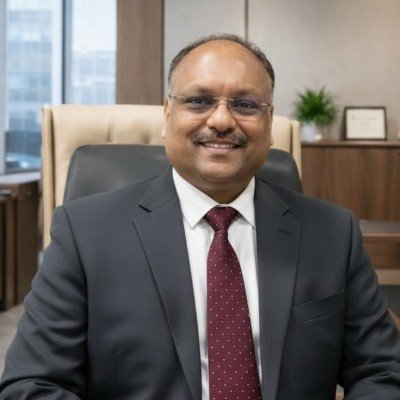
The NPCS project team, led by Ajay Kumar Gupta
This page and its sample report are prepared and reviewed by the NPCS project team, which has written techno-economic feasibility studies and detailed project reports since 1994.
Ajay Kumar Gupta founded Niir Project Consultancy Services (NPCS) and leads the organisation. With 40 years of experience in MSME project consulting, he has built the team that has delivered more than 28,000 project reports for clients worldwide, helping entrepreneurs plan and finance profitable manufacturing businesses.
- Published
- Last updated
- Next review
- Oct 2027
- Reviewed by
- NPCS project team
This page is reviewed every 12 months, or sooner when scheme limits, GST rates, BIS rules or pollution categories change. The sample report is illustrative: its figures are generated from industry-typical ratios for a unit of this size, checked so every statement balances, and are not taken from any client project.