
What is a m s billets project report?
An M S billets project report is a detailed project report (DPR) for a plant that melts sponge iron and steel scrap in an induction furnace and casts the liquid steel into square mild steel billets. It covers the process, machinery, charge mix, BIS and environmental approvals, project cost, five-year projections, DSCR and break-even.
Promoters use it to size the furnace and casting machine and to apply for a term loan; banks use it to judge whether thin billet margins can still repay the loan.
Also known as: MS billet project report, project report on MS billets, induction furnace billet plant DPR, M S billets business plan, mild steel billet plant report.
M S billets project report: plant cost and economics
The sample report models an induction furnace and billet caster making 32 MT per day, or 10,560 MT a year over 330 days. Utilisation starts at 60% and reaches 80% in Year 5, and billets are priced at ₹42,200 per MT before GST.
Billet making is a high-turnover, low-margin business. In the sample, raw materials take 70.2% of sales, operating profit is 9.3% of sales in Year 3 and net profit is ₹114.74 lakh on sales of ₹3,119.42 lakh.
| Land and site development | 44.89 |
|---|---|
| Building and civil works | 212.76 |
| Plant and machinery | 371.63 |
| Other fixed assets | 31.07 |
| Contingencies | 29.22 |
| Preliminary and pre-operative | 17.24 |
| Working capital margin | 97.12 |
| Total | 803.93 |
| Promoter's contribution (25%) | 200.98 |
|---|---|
| Term loan from bank (75%) | 602.95 |
| Cash credit limit (separate) | 291.35 |
| Total project cost | 803.93 |
Term loan at 10.5% with a 6-month moratorium and 54 monthly instalments; lowest yearly DSCR 1.22. All figures are illustrative. Larger plants of 100–200 MT per day cost an indicative ₹30–60 crore.
M S billets manufacturing process
Small and mid-size plants make MS billets by melting a sponge iron and scrap charge in a coreless induction furnace and casting it on a continuous casting machine (CCM). One heat, from cold charge to cut billets, takes a few hours.
- Charge preparation
Sponge iron, scrap and pig iron are sorted and weighed to a charge ratio set by the target carbon and sulphur.
- Melting
Heavy scrap goes in first to form a liquid heel, then sponge iron is fed steadily so it melts into the bath instead of floating.
- Deslagging
The gangue in sponge iron forms slag, which is raked off the surface before tapping.
- Chemistry correction
A sample is checked on the spectrometer, and silico manganese or ferro silicon is added to bring carbon and manganese into range.
- Tapping and deoxidation
Liquid steel is tapped into a preheated ladle and killed with aluminium so the billets are free of gas holes.
- Continuous casting
Steel flows through a tundish into water-cooled copper moulds, and spray cooling solidifies a square strand, commonly 100 mm to 150 mm across.
- Cutting and inspection
The strand is cut to length, cooled on a bed, checked for cracks and stacked by heat number for traceability.
Induction furnace with CCM, or ingot casting?
The route decides product quality, yield and who will buy from you. Most new small and mid-size billet plants choose the first option below.
| Induction furnace with CCM | Continuous square billets with even section and fewer surface defects. Higher machinery cost than ingot moulds, but better yield and the product most re-rollers ask for. |
|---|---|
| Induction furnace with ingot moulds | Lower investment and simpler to run, but more scrap in end crops, rougher surfaces and a smaller set of buyers. Many older units are adding a CCM for this reason. |
| Electric arc furnace | Can refine the bath, so it tolerates poorer scrap, but it needs a much larger plant and investment than most first-time promoters plan for. |
| Hot charging to a rolling mill | Sending hot billets straight to an attached re-rolling mill saves reheating fuel. It suits promoters who plan to make TMT bars as well. |
Why charge quality matters: an induction furnace melts what you put in and does little refining. Phosphorus and sulphur in the sponge iron and scrap largely end up in the billet, so buying discipline is quality control.
Raw materials for MS billets: the charge mix
Sponge iron is the largest raw material cost in the sample. A higher sponge iron share gives cleaner steel but more slag and longer melting, while more scrap melts faster but brings tramp elements. Units fix the mix heat by heat as prices move.
| Raw material | Share of cost | Year 3 (₹ lakh) |
|---|---|---|
| Sponge iron (DRI) | 55% | 1,204.33 |
| MS melting scrap | 30% | 656.90 |
| Pig iron | 6% | 131.38 |
| Ferro alloys (silico manganese and ferro silicon) | 6% | 131.38 |
| Aluminium, carbon raiser and fluxes | 3% | 65.69 |
| Total | 100% | 2,189.68 |
Machinery for an MS billet plant
The induction furnace with its power panel is the largest single item, followed by the billet caster. Together they are about 63% of plant and machinery in the sample.
| Machine | What it does | Sample cost (₹ lakh) |
|---|---|---|
| Induction melting furnace with crucibles | Melts the charge; crucibles are relined as the lining wears | 141.22 |
| Billet continuous casting machine | Casts liquid steel into a square strand | 92.91 |
| HT substation and furnace transformer | Takes the high-tension supply the furnace needs | 44.60 |
| EOT cranes and ladles | Carry liquid steel from furnace to caster | 37.16 |
| Fume extraction and pollution control | Captures furnace fumes for consent norms | 22.30 |
| Cooling tower and water circulation | Cools furnace coils and caster moulds | 14.86 |
| Spectrometer and testing laboratory | Checks chemistry each heat and supports BIS testing | 11.15 |
| Scrap charging buckets and magnet | Handle and charge scrap | 7.43 |
| Total plant and machinery | 371.63 | |
Costs are the sample report's estimates for a 32 MT per day plant. Get current quotations before you finalise.
Power, manpower and running costs
After raw materials, power is the biggest running cost of a billet plant, because the furnace runs on electricity alone. The tariff and reliability of the high-tension supply at your site matter as much as the price of sponge iron.
| Cost head | Share of sales | Year 3 (₹ lakh) |
|---|---|---|
| Raw materials | 70.2% | 2,189.68 |
| Power and fuel | 6.8% | 212.37 |
| Wages and salaries (77 people) | 5.9% | 183.43 |
| Selling and distribution | 3.1% | 96.86 |
| Administrative overheads | 3.1% | 96.89 |
The sample's 77 people are 12 in management and supervision, 27 skilled operators and 38 semi-skilled and unskilled workers, working round the clock in shifts.
BIS licence and approvals for an MS billet plant
Two approvals take the longest and should start as soon as the site is fixed: the BIS licence and, above 5,000 tonnes a year, environmental clearance.
| BIS licence | IS 2830:2012 (carbon steel cast billet ingots, billets, blooms and slabs for re-rolling) is listed under the Steel and Steel Products Quality Control Order, so these billets need the BIS Standard Mark |
|---|---|
| Environmental clearance | Non-toxic secondary metallurgical units above 5,000 tonnes a year are Category B under the EIA Notification and need prior clearance from the state authority |
| Pollution board consent | Consent to establish and operate from the State Pollution Control Board; steel melting is usually in the red category (Punjab, for example, lists secondary ferrous production above 1 MT per hour as red) |
| Power | High-tension connection sanctioned for the furnace load, with the substation approved by the state electricity authority |
| Factory and business registration | Factory licence under the Factories Act, Udyam (MSME) and GST registration, and fire NOC as the state requires |
Rules and categories differ by state. Confirm current requirements with BIS, the state pollution board and the state environment authority before you apply.
Who buys MS billets?
Billets are an intermediate product, so your customers are other mills. Demand follows the TMT bar and structural steel those mills sell to housing and infrastructure projects, and billet prices are quoted daily by region.
- Re-rolling mills making TMT bars and rebars
- Structural re-rollers making angles, channels and flats
- Wire rod mills supplying binding wire and nail makers
- Forging units, for billets of suitable grade
- Steel traders and stockists
Where a billet plant wins: buyers pay little premium for one maker's billets over another's, so profit comes from cheaper power, better yield and freight. A plant close to sponge iron suppliers and to re-rolling mills keeps both freight bills low.
Mistakes that weaken an MS billet project report
- Using a far-away market price
Billet prices differ between regional markets on the same day. Revenue must use the price at your plant gate, not the highest quote you can find.
- No melting loss
Sponge iron gangue, slag, spillage and cut ends all reduce yield. Projecting one tonne of billets from one tonne of charge overstates profit.
- Understating power
The furnace runs on power alone. A report that uses a low tariff or ignores demand charges and supply cuts will not survive a bank's review.
- Leaving out BIS and environmental clearance
Without the BIS licence the billets cannot be sold for re-rolling, and missing clearance can stop the plant. Both take time and cost money.
- Too little working capital
Sponge iron and scrap are often bought against advance, while mills expect credit. In the sample, receivables are the largest current asset at ₹329.65 lakh in Year 1.
How NPCS helps you plan an MS billet plant
- Furnace and caster sizingMatch furnace size, heats per day and caster strands to your power sanction and market.
- Charge mix and costingWork out sponge iron, scrap and alloy use, yield and power cost per tonne for your site.
- Bank-ready project reportProjections, DSCR, break-even and working capital in the format your lender wants.
- Approvals and layoutPlant layout, BIS, environmental clearance and pollution consent list for your state.
NPCS's client list shows 116 assignments in metal products. The NPCS project team, led by founder Ajay Kumar Gupta, has prepared project reports for steel and metal units since 1994.
What's inside the m s billets sample report
- Introduction
- Uses and applications
- Market potential
- Manufacturing process
- Raw materials
- Plant and machinery
- Land, building and utilities
- Manpower
- Licences and approvals
- Project cost and means of finance
- Working capital
- Projected profitability
- Cash flow statement
- Projected balance sheet
- Depreciation
- Term loan repayment
- Debt service coverage
- Break-even analysis
- Financial ratios
- Key assumptions
- Conclusion
- Monthly loan repayment schedule
19 pages, five-year projections, illustrative figures.
Open sample reportFree sample or a report for your project?
| What you get | Free sample | NPCS report for your project |
|---|---|---|
| Capacity and location | Typical unit | Your capacity, site and state |
| Figures | Illustrative | Built on current prices and quotations |
| Machinery suppliers and quotations | No | Yes |
| Market survey for your region | No | Yes |
| Bank or scheme format (PMEGP, term loan) | No | Yes |
| Use for a loan application | No | Yes |
Real NPCS m s billets project reports
These are m s billets project reports NPCS has prepared, with the plant capacity, total capital investment, rate of return and break-even worked out in each. Costs have moved since some were written, so we bring any of them up to date for your capacity and location.
| Project report | Plant capacity | Total investment | Rate of return | Break-even | Action |
|---|---|---|---|---|---|
| Aluminium Secondary Billet Casting | 21600 MT/Year | ₹20.2 crore | 43% | 63% | Get this report |
| M S Billets | M.S. Billets (Size 80x80 mm to 140x140 mm): 180 MT/Day | ₹33.43 crore | 28% | 63% | Get this report |
| Setting Up Mini Steel Plant (Billets and TMT Bar) | Steel Billets:150 MT Per Day (Size 100mm x 100mm to 180mm x 180 mm Sections of Max. 6 meter length)TMT Steel Bars (Rebar):150 MT Per Day (Si… | ₹104.17 crore | 28% | 37% | Get this report |
| Steel Billets and TMT Steel Bars (Rebar) from Scrap Metal | Steel Billets (Size 100mm x 100mm to 180mm x 180 mm Sections of Max. 6 meter length): 333.3 MT / Day TMT Steel Bars (Rebar) Size DB 8 to 40 … | ₹167.47 crore | 29% | 47% | Get this report |
| Billets From Steel Scrap BY Electric Furnace | 1785000 MT / Annum | ₹1124 crore | 45% | 52% | Get this report |
| Steel Project (IRON, Sponge Iron TO Billet TO RODS) | 1020000 MT/Annum Steel Round Section | ₹1175 crore | 46% | 54% | Get this report |
Figures as worked out in each NPCS report. Total investment includes plant and machinery, land and building, and working capital.
What clients say about NPCS
4.7
264 Google reviews, as of 20 Oct 2026
Clients most often mention
- feasibility reports 18
- project report 16
- helpful for startups 15
- detailed reports 8
-
Excellent experience with Niir Project Consultancy Services. Their Techno-Economic Feasibility Reports are incredibly detailed and backed by solid market data.
Piyush Singh, Google review, 2026
-
Niir Project Consultancy Services offers excellent guidance for business setup. Their market survey and feasibility reports saved us a lot of time and helped us make informed decisions. Highly recommended
Saroj Yadav, Google review, 2026 View on Google
-
In an era of information overload, NIIR stands out for its precision. Their technical consultancy and market feasibility studies are world-class.
Shrishti Gautam, Google review, 2026
-
NIIR Project Consultancy Services provides useful books and reports for students, entrepreneurs, and small businesses. Their content is easy to understand and focuses on practical ideas for starting and managing industries. Overall, NIIR is helpful for learning about business and project planning.
Raj Yadav, Google review, 2026
M S Billets project report: frequently asked questions
What is the cost of an MS billet manufacturing plant in India?
A small induction furnace plant with a billet caster making 30–50 MT per day needs roughly ₹7–15 crore. A 100–200 MT per day plant needs about ₹30–60 crore, including land, building and working capital margin. Our sample report models a 32 MT per day plant at ₹803.93 lakh. These are indicative figures; your project report prices your own capacity and site.
What raw materials are used to make MS billets?
Sponge iron (DRI) and melting scrap make up most of the charge, with some pig iron, ferro alloys such as silico manganese and ferro silicon, and aluminium for deoxidation. In our sample report sponge iron is 55% and scrap 30% of raw material cost. The mix depends on local prices and the carbon and sulphur limits of the grade.
What is the difference between an MS billet and an MS ingot?
Both are semi-finished steel for re-rolling. An ingot is cast in a fixed mould one piece at a time, while a billet comes out of a continuous casting machine as a square strand cut to length. Billets have a more even section and better surface, so most re-rolling mills prefer them and pay a little more.
Is an MS billet plant profitable?
It can be, but margins are thin. In our illustrative sample, a 32 MT per day plant earns a 14% return on investment in Year 3. It breaks even at 52% of capacity and pays back in about 4.6 years. Profit depends mostly on the gap between billet prices and sponge iron and scrap prices, and on power cost.
Is BIS certification mandatory for MS billets?
Yes, for billets meant for re-rolling into structural steel. IS 2830:2012 is listed under the Ministry of Steel's Steel and Steel Products Quality Control Order. These billets can be made and sold only under a BIS licence and Standard Mark. Plan the testing laboratory and BIS application into the project timeline before trial heats.
Does an induction furnace billet plant need environmental clearance?
Usually yes. The EIA Notification places non-toxic secondary metallurgical units above 5,000 tonnes a year in Category B, which needs prior environmental clearance from the state authority. Our sample plant makes 10,560 MT a year, so it would need it. You also need consent to establish and operate from the State Pollution Control Board.
Is the sample report free and can I use it for a loan?
The sample is free to view and download. It is an illustrative report that shows the format and depth of an NPCS report. Its figures are representative and not based on a real project, so it should not be submitted to a bank. For a loan, NPCS prepares a report for your own capacity, site, power tariff and lender.
Sources and references
- Steel and Steel Products (Quality Control) Order, 2019: intermediate products (IS 2830:2012 at entry 10)Ministry of Steel, Government of India, checked Oct 2026
- Lok Sabha unstarred question 3149: steel products under quality control ordersMinistry of Steel, Government of India, checked Oct 2026
- Notification S.O. 3250(E) on environmental clearance, citing item 3(a) metallurgical industries of the EIA Notification 2006Ministry of Environment, Forest and Climate Change (copy hosted by Uttarakhand Pollution Control Board), checked Oct 2026
- List of Red category industriesPunjab Pollution Control Board, checked Oct 2026
- Executive summary for an induction furnace and continuous casting billet expansionMaharashtra Pollution Control Board, checked Oct 2026
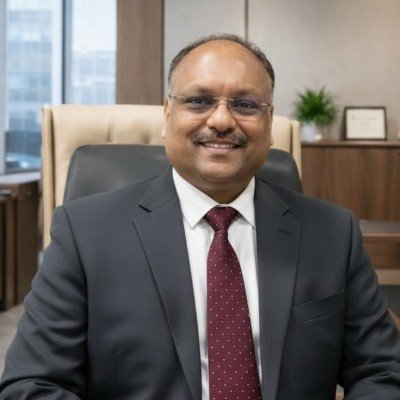
The NPCS project team, led by Ajay Kumar Gupta
This page and its sample report are prepared and reviewed by the NPCS project team, which has written techno-economic feasibility studies and detailed project reports since 1994.
Ajay Kumar Gupta founded Niir Project Consultancy Services (NPCS) and leads the organisation. With 40 years of experience in MSME project consulting, he has built the team that has delivered more than 28,000 project reports for clients worldwide, helping entrepreneurs plan and finance profitable manufacturing businesses.
- Published
- Last updated
- Next review
- Oct 2027
- Reviewed by
- NPCS project team
This page is reviewed every 12 months, or sooner when scheme limits, GST rates, BIS rules or pollution categories change. The sample report is illustrative: its figures are generated from industry-typical ratios for a unit of this size, checked so every statement balances, and are not taken from any client project.