
Introduction: Railway Scrap Business in India
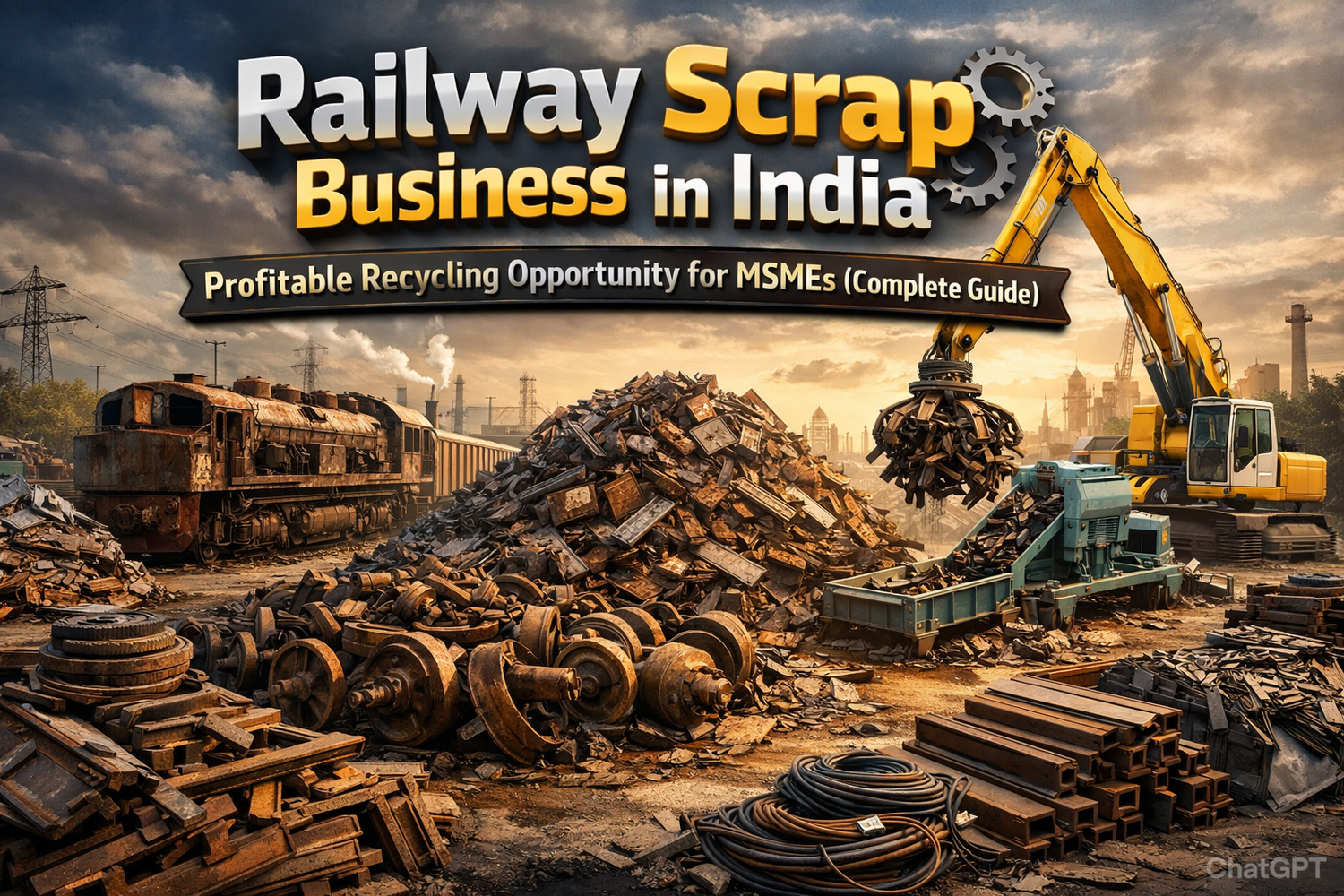
The way industries look at waste is changing in India as the country has been making a stride towards a circular economy. What once was considered as scrap is now treated as secondary raw material. One of the largest contributors to this shift is Indian Railways which operates one of the biggest railway networks in the world.
With the ongoing modernization works, track replacements and electrification works along with the rolling stock replacements, Indian Railways produces large volume of such recyclable materials every year. For MSME and first generation entrepreneurs this is a rare opportunity: a structured recycling business, which has institutional scrap supply.
Railway scrap recycling isn’t speculative. It is a volume-driven, system-based and backed by the long-term industrial demand.
Read More: Investment Opportunities In Infrastructure Projects
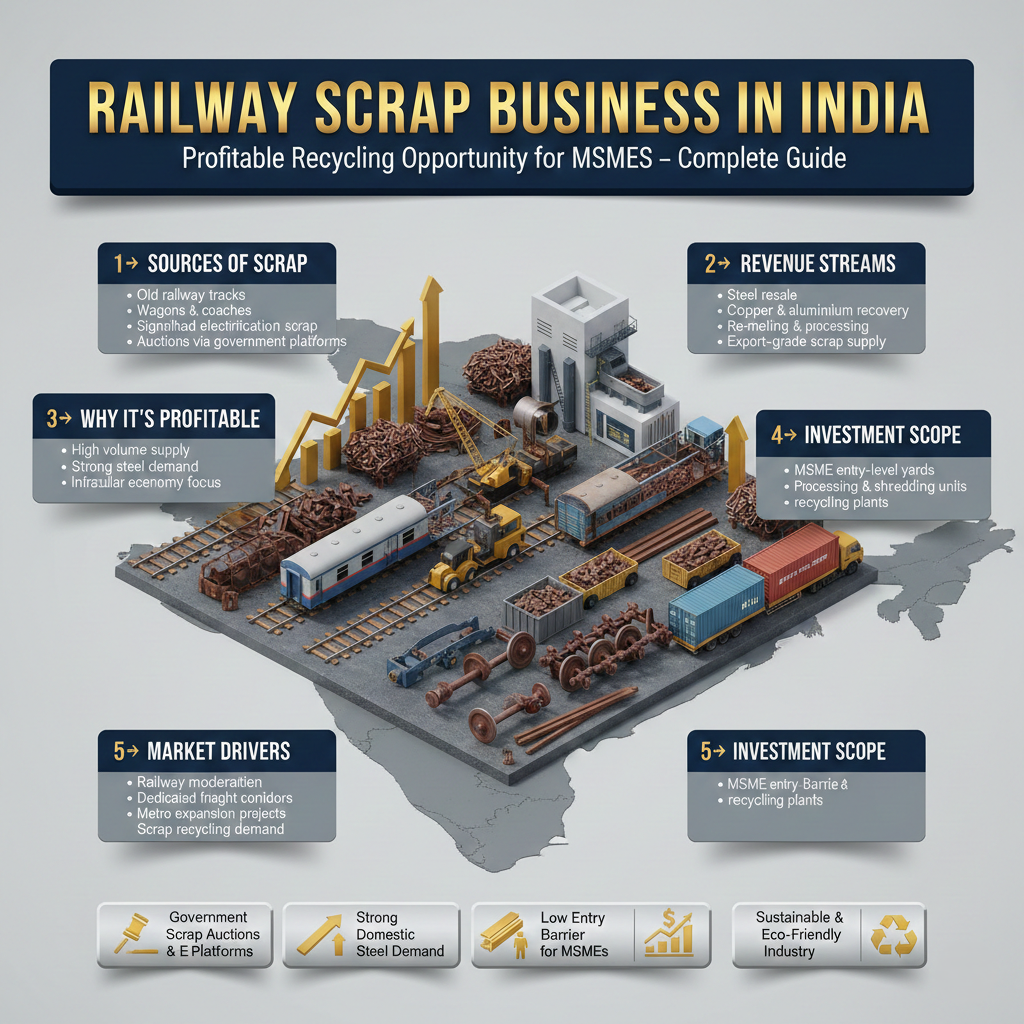
Indian Railways: A Strong Source of Recyclable Materials
Indian Railways is regularly replacing old infrastructure, equipment and infrastructure. This cycle naturally produces scrap that is responsible to process.
Major contributions to railway scrap are from:
- Old rails and steel structures, from track renewal
- Freight wagons and passenger coaches being condemned
- Electrification hardware and signalling systems
- Workshop and depot maintenance scrap
- Redevelopment of stations materials
Because these materials are produced through formal systems, the scrap is categorized, documented and disposed of via transparent mechanisms. The process reduces entrepreneur risk when they search for business partners.
Railway scrap markets provide three essential elements which establish operational reliability and business continuity whereas informal scrap markets lack these features.
Why Railway Scrap Recycling is a Low Risk MSME Opportunity
Recycling businesses are plagued by volatile supply and price changes. Railway scrap changes this equation. Since the process of modernization is continuous, the generation of scrap is continuous.
Key advantages include:
- Bulk and predictable availability of raw materials
- Standardized quality of metal and components
- Transparent auction based procurement
- Strong resale demand in construction and manufacturing
- Policy align with sustainability goals
Given the widespread use of recycled steel, aluminium, copper and aggregates as industrial inputs, the risk to demand is relatively low. This makes railway scrap recycling suitable for organized MSME investment.
Read More: India Glass Fibres and Glass Woven Fabrics Market
Profit Making Railway Scrap Recycling Business Ideas
Below are some practical and scale up business models associated with railway scrap:
1. Ferrous Scrap Processing & Secondary Steel Making
Old rails and wagons, and structural components are mostly made of high-grade steel. These materials can be cut, processed, and melted to produce billets and ingots for use in construction and engineering industries.
A typical ferrous recycling unit can contain:
- Scrap cutting and shearing machines
- Sorting and grading systems
- Induction furnace for melting
- set-up for casting billets or ingots
The infrastructure growth in India guarantees consistent demand for secondary steel. Since the steel used on railways is of high quality, it is a reliable raw material base.
2. Aluminium & Non Ferrous Metal Recycling
Electrification upgrades and coach refurbishments are sources of aluminum and copper scrap. These metals have higher value per tonne in comparison to ferrous scrap.
Recycling operations are able to produce:
- Aluminium ingots
- Copper granules
- Alloy cast components
Non-ferrous metal recycling generally requires less melting energy to be consumed than primary extraction, making it more cost-effective. Export demand from Asia and the Middle East region also helps in growth.
Read More: Ethanol as Biofuel – Manufacturing Plant, Detailed Project Report, Profile, Business Plan, Industry Trends, Market Research, Survey, Manufacturing Process, Machinery, Raw Materials, Feasibility Study, Investment Opportunities, Cost and Revenue
3. Concrete Sleeper & Construction Material Recycling
Railway track renewals generate old concrete sleepers and ballast material. Instead of being discarded, these may be crushed and reused in construction.
Output after processing may include:
- Crushed aggregates
- Road sub-base material
- Paver blocks
- Precast construction items
With the rapid road and infrastructure development in India, there is a good and stable demand for construction-grade aggregates.
4. Rubber & Polymer Scrap Recycling
Rubber pads, bushings, vibration dampers and polymer flooring materials are used in railway systems. Short life of these components guarantees recurrent scrap production.
Recycled products may include:
- Rubber granules
- Industrial mats
- Reprocessed sheets
- Bitumen modifiers for road construction
This segment takes a medium level of capital investment and caters for both domestic and industrial buyers.
5. Electrical & E-Waste Recycling from Railway Assets
Modernization of signalling systems and electrification systems produce electronic scrap. Authorized dismantling units are able to recover valuable metals and reusable components.
Recoverable materials often include:
- Copper
- Aluminium
- Small precious metal fractions
- Reusable electrical assemblies
With the electrification of more and more areas across the network, the generation of e-waste will continue to increase.(Railway Scrap Business in India)
Read More: Railway Infrastructure Boom: Manufacturing Business Opportunities for New Entrepreneurs
Market Demand and Growth Factors
The strength of railway scrap recycling is the good downstream demand. India’s construction, engineering, automotive and infrastructure industries consume huge amounts of processed materials.
Growth is driven by:
- Expansion projects of infrastructure
- Urban redevelopment
- Rising primary metal costs
- Regulations pertaining to sustainability
- Export Demand for Secondary Metals
Recycled materials are becoming accepted as cost effective and environmentally responsible alternatives to virgin materials.
Financial Viability and Investment Prospect
Investment requirements differ across the board. Small and medium scale recycling units can need moderate capital compared to steel melting plants which need larger infrastructure and machinery.
However, there are some financial advantages of recycling projects:
- Asset backed investment (machinery and inventory)
- Reduce volatility of raw materials
- strong working capital turnover
- Break-even period is normally 2-4 years
Banks are usually willing to finance recycling businesses because of the presence of tangible collateral and policy alignment with environmental goals.
Steps to Start Railway Scrap Recycling Business
Business setup of this type needs structured planning. Entrepreneurs have to get proper registrations, statutory approvals and pollution control clearances. Railway scrap auctions require participants to complete both documentation and compliance processes.
Key steps include:
- Registration of MSMEs and compliance with GST
- Permission from pollution control boards
- Securing land and utilities
- Procuring processing machinery
- Arranging Finance for working capital
- Building Buyer Network for processed output
Before making an investment decision, investors should conduct a complete techno-economic feasibility study.
Read More: Top Most Profitable Business Ideas for the Next 10 Years
Conclusion: From Scrap to Sustainable Profit
Railway scrap exists as industrial raw material which waits to undergo processing at recycling facilities. As India develops its circular economy regulations, organized recycling companies will become essential to the country’s waste management system.
Entrepreneurs who combine institutional scrap sourcing with disciplined financial planning can build scalable and profitable ventures. Railway scrap recycling provides three advantages which permit continuous supply, uninterrupted demand, and governmental backing.
For MSMEs which want to establish permanent business operations, this sector offers a vital link to sustainable manufacturing practices which will shape the future.(Railway Scrap Business in India)
Frequently Asked Questions (FAQ)
Q1. Is railway scrap available to MSMEs?
Yes. Scrap is disposed of through transparent institutional systems open to authorized buyers.
Q2. What is the minimum investment required?
Investment depends on the business model. Small recycling units require moderate capital, while melting plants need higher investment.
Q3. Is demand for recycled materials stable?
Yes. Construction, infrastructure, and manufacturing industries continuously absorb recycled metals and materials.
Q4. Can recycled products be exported?
Yes. Aluminium ingots, copper granules, and processed scrap have established export markets.
Q5. Are recycling businesses profitable?
Profitability depends on efficiency and scale, but margins can be attractive due to lower raw material costs and strong demand.
Q6. Do banks finance such projects?
Yes. Recycling projects are asset-backed and aligned with sustainability initiatives, making them suitable for term loans.(Railway Scrap Business in India)