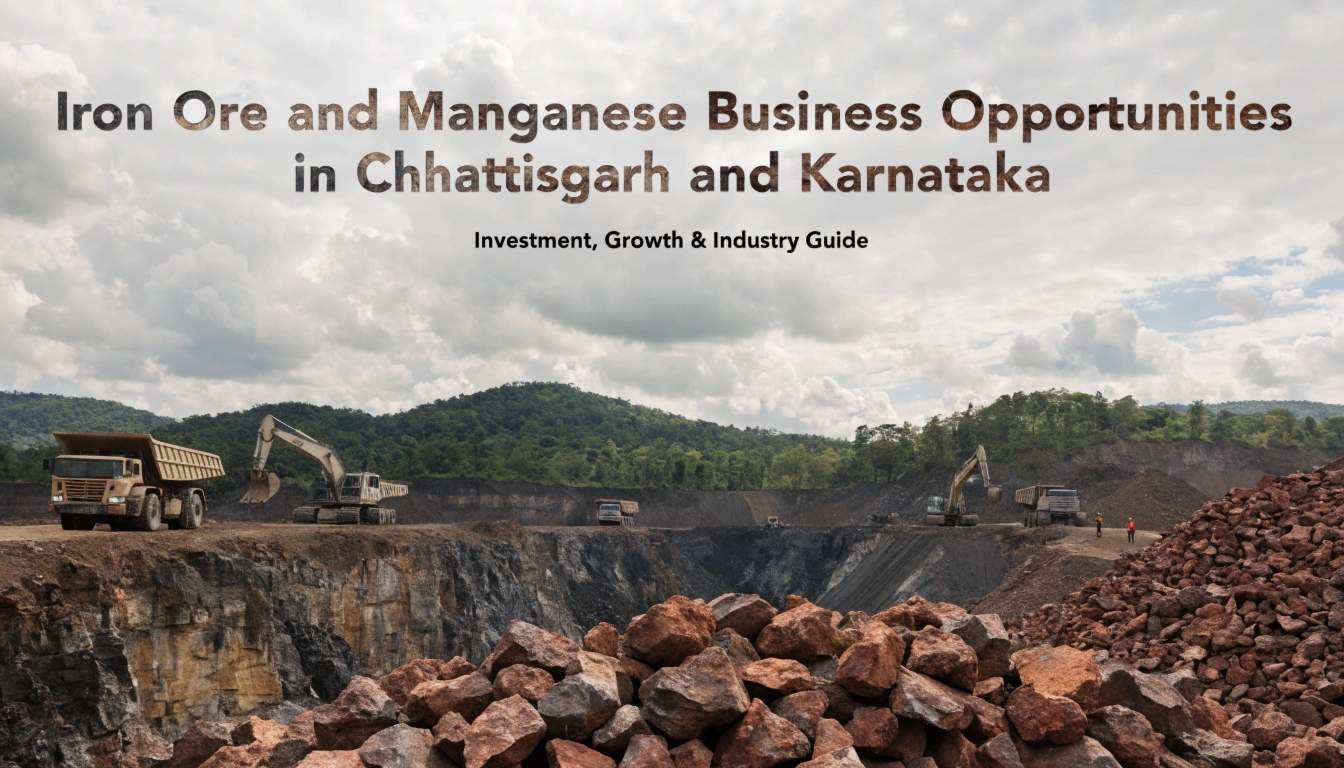

Iron Ore and Manganese Business Opportunities in India
India’s mineral and steel industry is moving on to a new stage of industrial expansion, and two states are attracting the attention of entrepreneurs and investors more than ever – Chhattisgarh and Karnataka. These states are no strangers to the world of mining; they have well-established industrial ecosystems with iron ore, limestone and energy resources at their disposal. What makes them of special importance today is the rapid development of downstream industries like steel manufacturing, ferro-alloys and mineral processing units.
As the pace of infrastructure development is accelerating in India, there is an increasing demand for products based on iron and manganese. This trend is providing great opportunities for startups and medium-scale industries seeking to get into the mineral processing and steel value chain. Choosing the right location has been one of the most crucial decisions for the success of industries and Chhattisgarh and Karnataka have strategic advantages that few other regions can beat.
Get Detailed Insights from This Book: Complete Technology Book on Steel and Steel Products
Mineral Resource Strength Propelling Industrial Development
The strength of any mineral based industry is the availability of raw materials and supporting minerals. Iron ore alone cannot continue to produce steel without the presence of limestone and manganese. The production process remains efficient because the complementary minerals maintain their operation costs at stable levels.
India produces more than 460 million tonnes of limestone every year and Chhattisgarh and Karnataka both serve as major production centers for this material. Limestone is used in the production of steel as a flux to aid in the removal of impurities from the molten metal. Without consistent limestone supply, steel plants are faced with increased costs and less efficiency.
Manganese is also equally important because it increases the strength and durability of steel products. Even though some other states are at the forefront of manganese production, the industries in Chhattisgarh and Karnataka have access to well-developed transportation networks and are therefore able to access raw materials easily.
In modern industrial economics, the availability of supporting minerals is often the deciding factor on whether manufacturing operations can be sustained for the long term.
Why Chhattisgarh And Karnataka Are Good For Industrial Startups
From a business feasibility point of view, mineral-based industries need an integration of infrastructure, logistics, and access to markets. Both states fulfil such requirements well and offer a conducive environment to invest in industries.(Iron Ore and Manganese Business)
Some of the major advantages are:
- Stable supply of iron ore and limestone
- Availability of electricity and industrial land
- Strong rail and road connectivity
- Growing demand from nearby steel plants
- Governmental policies and incentives (such as:)-
Chhattisgarh enjoys central location and hence the industries have been making efficient distribution of the products to many parts of the country. Karnataka, on the other hand, has a good export potential, because of its proximity to ports and markets in the south.
Best Option: Access Complete Business Plan: Iron Ore Mining Business Plan and Feasibility Study
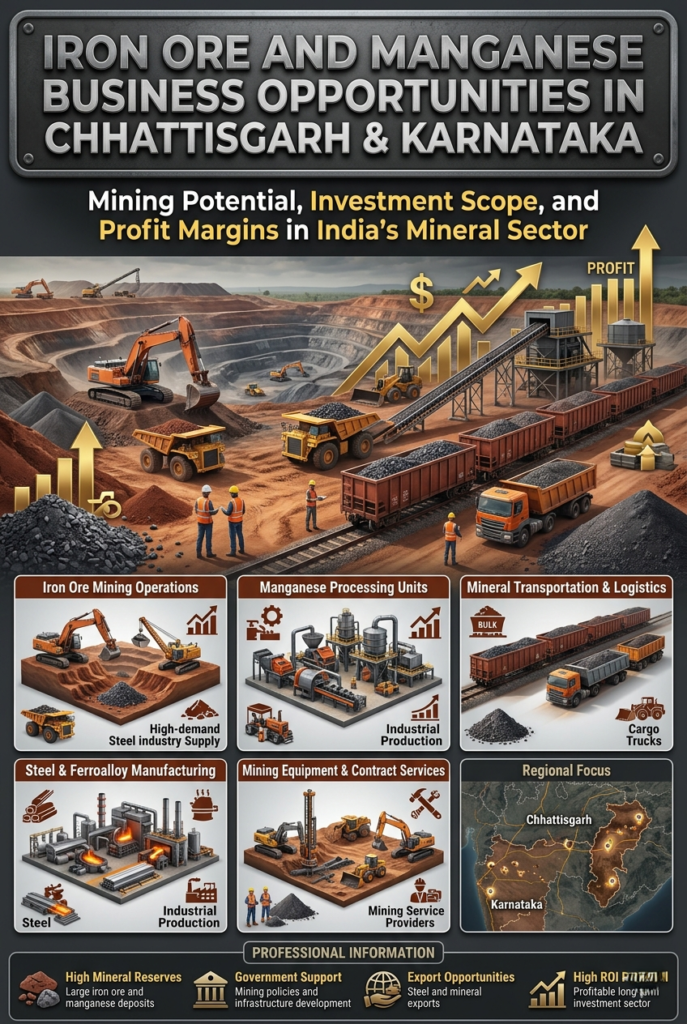
Business Opportunities with High Potential in Iron and Manganese Industries
A number of industries within the iron and manganese value chain are showing up as lucrative opportunities for entrepreneurs. These businesses are supported by a growing demand by construction, infrastructure, and manufacturing industries.
Iron Ore Beneficiation Plant
Iron ore beneficiation is gaining more importance as mining activities are producing more low-grade ore which need to be processed before they are used. Beneficiation enhances the quality of ore and adds more value to it in the market. The increasing demand for high-grade ore results in stable profitability for beneficiation plants because steel production needs continue to expand.
Pelletization Unit
Pelletization units transform iron ore fines into uniform pellets which serve as raw materials for steel production. This process helps to make the process more efficient and less wasteful, making it a vital component of modern steel production. Regions with high activity in mining like Karnataka and Chhattisgarh offer ideal situations for the functioning of pellet plants.(Iron Ore and Manganese Business)
Sponge Iron Manufacturing
Sponge iron production is one of the oldest industries in the Indian steel sector. The process involves the use of iron ore and coal to produce direct reduced iron, which is used as an important input in the production of steel. Chhattisgarh has emerged as a major sponge iron centre because it is close to coal mines and existing industrial infrastructure.
Find the most profitable startup for your investment range
Other Potential Opportunities
The states mentioned above have developed additional businesses that operate alongside their main industrial sectors:
- Ferro-manganese and silico-manganese production
- Steel rolling mills for construction materials
- Limestone calcination units lime production
- Refractory manufacturing, steel plants
- Industrial scrap recycling units
The industries benefit from stable demand patterns which create operational advantages when they link with other industrial sectors.
Factors Affecting Profitability In Mineral Based Industrial
The profitability of mineral-based industries is determined by efficient operations and cost management. Even if there is a strong demand, if things are not planned out properly, it can cut margins to a big extent. Entrepreneurs need to pay attention to the factors of operation before investing.
The following are the most important profitability drivers:
- Energy used per tonne of production
- Transport and logistics cost
- Quality and availability of raw materials
- In capacity utilization of machinery –
- Enhance market demand and pricing trends
Among these factors, energy and transportation costs are usually the biggest factors in overall profitability. Locations with better infrastructure and more compressed supply chain tend to do better financially.
Government Assistance and Industrial Policy
State governments in Chhattisgarh and Karnataka are taking an active interest in industrial development by providing incentives and infrastructure support. The policies aim to create manufacturing growth while generating new employment opportunities.
Industrial investors can benefit from a number of types of support including:
- Capital investment subsidies.
- Reduced electricity tariffs
- Assistance with land acquisition
- Tax incentives on new industries
- Infrastructure development programs
These incentives make it less risky for startups and makes new projects more financially feasible.
Related Article: Top 6 High Profit Manufacturing Business Ideas in India (2026)
Export Opportunities Market Growth
Global demand for steel and products made with minerals is still growing, especially in developing countries investing in infrastructure and construction. The Indian manufacturing sector can meet market demand because producers benefit from low production costs and bettering their logistics operations.
Karnataka’s sea route access to seaports is an obvious advantage for export-oriented industries while Chhattisgarh’s effective railway access allows proper transportation to sea ports in the east. Businesses where sales to domestic markets are combined with export operations are often more profitable and grow faster.
Conclusion
Chhattisgarh and Karnataka are emerging as the centre of the mineral-based industrial development in India. Their combination of natural resources, infrastructure and government support gives a strong foundation for sustainable manufacturing growth. Entrepreneurs who invest in industries like beneficiation, pelletization, sponge iron production and steel rolling can benefit from the growing demand and industrial activity.(Iron Ore and Manganese Business)
With the right planning and efficient running of operations, mineral-based industries in these states provide a great scope for long-term profitability and business growth.
Frequently Asked Questions (FAQ)
- Is Chattisgarh suitable for small scale steel projects?
Yes, the state is very suitable for sponge iron and steel rolling mills because of the availability of coal and the presence of existing industrial clusters.
- Is Karnataka better for export oriented industries?
Yes, Karnataka offers good export connectivity by ports and developed industrial infrastructure.
- What is the most profitable mineral based business in India?
Iron ore beneficiation, sponge iron production and steel rolling mills are some of the most profitable and stable options.
- How long does it take the mineral industries to payback?
Most projects pay back within three to five years based on efficiency and market demands.
- What is the greatest hazard of iron and manganese industries?
The greatest risks involve high energy costs, transport costs and volatility in raw material prices.