
Cannabis has been known in India since ancient times caught in the substance of Ayurveda’s traditions. The modern existence of Cannabidiol (CBD) oil is quite new in India, which has changed the wellness landscape in India. This industry develops at the confluence of modern science with traditions and premium legal systems.
In order to understand the oil industry of CBD in India, the analysis of its current position must be carried out under the law, reasons for its growth, the challenges they face, and future prospects. Wellness through natural remedies seems to be a typical reason for the growing tendency of people in India towards CBD oil.
Is CBD oil legal in India?
One main question asked around CBD concerns the legality of CBD. Although one usually knows that the CBD is legally valid, it does not seem to have detained it in India. The main laws on CBD include the 1985 and cosmetics and cosmetics Act.
The NDPS law is the main spine of Indian drug policies. This act is significant because it prohibits the sale and production of cannabis and resin, which are two main sources of tetrahydrocannabinol.
The leaves or seeds of the race are not exempt from the provisions. This then becomes a legal opportunity for CBD industry. The reason why CBD oil sold in India is made of cannabis sativa with a very low THC is that such oil is barely the subject of the NDPS Act.
If the THC concentration is not maintained very low, the product can be sold as legal CBD oil. The government generally allows the sale of CBD products with THC equal or below 0.3%. Therefore, the government is forbidden anything about it, even over 0.3%.
Production of Soft Gelatin Capsules (Softgel Capsules) Manufacturing Plant
This is how it works
For the production or selling of CBD oil in India, the person must obtain permission from the Ministry of Ayush. For the rest of the world, CBD oil would fall under Ayurveda. Companies cannot make wild statements about what the substance is doing; They usually say that this will help your body stay in balance.
Buying CBD oil is not something you can do anywhere. Usually it is necessary to obtain a prescription from an Ayurvedic physician. The purpose of this rule is to ensure that only people who are properly recommended use CBD oil. So if you need a product, it is a legal means of approval.
Understanding to Factors for CBD
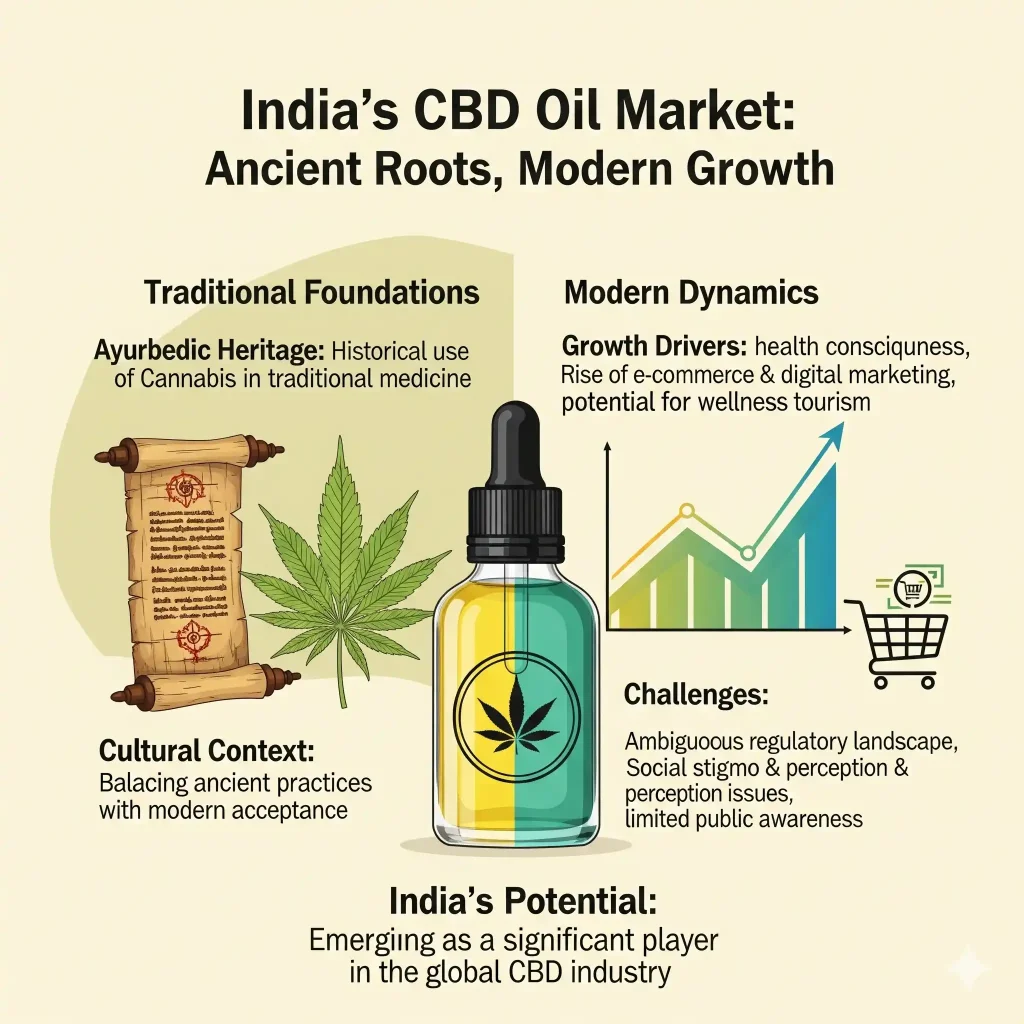
The factors of the growing boom of the Indian CBD market are mainly cultural changes, raising awareness and economic changes. This brought quite a stimulus to grow.
Today, CBD is everywhere, whether it is about sleeping, relaxation and pain relief. These wellness and influential blogger this start CBD simple.
It creates awareness in this mechanism of action between different levels of population. More and more people will try natural solutions that will heal them, as consciousness will constantly expand. Everyone is still looking for a way that eliminates any side effects in their lives.
At present, India is undergoing a holistic revolution. Urban consumer production is turned into deep expenses and time investment in well -being, especially between Millennials and Genzs. The progressive urban population moves through the proactive holistic wellness from only reactive care.
CBD has a sweet place in this demographic group because it is open to alternative therapies and plant accessories. CBD captures the imagination of individuals looking for organic, natural products that slightly pedal on an ecosystem with several side effects.
Your Guide to Starting a Low Investment Manufacturing Business
The rise of electronic trading
Today, the game changer in India is an electronic trade itself. With the rise of direct consumer sites and online platforms, CBD products come conveniently and discreetly to consumers.
Platforms represent tinctures, capsules, topical and food, while providing sufficient information about products and laboratory reports. The importance of digital availability in this regard cannot be overestimated because it overcomes the restrictions that represents a physical retail and addresses customers throughout the country.
Growing one -time income
With increasing one -time income there are more people who are willing to spend on products of new age and wellness.
Although CBD oil is not cheap, more people are willing to pay for quality, laboratory products that have already been shown to benefit physical health. I think this economic authorization is one of the most important market factors for growth.
Challenges faced by the Indian industry CBD
There are challenges, but the Indian CBD market flourishes the same way. These obstacles are influenced by each participant in the supplier chain: manufacturers, retailers and consumers.
The biggest obstacle is ambiguity in legal and regulatory frames. There is an existing legal framework, but is complicated, ambiguous and is subject to uneven use. Such gray areas are generally considered to be the best discouraging resources for investors and can enter businesses that are trying to function legally.
The Trump Tariffs – How Indian Startups Can Survive and Thrive in the New Trade Era
Lack of clearly current instructions for production, marketing and labeling makes adherence to regulations in terms of brands. This would create a lack of trust among consumers.
Lack of standardization and quality control is another major problem. There are many products on the market, but they are not all created the same. On an unregulated market, some brands can sell products that contain inaccurate CBD concentrations, non -reported THC levels and contaminants such as heavy metals or pesticides.
This is a serious risk for consumers. Some brands offer third -party laboratory reports (analysis certificates) dealing with this problem, but not all consumers are aware of them.
The stigma, which is associated with cannabis, remains a barrier. Cannabis is still associated with recreational drug use for many people. It is difficult to talk about the therapeutic value of CBD and other non-psychoactive substances because this perception exists. Extensive educational and awareness of the distinction of wellness derived from cannabis from illegal marijuana are needed to overcome this deeply rooted stigma.
Competition from unregulated markets is a threat to legitimate companies. Non -allowed CBD products can be cheaper, but they are not guaranteed to be safe or effective. It is not only cheaper for license producers, but also threatens consumers. This could lead to negative experience and damage to the reputation of industry.
Read Our Book: Click Here
The future is green: What will be for CBD in India?
The future of CBD oil in India is extremely promising. This branch industry is expected and subjected to several exciting changes.
We can expect clearer and more supportive regulations. The government is likely to introduce effective regulations because it recognizes the therapeutic and economic potential of cannabis. States such as Uttarakhand, Uttar Pradesh and others have taken measures to support cannabis agriculture. National policy would unlock the potential of this market and at the same time ensure the quality and protection of consumers.
Read Our Project Report: Click Here
A new wave of domestic and international players is likely to enter the market. More entrepreneurs and established wellness companies will enter the market, as the legal environment will be clearer. Increased competition will lead to innovation, wider range of products and perhaps lower consumer prices.
Product innovation is the main topic. While tinctures remain the most popular form, we should expect to see more products such as sophisticated topical substances and a gourmet food. We can also expect to see CBD products for pets. Research and development is aimed at creating formulations that have increased biological availability and target effects.
Education of consumers is paramount. Brands, healthcare professionals and media must continue to cooperate on marijuana destigmatization, educate the public about the differences between CBD and THC and seize consumers for a well -informed selection. CBD will be accepted and integrated into wellness routines as knowledge increases.
Conclusion: The market of the peak size
The Indian CBD oil market is one of the most dynamic and fastest developing industries in the world. The CBD oil market in India is a dynamic and rapidly developing sector. It balances ancient traditions, modern requirements and complex legal frameworks.
Although challenges, such as regulation, quality and social stigma, still exist, growth drivers – growing health consciousness, growing disposable income and digital trade – are undeniably strong.
The market is on the verge. India, with its clearer regulations and continued education of consumers, is in a good position to be the main player in CBD and provide millions of natural ways of health and well -being.
CBD oil market in India: Frequently asked questions (FAQ)
Q1. Is it legal to buy CBD oil in India?
Yes, you can buy CBD oil in India. The oil must come from hemp leaves and should have less than 0.3% THC. Most stores sell it as an Ayurvedic wellness product. Sometimes you need a prescription from an Ayurvedic doctor.
Q2. What is the difference between CBD and THC?
CBD and THC come from cannabis plant. THC causes people to feel “high”. CBD you don’t feel high. People use CBD for health reasons such as pain and stress.
Q3. Will the use of CBD oil are displayed in a drug test?
Most drug tests are looking for THC, not CBD. If you use CBD oil with zero or very little THC, you should be fine. CBD oil with full spectrum has a small amount of THC. If you use a lot, it may appear in the drug test.
Q4. How can I choose safe and high quality CBD oil?
Buy CBD oil from brands that explain where and how they can do it. Always check the laboratory message called Certificate of Analysis (COA). This message shows how much CBD and THC are in oil. This also proves that the oil is safe and clean.
Q5. Are there any side effects of CBD oil?
Most people have no problems with CBD oil. Some may feel sleepy, have a dry mouth, eat less or get diarrhea. Start with a small amount. Talk to your doctor before using it.