UDetailed Project Report (DPR)
The Document That Decides Your Fate with the Bank
The project report is the sticking point in 94% of cases of small business loans being denied by Indian banks. Not the credit score! Not the collateral. The project report.
This Detailed Project Report (DPR) bridges the gap between a businessman’s idea and the funding needed to turn it into reality. Banks use it to determine sanctions. Utilized by government agencies to disburse subsidies under various schemes such as PMEGP, SFURTI, PLI, etc. It is used by the State industrial departments to parcel out industrial estate land.
However, most first-generation founders treat it as a formality and put it in place only after completing all the actual work. It’s the other way around, isn’t it? A DPR isn’t a summary of your plan, it’s your plan. If you do it properly, you will engage directly with the reality of the numbers: how much it costs to buy the machines, what margins look like when your machines operate at only 60% capacity, when the business breaks even, and how much costs increase if raw material prices rise by 15%.
If you do not do it right, you could lose the loan—or worse, secure funding for a project that should never have been approved. As per the data from the MSME ministry, as of now more than 63 lakh Udyam registrations have been done but the most important factor that is a hurdle for the first time entrepreneurs is access to formal credit.
Related Article: 50 Powerful Business Quotes by Indian Entrepreneurs That Can Transform Your Success
Why Most DPRs Fail — and the Cost of Getting It Wrong
The DPR issue in India has two aspects. The first is a lack of quality. A significant number of DPRs prepared for MSME loan applications are thin documents, which duplicate the industry averages without local analysis. Thousands have been seen by banks; they can recognise a generic report within 2 minutes.
The second is that awareness is lacking. There are many promoters who have feasible project ideas in several states including Jharkhand, Chhattisgarh, Odisha, north-eastern states and are unable to access qualified consultants. They either don’t go through the DPR process at all or consult with unlicensed preparers who prepare documents that don’t meet regulatory standards.
The results are quantifiable. The annual report on priority sector lending by the Reserve Bank of India indicates that credit allocation for the micro and small enterprises is always short of the targeted figures; not due to lack of money, but because there are not that many bankable projects. The key that transforms a good idea into a viable business is a credible DPR.
It’s a much bigger deal with scheme-linked financing. PMEGP — the Prime Minister’s Employment Generation Programme, under Ministry of Information, Culture and Tourism, Government of India, has laid rigorous standards on the format of DPRs before disbursing any subsidy. Fund recovery notices have been sent to projects that don’t have a compliant DPR. Not only can a poor DPR mean rejection of an application, it can mean legal and financial liability.
The gap is not only a gap, but it’s a structural gap. India has to create hundreds of thousands of qualities DPRs annually to keep pace with the formation of the MSMEs and the availability of competent project consultancy has not been in tune.
Table 1 — Sections Inside a Standard DPR: Contents & Depth
| # | DPR Section | Key Contents | Typical Pages |
| 1 | Executive Summary | Project overview, promoter details, product description, capital cost, IRR | 4–6 |
| 2 | Market & Demand Analysis | Market size, growth trends, competition mapping, import-export data, demand forecast | 12–18 |
| 3 | Technical Feasibility | Manufacturing process, machinery list, plant layout, utilities, capacity utilisation | 15–25 |
| 4 | Financial Projections | CapEx, OpEx, revenue projections at 60% & 100% capacity, P&L, cash flows, IRR, NPV | 20–30 |
| 5 | Raw Material & Supply Chain | RM specifications, suppliers, annual consumption, procurement strategy | 6–10 |
| 6 | Manpower & Organisation | Staff structure, skill requirements, salary schedule, recruitment plan | 4–6 |
| 7 | Statutory & Legal Framework | Licences, NOCs, zoning, environmental clearances, applicable acts | 5–8 |
| 8 | Risk Analysis | Sensitivity analysis, break-even, SWOT, mitigation strategies | 4–6 |
Why This Matters Now: Policy, Credit, and the MSME Moment
The DPR is more relevant than ever before today because of a few factors.
For one, the credit line is growing. The Credit Guarantee Fund Trust for Micro and Small Enterprises (CGTMSE), a joint initiative of SIDBI and the Ministry of MSME, has increased its guarantee cover from ₹2 crore to ₹5 crore per borrower. This provides an opportunity for medium-sized manufacturing enterprises to achieve projects that were previously unable to provide enough collateral. However, all applications must still have a bankable DPR in place to meet the requirement.
Secondly, there is a requirement for detailed techno-economic feasibility documentation as a pre-condition for claiming incentives under the Production Linked Incentive (PLI) schemes across 14 sectors from food processing to specialty chemicals. This is clearly mentioned in the scheme guidelines by the Department for Promotion of Industry and Internal Trade (DPIIT). If there is no DPR you won’t be able to avail PLI benefits.(Detailed Project Report (DPR))
Third, states are increasingly linking industrial policies to the submission of validated DPRs to release capital subsidies, grant stamp duty exemptions, and provide power tariff rebates. DPR submission is a gateway trigger in the RIPS policy of Rajasthan, industrial investment policy of Tamil Nadu and industrial development incentives of Gujarat.
Demographic tailwind is a reality. Udyam has been adding about 12-15 Lakhs of new MSMEs to the database annually. Each is a possible requirement for the DPR. SFURTI’s cluster-development programs, rural non-farm employment schemes, and that’s just to name a few, and the need for quality project reports is outstripping supply.
Get Detailed Project Report (DPR): Project Reports & Profiles
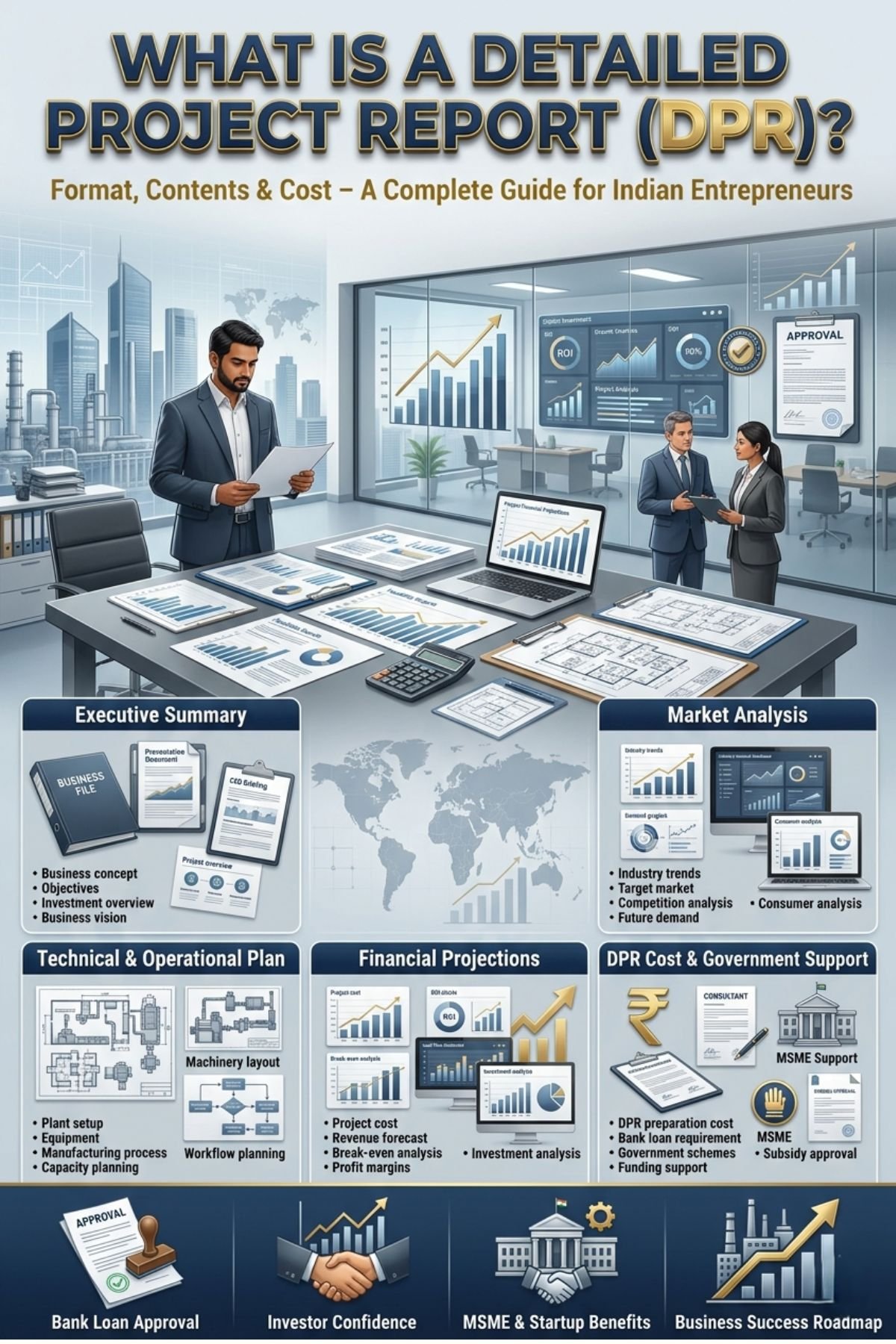
Table 3 — Government Schemes That Require a DPR for Eligibility
| Scheme | Nodal Agency | Max Loan / Subsidy | DPR Requirement |
| PMEGP | KVIC / Banks | ₹50 lakh (mfg) | Mandatory — prescribed format by KVIC |
| MUDRA – Tarun | SIDBI / Banks | ₹10 lakh | Bank-specific DPR format required |
| CGTMSE | SIDBI + Banks | Guarantee up to ₹5 crore | DPR required by lending bank |
| PLI Scheme | Ministry-specific | Incentive on incremental sales | Detailed techno-economic report mandatory |
| SFURTI | KVIC / MSME Ministry | ₹10 crore per cluster | Cluster DPR with SPV details required |
| Stand-Up India | SIDBI | ₹10 lakh – ₹1 crore | Bankable DPR with financials mandatory |
| ASIDE / State Industrial Policy | State MSME Dept. | Varies by state | DPR required for land allotment & subsidy |
What a DPR Must Contain: The Non-Negotiable Structure
A DPR is not an American start-up business plan. The institution will review this document for legal, technical, and financial considerations. The standard format adopted by Indian banks, SIDBI, and government agencies requires eight basic sections.
Start with the Executive Summary. Bank officers read this section first; it is typically 4–6 pages long. It has to include the promoter’s qualifications, the product, the total cost of the project, the sources of financing the project, the IRR, and the payback period — all in one place. The executive summary is the most important part of the document. If a document is poorly written, readers rarely read the rest of it carefully.(Detailed Project Report (DPR))
This is where most DPRs get it wrong – in the Market and Demand Analysis section. It must contain primary demand information by the target geography, and not the national level averages taken from a report by the industry association. List the competitor(s) by name, as applicable. If the company is still importing the product, emphasize the importance of import substitution. Use the data from any appropriate source such as the Office of the Economic Adviser, CMIE or the appropriate commodity board.
Get Detailed Insights from This Book: Select & Start Your Own Industry
The Technical Feasibility chapter includes manufacturing process flow, specification of the machinery, plant layout, power requirement, water requirement and effluent treatment (if applicable). Document Good Manufacturing Practice (GMP) compliance here for food or pharmaceutical units.
The Financial Projections section is the most important part of the DPR. It should contain such items as a detailed capital expenditure program, operating cost estimates monthly for three years, revenue estimates at 60% and 100% capacity utilisation, a profit and loss statement, a cash flow statement and break-even analysis. For bank appraisal, we will compute the IRR and NPV using at least a 12% discount rate.
The other mandatory sections include raw material sourcing, annual requirement, manpower and organisation structure, statutory licence and regulatory approvals, and risk sensitivity analysis. Novice preparers often leave out the risk analysis section of a document, raising a red flag during the bank’s appraisal stage.
Licences and Approvals That Must Appear in the DPR
Eligible MSMEs can take advantage of this opportunity to complete their Udyam Registration, which helps classify them as MSMEs and is available free of cost on the Udyam portal.
- ST Registration (required for supplies subject to tax)
- External Registration (for factories with 10 or more employees operating with power)
- DSPCB (State Pollution Control Board) – Pollution NOC (for manufacturing units)
- Demonstration of capacity for the industry (e.g. steel, cement, electrical goods etc. notified products)
- Food Safety Standards Authority (FSSAI) Licence (for any food grade product or by-product)
- Fire NOC from State Fire Department (for storage-heavy or chemical units)
- A trade licence issued by the local authority.
The time taken for a small-scale unit and first draft DPR is 10-20 working days and 35-60 working days for medium to a large project. The time taken after submission is bank appraisal and sanction, which takes another 30-90 days depending on the bank.(Detailed Project Report (DPR))
Table 3 — Cost of Preparing a DPR by Project Size
| Project Scale | Project Cost (INR) | DPR Preparation Cost (INR) | Turnaround Time |
| Micro / Cottage | Up to ₹25 lakh | ₹15,000 – ₹35,000 | 7–10 working days |
| Small Unit (MSME) | ₹25 lakh – ₹2 crore | ₹35,000 – ₹1,20,000 | 10–20 working days |
| Medium Unit | ₹2 crore – ₹10 crore | ₹1,20,000 – ₹3,50,000 | 20–35 working days |
| Large Industrial | ₹10 crore – ₹50 crore | ₹3,50,000 – ₹8,00,000 | 35–60 working days |
| Mega / Group Project | Above ₹50 crore | ₹8,00,000 – ₹25,00,000+ | 60–120 working days |
| Scheme-Linked DPR (PMEGP/SFURTI) | As per scheme ceiling | ₹20,000 – ₹75,000 | 10–15 working days |
Financial Snapshot: What a DPR-Backed Project Looks Like
To make this analysis meaningful, assume that the company operates as a medium-sized agro-processing unit, a category that PMEGP and MSME applicants most frequently seek loans for. Typical financial profile of a 1000kg/day groundnut oil expeller unit in Rajasthan or Gujarat would be as follows:
- Working capital margin: ₹46 lakh – ₹66 lakh (capital expenditure)
- Monthly operating cost at 70% capacity: ₹18 lakh – ₹22 lakh
- Monthly revenue at 70% capacity: ₹26 lakh – ₹30 lakh
- Gross margin: 28–34%
- After debt service net profit margin: 12 – 16%
- Estimated Payback Period: 3.5-5 years
These figures are central estimates. The actual margin will vary based on the raw material cost at the time of purchase, the local electricity cost and the percentage of branded versus volume sales. Before all of these are spent, they go through a stress test in the DPR.
The financial model should reflect how additional paddy or groundnut price increases impacts net margin or maintaining capacity utilisation at 60% during the first two years if the preparer wants to do this for the DPR. A positive forecast: a DPR that only models the optimistic case is a burden, not a help.(Detailed Project Report (DPR))
Turn your budget into a successful business plan
Entrepreneur Spotlight
Ramesh Patel, District Anand, Gujarat
Ramesh is the owner of a small dairy processing unit whose annual turnover is around ₹3.2 crore. He applies twice to the bank for a loan before he brings a professional DPR consultant around for his third application. Therefore, the funded DPR contained a detailed schedule of procurement of milk from the cooperative societies of the districts of Anand and Kheda, competitive price benchmark against the retail margin of Amul and a risk section for seasonal fluctuation in milk prices. The loan was sanctioned within 45 days. His one lesson is that the financial model in your DPR has to tell the bank how you will go the worst month and not the best year.
Where to Get a Credible DPR Prepared
Niir Project Consultancy Services (NPCS) is a consultancy firm based in New Delhi with 45+ years of experience and ISO 9001:2015 certified, specializes in providing Detailed Project Reports, techno-economic feasibility studies and plant layout designs in over 50 manufacturing industries that are acceptable to banks for loan applications and government schemes. The NPCS reports follow the Indian institutional appraisal format and include all eight required sections, along with sector-specific financial models and regulatory compliance checklists. Sample reports, consultancy requests are available at niir.org and entrepreneurindia.co for entrepreneurs. More details regarding project planning, scheme eligibility and manufacturing investment are available on entrepreneurindia.co.
The Immediate Next Step
Don’t use DPR as a window dressing. It’s the most used document you’ll prepare as a manufacturing entrepreneur — making or breaking the interest of any institution in taking your project seriously.
For ideation – hire a preliminary feasibility note before investing capital. It is much less expensive than the entire DPR, and provides you with an answer within two weeks of whether or not your cost and revenue assumptions are defensible.
In the case of application for scheme linked loan (SLL) under PMEGP / SFURTI/ Stand-Up India: Don’t use a DPR downloaded from internet in a template format. It is common for you to see these documents every day on the bank’s appraisal officers. The scheme compliant, site-specific DPR prepared by a qualified consultant cannot be an option; it’s the difference between sanction and rejection.(Detailed Project Report (DPR))
Practical Starting Point The actual take-off: log on to niir.org , see in which category your business will best fit into, find out a typical sector DPR looks like before even going for a meeting to the bank.
Frequently Asked Questions
Q1. How much does a DPR cost to prepare?
The cost ranges from ₹15,000 for a micro-unit PMEGP application to ₹25 lakh or more for a large industrial project requiring environmental impact assessment and multi-location plant layout. For most small manufacturing units in the ₹25 lakh – ₹2 crore project size range, expect to pay ₹35,000 – ₹1,20,000 for a professionally prepared report. The cost is typically 0.1%–0.5% of total project cost.
Q2. What licences must be mentioned in a DPR for a manufacturing unit?
Minimum: Udyam Registration, GST registration, Factory Licence (where applicable), Pollution NOC from State Pollution Control Board, Any specific product-related certification like BIS, FSSAI. Food-grade units will also need to provide documentation supporting GMP certification. DPR should document the approvals, their current status, and the target dates for obtaining clearance.
Q3. Is a DPR mandatory for all bank loans?
For MSME loans below ₹10 lakh (MUDRA Shishu and Kishor categories), banks may accept a simplified project summary. Above ₹10 lakh — and especially for manufacturing units — a formal DPR is mandatory. For scheme-linked financing under PMEGP, SFURTI, Stand-Up India, and CGTMSE, a full DPR is non-negotiable regardless of loan amount.
Q4. How long does it take to prepare a DPR?
A professionally prepared DPR for a small-scale unit (project cost under ₹2 crore) takes 10–20 working days from data collection to final delivery. Medium and large projects require 35–60 days. You can sometimes complete scheme-specific formats (PMEGP, KVIC) in 7–10 days when all promoter data is available upfront.
Q5. Can I prepare a DPR myself without a consultant?
Technically yes — for very small loan applications. But a self-prepared DPR rarely survives bank appraisal for loans above ₹10 lakh. Banks and government agencies look for specific financial modelling, regulatory compliance mapping, and market data sourcing that requires sector expertise. The SIDBI website has guidelines on what a bankable project report must contain.
Q6. Where can I get a DPR prepared for a government scheme application?
NPCS prepare the DPRs in Scheme Format for the PMEGP, SFURTI, PLI & STATE INDUSTRIAL POLICY Application in over 50+ Sectors of manufacturing. Reports are prepared at niir.org. For sector-specific market intelligence and investment guidance, entrepreneurindia.co provides regularly updated articles on manufacturing investment opportunities across Indian states.