BHAVYA Scheme 2026
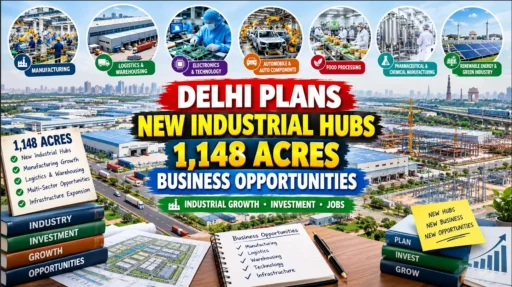
New policies by the government, transformation of the global supply chains and the domestic demand boom are pushing India toward an age of phenomenal power during industrialization. One giant stride towards the accomplishment of the nation’s industrialization has been the introduction of BHAVYA Scheme 2026 in which the nation plans to establish 100 plug and play industrial parks across the length and breadth of the country amounting to 33,660 crores.
It is expected to revolutionize the MSME ecosystem and address the long-standing problems related to land acquisition, infrastructure and regulatory hurdles. Entrepreneurs won’t need to create factories for years, but can begin production in a few months in well-established industrial ecosystems.
This is well aligned with the vision of industrialization of India through various government initiatives such as Make in India which targets to make India a global manufacturing hub. This mission is national; more information is here:
What is BHAVYA Scheme 2026?
The BHAVYA Scheme is geared towards the development of big Industrial Parks, which are well equipped with modern infrastructure like:
- Power Utility networks
- Logistics and transport connectivity
- Waste management units and environmental compliance units
- Both production and testing facilities are common.
- Sheds and plots made and ready for use for industries.
MSMEs or large industries will operate effectively in each park ranging from 100 to 1,000 acres in size. This model is based on the idea of industrial cluster that exists across the world and the industrial corridor concept in India.
Many of these will be coordinated by infrastructure agencies such as NICDC (National Industrial Corridor Development Corporation):
Why BHAVYA Scheme is Important for MSMEs
MSMEs are the backbone of India’s economy, contributing significantly to employment, exports, and innovation. But their problems are usually infrastructure constraints, funding issues and compliance bottlenecks.(BHAVYA Scheme 2026)
The government is taking efforts to resolve these problems by enhancing the support systems for MSMEs with dedicated policies and schemes available at:
Key Benefits for MSMEs
- Much quicker project setup (months rather than years)
- Reduced infrastructure investment
- Easier regulatory approvals
- Networks with industrial clusters and supply chains
- Improved export opportunities
- Lower operational risk
In addition, through the official MSME development portal, MSMEs can avail policy support, training programs, and financial schemes:
Role of Government Policy in Industrial Growth
In fact, the BHAVYA Scheme is not an isolated one as it is a part of the larger industrial development policies which the Government of India is involved with.
The Department for Promotion of Industry and Internal Trade (DPIIT) is very instrumental in the industrial strategy, investment promotion and ease of doing business reforms:
DPIIT also supports major programs like:
- Production Linked Incentive (PLI) Schemes
- Startup India initiative
- Industrial corridor development
- Improvements to the legal and regulatory frameworks
All these measures effectively lay the foundation for the growth of MSME and industry.
Export and Trade Opportunities Under BHAVYA Scheme
Improved export capability is another important benefit of industrial parks. The Directorate General of Foreign Trade (DGFT) regulates the trade scenario in India, which includes export-import policies and licensing.
With better infrastructure and logistics inside industrial parks, MSMEs can:
- Minimize production and delivery time
- Improve export competitiveness
- Be able to compete with global players more effectively
- Utilize export incentives by the government.
This is especially true as India endeavors to carve out a larger share of manufacturing for itself on the global stage.

High-Growth Manufacturing Sectors Under BHAVYA Scheme
The BHAVYA Scheme is capable of providing many opportunities to create jobs. Here are the top sectors to look at to perhaps be the most profitable ones to delve into as an MSME entrepreneur:
1. Electronics Manufacturing
India is fast emerging as a global electronics hub. The dependency on imports is however very high, which means there are opportunities for domestic production.
Opportunities include:
- PCB assembly
- Lithium battery components
- Sensors and connectors
- Small electronic devices
Get Detailed Insights from This Book: Lithium-Ion and Lead-Acid Battery Manufacturing Handbook
2. Specialty Chemicals & Pharmaceuticals
High compliance and infrastructure are required for this sector, and industrial parks are ideal.
Opportunities include:
- Industrial chemicals
- Pharma intermediates
- Agrochemicals
- Fine chemicals
3. Food Processing Industry
Food grains are wasted in significant quantity in India because of the absence of processing units.
Opportunities include:
- Frozen food units
- Fruit pulp processing
- Ready-to-eat meals
- Cold storage packaging
Get Detailed Project Report (DPR): Fruits and Vegetables Value addition, Food Processing, Dehydration, Canning and Preservation, Processed Food Projects
4. Electric Vehicle (EV) Components
The transition of EV in India is generating a healthy demand for domestic players. With the EV transition, the demand for domestic suppliers is growing strong in India.
Opportunities include:
- Batteries
- Charging infrastructure
- Motor controllers
- Power electronics
5. Technical Textiles
Demand for technical textile products are in the export and industrial segment.
Includes:
- Medical textiles
- Geotextiles
- Industrial fabrics
- Protective clothing
Related Article: Technical Textile Business Ideas in India: Profitable Manufacturing Opportunities for Entrepreneurs
Export Growth and Industrial Strategy
India is eager to boost exports and minimize imports. Institutions such as Federation of Indian Micro and Small & Medium Enterprises (FISME) will advocate MSME and industrial development:
This ecosystem, along with Industrial Parks, enables MSMEs to become globally competitive.
Importance of Planning Before Starting Business
The availability of infrastructure does not guarantee the success of enterprises; good planning is essential. Entrepreneurs must evaluate:
- Market demand
- Competition level
- Investment structure
- Profit margins
- Raw material availability
Planning is still dependent on government portals and reports, but detailed feasibility analysis is still needed.
Role of NPCS in Industrial Project Planning
Before initiating any manufacturing business within BHAVYA industrial park, appropriate feasibility study is very crucial. This is where Niir Project Consultancy Services (NPCS) is playing a significant role.
As a business service provider, NPCS offers detailed project reports (DPRs) to assist entrepreneurs in knowing the full business structure before investing.
NPCS services include:
- Identifying the market and analysing demand.
- Make sure to have the plant in place and machinery information as well.
- Sourcing of raw materials, guidance.
- Production process explanation
- The ability to calculate the profitability of an investment and determine if it is feasible.
These reports are useful for MSMEs to mitigate risks of investment and to take informed decisions. It is important for new entrepreneurs to do this type of planning in order to prevent expensive errors.
How Government Supports MSME Entrepreneurs
India provides multiple layers of support through different institutions:
- MSME Ministry: https://msme.gov.in/
- DPIIT: https://www.dpiit.gov.in/
- DGFT: https://www.dgft.gov.in/CP/
- Industrial development bodies like NICDC
These institutions ensure smoother industrial development and better business opportunities.
Identify high-growth industries before others do
Future of Manufacturing in India
India is poised to become one of the top manufacturing nations of the world in the next 10 years. The BHAVYA Scheme will play an important role in this transformation by:
- Increasing industrial output
- Creating large-scale employment
- Boosting exports
- Strengthening MSME ecosystem
- The development of industrial clusters in different states.
The move is extremely strategic as global companies are moving supply chains to India.
Conclusion
BHAVYA Scheme 2026 is a significant chance for MSME entrepreneurs and investors. It provides pre-existing infrastructure and minimizes set up time for quicker growth and efficiency of industries.
Attaining success, however, will rely on correct industry choice, knowledge of the market, and a designated plan. Entrepreneurs who are in sync with the Government-backed eco-systems such as Make in India, MSME Ministry and DPIIT initiatives will have higher chances of success in the future.
The manufacturing sector in India is rapidly changing its trajectory and schemes such as BHAVYA are at its core.
FAQs – BHAVYA Industrial Parks & MSME Opportunities
1) What is the meaning of BHAVYA Scheme?
The BHAVYA is a government initiative which aims to develop 100 plug and play Industrial Parks in India for manufacturing particularly.
2. Who can invest in BHAVYA industrial parks?
Both MSMEs and big industries including foreign investors under FDI norms.
3. What is the investment size of the scheme?
The total expenditure is ₹33,660 crore.
4. How long does it take to start production?
Around 9-14 months after land allotment, because of ready infrastructures.
5. In which sectors should you invest?
Electronics, chemicals, EV components, food processing and technical textiles.
6. Do there exist government subsidies?
Yes, even PLI, MSME subsidies, tax benefits and state incentives.
7. Why are industrial parks important for MSMEs?
Reduced costs, time, regulation, increased scalability and exports.
8. How does NPCS help entrepreneurs?
NPCS provides DPR, feasibility reports, market studies, and end-to-end services to establish new manufacturing units.