
Start Export Business from India
The Number That Should Shock Every Indian Manufacturer
About 63 million MSMEs are engaged in business in India and only 1% of them export their products. Let that sink in. While India has achieved a new India high in total exports of US$ 825 billion in the past financial year, the vast Maj
ority of the small manufacturers, food processors, handicraft units, and engineering firms are still selling their products within 50 km from their factory gates.
It’s not a failure story. It’s the tale of a gap, so vast that it’s the one biggest business opportunity for Indian entrepreneurs that they can currently capitalize on.
The world is eager to purchase Indian products. Indian spices are in demand in Germany. Indian cotton textiles are sought after by retailers in the United States. India is a wanted country by distributors in the UAE. Meanwhile, factories in Surat, Tiruppur, Moradabad and Rajkot either do not know about reaching these buyers or they think that it is too complex to bother.
It is not. The process of starting an export business from India is more structured, have more incentive and is more accessible than ever before. Here is how to do it, according to this guide.
Related Article: Manufacturing Business Ideas for Export in India: How Indian Brands Are Going Global
The Gap: 99% of Indian MSMEs Are Leaving Export Revenue on the Table
India’s exports of goods reached a new record height in the previous fiscal year and those of services are even more substantial. However, the Directorate General of Foreign Trade (DGFT) data shows that the number of active exporters in the country, by manufacturing scale, is thin.(Start Export Business from India)
The issue is the structure. The majority of small manufacturers are under the operation of domestic trader networks and never loaded a Shipping Bill. They have a GST registration. Udyam registration is available for many. Without an Importer Exporter Code (IEC) with 10-digit code issued by DGFT (for; ₹500; less than three working days) none of their goods can cross the Indian border legally.
This lack of knowledge is especially acute in manufacturing clusters in Tier 2 and Tier 3 cities, such as Ludhiana (bicycle parts and hosiery), Agra (leather goods), Jodhpur (furniture and handicrafts), Coimbatore (engineering components), Surat (textile and diamond), and Moradabad (brassware). These clusters generate output that meets international standards of quality, but can only be sold in the home market at 8-12% margins, whereas export margins could be 22-35%.
One sticking point: many small manufacturers feel that export involves a large business, a fully-fledged customs clearance department or costly freight forwarder relationships. This isn’t the case with a merchant exporter who begins by aggregating and resells, nor is it the case with a manufacturer exporter who exports directly.
Read the Complete Book Here: Modern Technology of Textile Dyes & Pigments (3rd Edition)
Table 1: Key Indian Export Clusters and Their Primary Export Products
| State/City | Key MSME Cluster | Primary Export Products | Major Destination Markets |
| Tamil Nadu – Tiruppur | Textile & Knitwear | Cotton hosiery, readymade garments | USA, EU, UAE |
| Gujarat – Surat | Diamond & Textile | Cut & polished diamonds, synthetic fabric | Belgium, USA, Hong Kong |
| Punjab – Ludhiana | Engineering & Textile | Bicycle parts, hosiery, fasteners | Africa, Middle East, EU |
| UP – Agra | Leather Goods | Footwear, bags, leather accessories | USA, Germany, Italy |
| UP – Moradabad | Brassware & Metal | Brass handicrafts, metal artefacts | USA, UK, Germany |
| Rajasthan – Jodhpur | Handicrafts & Furniture | Wood furniture, textiles, stonework | USA, France, Italy |
| Maharashtra – Kolhapur | Engineering Components | Castings, machine parts, forgings | Germany, Japan, USA |
Source: APEDA India Export Data (apeda.gov.in) and MSME Ministry Export Promotion Cell
The Opportunity: Why Now Is the Right Window
This is the best ten-year opportunity for a new Indian exporter to come into the market, thanks to three forces.
One, India’s trade deals are growing in number.One, India’s trade deals are increasing in number. The inked and in force India-UAE CEPA has helped bilateral trade reach above US$ 100 billion annually and Indian manufacturers have preferential access to tariff on hundreds of product categories. Talks for free trade with the EU and UK continue. This makes it cheaper for Indian products to be sold in big markets as compared to 5 years ago.
Second, global supply chains are becoming diversified from China. European and North American buyers are seeking alternative suppliers throughout electronics components, textiles, chemicals, and engineering goods. On-time delivery and consistency in product quality is helping Indian manufacturers secure contracts which were not previously competitive.
Thirdly, the government of India has substantially increased the financial muscle power being put behind export promotion. The Export Promotion Mission (EPM) with an outlay of ₹25,060 crore for six years, now provides an umbrella for subsidised credit, reimbursement of certification fees, overseas warehouse support, and logistics subsidies, especially to attract MSME exporters and first-time exporters from non-traditional districts.(Start Export Business from India)
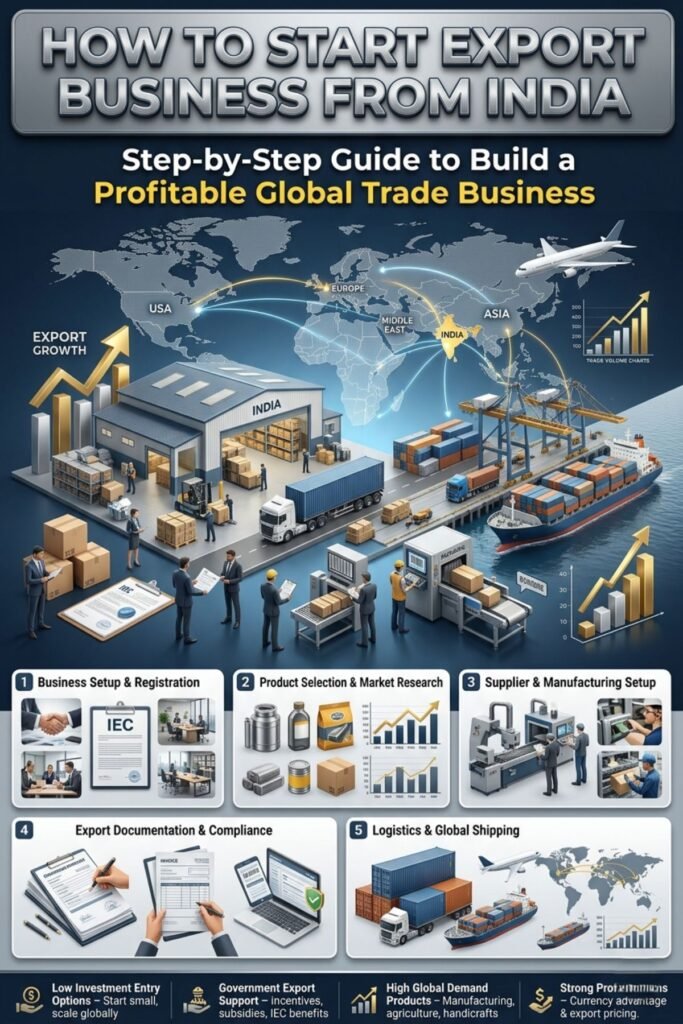
Table 2: Key Government Schemes for New Exporters — Eligibility and Benefit
| Scheme | Administered By | Who Is Eligible | Key Benefit |
| RoDTEP | DGFT / CBIC | All goods exporters (IEC holders) | Refund of embedded taxes (mandi tax, cess, electricity duty) as transferable duty credit scrips |
| EPCG Scheme | DGFT | Manufacturer-exporters with export obligation | Import capital goods at 0% customs duty; fulfil export obligation within 6 years |
| Advance Authorisation | DGFT | Exporters of products requiring imported inputs | Duty-free import of raw materials used in export production; 15% value addition required |
| Interest Equalisation Scheme | RBI / Banks | MSME manufacturer-exporters | 2.75% interest rate subvention on pre/post-shipment export credit |
| ECGC Export Credit Insurance | ECGC (GoI) | All exporters with IEC | Covers 90% of payment default risk from overseas buyers |
| Export Promotion Mission (EPM) | Dept. of Commerce | MSMEs, first-time exporters | ₹25,060 cr scheme covering certification, branding, logistics, credit guarantee |
| Niryat Bandhu | DGFT | First-time and small exporters | Free mentoring, workshops, hand-holding on IEC, documentation, market access |
| PMEGP (Manufacturing Units) | KVIC / MSME Ministry | New entrepreneurs in manufacturing | Subsidy of 15–35% of project cost for new units (useful as a pre-export production base) |
Sources: DGFT Foreign Trade Policy 2023 (dgft.gov.in);
ECGC India (ecgc.in); Ministry of MSME Export Schemes
Choose the right startup backed by real market demand
Step-by-Step: How to Set Up Your Export Business in India
Step 1 — Register Your Business Entity
Start with a legal business structure. A sole proprietorship is suitable for a business that is first time merchant exporter. A Private Limited Company or LLP is better suited for a manufacturer-exporter, since it offers the facility to open a separate current account, employ people on the formal payroll and will help the manufacturer in developing his credit history which banks can access for export credit. MSMEs must register on the Ministry of Corporate Affairs portal (mca.gov.in) or Udyam (udyamregistration.gov.in).
Step 2 — Obtain Your IEC (Import Export Code)
It is the most critical registration that every exporter has to go through. IEC is a code issued by DGFT having 10 digits. It is mandatory if you are to get your shipment cleared by customs, and if you are to receive foreign exchange from your bank. Fill the online application form at dgft.gov.in. The fee is ₹500. Documents required: PAN, Bank account with IFSC, Aadhaar linked mobile number. Processing time: 1-3 working days. The IEC will have a lifelong validity.
Step 3 — GST Registration and LUT Filing
GST Registration is compulsory for all the exporters. Most importantly, enroll under Letter of Undertaking (LUT) on the GST Portal. The Luter has the option to export without paying up IGST in advance, with the benefit of a refund; or to export at zero rated GST. If there is no LUT, then you have to pay IGST on exports and claim the refund later (which also consumes working capital) or you can even apply for a bond. Ensure LUT is filed at the GST portal every financial year.(Start Export Business from India)
Step 4 — Open a Current Account and Register AD Code with Customs
Set up a separate current account for your export company. Request your bank to provide you with the AD (Authorised Dealer) Code certificate. Register this AD Code at the customs port(s) you will be using, in the ICEGATE portal (icegate.gov.in). Customs clearance is not possible without the registration of AD code in your port. This will be a one-time step per port.
Step 5 — Join the Relevant Export Promotion Council (EPC)
There are more than 25 Export Promotion Councils (EPCs) in India representing all major product segments such as APEDA for Agricultural products, FIEO as the apex body, EPCH for Handicrafts, SRTEPC for Textiles and EEPC for Engineering goods. Get a Registration cum Membership Certificate (RCMC) by registering with the appropriate EPC. This certificate helps you avail various export incentives from the government under DGFT. It also gives you access to government-sponsored buyer–seller meets, trade fairs, and market intelligence.
Step 6 — Identify Your Product, Market, and Buyer
Research markets on DGFT’s trade data portal and India Trade Portal (indiantradeportal.in) for their import details of your product, price and countries they compete with. Identify your HS Code (Harmonised System tariff code)- this helps you know which duty/incentive rates are applicable for your exports and whether there are any restrictions on export under RoDTEP. IndiaMART, TradeIndia, Alibaba etc. are good avenues to get buyers and for for large volume contracts, using a freight forwarder who has access to the buyers is better.
Step 7 — Documentation, Logistics, and First Shipment
You must prepare all core export documents for each shipment, including the Commercial Invoice, Packing List, Shipping Bill (filed on ICEGATE), Bill of Lading or Airway Bill, Certificate of Origin issued by your EPC or Chamber of Commerce, and any product-specific certificates such as FSSAI for food products, BIS certification for specified manufactured goods, and phytosanitary certificates for agricultural produce. It is recommended that exporters use a licensed Customs House Agent (CHA) for their first 2–3 exports to become familiar with the process.(Start Export Business from India)
Minimum Investment and Infrastructure Required
A pure merchant exporter (who has aggregate sales role and resells) may be started with starting capital of Rs. 3 to 8 lakhs, registration under GST, IEC and a Laptop. A small manufacturing exporter with its own production unit operates a workshop of 1,000–3,000 sq. ft. and requires an investment of Rs 15–50 lakhs for machinery, raw material stock, and initial logistics. The cost range for a mid-scale unit for exports with separate packaging and quality control facilities is between ₹75 lakh and ₹1.5 crore.
Table 3: Investment Breakdown for a Small Manufacturer-Exporter (Illustrative Unit)
| Cost Head | Estimated Cost (INR) | Notes |
| Business registration (Pvt Ltd / LLP) | ₹8,000 – ₹20,000 | MCA incorporation + stamp duty |
| IEC registration (DGFT) | ₹500 | One-time, lifetime validity |
| RCMC with Export Promotion Council | ₹5,000 – ₹15,000 | Annual or multi-year; varies by EPC |
| GST registration and LUT filing | Nil (official fee) | CA fee: ₹2,000–5,000 if outsourced |
| Udyam (MSME) registration | Nil | Self-register at udyamregistration.gov.in |
| Production machinery (light mfg unit) | ₹5 lakh – ₹25 lakh | Depends on product segment |
| Factory/workspace (rented, 1,000–2,000 sq ft) | ₹15,000–60,000/month | Industrial estate preferred for proximity to CFS |
| Packaging and labelling setup | ₹1 lakh – ₹3 lakh | Export-grade packaging critical for buyer acceptance |
| Raw material working capital (first batch) | ₹3 lakh – ₹15 lakh | Leverage MSME export credit from banks at 2.75% subvention |
| Freight forwarder / CHA retainer (first 3 shipments) | ₹25,000–₹60,000 | One-time learning cost; manage in-house later |
| Total (small mfg exporter, first year) | ₹18 lakh – ₹60 lakh | Depending on product and scale |
Reference: DGFT India — IEC Registration Portal (dgft.gov.in)
Access Complete Business Plan: Trade, Commodities, International trade, Wholesaling, Retailer, Fair Trade, e-commerce, Merchant, Export, Import Business
Financial Snapshot: What to Realistically Expect
For a small manufacture-exporter having an investment of ₹30-40 lakhs:
- Monthly operating cost at start: ₹1.2–2.5 lakhs (rent, labour for 5–8 workers, raw material replenishment, freight booking fees, documentation)
- Revenue at 60% capacity – ₹6-10 lakhs/month (conservative – product dependent)
- Revenue with 100% capacity: ₹12-18 lakhs per month
- Gross margin: 28-38% (product segment specific, engineering and specialty food, are at the high end)
- After freight, documentation and finance charges, net margin: 14–22%.
- Initial investment payback period is 24-36 months with 60-70% utilisation.
- The other margin on RoDTEP and duty drawback claims are 2-5% of FOB value.
When a merchant exporter builds a sourcing relationship with a local manufacturer and arranges payments through advance payment or a Letter of Credit (LC), the exporter can earn a net profit of ₹5–8 lakh per month within 6–9 months.
An important risk to consider: risk of currency fluctuation. Exporters whose invoice in USD, experience margin compression with a strengthening rupee. Hedge using forward contracts through your bank from the first large order. The RBI permits the exporters to hedge 100% of their estimated annual export turnover.(Start Export Business from India)
ENTREPRENEUR SPOTLIGHT
Ramesh Jain, Moradabad, Uttar Pradesh.
Ramesh began his business of brassware finishing in Moradabad with an initial investment of ₹12 lakhs. Within 18 months of his registration, he attended his first buyer–seller meet in Frankfurt, which the Market Access Initiative scheme fully subsidised, while he explored export opportunities in Germany. Now, he exports ₹1.2 crore worth of metal home decoration items every year to the buyers of Germany, France and the USA. The one lesson he has learned: “Get the IEC on day one, attend your first international trade fair within two years – that is where the real orders come from.
Project Planning Support: NIIR Project Consultancy Services (NPCS)
Niir Project Consultancy Services (NPCS) has one of the most extensive repositories of pre-feasibility and techno-economic reports for manufacturing, food processing, chemical and export-based industries in India for entrepreneurs who require a solid financial and technical foundation prior to investing capital. Most of the information in their project reports is the sort of information that most first-time exporters take months to pull together on their own, such as plant layout design, machinery sourcing, raw material cost structures, market size estimates and financial projections.
NPCS also provides end-to-end consultancy for entrepreneurs setting up export-oriented units, including guidance on regulatory compliance and production setup. Their resources are accessible at niir.org and through the Entrepreneur India publication at
entrepreneurindia.co, which publishes sector-specific export opportunity guides for Indian MSME founders.
This is your One Step for This Week:
Don’t see exports as a thing for later. Exports are for today. The applications are live, affordable, and quick. The incentives are paid up and are functional. Overseas buyers want to buy and that desire is increasing.
So, your one action this week is to log onto DGFT (dgft.gov.in), click apply for IEC and complete the 500 registrations within 48 hours. The 10-digit code will be the doorway. All other steps like your product, market and the first customer can be developed once you have the code.(Start Export Business from India)
Next, apply for the India Trade Portal (indiantradeportal.in) to learn which countries are importing your product and at what price. Get in touch with your specific sector’s Export Promotion Council within 30 days to find out when is their next buyer-seller meet or trade fair planned. These are not long-term possibilities. They are three simple steps you can initiate in the very near future.
Frequent asked questions
1. How much capital is required to start export business from India?
Working capital of 3-8 lakhs would be sufficient for a merchant exporter. A manufacturer exporter setting up small production unit may require a sum from 15-50 lakhs depending on the product. IEC would cost 500. None of the required registration like GST, Udyam, LUT etc., carry any government fee.
2. Which all licenses are required mandatory before first export shipment?
IEC number from DGFT (dgft.gov.in), GST Registration with LUT filing and an AD Code registered with your customs port with ICEGATE are three indispensable registrations required prior to any export shipment. Other compulsory registrations for food products like FSSAI and in specified manufactured goods covered under Quality Control orders (QCO), the BIS license would be mandatory. RCMC from relevant export promotion council is also required to claim DGFT incentives.
3. Where can I get raw material for export quality production?
There is a well-established network of raw material producing regions, such as Maharashtra and Gujarat for cotton, Tamil Nadu and Uttar Pradesh for leather, Chhattisgarh and Jharkhand for engineering steel and Kerala and Andhra Pradesh for spices. For imported inputs, Advance Authorisation scheme permits duty free import of inputs to be used for export product, provided export product with 15% value addition is produced and shipped out within 18 months.
4. Is export viable for a small manufacturer?
Well- positioned products can fetch a gross margin of 28-38% in export markets. Net margins after deducting various charges like logistics, documentation, and financing costs, are between 14-22%. Also, RoDTEP and duty drawback refunds offer further gains, typically 2-5% of FOB price. An exporter availing Interest Equalisation Scheme can borrow export credit at a rate of interest lower than market rate by 2.75% per annum and gain directly from lowering of unit economics.
5. Which government incentives are available for first time exporter?
For new exporters, the Niryat Bandhu scheme from DGFT offers mentorship and hand-holding guidance by experienced trade experts. The government has also announced Export Promotion Mission (EPM) with an outlay of 25,060 crore covering certified branding, export warehousing and credit insurance cover. Credit insurance from ECGC covers buyers default risk up to 90%. For MSME manufacturers, interest equalization scheme and PMEGP subsidy (15-35% on capital expenditure) reduces financial burden.
6. Does NPCS helps in export business project plan?
Yes, the National Institute of Industrial Research and Consultancy Services (niir.org) publishes detailed techno-economic feasibility reports of export-oriented manufacturing projects covering hundreds of product lines. These include plant layout, machinery costs, sourcing of raw material, financing details and government clearances. Sector guides from Entrepreneur India (entrepreneurindia.co) also help a founder find categories that are most profitable from export point of view.
Key Citations and Government Sources:
- DGFT — Directorate General of Foreign Trade (IEC, RoDTEP, FTP)
- APEDA — Agricultural and Processed Food Products Export Development Authority
- ECGC — Export Credit Guarantee Corporation of India
- India Trade Portal — Ministry of Commerce
- FIEO — Federation of Indian Export Organisations
- Ministry of MSME — Udyam Registration Portal