

Renewable Energy Business India: A Huge Industrial Opportunity
India is engaged in one of the biggest industrial transformation of the 21st century. The national focus has been firmly moved towards renewable energy, sustainability and low carbon manufacturing. Massive solar parks are being commissioned, wind energy capacity continues to grow, electric vehicle (EV) adoption continues to accelerate and green hydrogen projects are moving from pilot to commercial scale.
When solar investments of billions by industrial leaders such as Mukesh Ambani, Gautam Adani, and the Tata Group, among others, become a reality, it clearly indicates a long-term process of structural change and not a temporary policy trend.
For startups, MSMEs and manufacturing entrepreneurs, renewable manufacturing means a perfect convergence of government support, market demand and export opportunity.
Read More: Activated Charcoal From Wood – Manufacturing Plant, Detailed Project Report, Profile, Business Plan, Industry Trends, Market Research, Survey, Manufacturing Process, Machinery, Raw Materials, Feasibility Study, Investment Opportunities, Cost and Revenue
Why Renewable Manufacturing in India Is Growing at a Rapid Pace
India currently imports a large share of advanced renewable equipment.
- Solar cells, high efficiency PV components
- Lithium-ion battery cells
- Electrolysers, hydrogen system components
- Advanced power electronics and converters
At the same time, Indian engineering and electrical goods are already accepted in the world markets. This provides a double opportunity:
1.Import substitution of domestic renewable project
2.Export expansion to Africa, Middle East and South East Asia
Policy incentives, infrastructure investment and aggressive clean energy targets are spurring continued demand for locally manufactured green energy equipment.
1. Manufacturing of Solar Modules & Mounting Structure
Solar energy is the fastest growing sector of renewable energy in India. Every solar project, no matter the size – utility-scale or rooftop – demands not only solar panels, but also mounting structures, cables, connectors, as well as balance of system and components.
Manufacture opportunity includes:
- Solar PV module assembly
- Galvanized steel mounting structures
- Rooftop solar hardware kits
- Argo-solar, raised structures
Among these, solar mounting structure fabrication provides relatively moderate capital requirements with consistency in demand from EPC contractors and developers. Steel fabrication units with galvanizing capability are capable of scale-up, and there is an increasing demand for export in emerging markets.(Renewable Energy Business India)
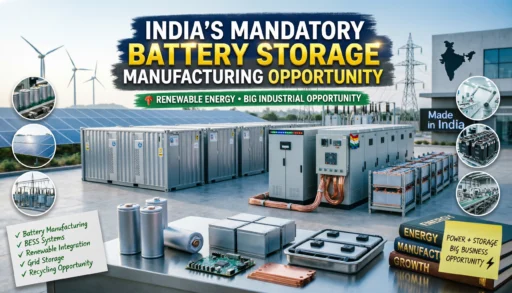
2. Battery Pack & Energy Storage System (ESS) Production
As the capacity from renewables grows, energy storage becomes increasingly important for ensuring the stability of the grid. Battery Energy Storage Systems (BESS) are used to facilitate peak-load management, backup power, and renewable integration.
Key manufacturing segments:
- Lithium ion battery pack assembly
- Containerized ESS units
- Industrial and commercial BESS
- Telecomm and microgrid backup systems
This sector presents a wide possibility for value addition and margins are generated through system integration, thermal management and software controls. As the domestic battery cell manufacturing industry grows, the reliance on imports will gradually decrease – it should be a win for local assemblers and integrators.
Read More: N-Butyl Acetate – Manufacturing Plant, Detailed Project Report, Profile, Business Plan, Industry Trends, Market Research, Survey, Manufacturing Process, Machinery, Raw Materials, Feasibility Study, Investment Opportunities, Cost and Revenue, Plant Layout
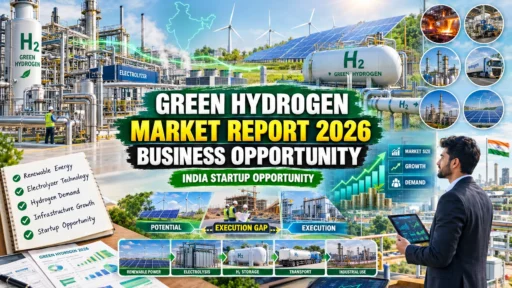
3. Green Hydrogen & Electrolyser Equipment Manufacturers
Green hydrogen is becoming a key solution to decarbonising steel, refining, fertilisers and heavy transport. While the large corporations are developing hydrogen plants, MSMEs can get involved in the supply of equipment and components.
High potential manufacturing areas:
- Skid Power Plant Electrolyser Skid Fabrication
- Hydrogen-rated compressors
- Pressure vessels and storage cylinders
- Power rectifiers and transformers
A significant amount of hydrogen project cost is in balance-of-plant equipment, rather than the electrolyser core itself. This creates interesting prospects for fabrication, electrical and heavy engineering industries.
4.Wind Turbine Components & Heavy Engineering
Wind energy remains an integral part of India’s renewable pool. Wind projects require massive and precision-engineered parts, many of which are already being exported around the world.
Opportunities for manufacturing include:
- Towers and Base Structure for Wind
- Hubs, frames and nacelle components
- Castings and forgings
- Assemblies that are machined with extreme precision
This is a sector that requires greater capital and technical experience, yet has the benefit of global scalability and export-growth.
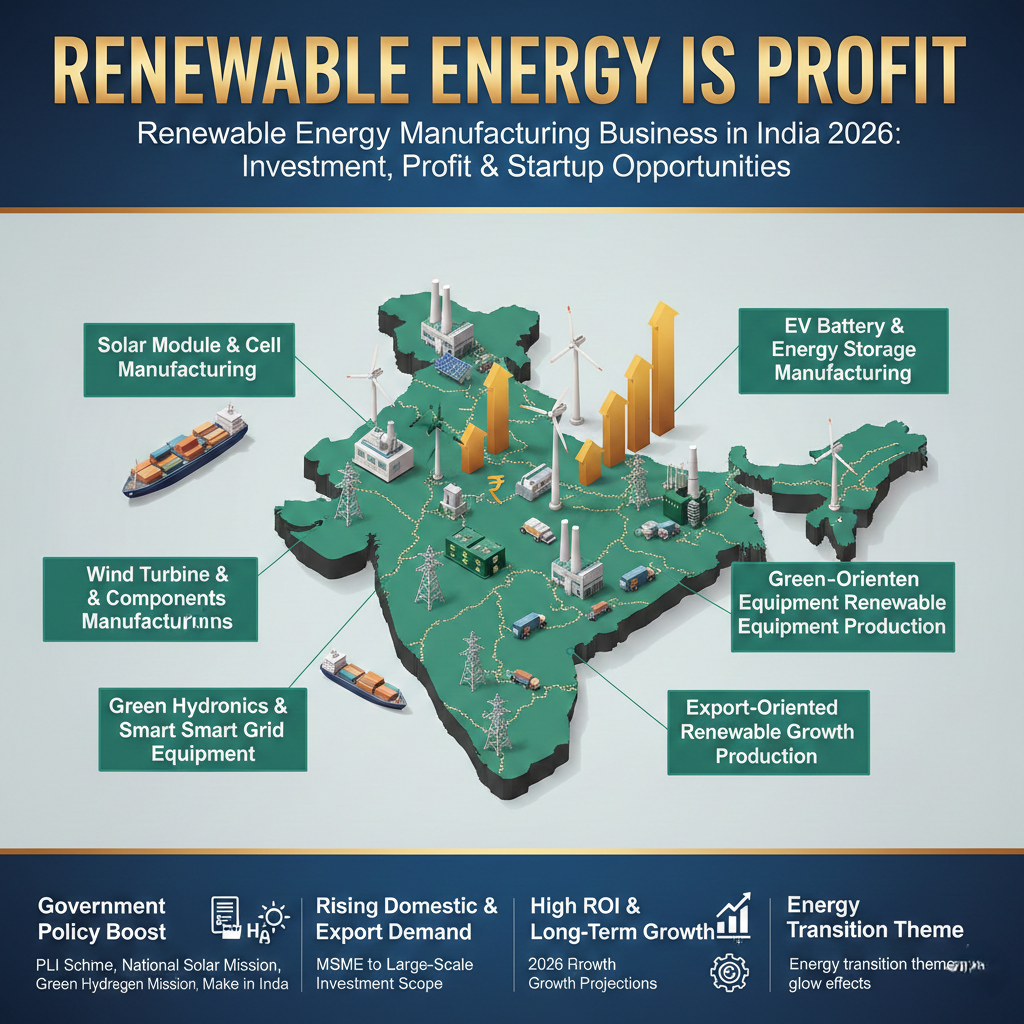
5. Manufacturing of EV Charging Equipment & Power Electronics
Electric vehicle adoption is gaining momentum in the passenger, commercial and fleet segments. It is therefore inevitable that charging infrastructure expansion will occur.
Manufacturing segments:
- AC residential chargers
- DC fast-charging stations
- Charging cabinets/panels
- Inverters and power electronics
This business is a combination of electrical engineering, software integration and certification driven manufacturing. With the compliance of international standards, EV chargers also have good export potential.
Read More: Biofertilizer from Birds Excreta – Manufacturing Plant, Detailed Project Report, Profile, Business Plan, Industry Trends, Market Research, Survey, Manufacturing Process, Machinery, Raw Materials, Feasibility Study, Investment Opportunities, Cost & Revenue
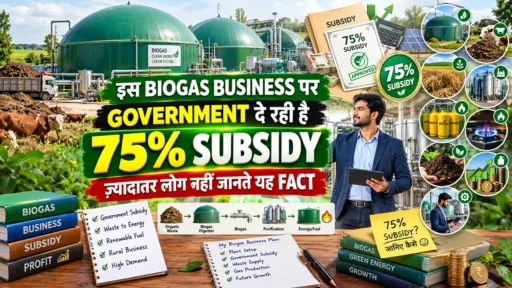
6. Bio-CNG & Waste to Energy Equipment Manufacturing
India produces huge amounts of agricultural residue and organic wastes. Bio-CNG technologies and waste-to-energy technologies process this waste into a valuable fuel.
Manufacturing opportunities include:
- Biogas digesters
- Gas purification, upgrading
- Compression plus bottling units
- Storage & dispensing systems
This sector is closely connected with circular economy providing long term sustainability and policy support.
Read More: The Rise of Bioenergy: Can India Lead the Next Renewable Energy Wave?
Investment Outlook and Profit Possibility
Renewable manufacturing projects have widely different capital needs:
- Moderate investment: Solar structures, EV chargers, bio-CNG equipment
- Increased investment: Battery storage systems, wind components, hydrogen equipment
Profitability is dependent on scale, automation, certifications, and efficiency of the supply chain. However, most of the renewable manufacturing segments are currently yielding good margins owing to growing demand and lack of domestic competition in specialized niches.(Renewable Energy Business India)
Why 2026–2030 Is the Best Entry Window
The years to come are expected to witness:
- Rapid additions of renewable capacity
- Accelerated EV adoption
- Large-scale Energy Storage Deployment
- Increased green hydrogen policy support
- Increasing export demand for Indian-made equipment
Entrepreneurs getting in now can lock in supplier relationships and positioning in the market before the sector matures and competition becomes intense.
Read More: Solar Panel Manufacturing: 10 reasons why it is a game-changer for startups
Final Conclusion
India’s green transition represents one of the largest industrial opportunities of this decade. The new manufacturing ecosystem combines multiple elements which include solar manufacturing operations and battery storage systems and green hydrogen equipment and EV charging infrastructure and wind components and bio-CNG systems.(Renewable Energy Business India)
Renewable manufacturing delivers extended market demand and international export potential and robust policy backing for entrepreneurs who make strategic investments and maintain high-quality standards and meet worldwide regulations.
The green economy is no longer a future concept—it is India’s present industrial revolution.
Frequently Asked Questions (FAQs)
- Which renewable manufacturing business is most profitable in India.
Battery pack assembly, solar mounting structures, EV charging equipment and wind components currently have great profitability and scalability with demand.
- How much investment does it require to start?
Investment varies from one segment to another. Solar structure fabrication needs moderate capital and wind tower or battery systems needs higher investment.
- Is export possible?
Yes. There is great demand for export of solar hardware, batteries, wind components, transformers and bio-CNG equipment.
- Is there government policy in support?
Yes. Several efforts encourage domestic production of renewable and EV and energy-efficient equipment.
- Is renewable manufacturing future proof?
Given India’s clean energy targets, as well as global sustainability pledges, renewable manufacturing is viewed as a long-term growth sector.