India’s food processing industry plays a vital role in the economy, representing 8.8% of manufacturing and 8.39% of agriculture. The sector was evaluated at $307 billion USD in 2023, and it is estimated to hit $700 billion USD by the year 2030.(Government schemes for food processing startups in India)
Through governmental schemes such as the PMKSY, the PLISFPI and the PMFME, the country is actively supporting micro and small enterprises in food processing and is virtually providing a fertile ground for them thanks to its rich and varied climate, abundant raw materials, and a robust agricultural base.
Why Startups Should Focus on Food Processing
India ranks as the 6th biggest food and grocery market globally. There is a quick growth in the demand for pre-packaged and ready-to-eat foods, and the agro-processing subsector, which accounts for 32% of the food market, is also fast growing.
Key facts:
- India has an annual production of 11.8 million tonnes of spices.
- The Indian contribution to the world’s milk production is 25%.
- The country is a major producer of poultry, meat, vegetables, and fruits with large volumes.
These statistics indicate that entrepreneurs can get gigantic opportunity for processing raw materials and supplying high-demand foods.
The Ministry of Food Processing Industries Sectors – Highlights
The food processing industry’s contribution to India’s GDP is 307 million, with predictions to grow 700 million in 2030. Processed food accounted for 13% of all exports. Between 2015 and 2022, the sector grew 7.3%. 1.93 million jobs have been registered, and 5.1 million jobs have not been registered. 6% of the industrial investment goes to the food processing sector.(Government schemes for food processing startups in India)
The Food Processing Sector: Selected Recent Initiatives
1. Pradhan Mantri Kisan SAMPADA Yojana (PMKSY)
The PMKSY scheme is aimed at developing effective and modern food processing systems and strengthening supply chains. Processes of streamlining loss and strengthening processing capabilities for all farm to market systems to include both small and large initiatives.
As of today, 41 Mega Food Parks have been approved; 24 remain operational. Support for Cold chains, Agro processing, food processing units and market linkages.
2. Production Linked Incentive Scheme for Food Processing Industry (PLISFPI)
PLISFPI aims at motivating companies to enhance their output and diversify their product lines. Higher tier companies get a tiered 4-10 percent incentive based on additional sales. Small innovative companies get 6 percent.
The initiative also sponsors marketing and overseas marketing. In the wake of the International Year of Millets 2023, additional funds of 800 crores were earmarked for millet-based products.
3. PM Formalisation of Micro Food Processing Enterprises (PMFME)
PMFME aims at assisting growth of micro and small food businesses. The initiative follows the ODOP (One District One Product) approach and encompasses 713 districts along with 137 designated products. More than 92,000 micro units have been assisted. The initiative covers funding for infrastructure, machinery, SHG seed capital, and training in food safety and entrepreneurship.
Read More: How MoFPI’s PLI Scheme and Food Parks are Creating the Next Generation of Manufacturing Startups
4. Operation Greens
Operation Greens aims at ensuring stable prices for Tomato, Onion, and Potato (TOP). It provides transport, storage, and processing subsidies to manage prices during high volatility. The initiative also aims at enhancing cold chain logistics and overall supply chain for the targeted crops.
Read Our Book: Click Here
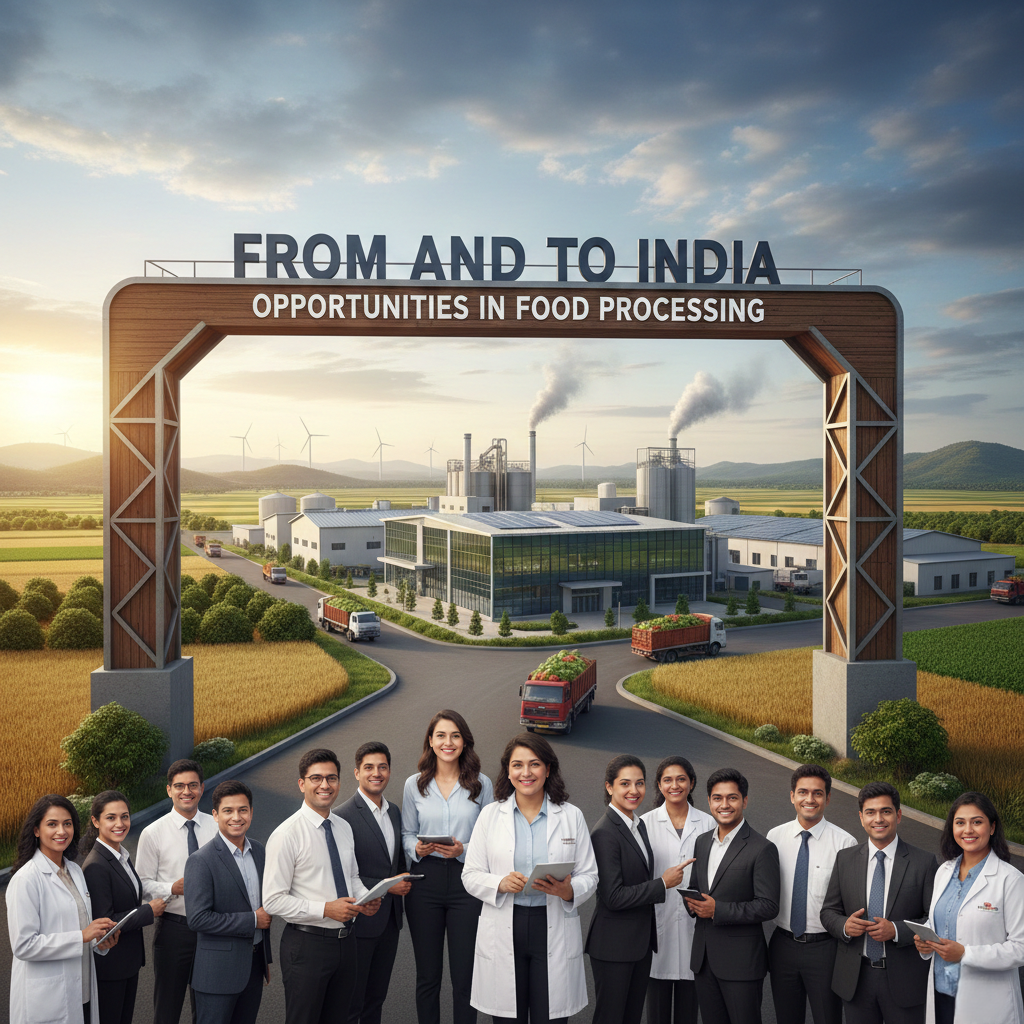
From and To India: Opportunities in Food Processing
As of 2023, India is one of the largest markets for processed food, with 21 billion in USD imports and 17 billion in USD exports. This shows that the scope of food production is great in India, and so is the opportunity for India to make such products domestically in greater volume as meat and dairy imports affect the self-sufficiency and carbon footprint of the country.
Other high impact opportunities include food processing, specialty and traditional ingredients and health-based organic food products. Ayurvedic products and processed Indian foods such as snacks, spices, and millet flour are also incorporated regularly in healthy recipes and are in high demand.
Read More: Start your own Micronutrient Fortified Blended Energy Dense Food Manufacturing Business
Success Stories of Industry Leaders
Amul is a top model in the world of dairy cooperative. It is also one of India’s largest. Parle has successful brand equity innovations and vertical integration of the fast-moving consumer goods (FMCG) market. Haldiram’s is a large exporter of Indian sweets and traditional snacks.
Britannia is one of the health-oriented and convenience food giants. These cooperatives and companies reflect the high impact of strong branding, and efficient and well organized supply chains.
How Niir Project Consultancy Services Helps
NPCS assists so that an entrepreneur can channel his efforts productively and systematically.
Services that NPCS offers, such as market controllers issues, project feasibility, detailed systems on the manufacturing process and quality control, and pumping the project’s desire on the cash flow, to name a few, provide the entrepreneur with information to assist in soil identification for the successful harvest he has in mind.
This is how NPCS helps the entrepreneur leverage the social facilities the State offers.
Prospective Business Ventures
Some ventures in this market include millet processing, cold chain facilities, organic products, ready-to-eat meals, and exports, especially spices and other traditional foods. Use of technology is also increasing, like digital supply chains, analytic testing laboratories, and advanced food processing equipment.
Read Our Project Report: Click Here
Estimated Duration for Startup Activities
1-3 months is earmarked for planning activities, market surveys, DPR preparation, and scheme selection. Then, in 4-6 months, they register the firm, apply for the schemes and obtain the land with the required approvals.
7-12 months is then allocated for the construction of the facilities, the operationalization of the equipment, and the staffing of the business. After 12 months, there is the commencement of production, the garnering of operational certifications, and the business’s market growth.
Some Government Services And Online Portals
Some of the most important are the Ministry of Food Processing Industries, PMKSY, PMFME, PLISFPI, Invest India, and Nivesh Bandhu. These sites help entrepreneurs with important information, applications, and instructions.(Government schemes for food processing startups in India)
Find the Best Idea for Yourself With our Startup Selector Tool
Conclusion
India’s food processing industry presents vast prospects for both new and existing players. Considering government backing, India is capable of much faster growth in this industry sector and the rapid food processing demand will propel India to the forefront of the industry.
FAQs–Ministry of Food Processing Industries
1. What is the aim of PMKSY?
A.The aim of PMKSY is to create modern food processing and supply chain systems, including Mega Food Parks.
2. Who is eligible to apply under PMFME?
A.Micro food processing units, FPOs, SHGs, and small traders are eligible to apply.
3. What are the benefits of PLISFPI?
A.The benefits include additional sales, innovation, and marketing support incentives.
4. What are the products of millets?
A.Flour and snacks, as well as cereals, ready-to-eat items, are for export. Manufacturers made them of millets.
5. Where do entrepreneurs access the information on the schemes?
A.Information can be through MoFPI, PMKSY, PMFME, PLISFPI portals, Invest India, and Nivesh Bandhu.