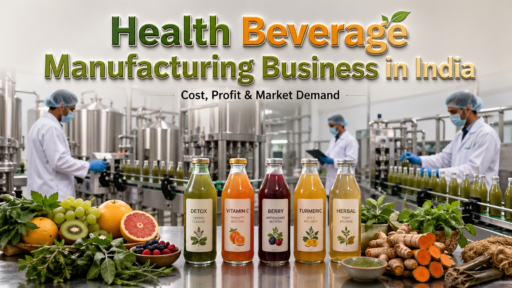


Introduction: Health Beverage Manufacturing Business
India’s health beverage sector has evolved over the past 10 years. In the past, this was limited to family-oriented malt beverages. Now, this sector has expanded to protein beverages, plant-based milk, herbal drinks, probiotic drinks, and strengthened traditional beverages. This expansion has been triggered by the growing interest among consumers towards a healthy lifestyle and preventive health.
Urbanization, rising disposable incomes and growing health and fitness awareness has led consumers to prefer beverages with nutritional benefits. Meanwhile, contemporary retail outlets and e-commerce have increased the availability in urban and semi-urban areas. This means that the market for health beverages is growing faster than the supply in a few areas.
This industry provides a great opportunity for MSMEs and entrepreneurs to get into the manufacturing sector with high growth prospects. The market is also evolving, meaning there is less competition for new entrants.
Market Size and Growth Outlook of the Health Beverages Industry
The health beverages industry in India is growing at a consistent rate and is set to witness healthy growth from 2026 to 2029. It has transitioned from a health segment to the mainstream.
The market size was estimated to be approx USD 3.5 billion in the year 2015 and is predicted to grow up to USD 6 billion by 2029. This accounts to an average of 9-11% annually growth rate.
This growth is being driven by a number of long-term trends such as growing health consciousness, the rise of the fitness industry, and the demand for on-the-go nutrition. There is also a growing consumer willingness to pay a premium price for beverages that can deliver certain health benefits, such as immunity, digestive, or energy support.
Demand–Supply Gap Creating Business Opportunities
A key opportunity in the health beverage manufacturing business is the demand–supply gap. For many categories, the existing capacity to produce in India is not enough to fulfil market requirements and as a result, imports are needed.
Many modern health beverage ingredients are imported to India. This leads to higher costs and risks of supply, particularly in the context of global crises. Setting up manufacturing facilities can help limit foreign product imports and develop a competitive edge.
The demand-supply gap is most evident in:
- Plant-based milk and dairy alternatives
- Protein and nutritional beverages
- Probiotic and fermented beverages
- Functional herbal beverages
- Nutraceutical-based drinks
These segments will likely experience strong growth in the coming years, so they are ripe for new investment.
Most Profitable Health Beverage Segments for Entrepreneurs
Selecting a product segment is one of the key factors when establishing a beverage manufacturing company. Certain segments are growing rapidly, have high margins and are easier to get into than others.
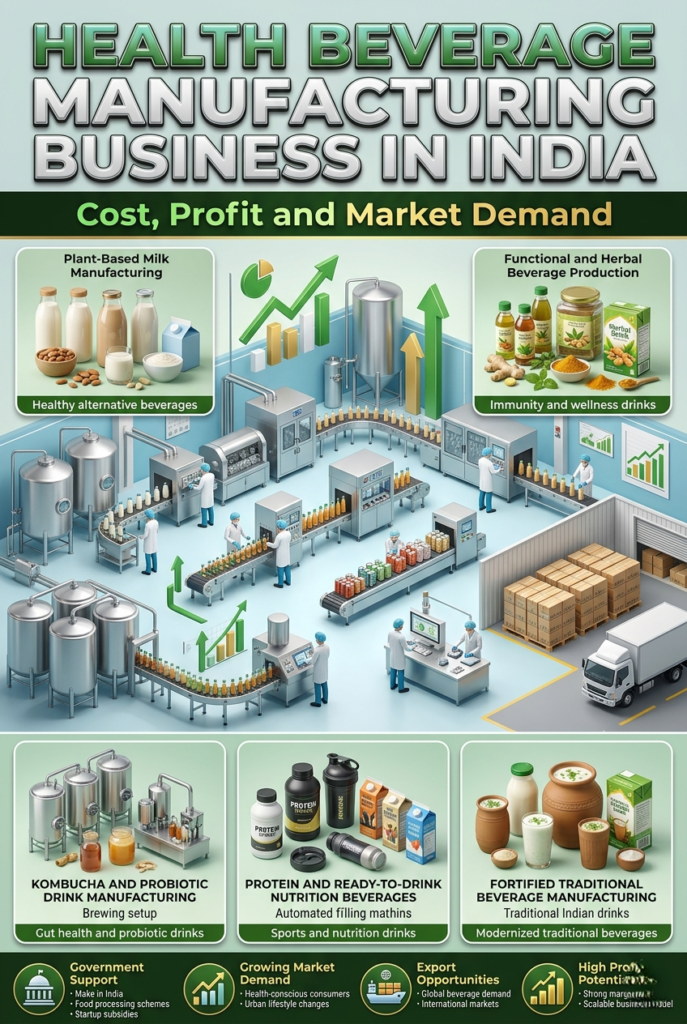
1. Plant-Based Milk Manufacturing
India’s plant milk market is said to be one of the fast-growing segments of beverages. People that are lactose intolerant, vegans and are health conscious are preferring oat milk, almond milk, soy milk, millet-based drinks and many other drinks. Drinks like this are in great demand in household, cafes and gyms.
A medium scale manufacturing unit for plant-based milk manufacturing can cost between 2.5 crore and 4 crores depending on capacity, used machinery and type of packaging used. The return on investment is relatively quick considering the increasing demand and the relative lack of competition in the segment.
Get Detailed Project Report (DPR): Milk and Value-Added Dairy Products Reference
2. Functional and Herbal Beverage Production
Herbal and functional beverages have seen rapid growth as they are linked to health benefits. Herbal drinks are also taken in to build immunity, improve digestion, and for overall wellbeing.
In this category, some of the well-known brands are:
- Turmeric drink
- Amla juice
- Giloy beverage
- Ashwagandha tonic
- Apple cider vinegar drink
This is a good segment for small and medium-scale enterprises because the ingredients (tea and sugar) are readily available in India and the processing technology is straightforward.
Get Detailed Insights from This Book: Herbal Cosmetics & Ayurvedic Medicines (EOU) (3rd Revised Edition)
3. Kombucha and Probiotic Drink Manufacturing
Kombucha is a health drink which helps digestion. Although a developing market in India, there is a demand for the same from the metropolitan cities. The beverages can also be priced at higher rates thereby generating better profits.
For the establishment of a kombucha unit, a proper machinery that helps fermentation and cooling is essential. Hygiene and quality control are vital in the process of fermentation. This is a sector that brands can truly make loyalists with great emphasis on brand name and quality.
4. Protein and Ready-to-Drink Nutrition Beverages
Protein drinks are popular with sportspeople, gym-goers and health enthusiasts. These are also consumed by the working class for their convenience.
This product category involves higher investment compared to other beverages, but has a good future outlook. With the growth of the fitness industry in India, protein beverages are likely to gain popularity.
5. Fortified Traditional Beverage Manufacturing
There is an increase in the consumption of traditional beverages as consumers seek safe products with familiar taste, convenient packaging and added value. Buttermilk, lassi, ragi malt, sattu products are well received throughout India.
First-time entrepreneurs consider this area the easiest, as the technology is simple and the market is steady. These products can give a tough competition to soft drinks if marketed and sold correctly.
Machinery and Infrastructure Required for a Beverage Manufacturing Unit
Establishing a beverage manufacturing unit requires appropriate machinery and facilities. This involves water treatment, blending, heating, cooling, filling and packaging. Quality and cleanliness in production will determine consumer confidence and regulatory compliance.
Beverage manufacturing equipment includes:
- Mixing and blending tanks
- Pasteurizer or sterilizer
- Homogenizer
- Filling and sealing machine
- Packaging machine
- Water treatment system
- Storage tanks
The final investment also varies depending on the production capacity, level of automation, and product variety.
Choose the right startup backed by real market demand
Government Subsidies and Financial Support for Beverage Manufacturing
The Government of India offers a number of subsidies and grants for food processing industries. These schemes are aimed at promoting entrepreneurship, creating employment opportunities, and boost domestic manufacturing.
A few major Government schemes that are relevant for the Beverage manufacturing project can be:
- PMFME Scheme
- Food Processing PLI Scheme
- MSME Subsidy Programs
- Subsidy Program for Industries
Such subsidies can contribute towards a lower investment cost and a higher viability of the project especially for the small and medium scale industry.
About NPCS (Niir Project Consultancy Services)
The NPCS is a known industrial consultant for setting up manufacturing plants across different industries for entrepreneurs and investors. The industrial consultant helps set up manufacturing plants by providing comprehensive project report, feasibility report, technical advice etc.
NPCS services typically include:
- Detailed Project Reports (DPR)
- Market Survey and Demand Analysis
- Equipment and Raw material procurement
- Cost and Profitability Analysis
- Advice for bank loan and subsidy programs
The NPCS ensures the transition of ideas into profit-making manufacturing units through its planning and information services.
Related Article: 10 Most Profitable Manufacturing Businesses in India for 2027–2030 (Future Growth Sectors)
Profitability and Future Growth Potential
Health beverages market holds immense growth potential, primarily due to its link with consumers’ health and lifestyle. With a rising level of nutritional consciousness, the demand for functional beverages is going to surge in the urban and rural areas.
If we give adequate importance to the quality of the product, packaging, and distribution, then the market will offer a steady income and growth for your enterprise. You may also plan a phased production such that you initially set up a unit of small-scale production and then expand in phases.
Frequent Asked Questions (FAQs)
What are the costs of setting up a health beverage manufacturing business in India?
The investment needed for small scale unit is about 1.5 cr – 2.5 cr. However, for the medium scale plant, you would need 4 cr – 8 cr based on capacity of the plant and degree of automation.
Is health beverage manufacturing a profitable business?
Yes, health beverages are profitable as the demand is high and consistent and consumption happens round the year in the form of health drinks.
Which health drinks are easiest to start with?
Health drinks such as fortified traditional drinks and herbal beverages can be good choices for beginners. They need medium investment and enjoy consistent demand in the market.
How soon is investment in a beverage plant to be recouped?
Companies are likely to take around 30 to 42 months to break even with investment, depending on market and plant scale.
Is it viable to export health beverages from India?
Yes, Indian health beverages have an export market mainly among people of Indian origin in many foreign countries and also because of the growing preference for natural health products across the world.