
Odisha Gopalpur Industrial Park: ₹65,400 Crore Green Hub Opens Massive Manufacturing Opportunities for MSMEs & Startups
The turn to green economy is shaping up to transform manufacturing opportunities for entrepreneurs, MSMEs and startup founders across India over the next 20 years on the eastern coastline. The Gopalpur Industrial Park (GIP) developed by Tata Steel Special Economic Zone Limited (TSSEZL) has quietly built a pipeline of investments worth more than ₹65,400 crore that makes the area the biggest emerging green industrial park in the country.
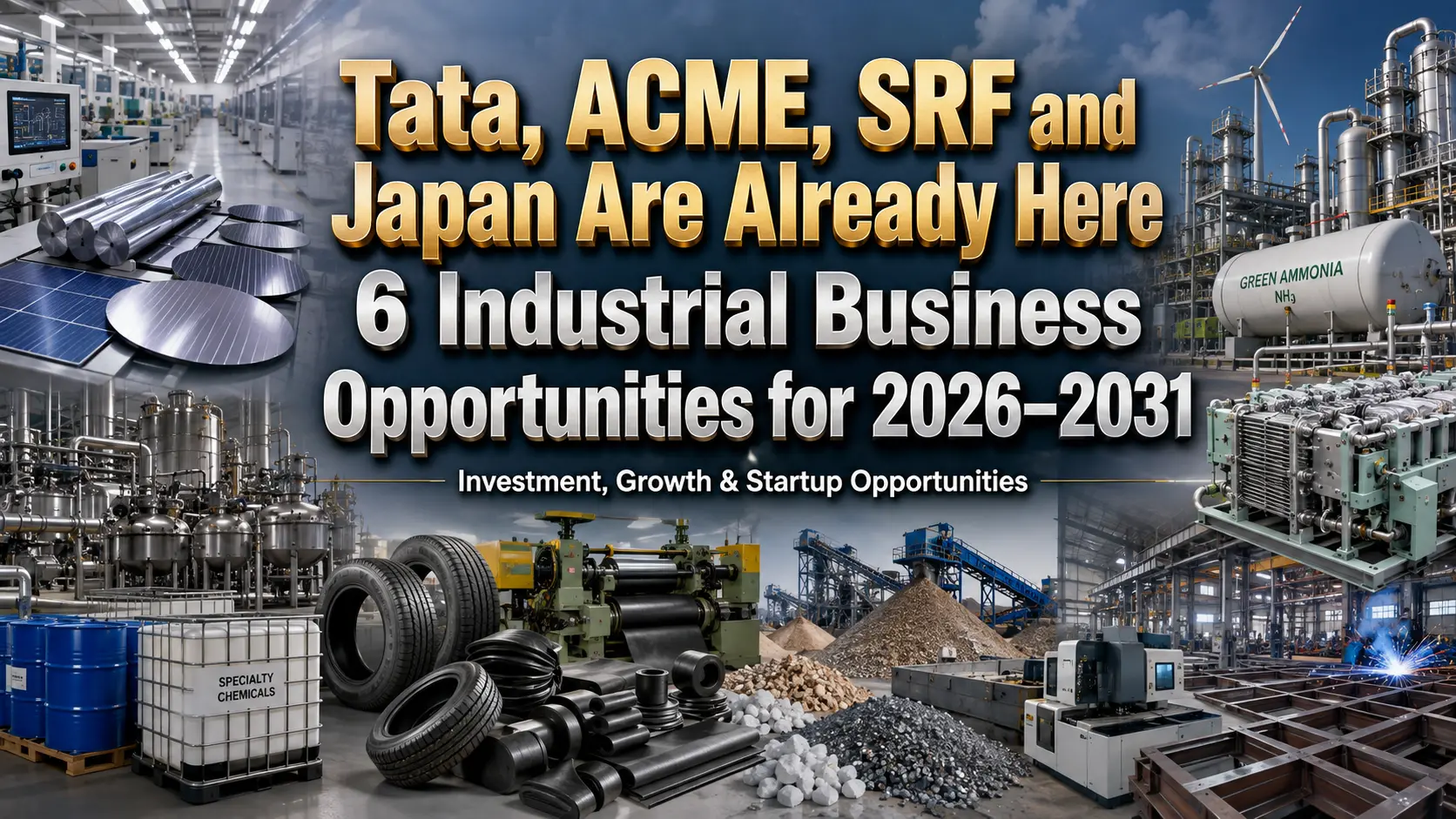
This is not a blueprint from the government in the distant future. Companies have already reached agreements for the transfer of land. Various companies, such as Tata Power Renewable Energy Limited (TPREL), ACME Group, Avada Green H2, Oysier Energy, Hygenko, Saatvik Solar Industries, SRF Limited, and ATC Tyres, are actively commissioning the projects. This transition is already gaining momentum — and it presents an extraordinary opportunity for Indian manufacturers, ancillary suppliers, and service providers to become a part of a high-growth ecosystem, with world-class infrastructure, port connectivity, and a government policy support system.
For those who know about the cycles of green manufacturing and component supply chains and specialty chemicals, Gopalpur is an on-going news story. It’s a business opportunity that calls for instant strategic activity.
What the Udaipur Times Reporting Means for Indian Business
What Happened
The 2,970-acre Gopalpur Industrial Park has made a new stride. Tata Power Renewable Energy Limited inked a land transfer deal for a solar ingot and wafer plant of ₹10,000 crore. At the same time, a 0.4 MTPA green ammonia plant is also under planning, as the Odisha government inked a four-way pact with the Japanese company IHI Corporation, ACME Group and TSSEZL. The park was also recognized as the ‘Smart Industrial Park’ at Smart Logistics Summit & Awards 2026 in Bhubaneswar.
Why It Matters for Entrepreneurs
It is not a one company investment. The confluence of green hydrogen, solar manufacturing, specialty chemicals, tyre manufacturing, mineral processing, and food processing, supported by Tata Steel’s world-class infrastructure. Once the critical investment mass is reached at this scale, a whole ecosystem of suppliers emerges, leading to opportunities in both Tier 1 and Tier 2 manufacturing.
The entrance to an industrial cluster at the ground level is relatively small. However, as anchor industries come and go, land values increase, competition increases, and the policy benefits diminish. Businesses that take on their roles as component manufacturers, maintenance services, specialty chemical makers, or logistics firms will reap the rewards.
Why This Industry Is Growing: The Green Manufacturing Supercycle
India has set the goal of installing 500 GW of renewable energy by 2030. To achieve this goal, India needs to build a strong domestic manufacturing capability for various solar panel, green hydrogen, electrolysers, and energy storage systems. The reliance on imports in these segments is high, which means, there is a direct manufacturing opportunity for Indian companies.
The National Green Hydrogen Mission aims to achieve 5 MMT of green hydrogen production by 2030 and has sanctioned ₹19,744 crore to establish a manufacturing base of electrolysers, green ammonia plants and associated clean energy equipment in the country. The policy commitment is a direct endorsement of the investment momentum that is already seen at Gopalpur.
Gopalpur Industrial Park is located in the eastern seaboard of Odisha, where Gopalpur Port is located and is connected to the nation’s highways and rail routes. The multi-modal infrastructure is suitable for both domestic distribution and export-oriented production. Apart from green energy, Odisha’s mineral abundance in the form of iron ore, bauxite, chromite etc offers the raw material benefits in advanced manufacturing of specialty chemicals and ferro-alloy intermediates.
Government Policies & Incentives Powering the Opportunity
There are several policy instruments at both the central and state levels which directly foster green industrial manufacturing clusters such as Gopalpur. Those entrepreneurs who are able to effectively use these incentives to their advantage have the potential to significantly lower the capital cost and shorten the payback period.
Production Linked Incentive Scheme for Solar PV Manufacturing (Ministry of New & Renewable Energy) offers incentives for domestic manufacture of solar cells, solar modules and integrated solar wafer units, all of which are directly applicable to the Tata Power solar plant in Gopalpur with a project cost of ₹10,000 crore.
In the case of MSME entrepreneurs, who are looking for lending without providing any physical collaterals for the loan, the Credit Guarantee Fund Trust for Micro and Small Enterprises (CGTMSE) is a good option for providing credit guarantees up to ₹5 crore for the new manufacturing units.
The Odisha Industrial Policy through IDCO provides capital investment subsidies, exemption from stamp duty, power tariff concession, employment generation incentives to support the industrial ecosystem of Odisha. The state support is layered on top of central schemes, making it a financial incentive for manufacturers to invest in the Gopalpur corridor.
Gopalpur’s operations under the SEZ follow the SEZ Act & Rules (SEZ India, Ministry of Commerce), which provides customs duty exemption on imported inputs, income tax holidays for SEZ-eligible units, and simplified export-import procedures that benefit green ammonia and processed mineral exports.
The MSME Udyam Registration Portal facilitates the entrepreneurs to register their manufacturing business to avail benefits such as priority sector lending, preference in government tender, subsidy on cluster development and finance under PMEGP for manufacturing businesses located in industrial clusters such as Gopalpur.
Build a profitable business with the right idea
PM Gati Shakti National Master Plan includes multi-modal logistics infrastructure planning by linking various road, rail and port networks. This coordinated investments in infrastructure is a direct consequence of Gopalpur’s connectivity with the eastern coast port and eastern national highway grid which will further lower the logistics expenses for the manufacturers in the cluster.
Manufacturing Business Opportunities Emerging from the Gopalpur Hub
The investment pipeline of ₹65,400 crore under Gopalpur has created specific and high potential manufacturing opportunities for MSMEs and startups. Below are six practical investment-based avenues that come straight from the companies and industries that are dedicated to this cluster:
1. Solar Ingot & Wafer Ancillary Manufacturing
The Electricity Corporation of Tamil Nadu (TPREL) is soon to have a ₹10,000 crore solar ingot/wafers plant and hence there is an immediate requirement for precision packaging materials for silicon wafers, anti-reflection coating chemicals, wafer handling machines and special cleaning solutions. These are Tier 1 ancillary inputs which the anchor plant does not have the capacity for.
The Make in India initiative (DPIIT) actively promotes green energy equipment manufacturing as a priority sector. An MSME that establishes precision manufacturing of solar wafer inputs within 50 km of Gopalpur gains a built-in customer with guaranteed offtake potential — and Make in India certification strengthens export credibility further.
Read the Complete Book Here: Solar PV Power and Solar Products Handbook
2. Green Ammonia Equipment & Electrolyser Component Manufacturing
For development of electrolyser/green ammonia equipment manufacturing, manufacturers can consider exploring the National Industrial Corridor Development Programme (NICDC) for plug-and-play support in infrastructure development. NICDC-backed industrial nodes offer pre-cleared land, utility connections, and logistics infrastructure, which cut down on the amount of time needed to setup for a new manufacturing business.
Related Article: India’s Green Ammonia Moment: How the Japan Deal Opens an MSME Frontier
3. Specialty Chemicals for Industrial Process Applications
Some of the companies such as the SRF Limited and SuperForm Chemistries have already established their plants in the Gopalpur cluster. They indicate demand for chemicals for processes, solvents, polymer intermediates and cleaning agents for industry. A specialty chemicals MSME in Gopalpur ecosystem can supply multiple anchor companies with just in time delivery without incurring logistics costs as national suppliers would do.
Get Detailed Project Report (DPR): Chemicals (Organic, Inorganic, Industrial) Projects
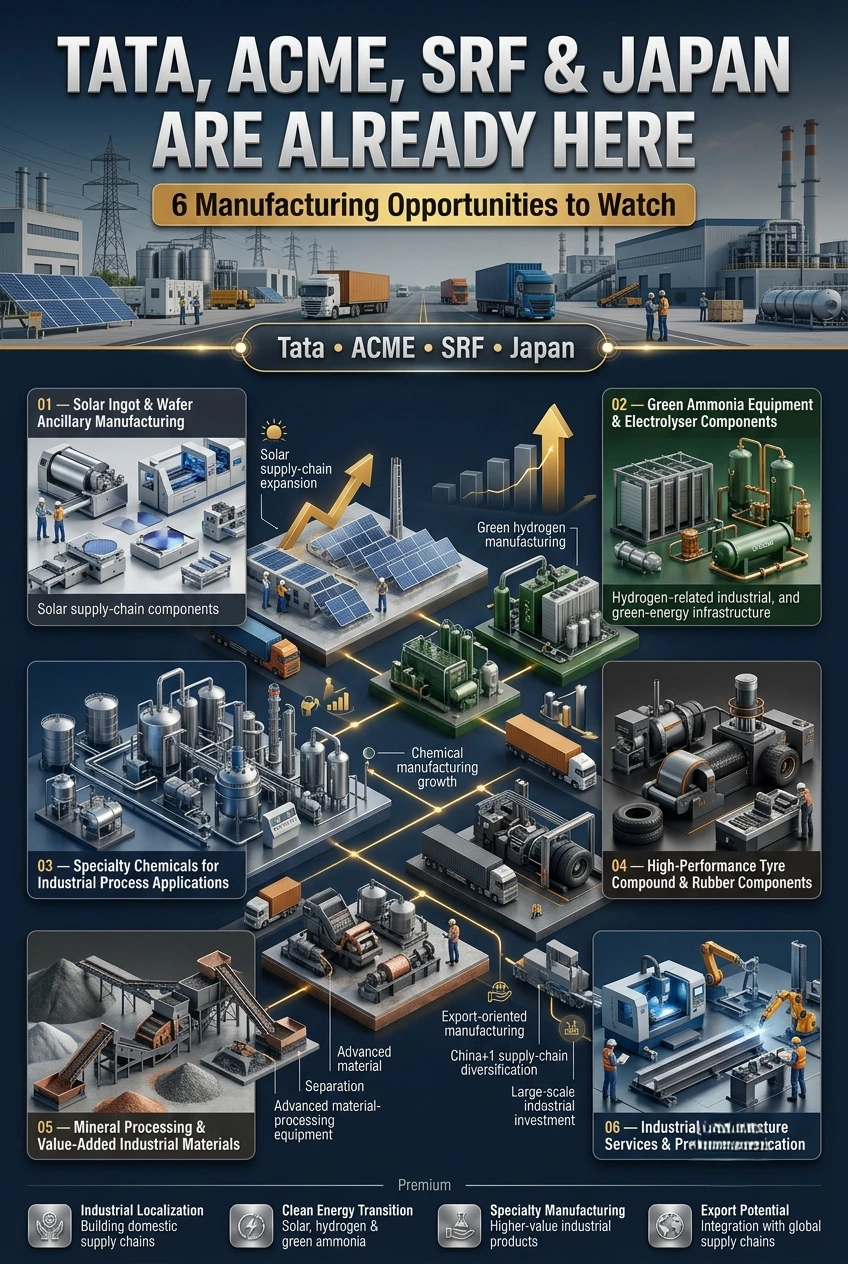
4. High-Performance Tyre Compound & Rubber Component Manufacturing
ATC Tyres has signed an agreement to tie up with Gopalpur Industrial Park. Rubber compounding chemicals, carbon black, zinc oxide, accelerators, mould release agents and textile reinforcement materials are used in the manufacture of tyres. These are each independent manufacturing possibilities.
The Startup India programme (DPIIT) provides tax exemptions, speedy IPR protection and government tender preference to the entrepreneurs. A rubber chemical processing unit or textile cord manufacturing unit that supplies ATC Tyres certainly falls within the investable range for Startup India-registered ventures.
Check Out This Recommended Book: The Complete Book on Rubber Processing and Compounding Technology
5. Mineral Processing & Value-Added Industrial Materials
Odisha boasts of the richest mineral resources in India. The Gopalpur hub is well suited for these resources in mineral processing, beneficiation and value addition to the minerals. The companies involved in the processing of chromite, ilmenite separation, value added alumina processing and production of ferro-alloy intermediates may cater to the local industrial market and to the export market of Southeast Asian, Japan and South Korea.
Explore This Book: The Complete Technology Book on Minerals & Mineral Processing
6. Industrial Infrastructure Services & Precision Fabrication
The 2,970-acre industrial park project will require structural fabrication, pipefitting, industrial insulation, process piping, and equipment maintenance services throughout the project. The project has an investment pipeline of ₹65,400 crore. MSMEs in precision engineering, structural steel fabrication, and maintenance, repair, and operation (MRO) services can sign long-term agreements with anchor enterprises. This can provide stable and regular income once the plants begin operations.
Import–Export Opportunity Analysis
Export Markets
The coast location of Gopalpur and direct connectivity to Gopalpur Port provides natural advantages of exports. The cluster can supply products such as green ammonia, processed minerals, specialty chemicals, and solar industry products to Japan, Korea, Southeast Asia, and the European Union. International offtake demand for green ammonia has been confirmed from Japan. IHI Corporation is already a project partner for the Gopalpur ammonia plant.
Import Substitution Opportunity
Currently, India is dependent on a large number of inputs for electrolyser components, solar wafer inputs, specialty polymer compounds and process chemicals. The Gopalpur cluster specifically focuses on the import substitution of these. Establishment of domestic manufacture of any of these import dependent categories by an MSME (close to the hub) can cater to multiple anchor manufacturers and support the import substitution target.
International Demand Signals
India’s low-carbon manufactured goods will become more competitive in EU markets with the implementation of the European Union’s Carbon Border Adjustment Mechanism (CBAM). Gopalpur has established itself as a green industrial hub. CBAM-compliant export products are gaining traction in minerals, chemicals, and green energy derivatives. This trend can provide an additional premium for sustainably produced Indian products.
Indian MSME Success Stories in Green & Industrial Manufacturing
1. Saatvik Solar Industries — From MSME to National Solar Supplier
Now, Saatvik Solar Industries is one of India’s leading domestic solar module manufacturers. The company was once a medium-scale solar module company. It became one of the first companies to invest in domestic solar manufacturing, even though the government had not yet announced PLI schemes. This made it a priority supplier when the policy came into effect. The company’s early investment in domestic solar manufacturing placed it on the priority list when the policy came into effect. Saatvik’s involvement in the Gopalur cluster is a positive sign of the region’s significance in green energy production. The company’s continued efforts in the area further underscore this.
2. SRF Limited — Specialty Chemicals Through Industrial Cluster Adjacency
SRF Limited started off as a cord manufacturer and then expanded its operations to specialty chemicals and packaging films. The proximity to specialty chemical anchor customers is part of its conscious policy to tap into Gopalpur Industrial Park, which aids in lower logistics costs and long-term supply dealings. The journey of SRF points to the fact that business scaling is quicker with Tier 1 industrial cluster access.
3. ACME Group — From MSME-Scale Solar EPC to Green Hydrogen Anchor
About NPCS – Niir Project Consultancy Services
MSMEs / entrepreneurs / manufacturers who intend to start Green Industrial Manufacturing or clusters of Green Manufacturing such as Gopalpur are provided with all the business planning assistance by Niir (project) Consultancy Services:
- Detailed Project Reports (DPRs): Bankable project reports for manufacturing projects in the fields of Green Energy, Specialty Chemicals, and Industrial Components that includes technology, machinery, financials and ROI projections.
- Feasibility Studies: Market feasibility, technical feasibility and financial viability studies of new manufacturing units.
- Market Research – Demand supply gap analysis, competitor landscape mapping, export market intelligence for industrial sector.
- Technology Consultancy: Guidance on selection of manufacturing processes, sourcing of equipment and technology licensing of green manufacturing ventures.
- Business Plan Preparation: Investor-ready business plans for Startup Funding, Bank Financing & Government Schemes Applications.
Industry Snapshot: Gopalpur Green Industrial Hub
| Parameter | Details |
| Industry | Green Industrial Manufacturing — Solar, Green Hydrogen, Specialty Chemicals, Tyres, Mineral Processing |
| Location | Gopalpur Industrial Park, Odisha (Eastern India) |
| Total Investment Pipeline | ₹65,400 crore+ (Udaipur Times, August 24, 2026) |
| Park Area | 2,970 acres (developed by TSSEZL, a Tata Steel subsidiary) |
| Market Driver | India’s 500 GW renewable energy target by 2030 + National Green Hydrogen Mission |
| Key Anchor Companies | Tata Power, ACME, Avada Green H2, SRF Limited, ATC Tyres, Saatvik Solar, IHI Corporation (Japan) |
| MSME Opportunity | Component manufacturing, specialty chemicals, rubber compounding, precision fabrication, MRO services, mineral processing |
| Export Potential | Green ammonia (Japan, EU), processed minerals (SE Asia, Japan, Korea), solar manufacturing inputs |
| Government Support | PLI schemes, National Green Hydrogen Mission, Odisha Industrial Policy, SEZ Act benefits, CGTMSE |
| Infrastructure Advantage | Port, rail, highway connectivity; dedicated utility corridors; pre-cleared land |
| Risk Level | Moderate — anchor-company-backed cluster with multi-party government support reduces demand risk |
| Growth Outlook | High — green manufacturing supercycle projected through 2035; first-mover advantage available now |
Conclusion: The Green Industrial Clock Is Already Ticking
The investment arm of ₹65,400 crore in Gopalpur IndustrialPark is not a possibility but a reality. Land is acquired through agreements. Capital has been invested in the company. IHI Corporation of Japan is already a project partner. This is where the biggest industrial group in India, Tata has placed its bet on green manufacturing.
For entrepreneurs, MSMEs, and manufacturers, this convergence signals one of the clearest business opportunity windows in India’s green industrial history. The anchor companies are established. The infrastructure is built. The government policy tailwinds are strong. What the ecosystem lacks — and what the market is actively seeking — are Tier 1 and Tier 2 manufacturers, service providers, and specialty material suppliers. These companies will help make these anchor plants run.
Entrepreneurs planning to enter this space should first register on the Udyam MSME Portal. This formalizes their enterprise status and unlocks priority financing, government scheme benefits, and cluster development support. These benefits are available to eligible manufacturing ventures in industrial corridors like Gopalpur.