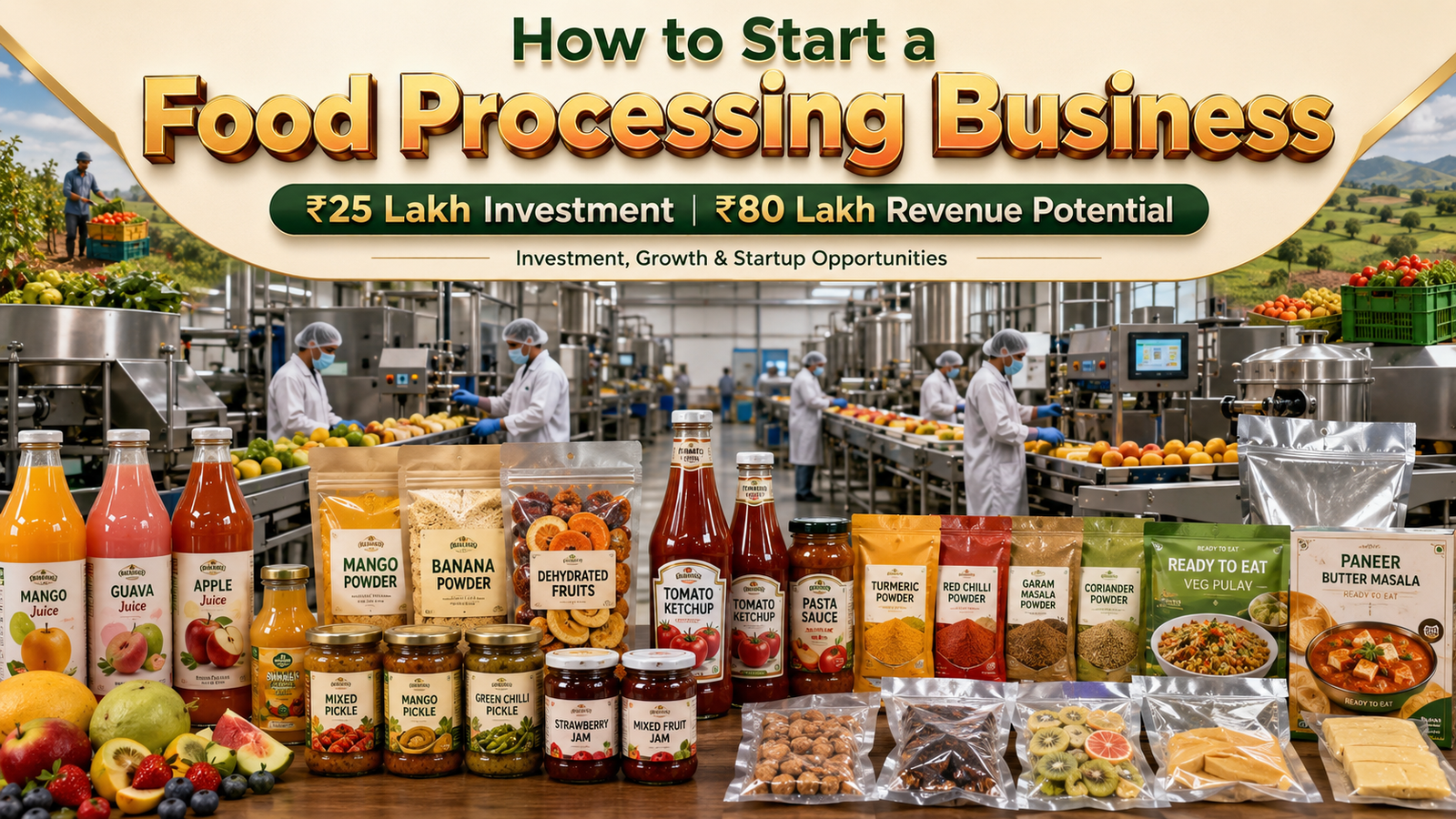

Food Processing Business in India
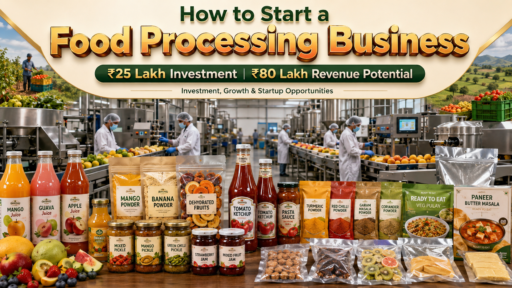
In recent memory, India’s food processing industry is emerging as one of the pivotal entry points for the entrepreneur. If you are looking for a business idea that is scalable and has a good set of tailwinds then this industry fits almost all the criteria — strong domestic consumption, ever expanding cold chain infrastructure, escalating disposable incomes in Tier 2 & Tier 3 cities and a push from the Central Government to push for the expansion of the cold chain infrastructure. Previously seen as a space of the big players, it is now a multi-layered market where small, medium and medium enterprises (MSMEs) with well-defined and specific business ideas are penetrating sub-segments like ready to eat foods, functional beverages, fruit and vegetable processing and ethnic snacks. This article analyses the structural changes, government incentives and known opportunity windows that shape the future of the food processing industry until 2026.
Why the Food Processing Sector Demands Serious Attention Now
India is the second largest producer of fruits and vegetables in the world, but every year a large number of fruits and vegetables are lost in post-harvest stages of production. This gap alone makes investment in processing infrastructure worthwhile, as economically speaking, it would be a complete waste of money. The food processing industry has a significant contribution towards GDP and is one of the leading sectors in terms of employment generation.
Like that of other processed food exports, the revenue has increased compounded, due to the demand from Indian Diaspora, Middle East, Southeast Asia and more from Europe and North America. The potential of India to turn into a global food factory has been realized in the present scenario, with the domestic processing capacity being scaled up, the Ministry of Food Processing Industries (MoFPI) said.
Demand for packaged and convenience foods is increasing in urban areas as a result of lifestyle changes and a decrease in family size, and this is structurally shifting demand in favor of processed and value-added foods over commodity produce. So, the strategic equation has changed: it’s not a sector to venture into lightly. It’s one that you can walk into with a sense of confidence.(Food Processing Business in India)
Related Article: How to Prepare a DPR for Food Processing Unit in India (Project Cost, Profit & Bank Loan Guide)
Government Policies and Incentives: A Favourable Regulatory Tailwind
The Central Government has synched several policy instruments to drive investments in food processing. MoFPI has the Production Linked Incentive (PLI) Scheme for Food Processing, providing financial incentive ranging from its 4% to 10% on incremental sales to designated product segments like ready-to-eat meals, processed fruits and vegetables, marine products and mozzarella cheese. It isn’t a subsidy per se; it’s a “growth” reward based on performance, i.e. efficient, scale rewards.
Perhaps the most comprehensive umbrella scheme for the sector is given by the Pradhan Mantri Kisan Sampada Yojana (PMKSY). It includes the Mega Food Parks scheme (infrastructure development around clusters of farmers), Integrated Cold Chain and Value Addition Infrastructure, and the Scheme for Creation/Expansion of Food Processing and Preservation Capacities. MSME Ministry’s Credit Guarantee Fund Scheme (CGTMSE) by MSME Ministry, thereby lowering the entry barrier. Furthermore, the FSSAI (Food Safety and Standards Authority of India) has regulatory requirements for small food businesses categorized as ‘Basic Registration’ and ‘State License’ have been made significantly easier to fulfil in recent years compared with 10 years ago, in favour of first generation entrepreneurs.(Food Processing Business in India)
In line with Make in India, food processing has been included as a priority sector for FDI and 100% FDI is permitted in most of the sub-segments in the automatic route. This has led to a lot of investment from foreign brands, which in turn has led to backward linkage opportunities for local MSMEs of ingredients and packaging materials. Financial assistance is also available to the exporters for the upgradation of quality of products, development of packaging, and market development activities through APEDA (Agricultural and Processed Food Products Export Development Authority), which is a very important assistance for startups in the international market.
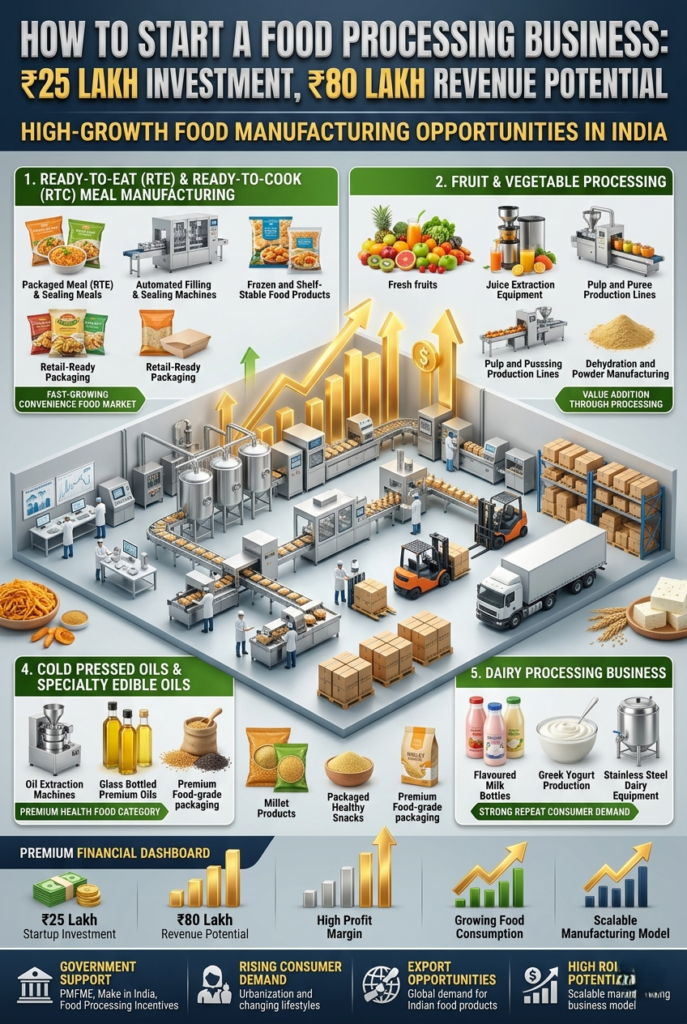
Multiple Business Ideas for Startups: Sector-by-Sector Opportunity Analysis
1. Ready-to-Eat (RTE) and Ready-to-Cook (RTC) Meal Manufacturing
The ready-to-eat and ready-to-cook is likely to be the fastest-growing food processing category in India. Supermarkets and online grocery shoppers are not meeting the growing demand from urban working professionals, students living in PG, nuclear families with dual incomes, or today’s health-conscious consumers who have suspicions about the hygiene standards at restaurants.
A start-up can carve out a niche in this segment with regional cuisine – Chettiar gravies, North Eastern tribal cuisines, authentic Rajasthani dals etc., which is difficult for mass players to duplicate. The total investment needed for establishing a small scale RTE with retort processing, vacuum sealing and cold storage varies from ₹40 lakh to ₹1.5 crore depending on the capacity size and level of automation.
Shelf-life extension technologies such as Modified Atmosphere Packaging (MAP) and retort technology are available even at the MSME level. Gross margins in this segment are often above 35–40% at a steady operating state. This makes it one of the more lucrative business ideas for storytelling-based foundational startups. (Food Processing Business in India)
2. Fruit and Vegetable Processing (Pulp, Puree, Dehydration, Powder)
India has a structural raw material advantage, such as agricultural surpluses of mangoes (in Maharashtra and UP), tomatoes (in Karnataka), bananas (in Tamil Nadu), onions (in Nashik) etc. compared to other food processing economies.
This involves converting surplus produce into shelf-stable products like pulps, purees, dehydrated flakes, and spray-dried powders directly at the farm. This helps reduce farmer distress and prevents price crashes during peak seasons. It also adds value across the supply chain.
With disciplined working capital management, such operations can be viable. Examples include tomato pulp or onion powder production. When sold to institutional buyers like QSR chains, hotel chains, and FMCG sauce manufacturers, these units can break even in 2–3 seasons.
The B2B aspect of these businesses makes them ideal for founder-entrepreneurs. These entrepreneurs prefer volume-based contract models over brand building. A hybrid model is also becoming popular. This is the cold press juice extraction machine. It produces fresh juice and concentrated puree for export. This helps generate revenue from both products and stabilizes cash flow.
Get Detailed Insights from This Book: Handbook on Fruits, Vegetables & Food Processing with Canning & Preservation (3rd Edition)
3. Ethnic Snacks, Namkeen, and Millet-Based Food Products
Among the most highly segmented and opportunity-rich areas in Indian food processing is the organized ethnic snack market. Murukku from Tamil Nadu, chakli from Maharashtra, thekua from Bihar, and tilgur from Rajasthan are regional snacks. Organized retail often overlooks them because only a few national brands can make them without losing their original taste and essence.
A startup that standardises its formulation can scale easily. It can also deliver products through modern, stylish packaging. This combination enables premium retail pricing and strong brand loyalty.
India is officially promoting millets as part of its national nutrition push. Building on the International Year of Millets legacy, the industry is expanding quickly. Millet-based extruded snacks, roasted grain mixes, and fortified biscuits sit at the intersection of health trends, policy support, and supply chain readiness.
The capital investment of a mid-scale namkeen/millet snack unit is not very high, between ₹15 lakh and ₹60 lakh, making it one of the more feasible business concepts for first-generation food entrepreneurs.(Food Processing Business in India)
4. Cold Pressed Oils and Specialty Edible Oils
Refined, solvent extracted oils that compromise the nutritional value for yield and shelf life dominate the edible oil market in India. The counter-movement, cold pressed, wood churned (kachi ghani) and single-origin artisan oils is steadily gaining momentum with urban health-conscious consumers, Ayurveda practitioners and premium food brand formulators.
The trade price of cold pressed coconut oil, sesame oil, mustard oil and groundnut oil is 2-4 times the refined version of the same oil, and the capital needed for the processing is much less as there is no stage of chemical refinery in the process. The problem is how to get a consistent supply of good quality oilseeds and entrepreneurs with access to geographical clusters in Konkan, Rajasthan, or Gujarat can leverage geographical provenance as a brand. For premium positioned brands with clean FSSAI certification and organic credentials, the export potential to the Gulf countries and in the West for natural food retail is real.
5. Dairy Processing — Flavored Milk, Paneer, Greek Yogurt, and Probiotic Products
The dairy sector is the largest in the world by volume in India, however, compared to global trends the value added per liters of milk processed is still low. The difference between the procurement price of commodity milk and its retail realization in value added milk products (Greek yogurt, flavored lassi, artisan paneer, probiotic milk drinks) is enormous and makes it a great opportunity for entrepreneurs.
Localized dairy processing facilities operating in a modern trade model with a farm-to-shelf distribution that includes information on animal welfare, quality, and no artificial additives can offer price premiums of 50% to 150% over commodity dairy on modern trade and quick-commerce platforms. Technical barrier is moderate as standardized UHT, homogenization and pasteurization processing machinery is readily available in Indian market by the Indian machine manufacturers with competitive prices.
Moreover, Technical barrier is moderate in the food processing industry, especially for milk surplus states like Gujarat, Punjab and Rajasthan and the various processing machines like UHT, homogenizer and pasteurization is available in Indian market.
Get Detailed Project Report (DPR): Dairy Farming (Cow) Project Report
Import–Export Opportunity Analysis
India’s food processing exports are growing steadily due to improvements in quality, bilateral trade agreements, and rising global demand for Indian ethnic foods. India exports mainly marine products, buffalo meat, rice (both basmati and non-basmati), spices, and processed fruits and vegetables. The market of organic certified pulses, spices, and grain products is witnessing fresh opportunity windows in Europe and North America, as retail chains in these regions are keen on sourcing Indian organic pulses, spices, and grain products. The APEDA export data portal has also revealed a steady rise in the processed food export revenue, supporting the export business strategy of food processing industries.(Food Processing Business in India)
The specialty ingredient side of the import substitution is currently being explored as processed specialty ingredients including inulin, resistant starch, protein isolates from plants and Guar derivatives (food grade) are currently imported from China and Europe and are seen as possible domestic manufacturing/sourcing opportunities given the increased demand of functional food ingredients in India. Moreover, Technical ability in ingredient processing can begin to drive revenue for food manufacturers, but also generate business for startup operations, thereby expanding their revenue stream while spreading their fixed costs. The most important strategic trick for any food exporter thinking of launching a business is to get FSSAI, Halal, Kosher and USFDA certification as early as possible — these are not only entry barriers for competitors, they are also price justification tools for overseas customers.
Indian MSME Success Stories: Lessons from the Field
1. Prataap Snacks — Amit Kumat, Vadodara
Prataap Snacks was founded by Amit Kumat, along with his brother, as a regional namkeen and extruded snack manufacturer in Gujarat which then grew to a national brand. The company’s success is a textbook example of building a brand in a highly commoditised category; it built the Yellow Diamond brand, ensured uniformity in product quality at manufacturing units and leveraged the use of modern trade and distributor networks to take on the competition from the national brands such as Haldirams and Bikaji.
Moreover, The lesson for new entrepreneurs is the importance of product consistency and packaging design to make a regional food manufacturer a nationally recognized brand without having to spend disproportionate amounts of money on advertising. Furthermore, What is also noteworthy from Prataap’s journey is that the institutional investors are willing to invest in food processing MSMEs who have addressed the quality and size issues — it eventually went public on the stock exchanges, thus proving the long-term value-creation potential in the food processing industry.
2. ID Fresh Food — PC Mustafa, Bengaluru
It all started with a small idli-dosa batter stall in Bengaluru, and now ID Fresh Food is one of the most popular fresh food brands in India, with its products, such as idli-dosa batter, parota, vada, curd and dosa batter, sold all across South and West India.
The lesson learned from this case is that ID Fresh focused on product freshness and a clean ingredient list. Most competitors used preservatives to extend shelf life. The brand built strong emotional trust with health-conscious urban consumers. It promised no preservatives and invested in a cold chain and fast distribution network. It prioritized these investments before focusing on profit.
(However, The rationale behind the decision was backwards: invest in the cold chain early, take a hit in margins in the near-term but create a level of consumer confidence that a competitor can’t easily match. Furthermore, This is possibly the most useful strategic tip that a food processing entrepreneur can get in the Indian market.
3. Vadilal Industries- Rajesh Gandhi, Ahmedabad
Vadilal Industries- Rajesh Gandhi, was transformed from a typical Gujarat-based ice cream company into a significant exporter of diversified frozen food processing. Moreover, Their shift from their core ice cream business to value-added frozen Indian meals, convenience foods and Indian ethnic frozen snacks exemplifies the kind of diversified strategy a mature food processor should be looking for. Furthermore, Vadilal’s export business catering to Indian frozen food requirements in markets as far as US, UK, Australia, Middle East, demonstrates the credible capability Indian food processing MSMEs possess when dealing with regulated markets through investment in food safety infrastructure and appropriate packaging norms. Consequently, The strategy adopted by Vadilal is reproducible by aspiring entrepreneurs planning food processing business for exports: establish the domestic brand; establish manufacturing excellence and then explore the global opportunities through Indian diaspora.
Find high-return business ideas based on your budget & ROI
How NPCS aids Food Processing entrepreneurs
An entrepreneur looking at the food processing industry should treat a detailed feasibility report as the single most critical decision he should make before he injects a single paisa into the business. Moreover, Niir Project Consultancy Services (NPCS) can undertake professional consultancy for the preparation of a comprehensive market survey cum detailed techno-economic feasibility reports (DPRs) for setting up of new Food processing industry / unit.
The detailed market study including detailed product mix, raw material, process flow diagram, market research and demand forecasting, choice of technology, machinery requirement, etc., will enable the prospective entrepreneur to take the appropriate business decision.
Our expertise will help you to analyze, as for instance, an RTE Meal manufacturing unit, fruits processing plant, edible oil manufacturing unit, etc., for their viability, profitability and future scalability. Furthermore, In an industry characterized by as much execution risk as market risk, a prudent project plan would be the primary requirement of the food processing industry.(Food Processing Business in India.
Data Table: Indicative Investment and Revenue Parameters — Selected Food Processing Business Ideas
| Business Segment | Approx. Capital Req. (₹ Lakh) | Gross Margin Range | Key Markets | Export Potential |
| Ready-to-Eat Meals (RTE) | 40 – 150 | 35 – 45% | Urban Retail, E-commerce | High (Diaspora, Middle East) |
| Fruit & Vegetable Processing | 25 – 80 | 25 – 38% | B2B, QSR, Export | Very High |
| Ethnic Snacks / Millet Snacks | 15 – 60 | 30 – 42% | Retail, Modern Trade | Moderate to High |
| Cold Pressed Oils | 10 – 40 | 40 – 60% | Premium Retail, D2C | Moderate |
| Dairy Value-Addition | 30 – 120 | 28 – 45% | Modern Trade, HoReCa | Moderate |
FAQs
1. Is food processing business profitable in India?
Yes. Depending on the product category gross profit margins could be between 25%-60%. One of the most promising manufacturing sectors to be in.
2. What is the minimum investment required?
While small-scale food processing can be started with 10 lacs to 20 lacs, while food processing unit needs more than 50 lacs.
3. What is the most profitable food processing business?
Cold pressed oils, ready to eat foods, premium snacks and specialty dairy products are some of the best bets.
4. What government schemes are available for food processing startups?
PMKSY, PLI scheme, CGTMSE and state-specific subsidy schemes.
5. Do I need an FSSAI registration?
Yes. The FBO should possess a valid FSSAI registration or license to perform such business.
6. Can food processing products be exported?
Yes. International demand for processed foods, spices, fruits, snacks and dairy is high.
7. What is the time frame for starting a food processing unit?
From 3-12 months according to the size, permits, procurements and construction.
8. What are the challenges in food processing business?
The unpredictable prices of raw materials, quality control, the management of supply chains, keeping to standards of food safety, etc.
9. What are the most in-demand food products in 2026?
Ready to eat foods, millet snacks, healthy beverages, dairy products, fruits & vegetables are predicted to be in high demand by 2026.
10. How to make food processing business project report?
A Food Processing business project report contains a market analysis, manufacturing process, required machinery, predicted profit margins, financial projections and compliance with all rules & regulations.