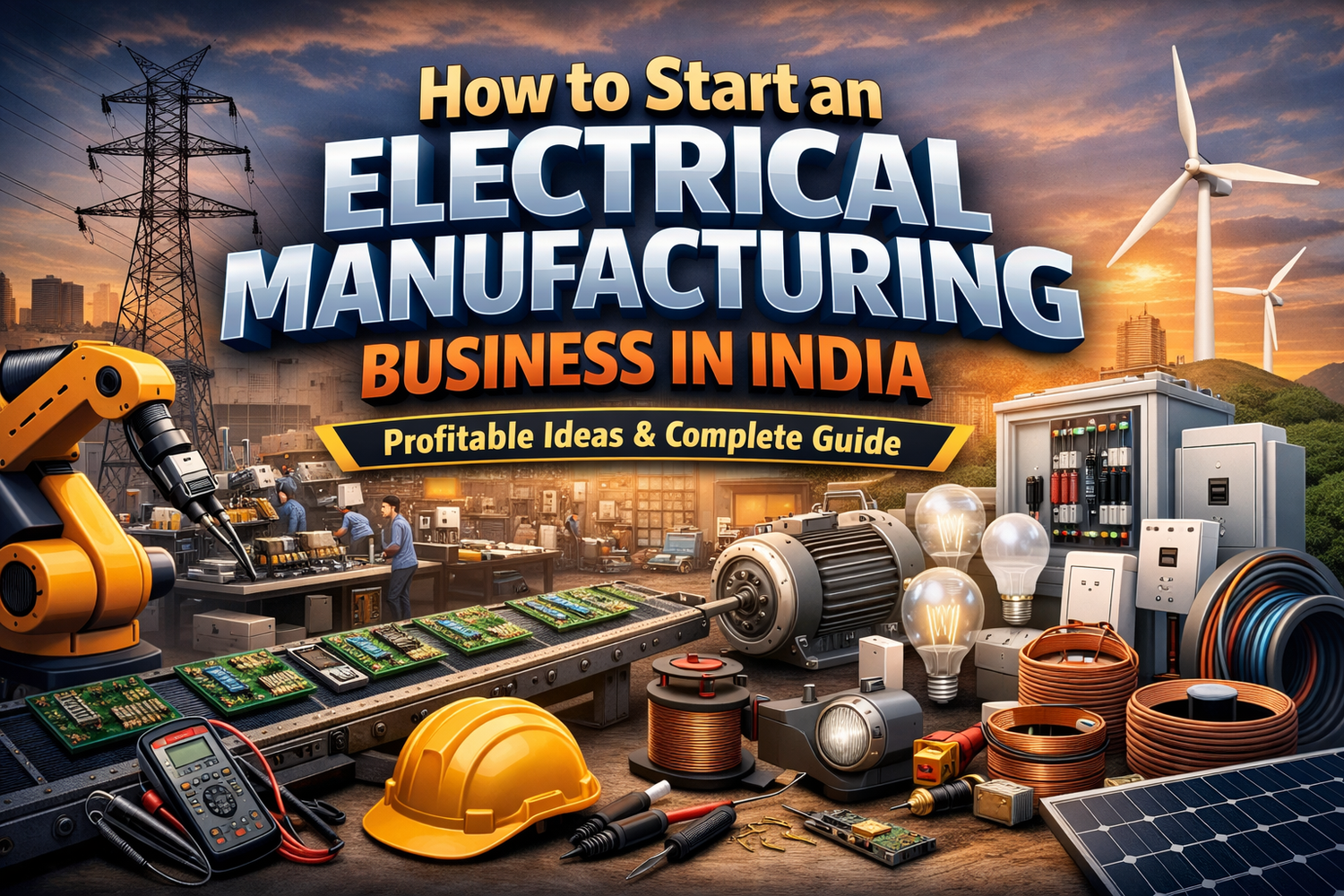

Introduction: Electrical Manufacturing Business in India
India’s electrical and power infrastructure industry is under rapid growth due to industrialisation, renewable energy projects, urbanisation, and Make in India and smart grid adoption by the government. As power generation and transmission networks expand it is finding that the demand in terms of electrical balance-of-plant products is rising steadily across industrial, commercial and infrastructure projects.
Unlike consumer driven business that rely on seasonal demands, electrical manufacturing is used by important industries where products are needed for operations and safety. Components like LT/HT cables, busbars, electrical enclosures, cable trays and earthing systems are needed in power plants, substations, factories, commercial buildings, data centres and renewable energy installations.
For new entrepreneurs and MSME’s manufacturers, this sector promises predictable demand, scalable production opportunities and good domestic as well as export potential.
Read More: Electroplating, Anodizing & Metal Treatment Handbook
Why Electrical Manufacturing Is a Sound Entry Point for MSMEs
Electrical manufacturing is regarded as a practical introduction into industrial entrepreneurship as there is a technical need, but also relatively structured production processes. Many products have standardized designs, so the manufacturers can ramp up operations over time.
Key advantages include:
- Continuous demand from infrastructure and industrial sectors
- Replies to EPC contractors and panel builders with orders repeating
- Customization and increased margins
- Strong domestic manufacturing thrust by government policies
- Export demand from developing economies of Asia and Africa
India’s growing power grid and electrification projects guarantee long-term demand for electrical components and accessories, which makes this industry relatively resilient to market fluctuations.
1. LT and HT Power Cable Manufactures
Market Opportunity
Power cables are important for transmitting electrical energy from the generation stations to the end users. With the growth of sustainability with renewable energy plants, underground urban cabling, EV infrastructure, and industrial automation, the demand for cabling continues to rise.(Electrical Manufacturing Business in India)
Business Potential
Entrepreneurs may start by producing low-tension (LT) cable manufacturing and eventually progress to high-tension (HT) or specialized cable segments. Many special cables like fire-resistant cable or high temperature cable still have import dependency and this provides the opportunity for domestic manufacturers.
Read More: The Complete Technology Book on Electroplating, Phosphating, Powder Coating and Metal Finishing (3rd Revised Edition)
Why This Business Works
- Large industrial and infrastructure customer base
- High volume orders from utilities and EPC companies
- Long-term growth because of energy infrastructure growth
- Potential for exports to developing markets
Cable manufacturing requires more investment and stringent quality standards and has a great revenue potential after establishment.
2. Manufacturing of Copper and Aluminium Busbars
Market Opportunity
Busbars are a crucial part of electrical panels, electrical substations, switchgear, and power distribution systems. As industries begin to make use of high-capacity power systems and automation, the demand for precision-engineered busbars is growing.
Business Advantages
Busbar manufacturing is a relatively moderate investment process when compared to large cable plants. Manufacturers are able to offer customized designs to panel builders and OEM companies.
Growth Factors
- Increasing demand from electrical panel manufacturers
- Insulated Busbars and Flexible Busbars-Insulated and flexible busbar designs offer a wide range of opportunities.
- Repeat orders that are consistent from industrial clients
- Expansion potential into export markets
Many successful Indian MSMEs are specialized in exclusively doing supply to the panel manufacturing companies in terms of busbar supply.
Read More: Manufacture of Electrical Cables, Wire and Wire Products Handbook
3. Electrical enclosures manufacturing
Market Opportunity
Electrical enclosures protect sensitive electrical equipment through their ability to block dust and moisture and prevent corrosion from reaching the equipment. Industrial automation, solar power installations, and outdoor infrastructure projects have driven up the demand for durable enclosures significantly.
Product Segments
- Electrical panels made of sheet metal
- Stainless steel enclosures
- IP-rated outdoor enclosures
- Industrial enclosures that are explosion proof
Why It’s Ideal for Startups
Electrical enclosure manufacturing is mainly fabrication-based and thus suitable for the new entrepreneurs with some sheet metal fabrication experience. Custom design capabilities also let manufacturers charge a premium price for specialty goods.
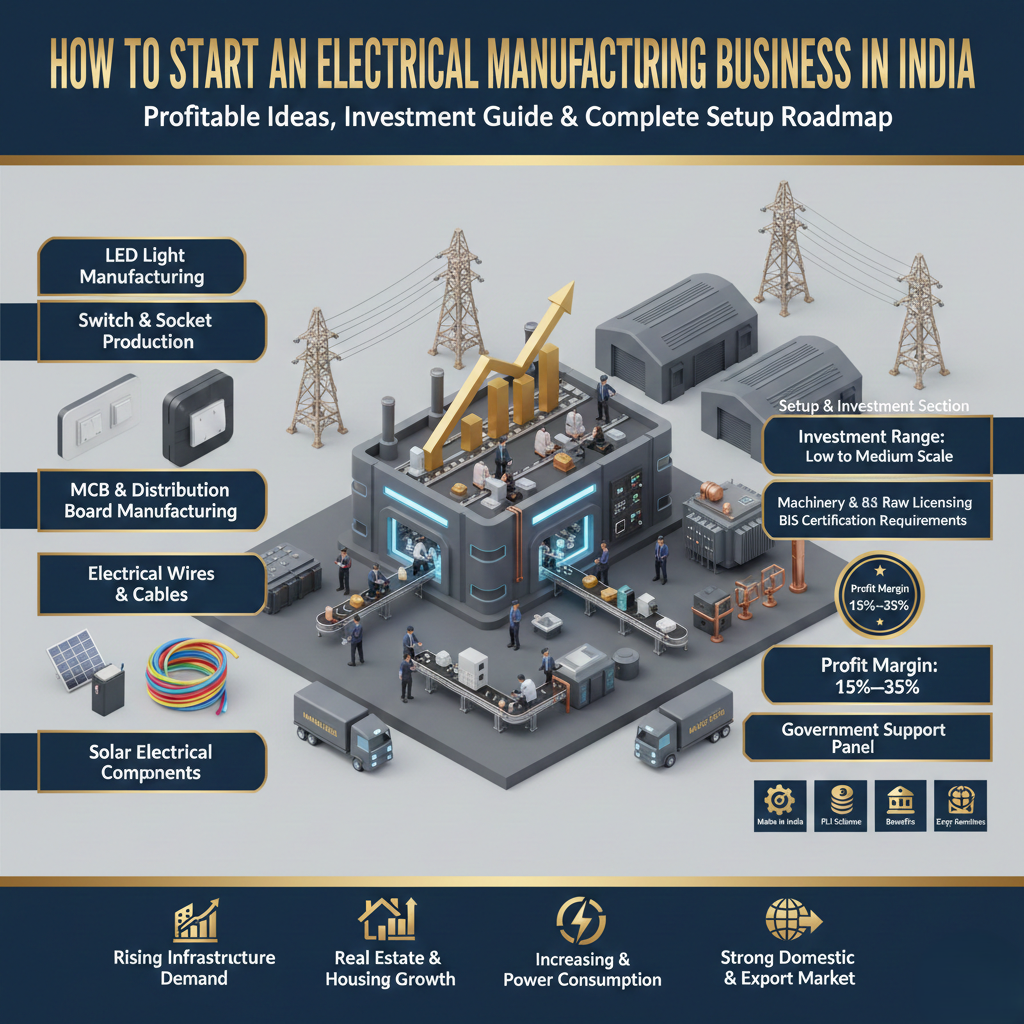
4. Cable Tray Manufacturing
Market Opportunity
Cable trays have been in wide use for supporting and organising electrical wiring in industrial plants, metro rail systems, data centres, commercial complexes, and power projects. As more infrastructure and manufacturing facilities are developed in India, there is a large demand for cable management systems.
Business Benefits
- Relatively simple fabrication process
- Moderate investment in start-up
- High volume project based demand
- Quick scalability using additional machinery
Cable tray manufacturing is considered by many to be one of the best entry level businesses in the electrical fabrication industry, because it offers a combination of manageable technical requirements and a consistent market demand.
Read More: High-Growth MSME Manufacturing Opportunities in India’s Power, Energy and Infrastructure Sectors
5. Earthing and Lightning Protection Systems Manufacturing
Market Opportunity
Earthing systems are required for electrical safety in industrial, commercial and domestic installations. Renewable energy plants, substations, telecom towers and factories are all in need of good grounding solutions.
Products to Manufacture
- Copper – GI earthing electrodes
- Earthing Strips and Connectors
- Bonding clamps and accessories
- Lightning arresters and protective parts
Startup Advantages
Earthing product manufacturing generally encompasses simple production processes and moderate investment. Since the earthing installations are required by safety regulations, the market is stable with recurring replacement and maintenance need.
Import Substitution Opportunities in India
India continues to de-depend upon import of electrical components and opportunities are created for domestic manufacturers to produce specialized and precision-engineered products.
Areas where there is potential include:
- Fire retardant and specialty cables
- Precisely engineered insulated busbars
- High IP rated industrial enclosures
- Effective earthing and grounding solutions
Entrepreneurs that meet compliance with BIS standards coupled with utility approval can receive long-term supply contracts while contributing to domestic manufacturing growth.(Electrical Manufacturing Business in India)
Important Success Strategies for Startups in Electrical Manufacturing
To create a sustainable and profitable business, it is important for entrepreneurs to focus on strategic planning and gradual growth instead of trying to produce multiple categories of products simultaneously.
Important strategies include:
- Focus on a single focused product line
- Invest in quality control and standardised production processes
- Get certifications like ISO and BIS
- EPC contractors and OEM manufactures Build relationships
- Maintain strict timelines for delivery
- Reinvest profits in technology upgrade and capacity expansion
Many successful manufacturing companies in India had started from small fabrication units and gradually grew with certification and export growth.
Read More: Electrical Components Manufacturing Opportunities in India 2026
Importance of Feasibility Planning Before Commencing
Entrepreneurs need to perform a comprehensive techno-economic feasibility study which examines all aspects of their manufacturing facility and equipment investments before they dedicate capital funds:
- Manufacturing process and machinery requirements
- Market Demand and Competition Analysis
- Raw materials sourcing strategy
- Production capacity planning
- Financial projections, return on investment
- Regulatory compliance and certifications
Entrepreneurs can make informed decisions about their business through proper feasibility planning which helps them assess financial risks and determine optimal plant size and product selection and market strategy development.
Conclusion: A Sustainable Manufacturing Opportunity
Electrical manufacturing that is tied to the growth of India’s power and infrastructure sector provides one of the surest and most scalable opportunities for new entrepreneurs. Products such as power cables, busbars, enclosures, cable trays and earthing systems are integral to every industrial and infrastructure project.(Electrical Manufacturing Business in India)
With consistent demand, good government support for local manufacture, and growing export markets, entrepreneurs who seek good manufacturing quality, compliance and long-term relationships in the industry can establish very profitable and sustainable businesses in this sector.
Frequently Asked Questions
- Which electrical manufacturing business is good for beginners?
Cable trays, electrical enclosures and earthing products are typically straightforward to initiate because of fabrication-based processes and moderate investment.
- Is electrical manufacturing profitable in India?
Yes. Infrastructure construction, renewable energy development, and industrial development all mean ongoing demand for electrical components.
- What capital needs to be invested?
Investment varies widely. Small fabrication units need moderate capital requirements and cable manufacturing units need higher investment and certifications.
- Is there export potential?
Yes. Indian electrical manufacturers are exporting to Africa, Southeast Asia and the Middle East because of competitive pricing and manufacturing capabilities.
- What kind of certifications are necessary?
Common certifications include BIS certifications, ISO certifications and approvals from utilities or EPC contractors based on the type of product.