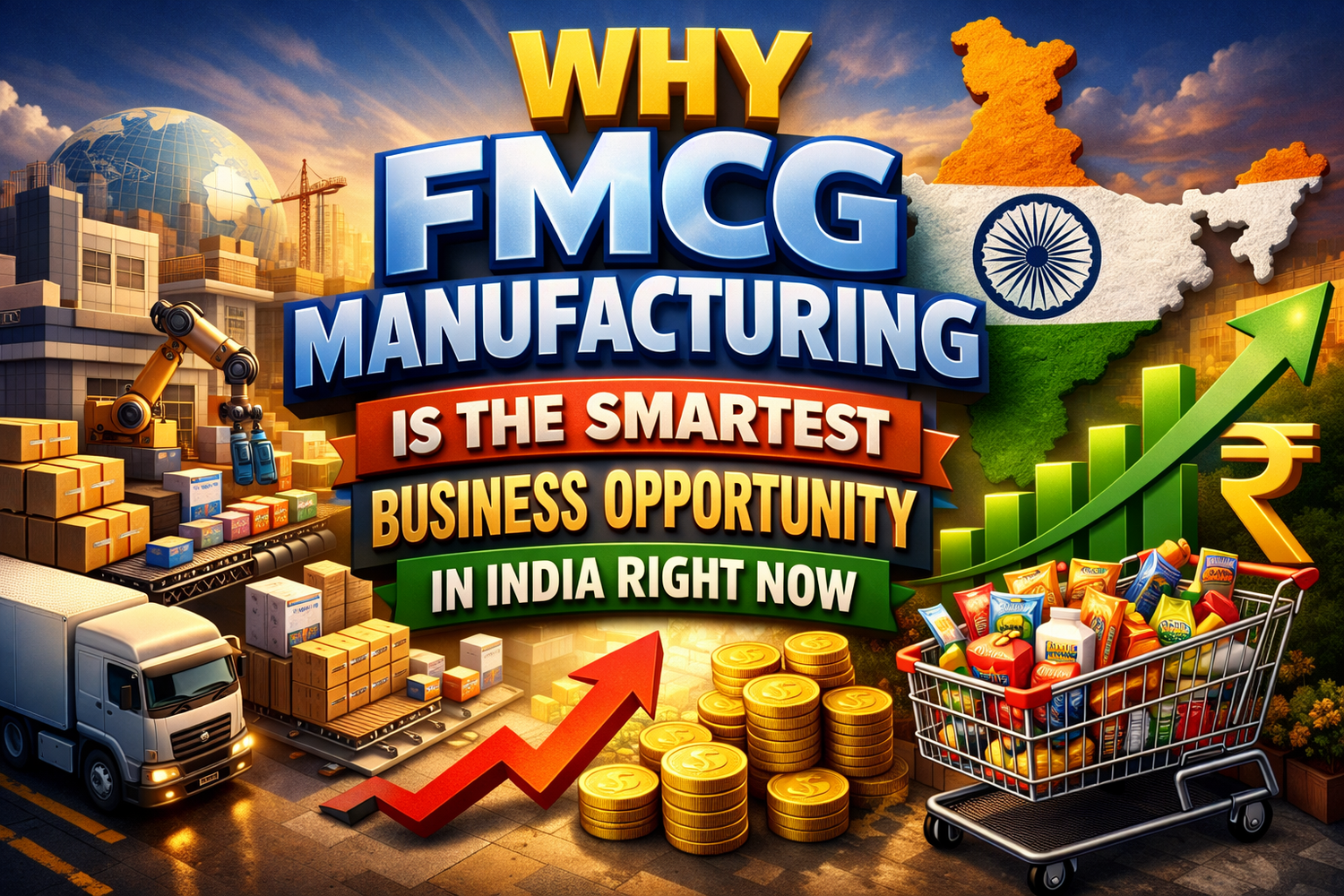

Introduction: FMCG Manufacturing Business in India
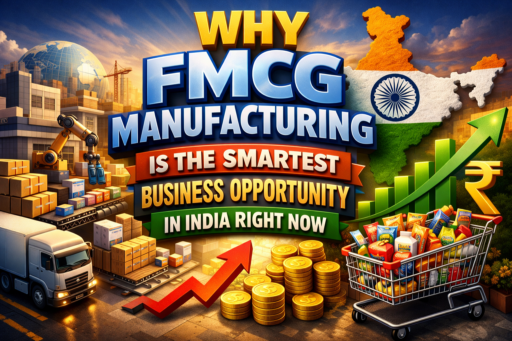
India’s FMCG sector is typically synonymous with brands, advertising and retail wars. However, the true power of this sector is in the background in manufacturing and supply chain businesses that make mass consumption possible. Every packaged food product, cleaning product and personal care brand relies on a huge network of manufacturers to provide ingredients, packaging, formulation, and production services.
As disposable income increases and consumers are moving towards packaged goods, the need for reliable backend manufacturing is growing rapidly. Instead of investing a lot of money into marketing their brand, many new entrepreneurs are finding that manufacturing for FMCG companies is a more stable and scalable business model. Backend suppliers can benefit from repeat orders, institutional buyers, and predictable production volumes.
This article examines the impact of India’s consumption boom and how it opens up profitable opportunities for manufacture, and how entrepreneurs can build sustainable industrial businesses within the FMCG ecosystem.
Read More: Tamarind Pulp from Tamarind – Manufacturing Plant, Detailed Project Report, Profile, Business Plan, Industry Trends, Market Research, Survey, Manufacturing Process, Machinery, Raw Materials, Feasibility Study, Investment Opportunities, Cost and Revenue
FMCG Is Not A Game Only Of Branding
Many first-time entrepreneurs assume success in FMCG is a matter of advertising and brand recognition. While branding is important for companies that deal with consumers, manufacturing businesses don’t work the same way. Backend suppliers don’t do marketing, their focus is on operational efficiency, product quality and cost optimization.
Behind every FMCG product is a manufacturing ecosystem consisting of ingredient processors, packaging manufacturers, formulation experts, and contract production units. These businesses benefit from such advantages as:
- Long-term supply relations with brands|
- Repeat bulk orders and predictable demand
- Lower marketing expenses than consumer brands
- Opportunity to scale production slowly
Because manufacturers have multiple clients at the same time, they are less susceptible to consumer trends.
Market Drivers Driving the Manufacturing Demand in India
The FMCG demand in India is being influenced by strong structural changes. Urbanisation is increasing at a tremendous pace and rural markets are accepting branded products at a faster rate than ever before. Modern retail and e-commerce platforms are making the products accessible in smaller towns, there is a new demand for packaged goods.
There are several key trends that are pushing manufacturing growth:
- Increasing disposable income and growth of the middle class
- More preference for hygienic and packaged products
- Growth of convenience foods and ready-to-use products
- Expansion of online grocery and quick-commerce platforms
Since FMCG products are basic daily use products, the demand is relatively stable even during economic slowdowns. For the manufacturers, this means uninterrupted production cycles and long-term business stability.
Read More: Printed Circuit Board – Manufacturing Plant, Detailed Project Report, Profile, Business Plan, Industry Trends, Market Research, Survey, Manufacturing Process, Machinery, Raw Materials, Feasibility Study, Investment Opportunities, Cost and Revenue
High Potential Manufacturing Segments in FMCG Ecosystem
Food Processing and Ingredients with Added Value
Processed ingredients are the cornerstone of present-day FMCG food manufacturing. Manufacturers of dehydrated vegetables, spice blends, flavour extracts are seeing good growth when packaged food consumption is on the rise. Nutraceutical and functional food ingredients are also following due to growth of health awareness.
This segment works well in the case of entrepreneurs as it integrates the domestic demand with the export possibilities. Standardised ingredients are easier to scale, store and transport making it suitable for MSME-level manufacturing.
Materials Needed: Packaging Materials Manufacturing
Packaging is one of the surest sure shot FMCG manufacturing sectors as every product needs protective and attractive packaging. From flexible films to eco-friendly paper boxes, the demand for packaging directly increases with the consumption.
Some typical manufacturing opportunities are:
- Laminated films and pouches, used in snacks and personal care products
- Sustainability-driven paper packaging for the food industry
- Bottle tops, pumps and dispensers for household products
Packaging manufacturers in many cases form long-term supply contracts with FMCG companies, which guarantees them steady returns.
Read More: Glass Sheet/Flat Glass/Float Glass – Manufacturing Plant, Detailed Project Report, Profile, Business Plan, Industry Trends, Market Research, Survey, Manufacturing Process, Machinery, Raw Materials, Feasibility Study, Investment Opportunities
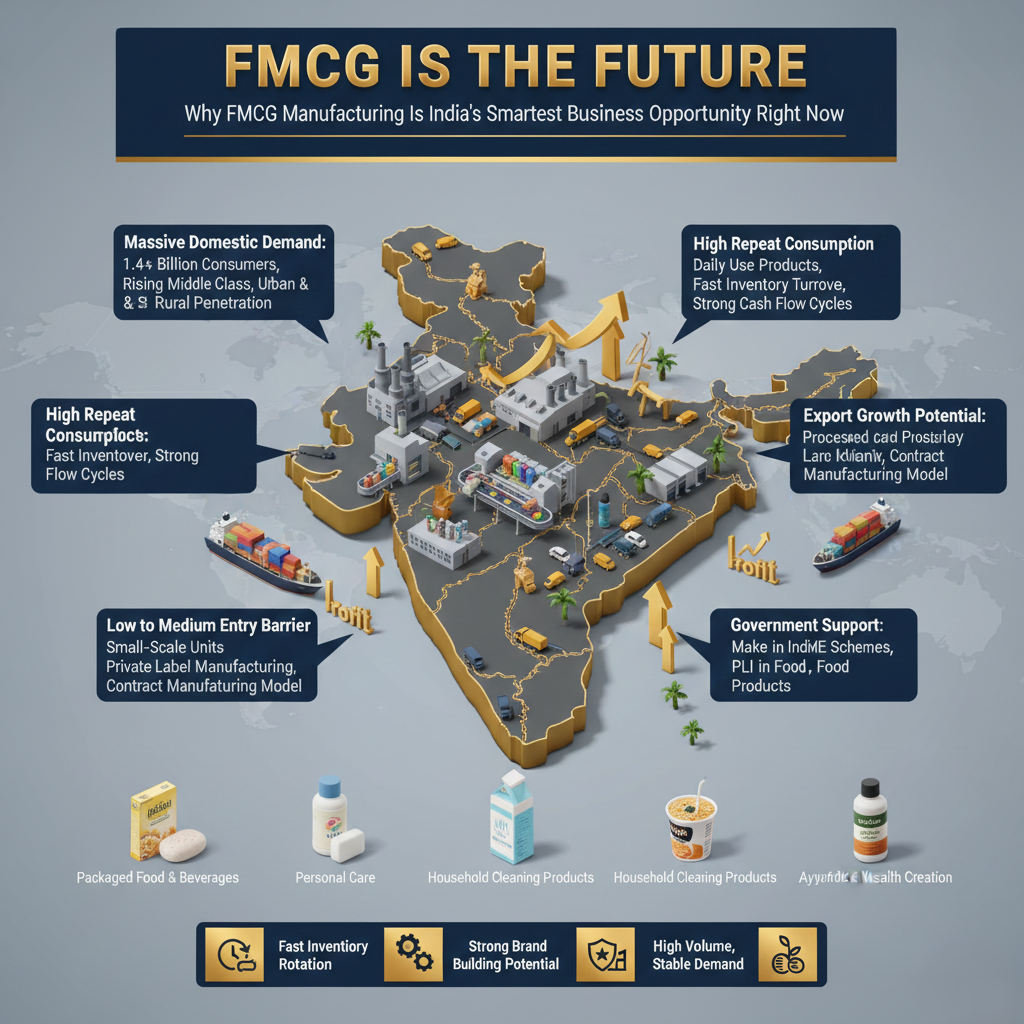
Personal Care and Home Care Intermediaries
Rather than creating costly beauty or cleaning brands, entrepreneurs can concentrate on producing intermediates that are used by a number of companies. Detergent bases, shampoo concentrates and cosmetic formulation carriers are examples of products with steady demand.(FMCG Manufacturing Business in India)
Due to continuous importation of many specialty ingredients, there is potential for domestic manufacturers to develop high-quality production units to replace imports but to serve local brands.
Contract Manufacturing for FMCG Brands
The emergence of asset-light FMCG startups has created a strong demand for third-party manufacturing partners. Many brands prefer to outsource production instead of investing in factories which has opened up avenues for entrepreneurs to run specialized facilities for manufacture.
Contract manufacturing businesses usually manufacture goods using brand names or private-label agreements. Once the quality approvals are made, manufacturers often receive predictable orders and long-term partnerships.
Read More: How to Start a Profitable Aerosol Manufacturing Business
Import-Export Potential Increasing Growth Possibilities
FMCG’s manufacturing has great export potential, especially in the standardized products sector. Dehydrated foods, spice blends, packaging materials and personal care intermediates are traded widely internationally. Export markets enable manufacturers to spread out revenue sources and to grow at a quicker rate by exploiting global demand.
The competitive labour costs and emerging reputation of India in the food processing and packaging sectors make it a compelling manufacturing hub for international buyers.
Government Support for FMCG Manufacturing Startups
The Indian government is a big supporter of manufacturing through different initiatives. Entrepreneurs establishing FMCG units can take advantage of:
- Food processing incentives and infrastructure support
- Programmes for MSME development and startups
- Export promotions initiatives and trade assistance
Compliance of the relevant authorities ensures a smoother functioning and helps the manufacturers build trust among the institutional buyers.
Read More: 10 New Manufacturing Business Opportunities in India for Startups and MSMEs
The Importance of Feasibility Planning Before Starting
FMCG manufacturing may seem simple but the profitability relies on proper planning and cost management. Entrepreneurs have to consider the capacity of production, procurement of raw materials, transportation cost and machinery investment before starting a factory.
A feasibility-first approach gives businesses the ability to:
- Understanding market demand and competition
- Plan for the capacity of production at scale
- Optimise financial projections and ROI
- Reduce operational risks
Professional project reports and techno-economic feasibility studies are often an important part of making industrial ventures successful.
Conclusion: The Future is for Backend FMCG Manufacturers
India’s consumption boom is opening up a huge potential for entrepreneurs targeting the manufacturing side of FMCG. Whereas the brands grab the spotlight in the public eye, the backend manufacturers are the ones responsible for long-term profitability, supporting the entire supply chain.(FMCG Manufacturing Business in India)
From food ingredients and packaging materials, to intermediates and contract production, FMCG manufacturing provides stable demand, export potential and scalable growth. Indian entrepreneurs who prioritize operational excellence and strategic planning will establish businesses that achieve sustainable growth through the development of the country’s consumption-based economy.(FMCG Manufacturing Business in India)
FAQs
- Is FMCG manufacturing a good business for beginners?
Yes, many MSMEs start with packaging, food ingredients, or contract manufacturing due to stable demand. - Which FMCG manufacturing segment is most profitable?
Packaging materials, processed food ingredients, and specialty intermediates often provide strong margins. - How much investment is needed?
Investment depends on the product and scale, ranging from small MSME setups to larger industrial plants. - Is export possible for FMCG manufacturers?
Yes, standardized products such as dehydrated foods and packaging materials have strong international demand. - What licenses are required?
Approvals may include FSSAI, pollution control clearances, and industry registrations depending on the product category. - Why is feasibility analysis important?
It helps evaluate costs, demand, and scalability before investing in manufacturing infrastructure.