
What is a compressed biogas project report?
A compressed biogas plant project report is a detailed project report (DPR) for a plant that digests cattle dung, Napier grass, crop residue or organic waste, upgrades the biogas to at least 95% methane and compresses it for sale. It covers feedstock, technology, machinery, approvals, project cost, finance, five-year projections, DSCR and break-even.
Developers use it to apply for a term loan, an oil company offtake agreement and GOBARdhan support; lenders use it to judge whether gas and manure sales can repay the loan.
Also known as: CBG, bio-CNG, biomethane, renewable natural gas, RNG.
CBG plant cost in India and plant economics
The sample report models a plant making 2,300 kg of CBG a day for 330 days a year. It starts at 60% capacity and reaches 80% in Year 5. Gas is priced at ₹92.80 per kg before GST, and manure sales are left out, so the figures are on the cautious side.
| Land and site development | 93.62 |
|---|---|
| Building and civil works | 142.17 |
| Plant and machinery | 405.27 |
| Other fixed assets | 69.10 |
| Contingencies | 27.37 |
| Preliminary and pre-operative | 18.44 |
| Working capital margin | 14.86 |
| Total | 770.83 |
| Promoter's contribution (25%) | 192.71 |
|---|---|
| Term loan from bank (75%) | 578.12 |
| Cash credit limit (separate) | 44.60 |
| Total project cost | 770.83 |
Indicative cost by size: plants of 2–5 TPD usually cost about ₹3–6 crore per TPD of CBG, so a 5 TPD plant runs to ₹15–30 crore. Plug flow digesters for grass and straw, pipeline connection and feedstock storage sheds push a project to the top of the range.
Term loan at 10.5% with a 6-month moratorium and 54 monthly instalments; the lowest yearly DSCR is 1.21. All sample figures are illustrative.
Compressed biogas manufacturing process
A CBG plant is a biological process followed by a gas plant. The digesters set the output; the upgrading and compression units set the gas quality the buyer will accept.
- Feedstock receiving and pre-treatment
Dung is pumped as slurry, while Napier grass and straw are chopped to a few centimetres and often pre-treated so bacteria can break down the fibre.
- Anaerobic digestion
The mix is held at about 35 to 40°C in sealed, stirred digesters for 25 to 35 days, producing raw biogas of roughly 55 to 60% methane.
- Gas cleaning
Hydrogen sulphide is removed in a biological or chemical scrubber and moisture in a chiller, which protects the compressor and the upgrading unit.
- Upgrading
Carbon dioxide is stripped out by pressure swing adsorption, membranes or water scrubbing until methane reaches the 95% that IS 16087 asks for.
- Compression and dispatch
The gas is compressed to about 250 bar into cascades for CNG outlets, or injected at lower pressure into a city gas pipeline.
- Digestate to manure
Spent slurry is separated; solids are dried and enriched into fermented organic manure and the liquid is recycled or sold as liquid manure.
Which digester and upgrading technology suits your feedstock?
The digester follows the feedstock, and the upgrading unit follows plant size and power cost. Getting the first choice wrong is the most expensive mistake in a CBG project.
| CSTR (wet) digester | Continuously stirred tank for pumpable slurry with under about 12% solids. Suits dung, press mud and food waste; grass and straw need fine chopping. |
|---|---|
| Plug flow (dry) digester | Handles high-solids feed such as Napier grass and paddy straw with much less process water. Feed moves through as a thick mass, so there is far less slurry to pump and separate. |
| Pressure swing adsorption (PSA or VPSA) | Adsorbs carbon dioxide on a solid bed. Common in 2–10 TPD plants; CSIR-IIP reports up to 97% methane with its VSA route. |
| Membrane separation | Compact and modular, easy to add stages as the plant grows. Membranes need clean, dry gas, so H2S removal must work every day. |
| Water scrubbing | Dissolves carbon dioxide in water under pressure. Simple and low on chemicals, but uses more power and water than the other routes. |
| Cascade or pipeline supply | Cascades suit plants far from a gas grid; a pipeline link saves trucking and compression to 250 bar but needs a CGD network nearby. |
Feedstock for a CBG plant: dung, Napier grass and residues
Feedstock is the business. As an indicative guide, a dung-only plant needs about 50 tonnes of fresh dung a day per tonne of CBG. Napier grass gives roughly 38–46 kg of CBG per tonne. Grass slows in winter and straw is available only after harvest, so a mixed feed with stored straw keeps the digesters fed all year.
| Feedstock | Share of cost | Year 3 (₹ lakh) |
|---|---|---|
| Cattle dung | 35% | 42.23 |
| Napier grass | 30% | 36.20 |
| Paddy straw and other crop residue | 20% | 24.13 |
| Segregated organic municipal waste | 5% | 6.03 |
| Feedstock collection and transport | 10% | 12.07 |
| Total | 100% | 120.66 |
Feedstock is 24.5% of sales in the sample. Yields per tonne are indicative; test your own mix before fixing capacity.
Machinery for a compressed biogas plant
The digesters are the largest item in the sample, followed by the upgrading unit. Together they take more than half of the machinery budget.
| Equipment | What it does | Sample cost (₹ lakh) |
|---|---|---|
| Feedstock shredder and pre-treatment | Chops grass and straw, mixes slurry | 48.63 |
| CSTR anaerobic digesters with agitators | Turn feedstock into raw biogas | 121.58 |
| Gas holder and H2S scrubber | Store gas, remove hydrogen sulphide | 32.42 |
| Biogas upgrading unit (VPSA or membrane) | Removes carbon dioxide to reach 95% methane | 89.16 |
| High pressure CBG compressor | Compresses gas to about 250 bar | 48.63 |
| Cascades and filling station | Hold and deliver gas to outlets | 24.32 |
| Digestate separator and manure handling | Turns spent slurry into manure | 24.32 |
| Flare, gas analyser and SCADA controls | Safety, gas quality and plant control | 16.21 |
| Total plant and machinery | 405.27 | |
Costs are the sample report's estimates for a 2,300 kg per day plant. Get current quotations before you finalise.
Licences and approvals for a CBG plant
| Offtake letter of intent | LoI from an oil marketing company under SATAT, then a commercial agreement valid for 15 years; IOCL asks for a ₹5 lakh bank guarantee per proposed plant |
|---|---|
| PESO licence | Licence under the Gas Cylinders Rules, 2016 for compression and cylinder or cascade filling; compressor electrical parts must be PESO-approved |
| Gas quality standard | IS 16087:2016: at least 95% methane, total sulphur up to 10 ppm and moisture up to 5 mg per cubic metre |
| Pollution board consent | Consent to establish and operate from the State Pollution Control Board under the Water and Air Acts |
| GOBARdhan registration | Registration on the unified GOBARdhan portal; registered plants are eligible for Market Development Assistance on manure |
| GST | Standalone CBG attracts 5% GST, as stated in the IOCL FAQ and the PNGRB report of February 2026 |
Factory licence, fire NOC, land use change and power connection are also needed; rules vary by state.
Government support for CBG plants as of October 2026
Support for CBG moved to a single scheme in August 2026. Older guides that quote MNRE's ₹4 crore per 4,800 kg a day are out of date for new projects.
GOBARdhan capital assistance
Up to ₹2 crore per TPDFor eligible greenfield plants and capacity expansions, FY 2026-27 to FY 2035-36, including feedstock aggregation and manure processing assets.
Administered CBG price
₹2,110 per MMBTUA stable price for at least ten years, backed by a credit guarantee mechanism for eligible MSME projects.
Market Development Assistance
₹1,500 per tonne of manurePaid on organic manure from registered GOBARdhan plants, which helps the manure side of the business.
Scheme terms change. Confirm current guidelines with the scheme portal and your lender before you apply.
CBG business in India: who buys the gas and the manure
CBG is sold to a handful of institutional buyers, not to retail customers. The CBG obligation on city gas companies covers CNG for transport and piped gas for homes. It rises from 3% in FY 2026-27 to 4% in FY 2027-28 and 5% from FY 2028-29, which sets demand for years ahead.
- Oil marketing companies buying under SATAT agreements
- City gas distribution companies meeting the blending obligation
- Industries replacing LPG or natural gas for heating
- Fleet operators and CNG station owners
- Farmers, fertiliser companies and FPOs buying organic manure
Location decides margins: PNGRB's February 2026 report counts only 24 functional CBG plants connected to city gas networks. A site close to a CNG outlet or pipeline saves on cascades and trucking every day the plant runs.
Mistakes that weaken a compressed biogas plant project report
- No year-round feedstock plan
Napier grass slows in winter and straw comes once a season. Without contracts and storage for 6 to 8 months of residue, the plant runs half full.
- Gas yields taken from brochures
Fibrous feed gives far less gas without pre-treatment. Lenders trust yields from a lab test of your own mix.
- Counting on old subsidies
MNRE stopped new Waste to Energy applications after 31 December 2025. Build the plan on GOBARdhan terms and keep subsidy out of repayment cash flow.
- Ignoring transport to the buyer
Every kilometre to a CNG outlet adds cascade trips and compression cost; distance must be in the operating cost.
- No buyer for the manure
The plant produces many tonnes of digestate a day. Without a sales plan for manure, storage fills up and gas output has to be cut.
How NPCS helps you set up a compressed biogas plant
- Feedstock and capacitySize the plant to the dung, grass and residue you can secure within an economic radius.
- Technology choiceCompare CSTR and plug flow digesters and PSA, membrane and water scrubbing upgrading for your feed.
- Bank-ready project reportProjections, DSCR, and gas and manure revenue in the format your lender and the oil company want.
- Approvals and supportThe SATAT LoI, PESO and pollution approvals, and the GOBARdhan support you can apply for.
NPCS's published client list records 269 specialty chemicals assignments, and NPCS has prepared project reports for entrepreneurs, banks and companies since 1994.
What's inside the compressed biogas sample report
- Introduction
- Uses and applications
- Market potential
- Manufacturing process
- Raw materials
- Plant and machinery
- Land, building and utilities
- Manpower
- Licences and approvals
- Project cost and means of finance
- Working capital
- Projected profitability
- Cash flow statement
- Projected balance sheet
- Depreciation
- Term loan repayment
- Debt service coverage
- Break-even analysis
- Financial ratios
- Key assumptions
- Conclusion
- Monthly loan repayment schedule
18 pages, five-year projections, illustrative figures.
Open sample reportFree sample or a report for your project?
| What you get | Free sample | NPCS report for your project |
|---|---|---|
| Capacity and location | Typical unit | Your capacity, site and state |
| Figures | Illustrative | Built on current prices and quotations |
| Machinery suppliers and quotations | No | Yes |
| Market survey for your region | No | Yes |
| Bank or scheme format (PMEGP, term loan) | No | Yes |
| Use for a loan application | No | Yes |
Real NPCS compressed biogas project reports
These are compressed biogas project reports NPCS has prepared, with the plant capacity, total capital investment, rate of return and break-even worked out in each. Costs have moved since some were written, so we bring any of them up to date for your capacity and location.
| Project report | Plant capacity | Total investment | Rate of return | Break-even | Action |
|---|---|---|---|---|---|
| Compressed Biogas | 1200 MT/Annum | ₹4.47 crore | 43% | 33% | Get this report |
| Compressed Biogas | Compressed Bio Gas , 6 MT Per Day Spent Slurry as Manure, 60 MT Per Day | ₹5.22 crore | 27% | 46% | Get this report |
Figures as worked out in each NPCS report. Total investment includes plant and machinery, land and building, and working capital.
What clients say about NPCS
4.7
264 Google reviews, as of 20 Oct 2026
Clients most often mention
- feasibility reports 18
- project report 16
- helpful for startups 15
- detailed reports 8
-
Excellent experience with Niir Project Consultancy Services. Their Techno-Economic Feasibility Reports are incredibly detailed and backed by solid market data.
Piyush Singh, Google review, 2026
-
Niir Project Consultancy Services offers excellent guidance for business setup. Their market survey and feasibility reports saved us a lot of time and helped us make informed decisions. Highly recommended
Saroj Yadav, Google review, 2026 View on Google
-
In an era of information overload, NIIR stands out for its precision. Their technical consultancy and market feasibility studies are world-class.
Shrishti Gautam, Google review, 2026
-
NIIR Project Consultancy Services provides useful books and reports for students, entrepreneurs, and small businesses. Their content is easy to understand and focuses on practical ideas for starting and managing industries. Overall, NIIR is helpful for learning about business and project planning.
Raj Yadav, Google review, 2026
Compressed Biogas project report: frequently asked questions
How much does a CBG plant cost in India?
Plants of 2–5 tonnes per day (TPD) of CBG usually cost about ₹3–6 crore per TPD of capacity, including land, digesters, upgrading, compression and working capital margin. Our sample report models a 2,300 kg per day plant at ₹771 lakh. These are indicative figures; the real cost depends on feedstock, digester type, land and whether you supply by cascade or pipeline.
How much cow dung is needed for a 1 TPD CBG plant?
Roughly 50 tonnes of fresh cattle dung a day for each tonne of CBG when dung is the only feed. This is an indicative planning figure. Mixing in Napier grass, press mud or crop residue cuts the tonnage, because these give more gas per tonne. A project report should rest on a gas yield test of your own feedstock mix.
What is the selling price of CBG?
The GOBARdhan scheme approved in August 2026 sets an administered CBG price of ₹2,110 per MMBTU for at least ten years. Before that, GAIL listed ₹1,478 per MMBTU plus a ₹8 per kg compression charge for May to October 2026. CBG attracts 5% GST. Our sample report uses a conservative ₹92.80 per kg.
Is a CBG plant profitable?
In our illustrative sample, a 2,300 kg per day plant earns a 13% return on investment in Year 3 without counting manure sales. It breaks even at about 40% of capacity and pays back in about 4.7 years. Real profit depends on feedstock cost and supply, gas yield, uptime of the upgrading unit and how far you transport the gas.
What subsidy is available for a compressed biogas plant?
Under GOBARdhan, eligible greenfield CBG projects can get capital assistance of up to ₹2 crore per TPD of installed capacity from FY 2026-27 to FY 2035-36. MNRE stopped taking new Waste to Energy applications after 31 December 2025. Registered plants can also claim Market Development Assistance on organic manure. Check the scheme guidelines in force when you apply.
CBG plant kaise lagaye?
Start by tying up feedstock for the whole year and choosing land within reach of a CNG station or gas pipeline. Then apply for an oil company letter of intent, get the project report, pollution consent and PESO licence, and arrange the term loan. Construction and stabilising the digesters usually take the better part of a year.
Is the sample report free and can I use it for a loan?
The sample is free to view and download. It is an illustrative report that shows the format and depth of an NPCS report. Its figures are representative and not based on a real project, so it should not be submitted to a bank. For a loan, NPCS prepares a report for your own capacity, feedstock, location and offtake terms.
Sources and references
- Cabinet approves GOBARdhan, India's National Unified Scheme for Compressed BiogasPress Information Bureau, Government of India, checked Oct 2026
- Frequently asked questions on CBG (SATAT)Indian Oil Corporation Ltd, checked Oct 2026
- CBG modalities and pricingGAIL (India) Ltd, checked Oct 2026
- Programme on Energy from Urban, Industrial and Agricultural Wastes and ResiduesMinistry of New and Renewable Energy, checked Oct 2026
- CBG pipeline infrastructure status report, February 2026Petroleum and Natural Gas Regulatory Board, checked Oct 2026
- Approval of CNG/CBG gas compressors (circular, 8 July 2024)Petroleum and Explosives Safety Organisation, checked Oct 2026
- Technology for upgrading raw biogas to pipeline quality bio-methaneCSIR-Indian Institute of Petroleum, checked Oct 2026
- Market Development Assistance of Rs 1,500 per MT for organic fertilizersAll India Radio News, checked Oct 2026
- Unified registration portal for GOBARdhanAll India Radio News, checked Oct 2026
Recommended reading on compressed biogas
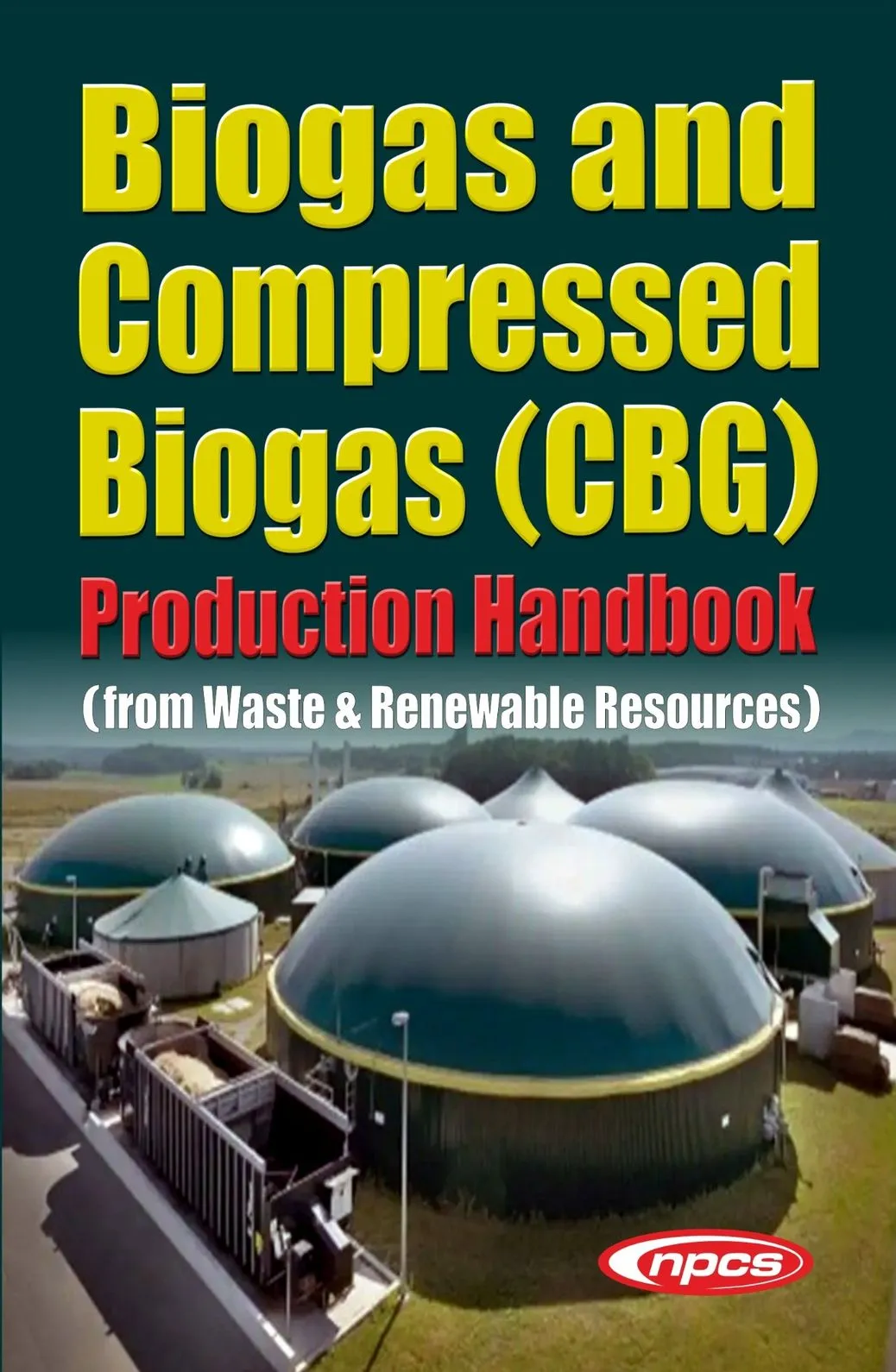

The NPCS project team, led by Ajay Kumar Gupta
This page and its sample report are prepared and reviewed by the NPCS project team, which has written techno-economic feasibility studies and detailed project reports since 1994.
Ajay Kumar Gupta founded Niir Project Consultancy Services (NPCS) and leads the organisation. With 40 years of experience in MSME project consulting, he has built the team that has delivered more than 28,000 project reports for clients worldwide, helping entrepreneurs plan and finance profitable manufacturing businesses.
- Published
- Last updated
- Next review
- Oct 2027
- Reviewed by
- NPCS project team
This page is reviewed every 12 months, or sooner when scheme limits, GST rates, BIS rules or pollution categories change. The sample report is illustrative: its figures are generated from industry-typical ratios for a unit of this size, checked so every statement balances, and are not taken from any client project.