
What is a composite materials project report?
A composite materials project report is a detailed project report (DPR) for a unit that moulds glass fibre and polyester resin into FRP parts such as tanks, panels and enclosures. It sets out the process, moulds and machinery, raw materials, market, project cost, means of finance, five-year projections, DSCR and break-even a lender needs.
Entrepreneurs and existing plastics or fabrication firms use it to size the unit and apply for a term loan; banks use it to judge whether the unit can repay.
Also known as: composites.
What a bank looks for in a composite materials project report
A credit officer reading an FRP project report tests a handful of numbers first. These are the values in our sample report and why each one matters for a composites unit.
Resin and glass fibre are about half of every rupee of sales. A report that shows much less is usually ignoring scrap, trimming waste and rejected parts.
Polyester resin is a petrochemical and its price moves with crude and styrene. Banks expect the report to show what a resin price rise does to profit.
DSCR (debt service coverage ratio) is cash available divided by loan dues. The weakest year matters more than the average of 2.23.
Industrial and tender buyers pay late. Debtor days, plus 30 days of resin and fibre stock, set the cash credit limit.
Values are the assumptions in our illustrative sample. Your report uses figures for your products, suppliers and buyers.
How much does a composite materials manufacturing plant cost in India?
The cost depends less on tonnage than on the moulding route. Open moulds are cheap; a compression press and steel dies push the budget up sharply. The large tier is the unit in our sample report; the other two are indicative.
Hand lay-up unit
₹25–60 lakh
About 100–300 kg per day, open moulds
- Moulds and tools₹8–20 lakh
- Shed fit-out (rented)₹5–15 lakh
- Working capital margin₹5–12 lakh
Can fit PMEGP, subject to the ₹50 lakh limit
Spray-up and small press
₹1.5–3 crore
About 500–1,200 kg per day
- Machinery and moulds₹0.7–1.5 crore
- Land and building₹0.5–1 crore
- Working capital margin₹15–30 lakh
MSME term loan, often with CGTMSE cover
Multi-process unit
₹473 lakh
2,200 kg per day, 7,26,000 kg per year
- Plant and machinery₹241 lakh
- Land and building₹148 lakh
- Working capital margin₹33 lakh
Term loan ₹355 lakh (75%), promoter ₹118 lakh
Smaller tiers are indicative and exclude land unless stated. Mould count, press tonnage and location move the cost most.
Composite materials plant economics in our sample
The sample models a 2,200 kg per day FRP unit working 330 days a year. It starts at 60% capacity and reaches 80% in Year 5, selling at an average ₹197 per kg ex-GST across its product mix.
| Land and site development | 37.97 |
|---|---|
| Building and civil works | 110.47 |
| Plant and machinery | 241.09 |
| Other fixed assets | 22.73 |
| Contingencies | 17.58 |
| Preliminary and pre-operative | 10.75 |
| Working capital margin | 32.53 |
| Total | 473.12 |
| Promoter's contribution (25%) | 118.28 |
|---|---|
| Term loan from bank (75%) | 354.84 |
| Cash credit limit (separate) | 97.60 |
| Total project cost | 473.12 |
Term loan at 10.5% with a 6-month moratorium and 54 monthly instalments. All figures are illustrative.
Composite materials manufacturing process
Most small FRP units run two routes side by side: open moulding for large or one-off parts, and compression moulding for repeat parts. The steps below follow a part from mould to dispatch.
- Mould preparation
The mould is cleaned, polished and waxed or coated with release agent; a scratched mould copies every mark onto the part.
- Gel coating
A pigmented gel coat, usually 0.4–0.6 mm thick, is sprayed on to give the weather-resistant outer face.
- Lay-up or spray-up
Glass mat or chopped roving is wetted with resin mixed with MEKP catalyst and rolled out to squeeze air bubbles from the laminate.
- Compression moulding
For repeat parts, SMC sheet is cut, loaded into heated matched dies and pressed for a few minutes per cycle.
- Curing
Open-mould parts cure at room temperature; a post-curing oven brings them to full hardness faster and more evenly.
- Demoulding and trimming
Parts are lifted off with air or wedges, and flash is trimmed and holes drilled, often on a CNC router.
- Inspection
Thickness, Barcol hardness and glass content (by burn-off) are checked and recorded for the buyer's test report.
Raw materials for FRP composite products
Resin and glass fibre make up 78% of raw material cost in our sample. Both are sold through distributors of large resin and glass makers, and resin has a limited shelf life, so units buy about a month ahead rather than stocking in bulk.
| Raw material | Share of cost | Year 3 (₹ lakh) |
|---|---|---|
| Unsaturated polyester resin | 48% | 238.53 |
| Glass fibre chopped strand mat and woven roving | 30% | 149.08 |
| Gel coat and pigment pastes | 8% | 39.75 |
| Calcium carbonate and other fillers | 6% | 29.81 |
| MEKP catalyst and cobalt accelerator | 5% | 24.85 |
| Mould release agents | 3% | 14.91 |
| Total | 100% | 496.93 |
Moulds and machinery for a composites unit
The compression press is the single largest item, and moulds come second. Moulds are product-specific, so the list grows each time you add a new part.
| Machine | What it does | Sample cost (₹ lakh) |
|---|---|---|
| Hydraulic compression moulding press | Presses SMC and DMC parts in heated dies | 72.33 |
| Moulds and tooling | FRP open moulds and steel press dies | 53.04 |
| Spray-up machine with chopper gun | Chops roving and sprays it with resin | 24.11 |
| Resin mixing and dispensing system | Meters resin and catalyst in the right ratio | 14.46 |
| Post-curing oven | Completes the cure of moulded parts | 19.29 |
| CNC router and trimming tools | Trims edges and drills holes | 19.29 |
| Fume extraction and dust collection | Removes styrene vapour and glass dust | 19.29 |
| Air compressor | Runs spray guns and demoulding air | 9.64 |
| Testing equipment | Barcol tester and burn-off furnace | 9.64 |
| Total plant and machinery | 241.09 | |
Costs are the sample report's estimates. Get current quotations for the press tonnage and moulds your products need.
Who buys FRP composite products in India?
Buyers choose FRP where steel would rust or concrete would be too heavy: chemical tanks, gratings in effluent plants, switchgear enclosures, bus and coach panels, and doors for wet areas. Most orders come against the buyer's drawing and specification, so repeat business follows quality and delivery more than price.
- Chemical, fertiliser and water treatment plants
- Electrical utilities and switchgear makers
- Bus, rail coach and truck body builders
- Building contractors and sanitary ware dealers
- Cooling tower and pollution control equipment makers
- Government departments buying through tenders
Where a new unit wins: tanks, ducts and panels are bulky and costly to ship. A unit within a day's drive of an industrial cluster can beat distant suppliers on freight and lead time.
Licences and standards for a composite materials unit
| Business registration | Udyam (MSME) registration and GST registration |
|---|---|
| Pollution board consent | Consent to establish and operate from the State Pollution Control Board; styrene vapour and glass dust control is checked, and the category is set by your state board |
| Fire safety | Fire NOC where the local rules require it; resin, acetone and organic peroxide catalyst are flammable and need separate storage |
| Glass fibre inputs | BIS specifications for chopped strand mat (IS 11551) and rovings (IS 11320), both revised in 2024; buyers often ask for supplier test certificates |
| Product standards | Use the product's own BIS standard where one exists, for example IS 11246 for GRP squatting pans; otherwise the buyer's specification applies |
| Factory licence | Under the Factories Act where worker and power thresholds apply; rules vary by state |
Mistakes that weaken an FRP project report
- Costing only the first set of moulds
Each new product needs its own mould, and moulds wear. A report with no budget for new and replacement moulds over-states profit from Year 2.
- Ignoring trimming waste and rejects
Flash, overspray and parts with air voids or dry patches are lost material. Saleable weight is always less than the resin and glass bought.
- Pricing every part at one rate per kg
A thin gel-coated enclosure sells for far more per kg than a thick tank. Revenue should follow the real product mix.
- Leaving out fume extraction
Styrene vapour affects workers and draws pollution board attention. Extraction and dust collection belong in the machinery cost from day one.
How NPCS helps you set up a composite materials unit
- Product and process choiceDecide between hand lay-up, spray-up, SMC or pultrusion for the parts your buyers order.
- Moulds, press and suppliersSize the press, plan the mould list and compare machinery quotations.
- Bank-ready project reportProjections, DSCR and working capital in the format your lender expects.
- Approvals and layoutShed layout with separate resin storage, fume extraction and the approvals list for your state.
NPCS's client list shows 21 assignments in non-woven and technical textiles, including several on glass fibre reinforced polymer products, and NPCS has prepared project reports for industrial units since 1994.
What's inside the composite materials sample report
- Introduction
- Uses and applications
- Market potential
- Manufacturing process
- Raw materials
- Plant and machinery
- Land, building and utilities
- Manpower
- Licences and approvals
- Project cost and means of finance
- Working capital
- Projected profitability
- Cash flow statement
- Projected balance sheet
- Depreciation
- Term loan repayment
- Debt service coverage
- Break-even analysis
- Financial ratios
- Key assumptions
- Conclusion
- Monthly loan repayment schedule
18 pages, five-year projections, illustrative figures.
Open sample reportFree sample or a report for your project?
| What you get | Free sample | NPCS report for your project |
|---|---|---|
| Capacity and location | Typical unit | Your capacity, site and state |
| Figures | Illustrative | Built on current prices and quotations |
| Machinery suppliers and quotations | No | Yes |
| Market survey for your region | No | Yes |
| Bank or scheme format (PMEGP, term loan) | No | Yes |
| Use for a loan application | No | Yes |
Real NPCS composite materials project reports
These are composite materials project reports NPCS has prepared, with the plant capacity, total capital investment, rate of return and break-even worked out in each. Costs have moved since some were written, so we bring any of them up to date for your capacity and location.
| Project report | Plant capacity | Total investment | Rate of return | Break-even | Action |
|---|---|---|---|---|---|
| Dental Materials (Alginate, GI Cement, Composite Resin & Polycarboxylate Cement) | Composite Resin Poly Carboxylate Cement (500 gms Pack): 80 Packs/ Day Glass Ionomer Cement (15 gms Packs with 10 gm Liquid): 1333 Packs/ Day… | ₹71 lakh | 33% | 75% | Get this report |
| Dental Materials Alginate, GI Cement, Composite Resin & Polycarboxylate Cement | Alginate (500 gms Packs): 80 Packs / Day Glass Ionomer Cement (15 gms Packs with 10 gm Liquid): 1,333.3 Packs / Day Composite Resin Poly Car… | ₹2.12 crore | 31% | 64% | Get this report |
| Composite Materials (Carbon Fibre Composites & Glass Fibre Composites) | Carbon Fibre Composite Laminate M2 width 1500 mm: 833.3 Sq. Mt. / Day Glass Fibre Composite Laminate M2 width 1500 mm, : 833.3 Sq. Mt. / Day | ₹4.52 crore | 29% | 67% | Get this report |
Figures as worked out in each NPCS report. Total investment includes plant and machinery, land and building, and working capital.
What clients say about NPCS
4.7
264 Google reviews, as of 20 Oct 2026
Clients most often mention
- feasibility reports 18
- project report 16
- helpful for startups 15
- detailed reports 8
-
Excellent experience with Niir Project Consultancy Services. Their Techno-Economic Feasibility Reports are incredibly detailed and backed by solid market data.
Piyush Singh, Google review, 2026
-
Niir Project Consultancy Services offers excellent guidance for business setup. Their market survey and feasibility reports saved us a lot of time and helped us make informed decisions. Highly recommended
Saroj Yadav, Google review, 2026 View on Google
-
In an era of information overload, NIIR stands out for its precision. Their technical consultancy and market feasibility studies are world-class.
Shrishti Gautam, Google review, 2026
-
NIIR Project Consultancy Services provides useful books and reports for students, entrepreneurs, and small businesses. Their content is easy to understand and focuses on practical ideas for starting and managing industries. Overall, NIIR is helpful for learning about business and project planning.
Raj Yadav, Google review, 2026
Composite Materials project report: frequently asked questions
How much does it cost to start a composite materials manufacturing unit?
A small hand lay-up unit in a rented shed needs roughly ₹25–60 lakh. A mid-size unit with spray-up and a small press needs about ₹1.5–3 crore, and a 2,000 kg per day SMC unit about ₹4–6 crore. Our sample report models a 2,200 kg per day unit at ₹473 lakh. These ranges are indicative; your report costs your own product mix and location.
What raw materials are used to make FRP composite products?
The main inputs are unsaturated polyester resin and glass fibre in the form of chopped strand mat, woven roving or SMC sheet. Gel coat, pigments, calcium carbonate filler, MEKP catalyst, cobalt accelerator and release agents make up the rest. In our sample report resin is 48% of raw material cost and glass fibre 30%.
Which machines are needed for a composite materials plant?
A hand lay-up unit needs mainly moulds, a resin dispenser, an air compressor, trimming tools and fume extraction. Larger units add a spray-up machine with chopper gun, a hydraulic compression moulding press for SMC and DMC, a post-curing oven and a CNC router. In our sample the press is the costliest item at ₹72.33 lakh.
Is the composite materials business profitable?
In our illustrative sample, a 2,200 kg per day unit earns a 30% return on investment in Year 3. It breaks even at about 32% of capacity and pays back in about 2.9 years. Real results depend on resin prices, rejection rates, how fast moulds pay for themselves and whether you win repeat orders from industrial buyers.
Can I get a PMEGP loan for an FRP products unit?
A small FRP unit can fit PMEGP, which covers manufacturing projects up to ₹50 lakh with a margin-money subsidy of 15–35% depending on category and location. Units above that limit usually take an MSME term loan, often with CGTMSE guarantee cover. Every lender needs a project report with projections, working capital and DSCR. Confirm current terms with the bank.
What is the difference between hand lay-up and SMC compression moulding?
Hand lay-up builds a part layer by layer in an open mould with brushes and rollers. Moulds are cheap, so it suits large parts and short runs such as tanks and ducts. SMC compression moulding presses a ready resin and fibre sheet in heated steel dies. It needs costly dies and a press but gives fast, repeatable parts with two finished faces.
Is the sample composite materials project report PDF free, and can I use it for a loan?
The sample is free to view and download. It is an illustrative report that shows the format and depth of an NPCS report; its figures are representative and not based on a real project. It should not be submitted to a bank. For a loan, NPCS prepares a report for your own products, capacity, location and loan scheme.
Sources and references
- Prime Minister's Employment Generation Programme (PMEGP) guideDistrict Industries Centre, Ganjam, Government of Odisha, checked Oct 2026
- IS 11551: Glass fibre chopped strand mat for the reinforcement of epoxy, phenolic and polyester resin systems (superseded by IS 11551:2024)Bureau of Indian Standards, checked Oct 2026
- IS 11320: Glass fibre rovings for the reinforcement of polyester and of epoxide resin systems (superseded by IS 11320:2024)Bureau of Indian Standards, checked Oct 2026
- IS 11246:1992 Glass fibre reinforced polyester resin (GRP) squatting pansBureau of Indian Standards, checked Oct 2026
- Project profile: FRP products (hand lay-up)Office of the Development Commissioner (MSME), Government of India, checked Oct 2026
Recommended reading on composite materials
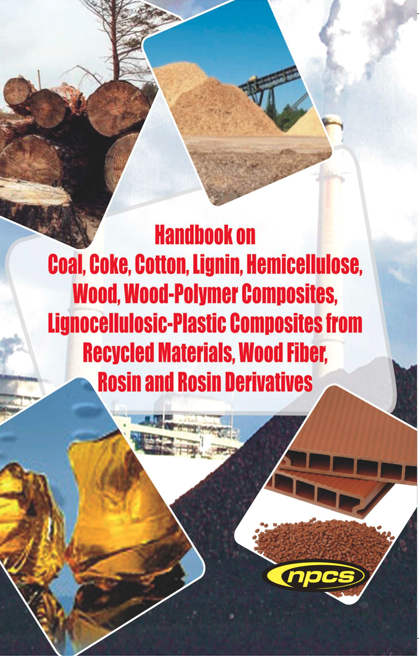

The NPCS project team, led by Ajay Kumar Gupta
This page and its sample report are prepared and reviewed by the NPCS project team, which has written techno-economic feasibility studies and detailed project reports since 1994.
Ajay Kumar Gupta founded Niir Project Consultancy Services (NPCS) and leads the organisation. With 40 years of experience in MSME project consulting, he has built the team that has delivered more than 28,000 project reports for clients worldwide, helping entrepreneurs plan and finance profitable manufacturing businesses.
- Published
- Last updated
- Next review
- Oct 2027
- Reviewed by
- NPCS project team
This page is reviewed every 12 months, or sooner when scheme limits, GST rates, BIS rules or pollution categories change. The sample report is illustrative: its figures are generated from industry-typical ratios for a unit of this size, checked so every statement balances, and are not taken from any client project.