
What is a caffeine project report?
A caffeine project report is a detailed project report (DPR) for a plant that turns crude or plant-extracted caffeine into white anhydrous caffeine of food or pharmaceutical grade. It sets out the process route, machinery, raw materials, buyers, project cost, means of finance, five-year projections, DSCR and break-even that a lender or investor checks before funding the plant.
Chemical and plant-extract companies use it to choose a route and raise a term loan; banks use it to judge whether the plant can repay.
Also known as: 1, 3, 7-trimethylxanthine, guaranine, theine.
Caffeine manufacturing plant cost in India: our sample plant
The sample report models a natural caffeine plant of 310 kg per day, or 1,02,300 kg a year over 330 working days. It starts at 60% of capacity, reaches 80% in Year 5 and sells anhydrous caffeine at ₹2,530 per kg before GST.
| Land and site development | 80.93 |
|---|---|
| Building and civil works | 298.70 |
| Plant and machinery | 548.28 |
| Other fixed assets | 80.71 |
| Contingencies | 42.35 |
| Preliminary and pre-operative | 26.27 |
| Working capital margin | 59.82 |
| Total | 1,137.06 |
| Promoter's contribution (25%) | 284.26 |
|---|---|
| Term loan from bank (75%) | 852.80 |
| Cash credit limit (separate) | 179.45 |
| Total project cost | 1,137.06 |
Term loan at 10.5% with a 6-month moratorium and 54 monthly instalments; the lowest yearly DSCR (debt service coverage ratio) is 1.27. All figures are illustrative.
Caffeine manufacturing process, step by step
The sample plant refines crude natural caffeine into anhydrous caffeine. The route rests on one property: caffeine dissolves far more readily in hot water than in cold. So it can be taken into solution, cleaned and then dropped out again as pure crystals.
- Dissolution
Crude caffeine is charged into stainless steel vessels with hot water and stirred until it goes into solution.
- Carbon treatment and filtration
Activated carbon takes up the brown colour and coffee or tea odour, and a sparkler filter removes the spent carbon and insoluble matter.
- Solvent extraction
The clear liquor is contacted with a food-grade solvent that pulls caffeine across and leaves sugars, salts and other water-soluble impurities behind.
- Solvent recovery
The solvent is distilled off, condensed and sent back to extraction; every litre lost is both a cost and an emission.
- Crystallisation
The concentrate is redissolved and cooled slowly in jacketed crystallisers to grow white needle crystals.
- Centrifuging and drying
Crystals from water carry water of crystallisation; they are spun dry and then dried under vacuum at moderate heat, because caffeine sublimes if overheated.
- Milling, testing and packing
The powder is milled and sifted to the buyer's mesh size, tested for assay, loss on drying and related substances, and packed in lined fibre drums.
Natural or synthetic: which caffeine route suits a new plant?
The route decides plant size, raw material risk and who will buy from you. Most caffeine sold worldwide is synthetic, but synthesis only pays at a scale few new Indian units can reach.
| Synthetic caffeine | Built from urea-based intermediates such as dimethylurea and cyanoacetic acid, through theophylline, then methylated. A multi-step chemical plant at thousands of tonnes a year, competing head on with large Chinese producers. |
|---|---|
| Natural, from crude caffeine | Refines crude caffeine recovered by coffee decaffeinators. Small batch equipment, a few hundred kg a day, and a premium price for plant origin. This is the route in our sample report. |
| Natural, from tea waste | Extracts caffeine from tea fluff, stalks and sweepings, then refines it the same way. Needs a Tea Board licence and large volumes of low-caffeine solids, so feed supply is the main risk. |
| What a lender looks at | For natural routes: secured crude caffeine or tea waste supply, recovery yield per batch and solvent loss. For synthesis: scale, process know-how and the price gap with imports. |
Raw materials for natural caffeine
Crude caffeine, a by-product of coffee decaffeination, is 85% of raw material cost in the sample, and much of it is bought from decaffeinators abroad. Its purity varies from lot to lot, so every lot is assayed before it is charged, because the assay decides how much saleable caffeine you get back.
| Raw material | Share of cost | Year 3 (₹ lakh) |
|---|---|---|
| Crude natural caffeine | 85% | 766.51 |
| Food-grade solvent make-up | 7% | 63.12 |
| Activated carbon | 4% | 36.07 |
| Filter aid and process chemicals | 4% | 36.07 |
| Total | 100% | 901.77 |
Raw materials are 49.8% of Year 3 sales in the sample. Packing in lined drums adds a further 4.7%.
Machinery for a caffeine plant
The solvent extraction and recovery system is the costliest item in the sample, ahead of the dissolution vessels. Product-contact parts are stainless steel, and the dryer and packing area are kept clean enough for pharmaceutical buyers.
| Machine | What it does | Sample cost (₹ lakh) |
|---|---|---|
| SS dissolution and extraction vessels | Dissolve crude caffeine and hold liquor between stages | 98.69 |
| Solvent extraction and recovery distillation system | Moves caffeine into solvent and recovers the solvent for reuse | 109.65 |
| Carbon treatment tank and sparkler filter | Removes colour, odour and insolubles | 54.83 |
| Jacketed crystallisers with chiller | Grow pure crystals by controlled cooling | 76.76 |
| Basket centrifuges | Separate crystals from mother liquor | 54.83 |
| Vacuum tray dryer | Dries to anhydrous grade without sublimation loss | 54.83 |
| Multi-mill and vibro sifter | Sizes the powder to buyer mesh | 32.90 |
| QC laboratory with HPLC | Assay and impurity tests on every batch | 38.38 |
| Steam boiler and utilities | Heat for dissolution and distillation | 27.41 |
| Total plant and machinery | 548.28 | |
Costs are the sample report's estimates for a 310 kg per day plant. Get current quotations before you finalise.
Utilities, building and manpower
A caffeine plant heats and cools the same liquor several times a day, so steam and chilled water matter as much as power.
| Power and fuel | ₹128.61 lakh in Year 3 in the sample, about 7.1% of sales |
|---|---|
| Steam | For hot-water dissolution and solvent distillation, from an on-site boiler |
| Chilled water | For the crystallisers and the solvent condensers; poor cooling means more solvent loss |
| Water | Process water for dissolution and recrystallisation, plus cleaning between batches |
| Land and building | ₹80.93 lakh for land and ₹298.70 lakh for the production block, stores and office in the sample |
| Manpower | 60 people: 9 in management and supervision, 21 skilled operators and 30 semi-skilled and unskilled workers; Year 1 wage bill ₹135.36 lakh |
Licences and approvals for a caffeine plant
Which licences you need depends on the grade you sell and the feedstock you buy. Beyond Udyam, GST, factory and fire approvals, these are the ones specific to caffeine.
| Pollution board consent | Consent to establish and operate from the State Pollution Control Board. State lists such as Odisha's place organic chemicals manufacturing and pharmaceuticals in the Red category |
|---|---|
| Food-grade caffeine | FSSAI licence as a manufacturer. Buyers must keep total caffeine within 145–300 mg per litre in caffeinated beverages and 145 ppm in carbonated water |
| Pharmaceutical grade | Drug manufacturing licence on Form 25, applied for on Form 24 to the State Licensing Authority, with named technical staff in charge of manufacture |
| Product standard | The caffeine monograph of the Indian Pharmacopoeia, USP or BP, as the buyer specifies |
| Tea waste feedstock | Tea waste buyer licence from the Tea Board under the Tea Waste (Control) Order, 1959, with purchases through the Board's e-auction |
Rules checked in October 2026. Confirm current requirements with the state authorities before you apply.
Who buys caffeine in India
Energy drinks and colas take a large share, alongside pain relief and cold tablets that pair caffeine with paracetamol or aspirin. Supplement, sports nutrition and hair care brands buy smaller lots at better prices. Buyers audit a new plant and test trial lots before approving it, so the first orders take months, but an approved supplier tends to keep the account.
- Energy drink and soft drink manufacturers
- Pharmaceutical tablet and syrup makers
- Nutraceutical and sports supplement brands
- Cosmetic and personal care manufacturers
- Food ingredient distributors and exporters
Why natural caffeine is a premium: FSSAI limits total caffeine in a drink whatever its source, so natural caffeine is a label choice, not a legal need. You win those buyers with origin documents and consistent purity, not with a lower price than synthetic imports.
Mistakes that weaken a caffeine project report
- One crude caffeine supplier
Crude caffeine is most of the cost. A report that relies on a single decaffeinator, with no second source or price clause, leaves the plant idle if supply stops.
- Assuming full recovery
Some caffeine stays in spent carbon, mother liquor and dryer fines. Output should be worked out from the assay of the crude and a realistic recovery, not from the weight charged.
- Leaving out solvent loss
Solvent lost at the condensers and dryer is a running cost and an emission point. It should appear as a make-up line, as it does in the sample.
- Counting on tea waste as free feed
Tea waste needs a Tea Board licence and is sold by e-auction, and supply has tightened since 2024. Price and volume both need a downside case.
- Ignoring buyer approval time
Audits and trial lots delay sales, and buyers take credit. Receivables are the largest current asset in the sample, at ₹191.45 lakh in Year 1.
How NPCS helps you plan a caffeine plant
- Route and capacityCompare crude caffeine refining, tea waste extraction and synthesis for your budget and buyers.
- Feedstock and yield modelRecovery, solvent loss and cost per kg worked out from the assay of your crude or tea waste.
- Bank-ready project reportProjections, DSCR and working capital in the format your lender or investor wants.
- Licences and plant layoutFSSAI, drug licence, pollution consent and a layout that keeps solvent and clean areas apart.
NPCS's client list includes 269 specialty chemical assignments, among them caffeine. The NPCS project team, led by founder Ajay Kumar Gupta, has prepared project reports and feasibility studies since 1994.
What's inside the caffeine sample report
- Introduction
- Uses and applications
- Market potential
- Manufacturing process
- Raw materials
- Plant and machinery
- Land, building and utilities
- Manpower
- Licences and approvals
- Project cost and means of finance
- Working capital
- Projected profitability
- Cash flow statement
- Projected balance sheet
- Depreciation
- Term loan repayment
- Debt service coverage
- Break-even analysis
- Financial ratios
- Key assumptions
- Conclusion
- Monthly loan repayment schedule
19 pages, five-year projections, illustrative figures.
Open sample reportFree sample or a report for your project?
| What you get | Free sample | NPCS report for your project |
|---|---|---|
| Capacity and location | Typical unit | Your capacity, site and state |
| Figures | Illustrative | Built on current prices and quotations |
| Machinery suppliers and quotations | No | Yes |
| Market survey for your region | No | Yes |
| Bank or scheme format (PMEGP, term loan) | No | Yes |
| Use for a loan application | No | Yes |
Real NPCS caffeine project reports
These are caffeine project reports NPCS has prepared, with the plant capacity, total capital investment, rate of return and break-even worked out in each. Costs have moved since some were written, so we bring any of them up to date for your capacity and location.
| Project report | Plant capacity | Total investment | Rate of return | Break-even | Action |
|---|---|---|---|---|---|
| Caffeine From TEA Waste | 0.30 MT/day | ₹1.38 crore | 45% | 49% | Get this report |
| Caffeine from Tea Waste | Caffeine: 20 MT/day | ₹22.68 crore | 30% | 61% | Get this report |
Figures as worked out in each NPCS report. Total investment includes plant and machinery, land and building, and working capital.
What clients say about NPCS
4.7
264 Google reviews, as of 20 Oct 2026
Clients most often mention
- feasibility reports 18
- project report 16
- helpful for startups 15
- detailed reports 8
-
Excellent experience with Niir Project Consultancy Services. Their Techno-Economic Feasibility Reports are incredibly detailed and backed by solid market data.
Piyush Singh, Google review, 2026
-
Niir Project Consultancy Services offers excellent guidance for business setup. Their market survey and feasibility reports saved us a lot of time and helped us make informed decisions. Highly recommended
Saroj Yadav, Google review, 2026 View on Google
-
In an era of information overload, NIIR stands out for its precision. Their technical consultancy and market feasibility studies are world-class.
Shrishti Gautam, Google review, 2026
-
NIIR Project Consultancy Services provides useful books and reports for students, entrepreneurs, and small businesses. Their content is easy to understand and focuses on practical ideas for starting and managing industries. Overall, NIIR is helpful for learning about business and project planning.
Raj Yadav, Google review, 2026
Caffeine project report: frequently asked questions
How much does it cost to set up a caffeine manufacturing plant in India?
Our sample report models a 310 kg per day natural caffeine plant at ₹1,137 lakh, including ₹548 lakh of plant and machinery and land, building and working capital margin. A smaller refining unit of 150–200 kg per day needs roughly ₹6–8 crore (indicative). A synthetic plant built at thousands of tonnes a year costs many times more. Your report works out the cost for your route and site.
How is caffeine manufactured commercially?
There are two routes. Most of the world's caffeine is synthetic, built up from urea-based chemicals through theophylline and then methylated. Natural caffeine is recovered from coffee decaffeination, tea waste or other plant material and then purified by carbon treatment, solvent extraction, recrystallisation and vacuum drying. A new Indian unit usually starts with the natural refining route because it works at a much smaller scale.
What is the difference between natural and synthetic caffeine?
The molecule is the same, so purity and pharmacopoeia tests read alike. The difference is source and price. Natural caffeine sells at a premium to brands that want plant-origin labels, and buyers ask for documents proving origin. Laboratories can tell the two apart with isotope tests, so a natural claim has to be backed by records of the crude caffeine or tea waste used.
Is a caffeine plant profitable?
In our illustrative sample, a 310 kg per day plant earns a 14% return on investment in Year 3 and breaks even at 45% of capacity. It pays back in about 4.4 years, with an average DSCR of 1.45. Actual profit depends mostly on the price paid for crude caffeine, recovery yield, solvent losses and how quickly beverage and pharma buyers approve the plant.
Can caffeine be extracted from tea waste in India?
Yes, but only a buyer licensed by the Tea Board under the Tea Waste (Control) Order, 1959 can buy tea waste. Caffeine makers are one of the licensed buyer types. Sales run through the Tea Board's tea waste e-auction. Since 2024 the Board has pressed gardens to cut tea waste, so a report should test what happens if supply falls short.
What grade of caffeine do buyers ask for?
Beverage makers ask for food-grade anhydrous caffeine from an FSSAI-licensed plant, and FSSAI caps total caffeine in caffeinated beverages at 145–300 mg per litre whatever its source. Pharmaceutical buyers want caffeine tested to the Indian Pharmacopoeia, USP or BP monograph and made under a drug manufacturing licence. Exporters usually also need food safety and kosher or halal certificates.
Is the sample caffeine project report PDF free and can I use it for a loan?
The sample is free to view and download. It is an illustrative report that shows the format and depth of an NPCS report. Its figures are representative and not based on a real project, so it should not be submitted to a bank. For a loan, NPCS prepares a report for your own capacity, route, location and lender.
Sources and references
- Food product standards, Chapter 2.10: Beverages (other than dairy and fruit and vegetable based)Food Safety and Standards Authority of India, checked Oct 2026
- Guidelines on tea waste auctionTea Board India, checked Oct 2026
- Guidelines for tea waste licence for exporting tea waste (Tea Waste (Control) Order, 1959)Tea Board India, checked Oct 2026
- List of industries under Red categoryState Pollution Control Board, Odisha, checked Oct 2026
- Procedure for drug manufacturer licence (Form 24 and Form 25)Drug Licensing Authority, Andaman and Nicobar Administration, checked Oct 2026
Recommended reading on caffeine
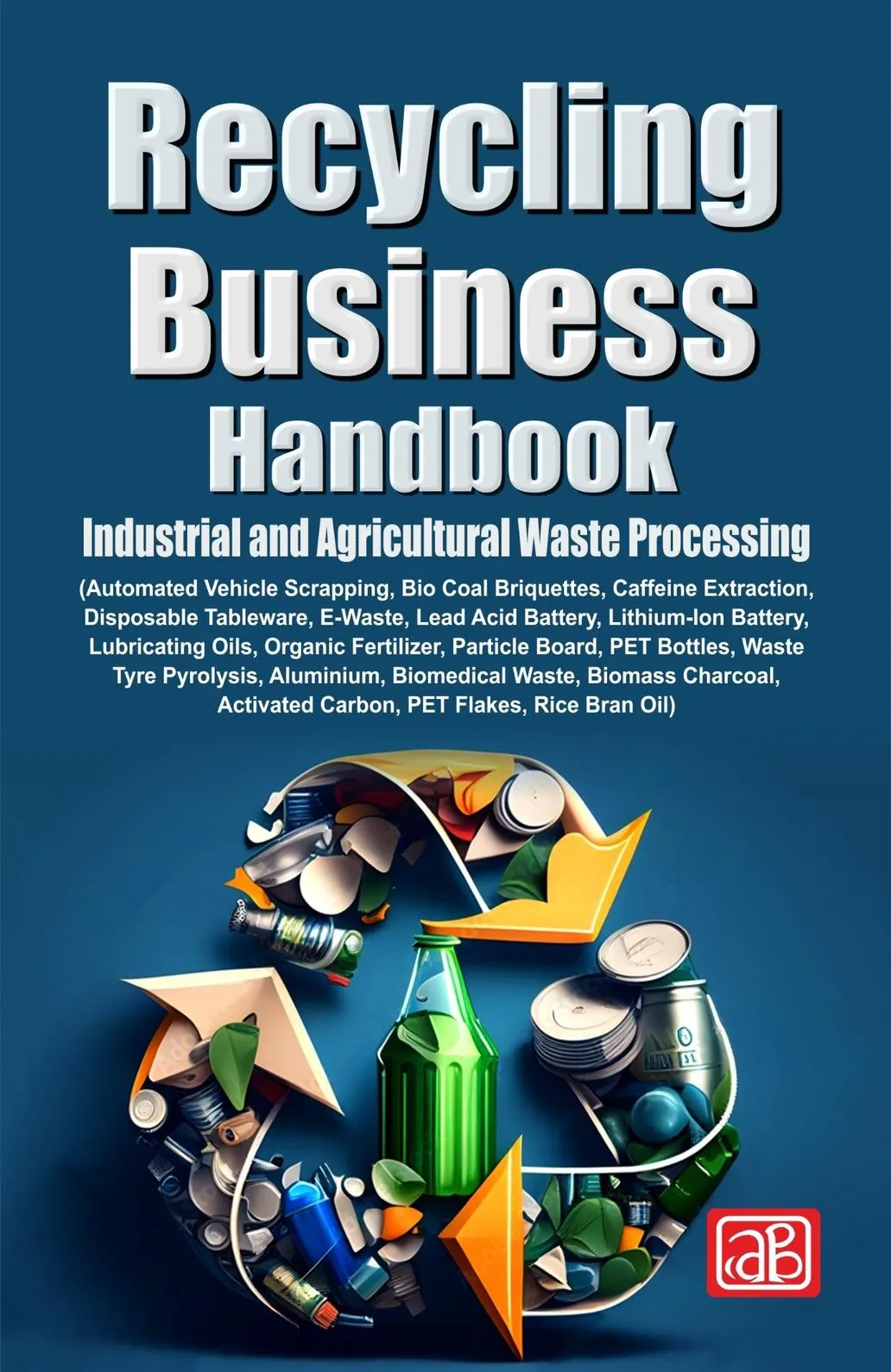

The NPCS project team, led by Ajay Kumar Gupta
This page and its sample report are prepared and reviewed by the NPCS project team, which has written techno-economic feasibility studies and detailed project reports since 1994.
Ajay Kumar Gupta founded Niir Project Consultancy Services (NPCS) and leads the organisation. With 40 years of experience in MSME project consulting, he has built the team that has delivered more than 28,000 project reports for clients worldwide, helping entrepreneurs plan and finance profitable manufacturing businesses.
- Published
- Last updated
- Next review
- Oct 2027
- Reviewed by
- NPCS project team
This page is reviewed every 12 months, or sooner when scheme limits, GST rates, BIS rules or pollution categories change. The sample report is illustrative: its figures are generated from industry-typical ratios for a unit of this size, checked so every statement balances, and are not taken from any client project.