How to Start a Paper Bag Business in India
Contents 10 sections
- Which paper bag should you make first?
- How paper bags are made, step by step
- Paper bag manufacturing machines and what each does
- Raw materials for paper bags: kraft paper, glue and handles
- Who buys paper bags, and why demand holds
- Paper bag business cost and profit margin
- Licences and registration for a paper bag unit
- What a paper bag business plan should contain
- Next steps to start your paper bag business
- Frequently asked questions about the paper bag business
A paper bag business turns reels of kraft paper into bags on a forming machine and sells them to grocery shops, chemists, bakeries, restaurants and brands. Decide first which bag you will make, because the bag type fixes the machine. Flat and V-bottom bags need simpler machines than square-bottom bags with handles.
A one-machine unit can run from a small shed. Demand has held up since India banned thin plastic carry bags, but so has competition, so the units that last sell repeat orders to a fixed list of buyers.
Which paper bag should you make first?
Start with the bag whose buyers you can already name.
|
Bag type |
Typical buyers |
Machine needed |
Watch out for |
|
Flat bags |
Chemists, sweet shops, bakeries |
Flat bag machine |
Low price per bag, so you need volume |
|
V-bottom grocery bags |
Kirana stores, vegetable sellers, takeaway counters |
Roll-fed V-bottom machine |
Many local makers compete on price |
|
Square-bottom bags |
Supermarkets, restaurants, food delivery |
Square-bottom machine |
Higher machine cost and more set-up waste |
|
Handle (shopping) bags |
Garment shops, brands, gifting |
Square-bottom machine plus handle pasting, usually with printing |
Buyers expect printed designs and consistent colour |
Multiwall cement and flour sacks are a separate industry and are not covered here.
How paper bags are made, step by step
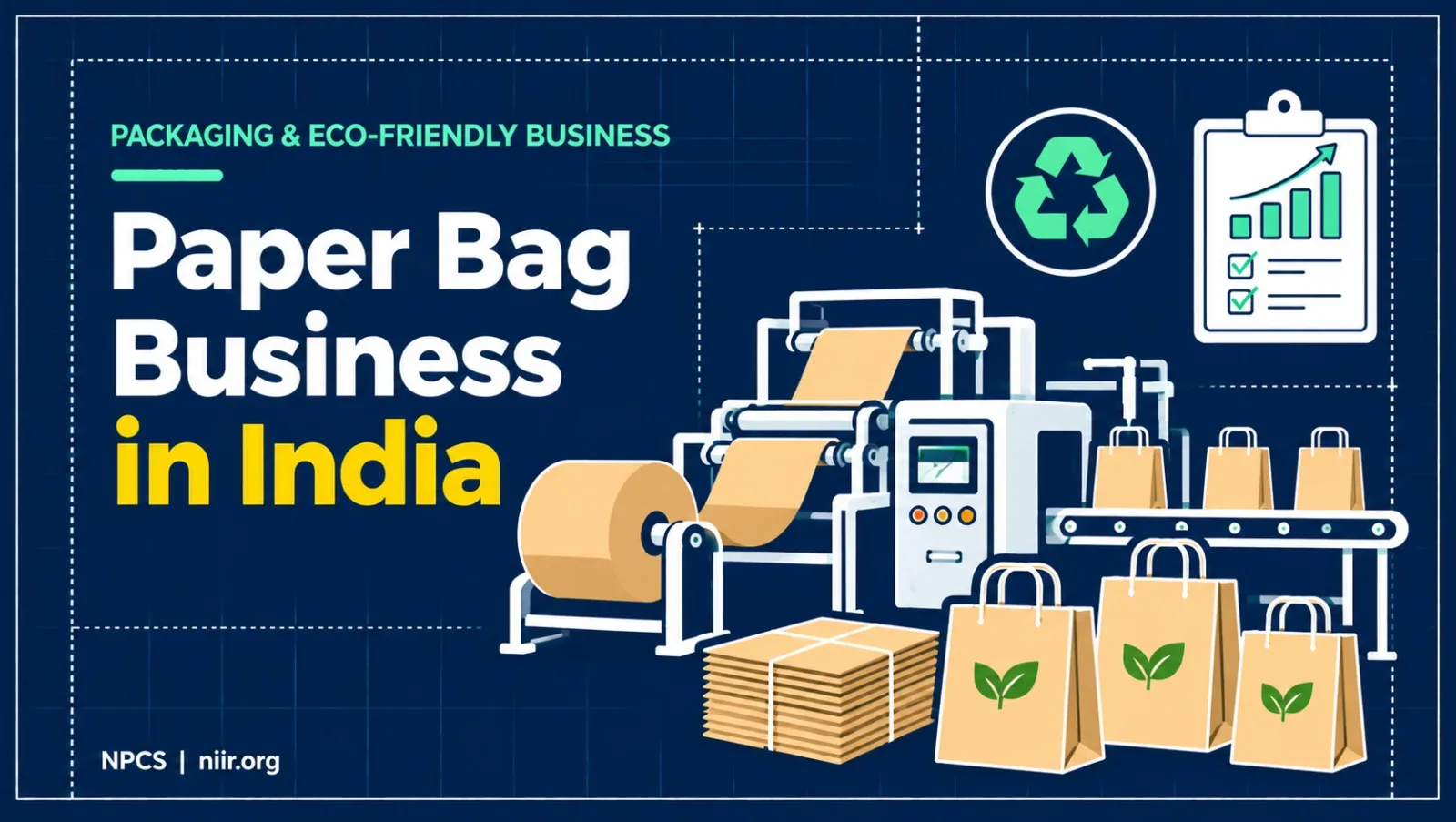
A roll-fed machine runs most of these steps in one pass; printing and handles are often separate jobs.
1. Reel loading: the kraft reel is mounted and tension set so the paper runs straight.
2. Printing (optional): a flexographic unit prints the logo with water-based ink, inline or before forming.
3. Tube forming and side gluing: the paper is folded around a former into a tube, and the side seam is glued.
4. Gusset folding: side folds are pressed in so the bag can open into a V or a square bottom.
5. Cutting: the tube is cut to bag length.
6. Bottom folding and gluing: the bottom is folded and glued, either as a V or as a flat square base that lets the bag stand.
7. Handle pasting: for shopping bags, twisted paper or flat paper handles are glued on.
8. Drying, checking and packing: the glue sets; bags are checked for open seams and weak bottoms, counted and packed.
Paper bag manufacturing machines and what each does
Buy the forming machine your buyers' bag needs; add printing and handle equipment when orders ask.
|
Machine |
What it does |
When you need it |
|
Roll-fed V-bottom bag machine |
Forms the tube, cuts and folds a V-bottom in one run |
Grocery and takeaway bags |
|
Square-bottom bag machine |
Makes bags with a flat base that stand upright |
Supermarket, restaurant and delivery bags |
|
Flat bag machine |
Makes flat, gusset-free bags |
Chemist and bakery bags |
|
Flexographic printing machine (one to four colours) |
Prints logos and designs on the reel before forming |
Branded orders |
|
Handle making and pasting machine |
Twists paper cord into handles and glues them to bags |
Shopping and gift bags |
|
Reel slitting and rewinding machine |
Cuts wide reels down to the width your machine takes |
If you buy wide mill reels |
|
Air compressor, glue tank and packing table |
Supports the main machines and finishing |
Every unit |
Before paying, run your own paper on the supplier's machine for a full shift, and ask who repairs it in your district.
Raw materials for paper bags: kraft paper, glue and handles
• Kraft paper reels: brown kraft for grocery and chemist bags; white or bleached kraft for retail and gift bags. GSM, the weight of one square metre of paper, decides strength: heavier paper carries more but costs more per bag.
• Adhesive: a glue suited to your machine for the side seam and bottom. Weak glue shows up as bottoms that open under load, which loses repeat orders fastest.
• Handles: twisted paper cord or flat paper strips for shopping bags.
• Printing ink: water-based flexographic ink for logos.
If your bags hold food directly, buyers will ask for food-grade paper and inks with supplier certificates.
Who buys paper bags, and why demand holds
The Environment Ministry's ban on identified single-use plastic items has been in force since 1 July 2022, and plastic carry bags thinner than 120 microns have been banned since 31 December 2022. Shops that handed out thin plastic bags now need substitutes such as paper.
The steadiest buyers use bags daily in predictable numbers: chemists, bakeries, sweet shops, kirana chains and restaurants. Brands order printed handle bags in larger, less frequent batches. Visit ten shops nearby and note which bags they use and who supplies them; that list is your demand estimate.
Paper bag business cost and profit margin
Paper is usually the largest cost, so price each order from the paper it uses:
1. Paper cost per bag = weight of paper per bag (sheet area in square metres x GSM, in grams) x paper price per gram.
2. Add glue, ink and handles per bag.
3. Add power, labour and rent per good bag made.
4. Add wastage: the paper lost while setting up each new size or print job.
Margin comes from long runs, because each change of size or design costs set-up time and spoiled paper. Printing lets you charge more per bag, since not every small maker can print.
Check GST before you quote. Notification 9/2025-Central Tax (Rate) of 17 September 2025 added a 5% entry for paper sacks and bags, but advance rulings have differed on which bags it covers: the Tamil Nadu authority allowed 5% for plain kraft bags, while a Gujarat ruling reported by JurisHour applied 18% to bags under the same HSN code. Confirm the rate for your exact bag with your chartered accountant.
Licences and registration for a paper bag unit
• Udyam registration, which most loan and scheme forms ask for.
• GST registration, which business buyers need for input credit.
• Trade licence from your municipality or panchayat for the premises.
• Pollution board category: several state boards, such as Uttarakhand's white category list, place paper-based items including bags in the white category. Check your own state's list.
• Factory and fire rules: a factory licence once your workforce crosses your state's threshold, and fire safety for stored paper reels.
What a paper bag business plan should contain
A lender reading your paper bag business plan checks whether the numbers come from real quotations and real buyers. Cover:
• The bag types and sizes you will make, and who will buy them, with any letters of intent.
• Machine quotations, and output per shift tested on your own paper.
• Raw material cost per bag, worked out as in the cost section above.
• Project cost and how you will finance it: your contribution, the loan and any subsidy.
• Working capital: paper stock plus credit to buyers, which first-time owners often underestimate.
• Monthly sales, costs and cash flow for the first year, and the break-even volume.
A downloaded paper bag business plan PDF is a format, not a plan.
Next steps to start your paper bag business
1. Visit ten likely buyers and list the bag types, sizes and monthly quantities they use.
2. Pick one bag type that at least three of them want.
3. Get quotations from three machine suppliers and run a trial on your own paper.
4. Price one bag using the cost steps above, then quote it to two buyers before you buy the machine.
5. Register under Udyam and GST.
6. Build your plan with real quotations and buyer letters, then approach a bank.
Compare paper bags with other plastic-ban businesses in these trending business ideas for 2026. For other small manufacturing units you can run from a shed, see how to start an agarbatti business or a candle making business.
Frequently asked questions about the paper bag business
Is paper bag making a good business?
It can be, if you line up buyers first. Demand has been steady since thin plastic carry bags were banned, but machines are easy to buy, so local competition is real. Units with repeat orders, or that offer printing, hold margins better than those selling plain bags on price.
How many paper bags are in 1 kg?
It depends on bag size and paper weight: sheet area in square metres multiplied by GSM gives the bag's weight in grams. A bag cut from a 50 cm by 35 cm sheet (0.175 square metres) of 80 GSM paper weighs about 14 grams, so roughly 70 bags make a kilo before glue and trim.
Can I start a paper bag business from home?
A small flat bag or V-bottom machine can run from a ground-floor room or garage. First check that your power connection can take the machine's load, that local rules allow manufacturing at your address, and that you have dry space for reels, because damp paper tears on the machine.
Which paper is used for paper bags?
Most bags use kraft paper: brown for grocery and chemist bags, white or bleached for retail and gift bags. Heavier GSM paper suits heavier contents but costs more per bag. For bags that touch food directly, buyers expect food-grade paper and inks, with supplier certificates.

Planning a new manufacturing unit?
NIIR prepares detailed project reports and feasibility studies for new projects. Share your requirement and the team will get in touch.