Introduction: Zinc Sulphate Manufacturing Plant
India’s agri sector is constantly growing as the farmers are using better fertilization techniques to increase the yield of crops and fertility of soil. Among the many micronutrients that are needed for the healthy growth of the plant, zinc has a very important role. The agricultural and industrial sectors use Zinc Sulphate Heptahydrate (ZnSO4*7H2O) as their most common zinc compound.
Zinc sulphate heptahydrate functions as a chemical substance that dissolves in water and serves multiple purposes including fertilizer production, animal feed enhancement, pharmaceutical development, water treatment operation, and various industrial applications. The chemical’s usage has experienced continuous growth across India because of rising soil nutrient deficiencies and mounting industrial requirements.
The market needs domestic production to satisfy current demand yet production levels remain insufficient to fulfil this requirement. India imports a good quantity of zinc sulphate especially high purity grades for pharmaceuticals and special applications. This gap between demand and supply presents a lucrative opportunity for the entrepreneurs who are interested in starting a Zinc Sulphate Heptahydrate manufacturing plant in India.
Read More: The Complete Technology Book on Chemical Industries
Rising Demand of Zinc Sulphate in Agriculture
Agriculture is the biggest consumer of Zinc Sulphate in India. Zinc is an essential micronutrient that is needed for the functioning of enzymes, plant metabolism and crop growth. The Indian agricultural sector faces a major challenge because most of its farmland lacks adequate zinc levels which results in decreased crop yields.
To solve this problem, farmers widely use fertilizers based on zinc, which can improve the soil quality and yield of crops. The most preferred form is zinc sulphate heptahydrate as it dissolves easily in water and is readily absorbed by plants.
Several factors are contributing to the growing demand for zinc sulphate fertilizers:
- Rising awareness about micronutrient deficiencies of soils
- Government programs which encourage balanced fertilization
- Increasing adoption of high yield varieties of crops
- Increase in commercial agriculture
Due to these factors, the demand for zinc sulphate fertilizers has been increasing gradually all over the country.
Industrial Uses of Zinc Sulphate heptahydrate
Although agriculture is the dominant market, zinc sulphate also has a number of important industrial uses. These applications build a wider demand base and this is good for manufacturers.
Some of the major industrial applications are:
- Animal feed supplements to enhance the nutrition of livestock
- Pharmaceutical preparations and medicinal products
- Water treatment chemicals for purification processes
- Textile and leather processing industries
- Electro plating and chemical manufacturing
Because the product has a number of industries to sell to, the manufacturers can also diversify their sales channels and lessen their reliance on one market segment.
Globally, the Asia-Pacific region represents a significant part of the consumption of zinc sulphate, primarily as a result of strong agricultural activity and growing industrial activity.
Read More: ZINC SULPHATE – Manufacturing Plant, Detailed Project Report, Profile, Business Plan, Industry Trends, Market Research, Survey, Manufacturing Process, Machinery, Raw Materials, Feasibility Study, Investment Opportunities, Cost and Revenue, Plant Economics
Demand and Supply Gap in Indian Market
India has a robust ecosystem of zinc production with mining operations and smelting operations. However, the country still has a mismatch between zinc sulphate demand and domestic manufacturing capability.
Existing manufacturers are primarily small-scale operation and supply technical grade zinc sulphate for use in fertilizers. High-purity grades required for pharmaceutical or feed applications are produced by somewhat fewer companies.
As a result, India imports a good quantity of zinc sulphate from countries like China and a number of European countries. Import data reveals consistent increases in shipments over the past couple of years, which reflects the fact that production within the country has yet to reach the level of demand.
For fresh entrepreneurs, this supply gap is a great opportunity for them to set up modern manufacturing units to produce high-quality zinc sulphate.
Read More: Project Reports & Profiles
Raw Materials Needed to Manufacture
One of the benefits of establishing a zinc sulphate manufacturing plant in India is the ease of availability of raw materials. The country possesses good industries of mining and refining of zinc that provide zinc metal and zinc oxide.
The principal raw materials needed for production are:
- Zinc metal zinc oxide zinc ash
- Sulphuric acid
- Water for processing
- utilities such as electricity and steam
Sulphuric acid is readily available from the metallurgical industries and therefore relatively cheap and easily available.
Zinc Sulphate Heptahydrate Manufacturing Process
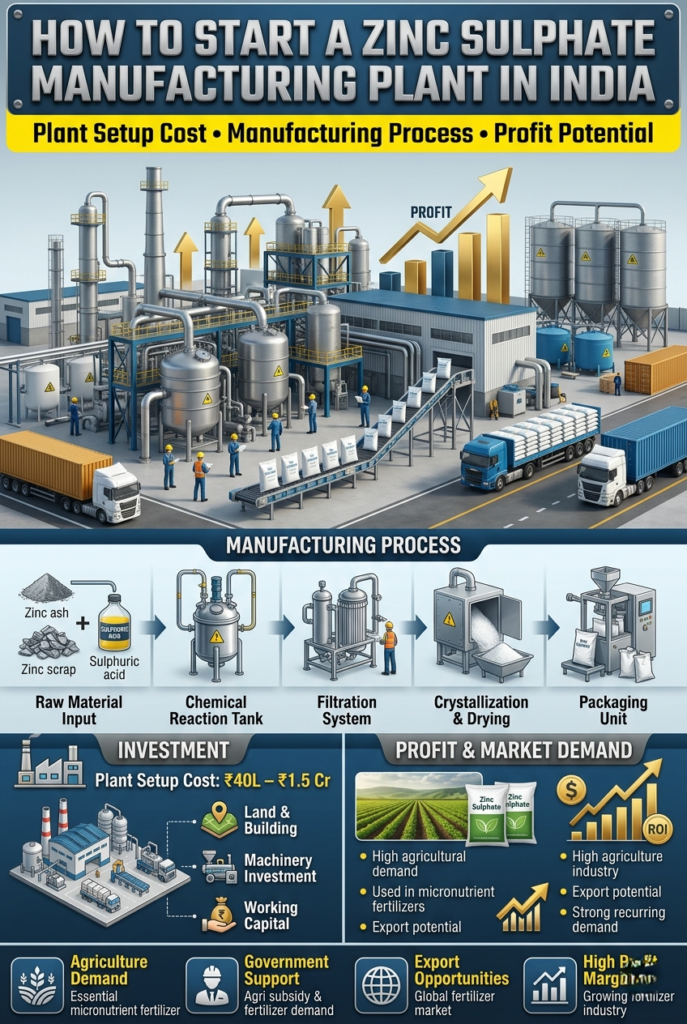
The manufacturing process of zinc sulphate heptahydrate is relatively quite simple and quite widely used in the chemical industry. It involves a chemical reaction and purification and crystallization.
The general production process involves the following stages:
- Chemical Reaction
Zinc metal or zinc oxide reacts with sulphuric acid to form zinc sulphate solution.
- Filtration
The reaction mixture is filtered to remove impurities and solid residues.
- Evaporation and Crystallization
The purified solution is concentrated by evaporation until zinc sulphate crystals will begin to form.
- Drying and Packaging
Crystallization process requires that technicians dry the crystals before they proceed to the grading stage and afterward pack the product into bags which will be distributed to fertilizer companies and chemical industries and exporters.
The process needs both proper crystallization conditions and quality control procedures to achieve consistent product purity levels.
Read More: Zinc Sulphate Manufacturing Business in India: Heptahydrate vs Monohydrate, Market & Profit
Investment Needed in Zinc Sulphate Plant
Establishing a zinc sulphate heptahydrate plant requires less capital investment than most chemical manufacturing operations. The exact cost is dependent on plant capacity, quality of equipment and level of automation.
A typical plant at the MSME scale usually has:
- Chemical reactors
- Crystallizers and evaporators
- Filtration systems
- Dryers
- Packaging equipment
- Quality control laboratory
- Effluent treatment plant
For the production capacity of about 3000 to 5000 tons per annum, the total investment could be between Rs 2 crores and Rs 5 crores depending on the infrastructure and machinery.
Profit Potential and Business Opportunities
Zinc sulphate manufacturing presents some lucrative profit potential due to an ongoing increase in demand from a number of sectors. The fertilizer industry alone has huge consumption of zinc sulphate all year round.
Manufacturers can improve profitability by concentrating on:
- Producing high purity grades
- Feeds and pharmaceutical industries
- Creating the channels of export
- Maintaining consistent product quality
Profit margins in this industry are typically between 15 percent and 30 percent, depending on efficiency in production and raw material costs.
Read More: Top 15 Chemical Manufacturing Business Ideas in India with Huge Import Substitution Potential
Export Opportunities
India has good potential as global supplier of Zinc Sulphate products. Many developing countries rely for micronutrient fertilizers and industrial chemicals on imports.
Areas that provide good export opportunities include:
- Africa
- Southeast Asia
- South Asia
- Middle East
Agricultural growth and growing use of fertilizer in these regions is creating a strong demand for zinc sulphate products.
Regulatory and Compliance Requirements
Zinc sulphate manufacturing plant process requires entrepreneurs to obtain various licenses and approvals before they can begin their operations. Environmental and safety regulations need to be followed by chemical manufacturing companies because it operates within a regulated market.
Significant requirements include:
- Approval of Pollution Control Board
- Environmental clearance
- Factory license
- Hazardous chemical handling compliance
- Examples Of Quality Certifications Include: ISO
Pharmaceutical manufacturers and feed-grade manufacturers need to obtain GMP certification because it serves as proof of their compliance with international quality standards.
Conclusion
The zinc sulphate heptahydrate industry in India presents great opportunities to entrepreneurs and investors. Rising agricultural demand, growing industrial application, and the supply gap prevailing in the market provide a good environment for new manufacturing units.
The zinc sulphate manufacturing plant becomes a profitable business operation after investing moderate funds and using common raw materials because it provides long-term financial benefits. Entrepreneurs who establish their companies to create high-quality products through efficient manufacturing and effective distribution networks gain access to both domestic markets and international markets.
India’s ongoing agricultural modernization together with its micronutrient fertilizer development programs will create continuous demand for zinc sulphate throughout the next several years. For those investors who are interested in launching into the chemical manufacturing industry, this project is a good business opportunity.
Frequently Asked Questions (FAQs)
What is Zinc Sulphate Heptahydrate Used For?
Zinc sulphate heptahydrate is primarily used as a micronutrient fertilizer in agriculture. The substance functions in animal feed supplements and pharmaceuticals and water treatment processes and industrial chemical production.
Is the manufacturing of zinc sulphate profitable?
The agricultural industry and industrial sectors have high demand for zinc sulphate production which makes this business operation economically profitable. The profit margins range between 15 percent and 30 percent based on both production size and market conditions.
What are the raw materials required for the manufacture of zinc sulphate?
The main raw materials are zinc metal or zinc oxide, sulphuric acid and water. There are also utilities such as electricity and steam necessary for the production process.
How much investment is required to set up zinc sulphate plant?
A small to medium scale plant having production capacity of about 3,000-5,000 tons per annum may require an investment of about 2 crore to 5 crores.
Are there export opportunities for zinc sulphate?
Yes, several regions such as Africa, South East Asia and South Asia are importing zinc sulphate products for agricultural and industrial applications, and this poses low export opportunities for the Indian manufacturers.