Textile Manufacturing Business in India
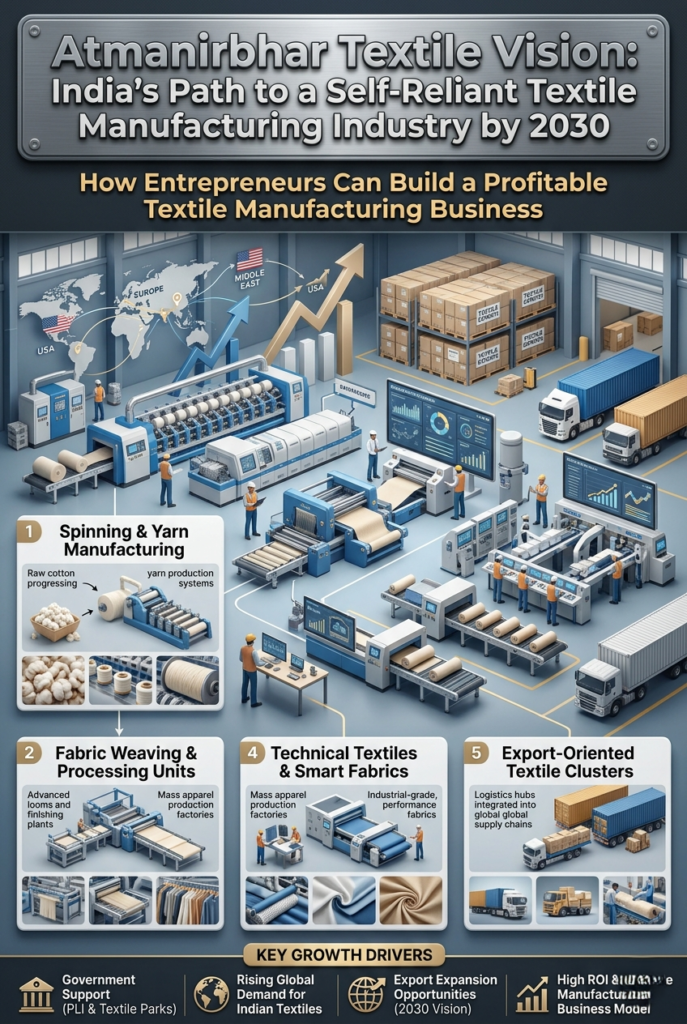
The textile sector in India is experiencing one of the most vigorous development stages that are opening up new business opportunities to entrepreneurs, producers and investors. As the government aims to develop a textile sector worth US 250 billion and an export base of US 100 billion by 2030, the industry will be one of the most robust sectors of the manufacturing economy in the country. To future business owners, this vision is not just a policy aspiration but a bright indication that the climate to commence business in textile manufacturing is getting more favourable and lucrative.
Atmanirbhar initiative in textiles aims at enhancing domestic production, competitiveness of exports, and developing world-class infrastructure. The demand of textiles is likely to increase in India and abroad within the next 10 years. The growing demand of clothing, home textiles, and industrial fabrics is growing with a rise in population, urbanization, and new lifestyles of consumers. Meanwhile, international firms are seeking trustworthy suppliers beyond conventional manufacturing locations, and this presents Indian entrepreneurs with a huge opportunity.
Get Detailed Insights from This Book: Modern Technology of Textile Dyes & Pigments (3rd Edition)
Understanding Where Real Profit Exists in the Textile Industry
A lot of new businesspeople think that the textile production is a low-income enterprise. As a matter of fact, profitability lies in the choice of a certain part of the textile value chain. There are those segments that are very competitive in production scale and price wars, and those that reward specialization and quality control.(Textile Manufacturing Business in India)
In the current market value-added services and specialized products are usually the most profitable and not mass production. Companies that invest in technology, process management, and quality assurance would be able to develop good relationships with their customers and attain steady growth.
The textile value chain has a series of steps, including the production of fibers, fabric production, processing, production of garments, and distribution. The different stages provide different opportunities to entrepreneurs based on their capabilities and investment abilities.
Segments with Strong Profit Potential
- Textile processing and finishing.
- Technical textile manufacturing
- Export-oriented garment production
- Sustainable and recycled fabrics.
- Printing and dyeing of fabrics.
These segments enable small manufacturers and startups to compete on expertise as opposed to scale and they are ideal.
Government Support Is Making Textile Startups Easier Than Ever
The government has come up with numerous programs that are aimed at fostering development of the textile industry. Such initiatives are meant to minimize operation expenses as well as enhance infrastructure and investment in new manufacturing plants. Consequently, it is today more viable to start a business in textile than it was ten years ago.
The development of integrated textile parks as part of PM MITRA is one of the most significant. These parks offer ready industrial facilities, common utilities, and simplified regulatory procedures. By establishing their business in such parks, entrepreneurs do not have to deal with the complicated administrative needs, but rather concentrate on their production.
The other significant program is Production Linked Incentive scheme, which incentivizes companies to grow their production in high-growth segments in the textile industry. It is aimed at increasing the manufacturing capacity and competitiveness of exports.
Key Benefits of Government Textile Schemes
- Less infrastructure and set up costs.
- Availability of modern industrial facilities.
- Production growth by monetary rewards.
- Enhanced supply chain and logistics.
- Faster regulatory approvals
These strengths have simplified the process of establishing and developing textile manufacturing companies by entrepreneurs.
Access Complete Business Plan: Textile Processing and Finishing Projects
Export Opportunities Are Driving Industry Growth
One of the largest sources of growth in the textile industry is exports. Foreign customers are in a continuous hunt of stable suppliers capable of supplying quality products on time. The reputation of India as a competent manufacturer of textiles provides the local companies with a good edge in the international markets.(Textile Manufacturing Business in India)
Exportation of textiles however is a detailed process which must be followed properly and in line with the international standards. Customers require regularity, openness and sustainable production. Firms which have adequate documentation and quality control measures stand better chances of getting a long-term contract.
Effective exporters usually invest in newer equipment, labor and effective manufacturing. They also establish effective relationships with the customers and react promptly to the market changes.
Choosing the Right Textile Business Model
One of the most critical decisions that an entrepreneur who ventures into the textile industry can make is the choice of the appropriate business model. The decision to make depends on the capital, technical expertise, and demand in the target market. Others begin small with manufacturing plants and others specialize in certain services like fabric processing or packaging.
Market research and financial viability should be undertaken in detail before starting a textile business. Knowledge of the customer needs and production expenses can assist entrepreneurs in making expensive errors and constructing viable businesses.
Entrepreneurial Ideas in popular Textiles Business:
- Textile processing unit
- Garment manufacturing business
- Technical textile production
- Recycling and waste management of textiles.
- Business trading and export of fabrics.
- Testing and quality inspection services of textiles.
All these business models have varying amounts of investment and potential profitability, thus enabling entrepreneurs to select the alternative that best suits their strengths.
Explore proven business ideas with high success potential
Common Mistakes to Avoid in Textile Startups
Poor planning and unrealistic expectations are some of the challenges that many textile businesses face in their initial stages. The possibility to prevent typical mistakes can contribute to great success and profitability.
Underestimation of working capital requirements is one of the most common issues. Textile manufacturing entails buying raw materials, wages paid, and holding inventory, and then getting paid by customers. Businesses can easily experience financial strain even with high demand in cases where there is a lack of cash flow.
The other problem is the failure to comply with regulation. There is an increase in environmental and safety standards particularly to the export-oriented units. Firms that fail to comply with these are likely to face fines, delays in production or loss of customers.
Major Startup Mistakes in Textile Manufacturing
- Inadequate financial planning
- Making an incorrect product selection.
- Disregard to quality control systems.
- Underestimating operational costs
- Failure to conduct market research.
Through proper planning and expert advice, entrepreneurs can be able to escape these.
Building a Sustainable Textile Manufacturing Business
The establishment of a winning textile company is a long-term outlook and a strict management process. The entrepreneurs have to work on efficiency, quality and customer satisfaction at the start itself. Reliable machinery and skilled workers are important in ensuring consistency in production, and minimizing operational risks.
The textile industry is also getting more involved in technology. Inventory management, production scheduling and quality monitoring digital tools can enhance productivity and minimise wastages. The earlier businesses embrace modern technology, the higher their chances of being competitive in the future.
Branding and marketing are also important. Even the small-scale manufacturers benefit when using online platforms and export networks in order to reach the international customers. The reputation of reliability and professionalism is the key to growth in the long-term.
Related Article: Top 8 Textile Manufacturing Business Ideas in India: High Profit, Low Investment & Export Opportunities
How NPCS Helps Entrepreneurs Start Textile Manufacturing Businesses
The initiation of a textile manufacturing unit is technically planned, financially analysed, and regulated. Estimating the cost of investment, choosing machinery and business plan preparation are some of the problems that many entrepreneurs go through. Professional consultancy services provide valuable support at this location.
Niir Project Consultancy Services NPCS provides businesspeople with complete project reports and industrial project feasibility studies to support their needs. These reports contain detailed data on production procedures, raw materials, machinery needs and financial estimates. Through the study of market needs and cost formations, NPCS assists entrepreneurs to make good decisions before committing their capital.
Project reports prepared by professionals are usually what financial institutions need to give business loans. Properly developed report proves that the project is viable and gives the project more likelihood of getting funds. When properly planned and advised by experts, business starters can confidently start their textile enterprises and reduce the risk of financial loss.
The Future of the Textile Industry in India
The prospects of the Indian textile industry are very bright. The favourable environment to new businesses is being created by rapid economic growth, expanding export markets and strong government support. Within the next ten years, the industry will embrace improved manufacturing technologies, sustainable production practices and new product designs.
Those who venture into the textile industry today can create thriving companies that can help the country develop economically. New businesses can establish themselves as reliable suppliers in both domestic and international markets through their focus on delivering high-quality products and efficient services and maintaining customer satisfaction.
Frequently Asked Questions (FAQ)
1. Does the textile manufacturing business in India make a profit?
Yes, the production of textiles can be exceptionally lucrative when the companies pay attention to the effective production, quality management and good relationships with customers. Niche markets like processing and technical textiles are more lucrative.
2. What is the amount of investment to start a textile manufacturing business?
The amount of investment required differs according to the nature and size of the business. Small units might need moderate capital investment whereas large factories need large capital. Project report aids in the determination of real costs.
3. Which textile segment has the highest demand in the future?
The growth of industries and environmental consciousness are likely to demand technical textiles, garments exports and sustainable fabrics.
4. What are the licences needed to open a textile producing unit?
Business registration, tax registration, factory approval and environmental clearance are usually required before the operation of the entrepreneur.
5. What is the importance of a project report prior to opening a textile business?
A project report is a document that gives specific details regarding the demand in the market, cost of production and financial forecasts. It assists business people to plan and finance their projects with the banks.
6. What is the role of NPCS in initiating a business of textile manufacturing? NPCS writes professional feasibility reports, market studies and financial plans and directs the entrepreneurs in establishing successful textile manufactur