Stone Paper Manufacturing in India: Process, Machinery, Cost Drivers and Rules
Contents 8 sections
- What stone paper is made of, and is it better than normal paper?
- Why stone paper costs more than ordinary paper
- How stone paper is made, step by step
- Machinery for a stone paper line
- Raw materials: calcite from Rajasthan and Andhra Pradesh, resin from the polymer market
- Why Indian rules treat stone paper as plastic
- Before you commit to a stone paper line: five checks
- Stone paper questions people ask
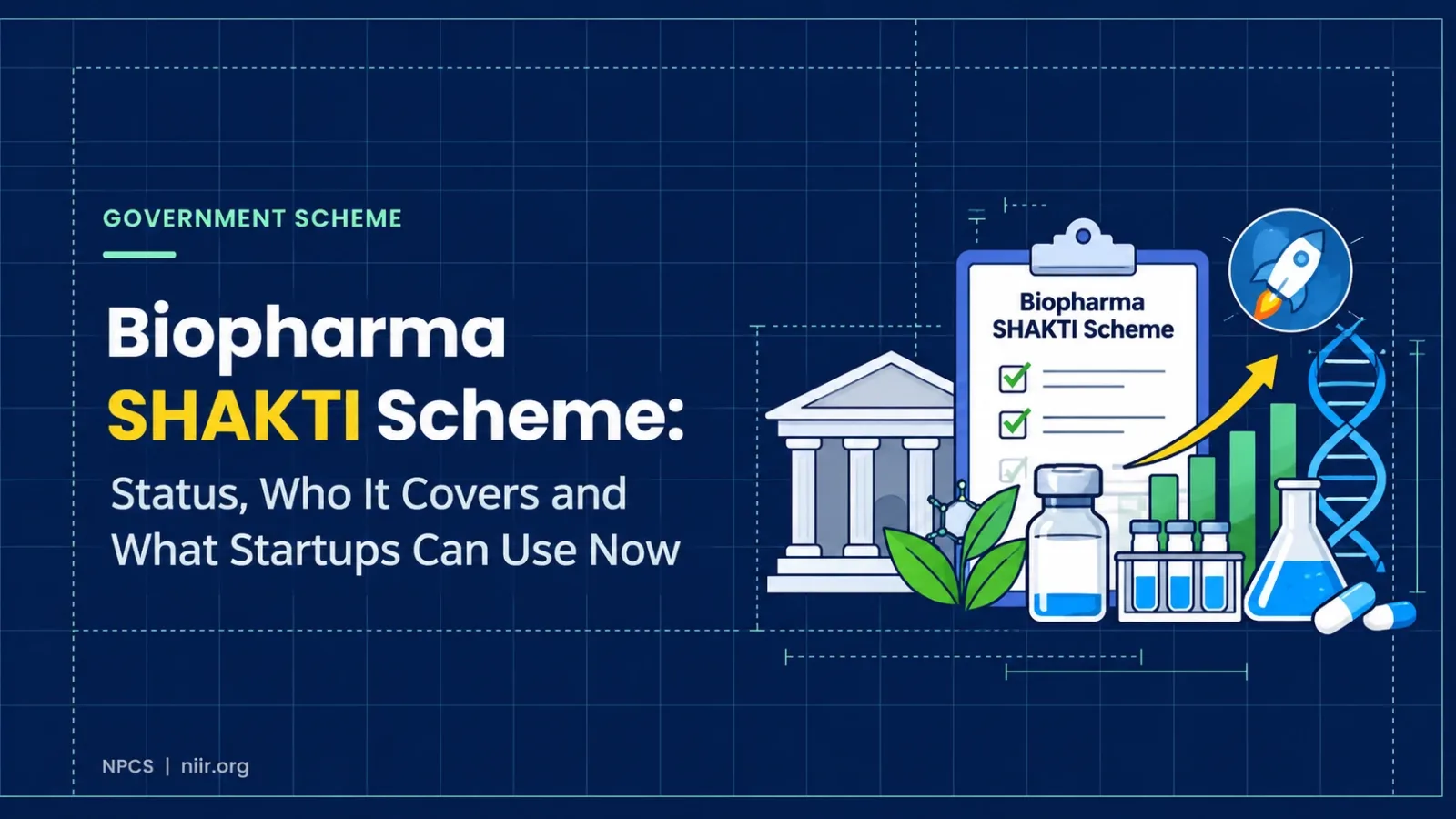
Stone paper manufacturing has nothing in common with a paper mill. You take finely ground limestone (calcium carbonate), blend it with high-density polyethylene (HDPE), mostly stone with a smaller share of plastic, melt the blend into pellets and extrude them into a thin film that usually gets a light coating for print. There is no pulp, no wet end and no drying section. The sheet takes pen and printing ink, shrugs off water and is hard to tear.
The catch sits in the same sentence. Because a plastic holds the stone together, stone paper behaves like a filled plastic film, and Indian rules treat it much the same way. That decides your machinery (plastic extrusion, not paper machines), your buyers (people who pay for water and tear resistance) and your compliance. Plan it as a plastics converting project with a mineral supply chain. For fibre-based options, see the paper business ideas list.
What stone paper is made of, and is it better than normal paper?
A 2016 editorial in the journal BioResources by Martin Hubbe of North Carolina State University described commercial stone paper as about 80% ground calcium carbonate, extruded with recycled HDPE and at least one undisclosed additive. A 2024 patent held by Brückner Maschinenbau, a German film-line maker, draws the working line: at 50% mineral filler or more by weight the film is stone paper; below that, it is synthetic paper.
The table shows where stone paper beats ordinary paper and where it loses.
|
Property |
Stone paper |
Wood-pulp paper |
|
Water |
Beads off; strength holds when wet |
Softens and weakens |
|
Tearing |
Stretches, resists tearing |
Tears easily |
|
Printing |
Offset, flexo, gravure, inkjet; not laser |
All methods |
|
Folding |
Needs pressure, can spring back or crack |
Holds a crease |
|
Recycling |
Separate collection only; spoils paper recycling |
Normal paper stream |
|
End of life |
Not biodegradable; sunlight breaks HDPE into microplastics |
Biodegradable |
So it wins only where water, grease or rough handling would ruin paper: menus, outdoor maps, field notebooks, labels and shipping cartons. For school notebooks and office printing, ordinary paper from a pulp and paper mill is cheaper and works in every printer.
Why stone paper costs more than ordinary paper
Stone paper is priced on plastics economics, not paper economics. These levers move its cost.
|
Cost driver |
Why it raises the price |
|
HDPE resin |
The binder follows polymer prices, which move with crude oil |
|
Line speed |
Hubbe notes extrusion is slow and lacks the scale of a modern paper machine |
|
Machine wear |
Abrasive mineral wears screws and dies; clumps block the line and mark the film |
|
Mineral fineness |
Crushing limestone takes roughly 100 to 1,000 kWh per tonne, per the same editorial |
|
Coating |
A separate coat is needed for good print results |
|
Weight per sheet |
A denser sheet gives fewer sheets per kilo |
Public price lists for stone paper in India are unreliable; quotes swing with thickness, coating and order size. Compare and quote per square metre at a stated thickness, never per kg alone. A low price per kg can hide a thin, poorly coated sheet.
How stone paper is made, step by step
1. Prepare the mineral. Limestone, marble waste or calcite is crushed, ground to ultra-fine ground calcium carbonate (GCC) and classified to remove oversize grains.
2. Treat and compound. The powder is surface-treated so it disperses in the polymer, mixed with HDPE plus small amounts of dispersants, stabilisers and lubricants, and compounded into filled pellets.
3. Form the film. The Brückner patent says most stone paper is made by blown film extrusion; some is cast or calendered, then stretched along the machine direction.
4. Coat the surface for ink acceptance and print sharpness.
5. Slit, sheet and test for thickness, tear strength, print acceptance and heat behaviour.
Forming uses no process water, though extruders still need chillers.
Machinery for a stone paper line
The compounding extruder is where filled lines lose most money, because the mineral grinds down the metal. Start supplier talks there.
|
Machine |
What it does |
Ask the supplier |
|
Grinding mill with classifier |
Ultra-fine powder (only if grinding in-house) |
Fineness, power per tonne |
|
High-speed mixer |
Surface-treats the powder |
Batch size, heat control |
|
Twin-screw extruder with pelletiser |
Compounds HDPE and mineral |
Proven filler loading, wear parts |
|
Blown film, cast or calender line |
Forms the sheet |
Thickness control, width |
|
Coating unit with dryer |
Adds the print layer |
Coat weight, line speed |
|
Slitter-rewinder and sheeter |
Cuts rolls and sheets |
Cut accuracy, static control |
Raw materials: calcite from Rajasthan and Andhra Pradesh, resin from the polymer market
The Indian Bureau of Mines calcite review puts 53% of India's calcite resources in Rajasthan, 40% in Andhra Pradesh and 5% in Madhya Pradesh, and notes that calcite ground as GCC is widely used as a filler in plastics and paper. Since February 2015 calcite is a minor mineral, so producers report to state mining departments. If you are weighing a site near the source, see the industrial areas in Rajasthan.
Recycled HDPE lowers binder cost but must hold a steady melt flow, or film thickness wanders. The plastic waste recycling guide explains how that feedstock is made.
Buying powder or grinding it is your first big decision. In the NPCS project report on ground calcium carbonate (90% brightness, over 90% CaCO3), a 100 tonnes per day grinding plant needs about ₹262 lakh in plant and machinery and about ₹535 lakh in total project cost, breaking even at about 40% of capacity. Most first stone paper plants should buy surface-treated powder and put their capital into the film line.
Why Indian rules treat stone paper as plastic
The Plastic Waste Management Rules definitions published by the CPCB call a material plastic if it contains a high polymer such as HDPE as an essential ingredient. Stone paper fits that wording. In practice:
• Carry bags: plastic carry bags must be at least 120 microns thick from 31 December 2022, as the Environment Ministry announced in 2021. A thin stone paper bag sold as a paper bag substitute can breach this.
• Packaging: plastic packaging carries extended producer responsibility for producers, importers and brand owners, so packaging buyers will ask how your material is classed.
• Claims: Central Consumer Protection Authority guidelines from October 2024 bar vague claims such as "eco-friendly" or "sustainable" without credible evidence, Paper Mart reported. "Tree-free" is accurate; "plastic-free" and "biodegradable" are not.
• Tax code: in July 2026 US Customs classed stone paper boxes as plastic articles (ruling N362761) because they are not cellulose-based. India uses the same Harmonized System headings, so settle your HSN code with your tax adviser before quoting.
Before you commit to a stone paper line: five checks
1. Name the product and buyer, and have the buyer run your samples on their own press.
2. Start as a converter if volumes are uncertain: buy rolls and convert them, as a notebook manufacturing unit would. Build a film line once offtake is steady.
3. Get the compliance view in writing from your State Pollution Control Board, and fix your HSN code and marketing wording before launch.
4. Test powder fineness and surface treatment from two grinders before you sign for machinery.
5. Lay out costs, cash flow and break-even the way a detailed project report does, because your bank will ask for exactly that.
NPCS has prepared over 150k project reports across 40+ sectors since 1994. An NPCS report for a stone paper unit would set out the process flow, machinery with suppliers, raw material costs, plant layout, manpower and the financials (project cost, working capital, break-even, cash flow) in the format banks typically ask for.
Stone paper questions people ask
Is stone paper waterproof?
Yes. The sheet is a mineral-filled plastic film, so water beads on it and the sheet keeps its strength when wet. That is why it suits menus, maps and outdoor labels. Whether the print survives water depends on the ink and coating, so test with the exact ink your buyer will use.
Can you use stone paper in a laser printer?
No. Laser printers and copiers fuse toner with heat high enough to soften the HDPE binder, so the sheet can deform. Stone paper works with inkjet and solid-ink printers and with offset, flexo, gravure and letterpress. If a buyer's office runs only laser printers, sell them something else.
What is the difference between stone paper and synthetic paper?
Both are plastic films made to behave like paper. The difference is the mineral share. At 50% filler or more by weight, the film is called stone paper. Below that it is synthetic paper, usually stretched in both directions.
Can stone paper go into paper recycling?
No. Melted polyethylene sticks to the drying cylinders and calender stacks of paper machines and shows up as flakes in recycled paper. Stone paper can be recycled into new stone paper only through separate collection. Mark your products clearly so users keep them out of the paper bin.

Planning a new manufacturing unit?
NIIR prepares detailed project reports and feasibility studies for new projects. Share your requirement and the team will get in touch.