

From company registration to foreign payment realisation — everything you need to know before you start exporting
Why Exporting Is One of the Best Business Decisions You Can Make Today
India is no longer just a large domestic market. It is rapidly becoming one of the world’s most competitive export powerhouses. Merchandise exports from India crossed USD 437 billion in the financial year 2023-24, and the government has set an ambitious target of achieving USD 2 trillion in total exports by 2030. From engineering goods and pharmaceuticals to textiles, agri-products, and software services, Indian businesses are finding profitable markets in every corner of the globe.
Yet for every manufacturer, trader, or first-generation entrepreneur sitting on a potentially exportable product, the process of actually starting an export business can seem overwhelming. Which registrations are needed? How does a Letter of Credit work? What is pre-shipment finance? How do you find foreign buyers? What happens if a foreign buyer does not pay?
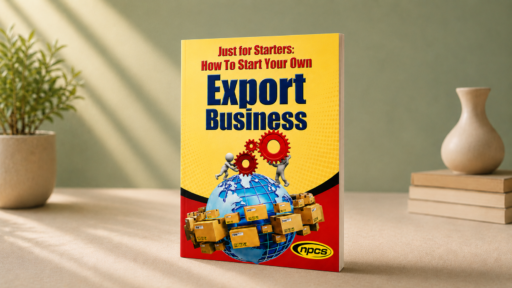
These are not trivial questions, and the answers are scattered across government portals, trade handbooks, and years of industry experience. That is exactly the gap that a well-structured export business handbook fills. And for Indian entrepreneurs, one such resource has been trusted through six successive editions — Just For Starters: How To Start Your Own Export Business by Ajay Kumar Gupta.
India’s Export Sector: Market Demand, Growth and Opportunity
Moreover, The scale of opportunity in Indian exports is difficult to overstate. India’s Foreign Trade Policy 2023 targets a combined goods and services exports figure of USD 2 trillion by 2030, and the government has backed this ambition with a host of schemes, duty exemptions, export credit access, and institutional support from bodies like DGFT, EXIM Bank, and ECGC.(Start Export Business in India)
India ranks among the top 20 exporters in the world. Sectors such as pharmaceuticals, IT services, engineering goods, chemicals, and textiles are achieving double-digit growth in international markets, with significant headroom still available.
In particular, For MSMEs, the opportunity is particularly significant. Small and medium enterprises account for nearly 45 percent of India’s total exports. The government’s Production-Linked Incentive (PLI) scheme, combined with trade agreements across Southeast Asia, the Middle East, and Africa, is opening entirely new categories for Indian exporters. E-commerce exports are creating another frontier — platforms like Amazon Global Selling are enabling even cottage-scale manufacturers to sell directly to international customers.
Furthermore, At the regional level, India’s SAARC commitments, the South Asian Free Trade Area (SAFTA) framework, and growing bilateral trade with Commonwealth of Independent States (CIS) countries are creating low-tariff corridors that earlier generations of exporters never had access to.
The Real Challenges That Trip up First-Time Exporters
Moreover, Despite the size of the opportunity, first-time exporters routinely run into the same set of problems. Understanding these pitfalls is the first step to avoiding them.
- Incomplete registration: Many new exporters miss the full sequence — PAN, IEC code, RCMC, ECGC cover, and Export Promotion Council membership — and lose significant benefits as a result.
- Export pricing errors: Export costing is not the same as domestic pricing. Freight, insurance, customs duties, agent commissions, and currency fluctuation must all be factored in from day one.
- Documentation failures: A mistake on a shipping bill, a mismatch between invoice and Bill of Lading, or a delayed submission to the bank can delay payment realisation by weeks.
- Payment risk: International trade means dealing with buyers you may never have met in person. Without ECGC cover or a properly structured Letter of Credit, the risk of non-payment is real.
- GST compliance gaps: The GST framework for exports — zero-rated supply, LUT filings, refund claims, treatment of deemed exports — is different from domestic GST and requires specific knowledge.
All of these challenges share a common solution: proper knowledge and practical guidance from a source that has been tested, revised, and refined over Six editions.
Introducing ‘Just For Starters: How to Start Your Own Export Business’ 6th Revised Edition
Moreover, Now in its 6th Revised Edition, Just For Starters: How To Start Your Own Export Business by Ajay Kumar Gupta, published by Niir Project Consultancy Services (NPCS), is one of the most comprehensive and practically-oriented guides to the Indian export business available today.(Start Export Business in India)
Instead, The book was not written for academics. It was written for the manufacturer in Ludhiana wondering how to send his bicycle parts to Africa, the textile trader in Surat looking to open European accounts, the food processor in Punjab curious about APEDA-certified exports, and the young entrepreneur anywhere in India who has a product, a market idea, and no idea where to begin.
In 29 structured chapters, the book walks readers through every stage of the export journey — from setting up the firm and getting registered, all the way through to realising foreign exchange proceeds and handling post-shipment compliance.
Get Detailed Insights from This Book: Just For Starters: How To Start Your Own Export Business
What the Book Covers?: A Practical Chapter-by-Chapter Value Breakdown
Setting Up and Registering Your Export Firm
Moreover, The book opens by walking readers through the practical mechanics of establishing an export firm: selecting a business structure (OPC, LLP, or Private Limited Company), registering the company, opening a current account, obtaining a PAN, and securing the IEC (Importer-Exporter Code) from DGFT. It covers registration with Export Promotion Councils, ECGC, and the Chamber of Commerce. This section alone saves new exporters weeks of confusion by laying out the sequence clearly.
Executing Export Orders from Start to Finish
Furthermore, Chapters on export procedure and execution cover the full cycle — responding to inquiries, preparing quotations, confirming orders, arranging shipment, dealing with clearing and forwarding agents, filing customs paperwork, and submitting documents to the bank for payment realisation. Each step is explained in practical terms, so readers understand not just what to do but why.(Start Export Business in India)
Export Finance: Funding Your Export Business
Moreover, One of the most valuable sections covers export finance in depth. The book explains pre-shipment finance (packing credit), post-shipment finance, and all major methods of payment — open account, documentary collection, Letter of Credit, cash in advance, and consignment. It also covers the EXIM Bank of India and ECGC, explaining how export credit insurance protects exporters against buyer default and political risk abroad.(Start Export Business in India)
Export Pricing, Costing, and Strategies
Moreover, A dedicated section demystifies export pricing and costing — marginal costing, standard costing, job costing — and explains export pricing quotations and Incoterms-linked price structures. Multiple pricing strategies (skimming, penetration, differential, market pricing) are explained in a business context, helping exporters compete effectively on price without sacrificing margins.
Export Documentation: The 13-Step Process
Moreover, Chapter 22 takes the reader through export documentation in a crisp 13-step format — from enquiry to proforma generation, order placement, goods readiness, customs clearance, document forwarding, bills negotiation, and bank certificate receipt. This section alone makes the book an invaluable operational reference that exporters return to again and again.
GST on Exports: Practical Clarity on a Complex Subject
Moreover, Three dedicated chapters cover GST as it applies to export of goods, services, and applicable tax rates. In addition, These chapters explain zero-rated supply, the LUT (Letter of Undertaking) method versus the IGST refund route, treatment of deemed exports, and the exact documentation procedures exporters must follow. As a result, Given how frequently GST compliance errors trip up exporters, this section provides genuinely useful guidance.
Export Incentives, Benefits, and Government Schemes
Moreover, The book provides a thorough breakdown of government export incentive schemes — Advance Authorisation Scheme, Duty Free Import Authorisation (DFIA), Duty Drawback, EPCG Scheme, RoSCTL, EOU/EHTP/STP/BTP schemes, Market Access Initiative (MAI), and Marketing Development Assistance (MDA). For MSMEs in particular, accessing these incentives correctly can mean the difference between a profitable and a loss-making export operation.
Regional Trade: SAARC, CIS, and Beyond
Two chapters specifically address India’s export relations with SAARC member countries (Bangladesh, Sri Lanka, Nepal, Pakistan, Bhutan, Afghanistan, Maldives) and the CIS region (Armenia, Georgia, Ukraine, Latvia, Estonia, Lithuania, Belarus). Moreover, These chapters are particularly useful for exporters in north and east India looking to tap proximate international markets with preferential trade terms.
Why is this Book genuinely useful for Entrepreneurs?
The book works because it bridges the gap between policy-level information and ground-level operational knowledge. Government websites tell you what schemes exist. However, This book tells you how to actually use them.
The writing is clear and free of unnecessary jargon. In addition, Complex concepts like export costing, packing credit eligibility, or the EPCG obligation framework are broken down in plain language. As a result, This makes the book accessible to a first-generation entrepreneur with no export background, while still being substantive enough to be useful to an experienced professional looking for a comprehensive reference.
Moreover, It is also regularly updated. The 6th Revised Edition incorporates the current GST framework, updated export registration procedures, and the latest export promotion scheme structures — making it current and practically applicable rather than a dated theoretical text.
Who Should Buy this Book?
- First-time exporters and entrepreneurs looking to take their business international
- MSME manufacturers evaluating global market entry for their products
- Commerce, MBA, and international trade students and faculty
- Sourcing agents, trading house executives, and export management company professionals
- Bankers and financial professionals handling export credit and trade finance
- CAs and consultants advising export-oriented clients on GST and incentive schemes
- Agri-processing, textile, pharmaceutical, and engineering goods businesses considering exports
References and Data Sources
| # | Organisation | Website |
| 1 | DGFT — Ministry of Commerce & Industry, Govt. of India | https://www.dgft.gov.in |
| 2 | EXIM Bank of India — Export Finance & Resources | https://www.eximbankindia.in |
| 3 | ECGC — Export Credit Guarantee Corporation of India | https://www.ecgc.in |
| 4 | Ministry of MSME — MSME Export Statistics & Schemes | https://msme.gov.in |
| 5 | World Trade Organization (WTO) — India Trade Statistics | https://www.wto.org |
Frequently Asked Questions (FAQ)
Q1. What are the basic requirements to start an export business in India?
Firstly, 6To start an export business in India, first establish a legal business entity and open a current bank account. Then, obtain a PAN from the Income Tax Department and apply for an IEC (Importer-Exporter Code) from the DGFT. Additionally, You will also need to register with the relevant Export Promotion Council (RCMC) and obtain ECGC export credit insurance. Furthermore, The book covers each of these steps in full detail, including the documents required and the government portals where each registration is processed.
Q2. How does export finance work in India?
India broadly divides export finance into pre-shipment finance (packing credit) and post-shipment finance. Pre-shipment finance enables exporters to procure raw materials and manufacture goods before shipment. Post-shipment finance covers the period from shipment to realization of export proceeds. The EXIM Bank of India and commercial banks are the principal providers under RBI guidelines. ECGC guarantees protect against buyer default risk.
Q3. What is the GST treatment for exports from India?
Under GST, exports qualify as zero-rated supplies, so Indian exporters do not charge GST on exported goods or services. Exporters have two options: they can export under a Letter of Undertaking (LUT) without paying IGST and then claim refund of input tax credit, or they can pay IGST at the time of export and claim a cash refund from the government. Three dedicated chapters in Just For Starters cover this in full, including LUT filing procedures, refund claim processes, and treatment of deemed exports.
Q4. What is the EPCG Scheme and how does it benefit exporters?
The Export Promotion Capital Goods (EPCG) Scheme allows Indian exporters to import capital goods at zero or reduced customs duty. In return, they must meet an export obligation within a specified period. This significantly reduces capital costs for setting up or upgrading export production infrastructure. The book explains EPCG eligibility, how to apply for an EPCG licence, export obligations, and how the scheme operates under the current GST regime.
Q5. How does an Indian exporter find and manage foreign buyers?
Finding foreign buyers requires a multi-channel approach. Businesses can participate in international trade fairs organized by India Trade Promotion Organisation and Export Promotion Councils. They can also use buyer-seller matching services offered by Federation of Indian Export Organisations, register on global B2B platforms, and work with foreign sales agents or distributors.
The book also explains how to evaluate international distribution partners and negotiate with foreign buyers. It covers managing overseas agents through proper agency contracts and building long-term relationships in international markets.
Get Your Copy Order Now
Just For Starters: How To Start Your Own Export Business (6th Revised Edition)
Author: Ajay Kumar Gupta | Publisher: NIIR Project Consultancy Services | Price: Rs. 999 / USD 26 | ISBN: 9788195075546
If you are serious about building an export business from India, this book belongs on your desk — not your reading list. In 29 chapters covering every operational, financial, regulatory, and strategic aspect of the Indian export business, Just For Starters gives you the knowledge that most exporters spend years accumulating through trial, error, and expensive mistakes.
Whether you are a first-time exporter, an MSME looking to go global, a student of international trade, or a professional advising export-oriented clients, this is one of the most cost-effective investments you can make in your export career.
Order From Your Preferred Platform:
Buy on Entrepreneur India (entrepreneurindia.co)
For bulk orders, institutional purchases or NPCS consulting enquiries: