


India is ranked first in the world both in spices production and spices export. Starting a spice manufacturing business in India is a highly profitable opportunity, especially in value-added products like oleoresins, essential oils, and blended spices. In 2023–24, Indian spice exports crossed USD 15.1 billion, which shows the huge global demand for Indian spices.
If you want to start a spice processing unit or spice export business, this guide will help you understand investment, profit, process, machinery and business opportunities.
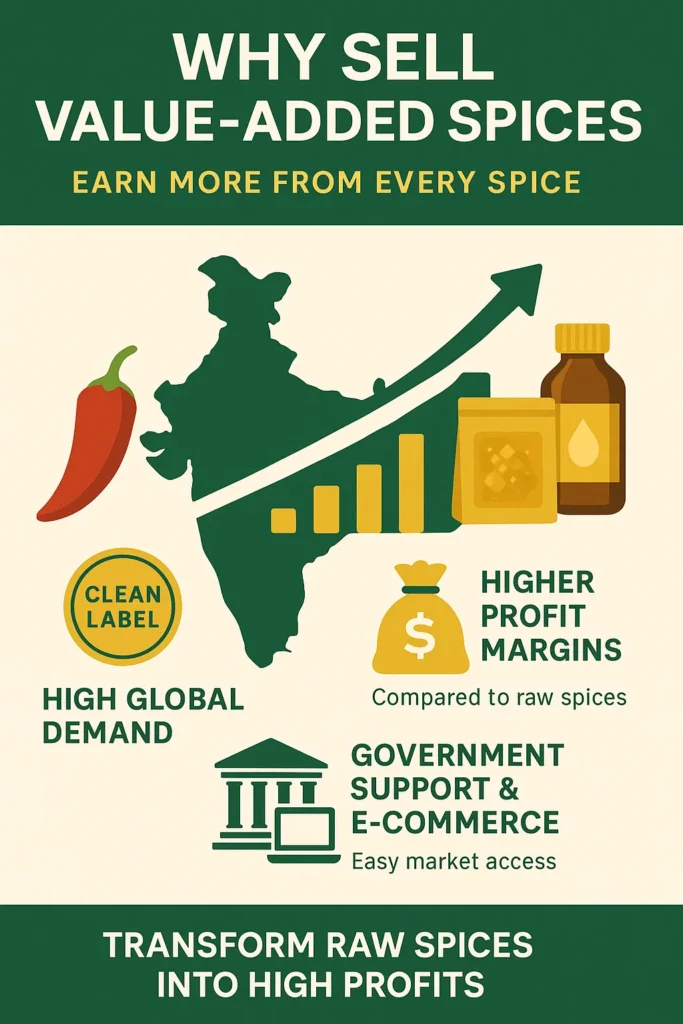
Why Spice Manufacturing Business is Profitable in India?
Spice manufacturing business in India is a very attractive business due to the following reasons:
• Worldwide demand on Indian spices is high
• Raw materials are cheap
• Mainly, the value-added products are giving a lot of profits
• Clean label and natural ingredients are becoming widely accepted
• USA, Europe and Middle East are the main markets for spice exports
Increasing demand for value-added products like oleoresin, essential oils, and blended spices gives much more profit than simply trading in raw spices.
Read More: Spice Processing Business Opportunities For Entrepreneurs
Types of Spice Manufacturing Businesses in India
You can start any of these spice processing businesses:
Oleoresin Manufacturing Business
Spices in the form of oleoresins are less perishable, more potent, and generally more vivid than regular spices and thus help in increasing the overall value of the product. They are more cost effective to ship and have a longer shelf life(Spice Manufacturing and Exports in India).
The production of oleoresins involves the processes of solvent extraction and evaporation, but the successful standardization of the product is what requires the most capital. The spice industry, especially oleoresins, has the most profitable return on investments.
Essential Oil Extraction Business
Moreover, steam distillation can be started on a small scale and can grow quickly. In addition, The oils can be sold in the food, fragrance, and pharma markets as a result, they are high in demand. Furthermore, With post-harvest residues as feedstock, oils can obtain higher prices.
Read More: Know About Spice Oleoresins
Blended and Fortified Mixes
Currently, there is a high demand for ready-to-cook masalas, health fortified blends, and diet-specific seasonings. Moreover, In comparison to extraction plants, the blending facilities require a smaller capital investment and are easier to focus on branded business, as they require a simpler layout and sterilization, automated packaging, and a laboratory for monitoring.
Encapsulated Spice Flavours
Moreover, high prices in business to business markets are offered for the powders, which can result from a technically complicated process. In fact, the powders are created for instant foods and beverages through a process which spray dries and micro-encapsulates spice extracts.
Read Our Project Report: Click Here
Gourmet and Organic Ranges
Premium, artisanal, organic spice kits and rubs are able to add extra value through certification and a good narrative.
Market Signals and Export Playbook
Currently, soft export markets (North America, Europe, Middle East, East Asia) rely on India’s competencies for spices including chilli, cumin and turmeric. Moreover, Standardized flavors and natural colorants are in demand(Spice Manufacturing and Exports in India).
Use APEDA and the Spices Board for market intelligence and buyer contacts. Use trade fairs and B2B marketplaces. Obtain FSSAI, HACCP and organic certifications to reach premium buyers.
Manufacturing and Compliance Essentials
First, establish hygienic blending and GMP compliant extraction lines. In addition, build in-house laboratories for GC, HPLC and microbial testing. Moreover, enforce strong traceability from farm to factory. At the same time, Employ FPOs to ensure reliable supplies. Finally, Design packaging according to export regulations and product shelf life.
Read Our Book: Click Here
Business Models That Work
- Contract processing for big exporters
- Private label blends for global brands
- Direct-to-consumer gourmet brands through e-commerce
- Specialized B2B ingredient supply for nutraceuticals and snacks
- Integrated model with backward linkages to farmer groups
Funding and Government Support
Moreover, Use PMKSY, MSME technology upgradation and APEDA export schemes, In addition, use subsidies for extraction and cold storage to reduce your own cost. Furthermore, Incubators, DST grants and export finance for early working capital gaps are also necessary.
Find the Best Idea for Yourself With our Startup Selector Tool
How NPCS Helps You-Spice Manufacturing and Exports in India
NPCS prepares Market Survey cum Detailed Techno Economic Feasibility Reports. NPCS provides sequential plant designs, process flows, machinery and CAPEX lists.
Their DPRs have market sizing, export buyers, raw material information and financials. NPCS also guides clients in applying for grants, prepares bankable project reports and completes regulatory checklists. Working with NPCS reduces execution risk and accelerates time to market.
FAQS-Spice Manufacturing and Exports in India
1. Which of the spice products has the most profitable margin?
A. Oleoresins as well as essential oils have the most profitable margin most of the time.
2. Is it possible for a small unit to do direct exports?
A. Yes. Direct exports can be done with FSSAI and organic or HACCP certifications.
3. What do you think the investment should be for an oleoresin unit?
A. For the oleoresin plants of mid-scale, you will need a reasonable range of capital and it will vary depending on the level of capacity you have, and the level of technology.
4. How can I obtain a surplus of raw spices?
A. Cooperating with FPOs, implementing contract farming, and changing the regions from which you source are three methods to obtain a surplus of raw spices.
5. Which agencies offer assistance for the export of the products?
A. For export assistance and market information, you should contact APEDA, the Spices Board, and then MoFPI.


