
Rare Earth Magnet Manufacturing India
India is pooling into a new era of industrial development and production of rare earth magnets is emerging as one of the best entrepreneur and investor prospects. The magnets provide basic functions which electric vehicles and renewable energy systems and robotic technologies and consumer electronic devices and defense systems require to operate. India has abundant rare earth mineral reserves, yet the country depends on imported finished magnets, which creates substantial market potential for local manufacturers.
The Ministry of Heavy Industries plans a major initiative with a budget of ₹7,280 crore to support rare earth permanent magnet manufacturing which will decrease import reliance and boost domestic production. This program is designed to develop domestic capacity, facilitate industrial development and provide employment opportunities within the country. The advanced manufacturing sector will provide long-term growth opportunities to companies that want to enter this market because of government regulations and rising consumer demand.
Why Rare Earth Magnet Manufacturing Is a High-Growth Industry
The rare earth magnets, in particular the Neodymium-Iron-Boron (NdFeB) magnets are characterized by their high magnetic strength and efficiency. They are popular in the contemporary technologies that demand a smaller size and strong performance. These magnets are in high demand as industries are becoming automated and using clean energy.
A combination of multiple factors is driving the expansion of this sector in India. The production of electric vehicles and development of renewable energy sources and updates to existing manufacturing plants are driving higher production requirements. The domestic production enhancement initiatives from the government create a favourable environment for businesses to invest.
Key industries using rare earth magnets include:
- Electric vehicles and auto parts.
- Wind and solar energy systems.
- Electronics and appliances.
- Automation and robotics in industries.
- Defense and aerospace equipment.
These sectors will continue to expand in the coming ten years, and the high quality of magnets will be in demand.
Get Detailed Project Report (DPR): Rare Earth Permanent Magnet (Strategic Manufacturing Opportunity for Startups)
Market Demand and Future Opportunities
Investments in infrastructure and technology in India will significantly boost the demand for rare earth magnets. One of the main sources of this demand is the adoption of electric vehicles because each one of them needs special magnets to operate in the motor. On the same note, wind turbines and other renewable energy sources require the use of permanent magnets in order to produce electricity effectively.
New opportunities are also emerging to the entrepreneurs because of government policies that favour domestic production. With firms seeking stable local suppliers, early movers in setting up manufacturing plants may get an upper hand in the market.
Besides local demand, there will be increased export opportunities as the industries in the world are looking to alternative suppliers other than the traditional manufacturing centers. Such a development has the potential to make India a global power in the rare earth magnet market.
Investment Required to Start Rare Earth Magnet Manufacturing
The establishment of a rare earth magnet production facility is a highly capital-intensive undertaking because of the high-level of technology and equipment. The overall price will be based on the production capacity, level of automation and location of the plant.
Estimated investment ranges:
- Small pilot plant (200–500 MTPA): ₹26 crore to ₹45 crore
- Large-scale manufacturing unit (up to 1,200 MTPA): ₹128 crore to 210 crores.
Besides the cost of machinery, there are other costs such as land, utilities, training of the work force and compliance costs that the entrepreneur has to put into consideration. The development of manufacturing units is usually done in industrial areas which have a good infrastructure.
Land, Infrastructure and Utility Requirements
Infrastructure planning is important to the success of a manufacturing facility. The process of producing rare earth magnets needs consistency in electricity supply, effective waste disposal mechanisms and good logistics connectivity.
Typical requirements include:
- About 3 to 5 acres of land.
- Power supply that is uninterrupted and has industrial capacity.
- Water facilities and effluents treatment plants.
- Availability of highways, railways or ports.
Developed industrial ecosystems in states tend to offer more support and incentives to manufacturing enterprises.
Read the Complete Book Here: Handbook on Rare Earth Metals and Alloys (Properties, Extraction, Preparation and Applications)
Manufacturing Process Overview
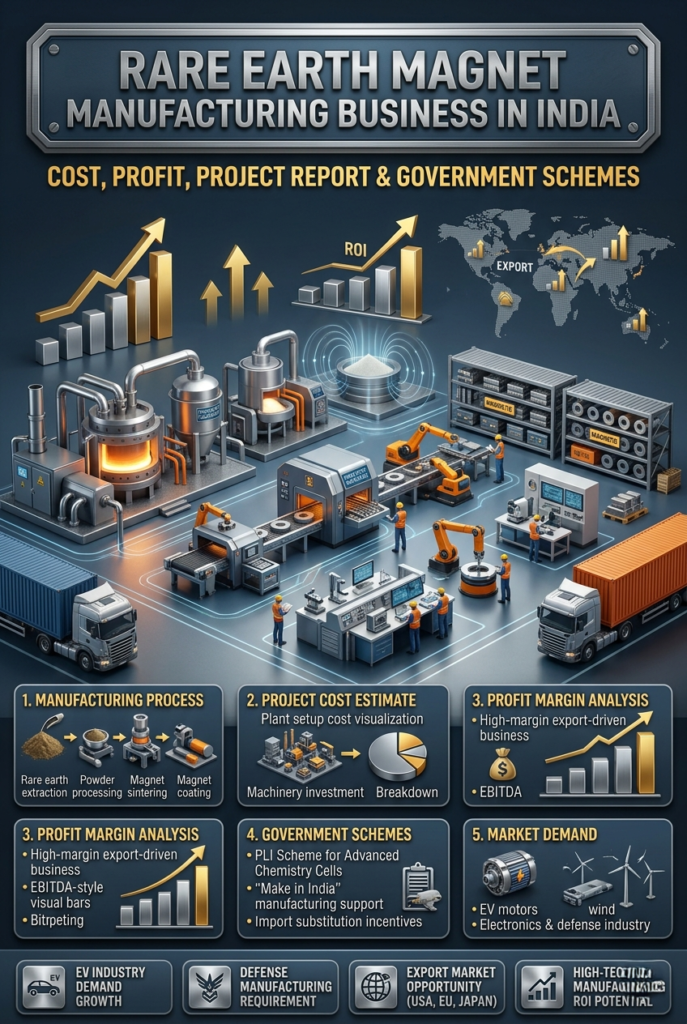
Manufacturers carry out numerous technical operations with accuracy during the process of rare earth magnet manufacturing. It starts with the preparation of alloy materials and their conversion to fine powder using special milling methods. Magnetic alignment systems form the powder, and then high-temperature sintering produces the desired strength and toughness.
The magnets are machined, coated and magnetized to industry standards after sintering. The quality control must be done strictly at each stage in order to maintain the same performance and reliability. Due to the complexity of the process, manufacturers usually invest in high-tech equipment and technical teams.
Raw Materials and Supply Chain.
Constant supply of raw materials is a requirement in ensuring continuity in production. Rare earth magnets require neodymium praseodymium and iron-based alloys as their essential components. In India, they are provided by companies such as Indian Rare Earths Limited which has government owned mining and processing plants.
Domestic sourcing will assist in decreasing the reliance on imports and aid national initiatives to firm up local supply chains. The second step towards creating a sustainable manufacturing business is to build a good relationship with suppliers.
Find high-return business ideas based on your budget & ROI
Profitability and Finance Performance.
When the manufacturing of rare earth magnets is at full capacity the production can be able to provide a consistent revenue. The efficiency of production, quality of products and the demand of the products in the market determines the profitability of the business. Magnets of higher performance in specialized industries generally have higher profit margins.
Typical financial indicators for this industry include:
- Selling price per kilogram: ₹4,800 to ₹7,200
- Net profit margin: 12% to 20%
- Payback period: 5-8 years.
The initial investment is high but the returns in the long run can be good because demand is stable and there is limited competition in the country.
Government Support and Policy Benefits
Indian government is in the process of encouraging local production in key areas such as high-tech materials and clean energy technologies. The aim is to promote investment in these industries through the provision of financial incentives, infrastructural support, and streamlined regulatory processes.
National programs like the Make in India initiative serve as the foundation for programs that focus on improving local manufacturing capabilities and creating job opportunities. Companies that participate in these initiatives receive tax benefits and subsidies and special treatment for government service contracts.
Related Article: Rare Earth Magnet Production Opportunities in India: A Complete Guide for Entrepreneurs
Challenges in Rare Earth Magnet Manufacturing
Although the prospects of this industry are huge, there are some challenges that entrepreneurs should be ready to face. Small businesses may find it challenging to enter the industry due to the high cost of machinery and the technical expertise required. Environmental regulations and safety standards require organizations to create their plans while following regulations and safety requirements.
The business faces two main challenges which include the unpredictable raw material expenses and the inadequate availability of trained staff. The business can manage these threats by conducting complete feasibility studies and developing effective business plans.
Role of NPCS in Starting a Rare Earth Magnet Manufacturing Business
NIIR Project Consultancy Services, also referred to as NPCS, is a top-ranking consultancy firm, which assists entrepreneurs to set up manufacturing enterprises in India. The service will offer you three types of support which include advising help and technical assistance together with complete technical knowledge for your upcoming project design work.
NPCS services are usually inclusive of:
- Drawing of Detailed Project Reports (DPR)
- Market research and feasibility analysis.
- Guidance in the choice of machinery and technology.
- Cost estimation and financial planning.
- Regulatory approvals support.
Such services assist the entrepreneurs in the reduction of risk, efficiencies in the project, and getting funding by banks and financial institutions.
Future Outlook for Rare Earth Magnet Manufacturing in India
The future of production of rare earth magnets in India is very bright. The need of materials of high performance will be in demand as industries keep adopting advanced technology and sustainable solutions to energy. Domestic production and innovation programs by the government are likely to expedite the growth of this sector.
Investors in this business today might enjoy the prospects of growth and growing markets over the long term. Through proper planning, good technology, and good financial control, the production of rare earth magnets can be a successful and sustainable business in the next few years.
Frequently Asked Questions (FAQs)
How much money do you need to start up the production of rare earth magnets in India?
A small pilot plant will cost between ₹26 crore to 45 crore and a large-scale manufacturing facility may cost more than 128 crore.
Is the production of rare earth magnets in India profitable?
Yes, the business could be a gain because of the increase in demand and governmental backing. The margin of profits is between 12 and 20 percent.
How long does it take to set up a manufacturing plant?
The entire installation process normally takes two or three years, such as building, installing of machinery, and approvals.
Is it possible to involve small businesses in this industry?
Yes, small businesses can be involved into the supply chain, they offer their services to machining, coating, testing, packaging and logistics.
What can NPCS do to assist in setting up this business?
NPCS also offers reports on project, feasibility, technical advice and financial planning assistance, which assists entrepreneurs to start manufacturing projects effectively.