
PMEGP second loan: The MSMEs in India are vital to the country’s economy. The MSME sector comprises about 30 percentage of the country’s Gross Domestic Product (GDP) and gives jobs to over 110 million people.
The Employment Generation Programme (PMEGP) is a subsidy of 35 percentage and has helped first-time business owners in the country to begin a small business.
The PMEGP first loan and modernization (PMEGP) has now extended. PMEGP 1 borrowers get subsidy for an additional loan up to ₹1 crore. This gives small businesses the ability to improve their business in several ways; they can upgrade their business to newer machinery, technologies and newer products.
This for young business owners, is a very good thing, as it gives them the ability to improve their business and compete in the global economy.
Read More: PMEGP 2nd Loan Explained: Eligibility, DPR & Best Sectors
The PMEGP Second Loans and Modernization (Support)
The PMEGP Second Loans and Modernization Support may facilitate scaling up in PMEGP supported businesses. The funds make it possible for the increase of modernization, and the enhancement of the quality of the outputs of the business.
This, in turn means that the business that is supported is able to obtain a loan of 1 crore for the purpose of business automation technology and equipment so that their business systems can undergo radical changes. This ensures that over time, the micro enterprises can graduate and grow to bigger enterprises.
The Importance of Modernization for MSMEs
MSMEs experience fierce rivalry from imported products. Without adopting new technologies, they forfeit portions of their market. Modern machines reduce waste and improve productivity.
They enable units to satisfy export demands and bilateral trade. Costs associated green technologies are outweighed by their market access for sustainable products. Expanding units improve the local economy by adding jobs.
Read More: What is Pradhan Mantri Employment Generation Program (PMEGP) Scheme
High Potential Sectors for Scaling under PMEGP Second Loan
Food Processing and Agro Industry
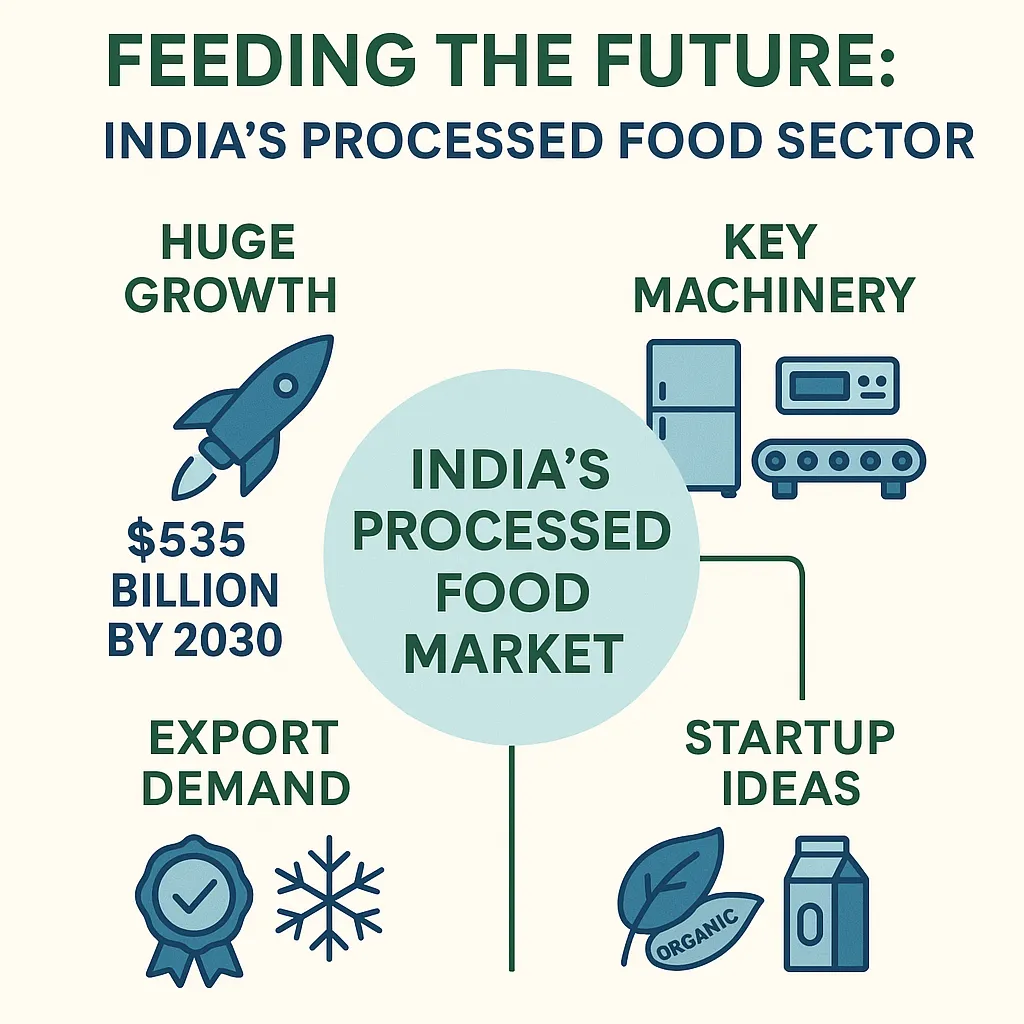
India’s processed food market is projected to reach $535 billion by 2030. Modern machinery is required for the new automated freezing, vacuum packaging, and ready to eat food lines.
Export markets, especially in the Middle East and Europe, demand certified facilities. Young entrepreneurs can branch out into organic packaged foods, frozen foods, and ready to drink products.
Chemicals and Specialty Products
India has large volume imports of specialty chemicals. Modernization allows units to clinically produce specialty chemicals for their respective industries and for export. Opportunities include water treatment chemicals, sodium silicate, eco-friendly solvents, and other specialty formulations.
Renewables and Green Technology
By 2030, India desires to achieve a target of 500 GW of renewables. Potential for MSME expansion includes solar structures, LED units, and lithium ion battery recycling. Lithium ion battery recycling is significant because many valuable metals including lithium, cobalt, and nickel can be recovered.
Read More: One District One Product (ODOP): New Startup Ideas Backed by Government Support
Substitutes for Packaging and Plastics
The growth of e-commerce is associated with increased packaging demand. The second loan by PMEGP to MSME owners promotes automation in the production of corrugated cartons, PET recycling, and compostable biopolymer packaging.
MSME owners have the potential to manufacture eco-friendly bags, biodegradable cutlery, and packagings that can be used for exported goods.
Textiles and Other Technical Fabrics
India is the second largest textile exporter, with textile exports amounting to 44 billion USD. The introduction of modern dyeing and finishing machines in the production system is likely to enhance the quality of the products.
Geotextiles and medical fabrics are examples of innovative technical textiles that have a high rate of return. Expansion into the production of uniforms, workwear, and other sustainable clothing is an opportunity for young entrepreneurs.
Furniture and Modular Manufacturing
India’s furniture market is projected to grow to 40 billion USD by 2030. The integration of CNC cutting technology and modular design machines enables MSMEs to produce quality furniture of their choice.
There are also other non-conventional furniture products that can be exported, especially those that are made of bamboo and other eco-friendly materials.
Import-Export Analysis for Entrepreneurial Opportunities
India imports lithium, nickel, and cobalt. Implementing recycling facilities minimizes this dependence. Carbon fiber and its composites are other major imports with local production abilities.
Imports of biodegradable polymers are complemented with local demand for exports. India is the largest exporter of spices, but there is still a need for modernization.
Read Our Book: Click Here
Potential Business Opportunities for Startups based on PMEGP Modernization
Manufacturing of Carbon Fiber
The demand is growing in aerospace, defense, and automotive industries. Local production offers new export opportunities and reduces imports.
Medical Consumables
Modern and sterile facilities can contribute to the production of IV fluids, gloves, and masks, which are in steady demand across the globe.
Eco-Friendly packaging
Exporting companies are on the lookout for biodegradable substitutes. MSMEs can manufacture corn-starch based bags, paper packaging, compostable cutlery, and other single-use items.
Bio Fertilizers and Biochemicals
Export friendly opportunities thrive in the growing markets of Africa and Asia.
Inspiration from Successful Indian Entrepreneurial Ventures
- Dhirubhai Ambani progressed from the textile business to petrochemicals with steady modernization.
- Karsanbhai Patel built a nationally recognized brand Nirma from small-scale detergent production.
- Ghanshyam Das Birla built a business empire with modern textile mills.
- Pawan Munjal epitomized sustained technological advancement with Hero MotoCorp, the largest two-wheeler manufacturer in the world.
Modernization is the foundation for growth, as illustrated in these instances.
The Role of DPR in Scaling and Modernization
Presenting detailed project reports: DPR) assists with obtaining a second loan from PMEGP. The DPR contains technical details, marketing need, financial breakdown, and recovery of investment details.
Read Our Project Report: Click Here
About NPCS
NPCS reports are techno-economic feasibility studies and market surveys, lasting analysis, and covering all components of potential expansion of industries. NPCS prepares DPRs, increasing the likelihood of helping the entrepreneur receive loan approvals.
Step-By-Step Roadmap For Entrepreneurs To Scale With PMEGP Second Loan
Evaluate the existing production capacity and identify gaps. Identify a modernization blueprint that emphasizes the incorporation of automation and the addition of new products.
Develop a quality detailed project report and submit it at the PMEGP online front desk to receive second loan approvals. Once approved, shift to new market production and hire skilled new labor. Profitably reinvest to continue expansion.
Future Outlook: Why 2025 Is The Right Time To Scale
By 2027, India hopes to attain a $5 trillion economy. The PMEGP scheme and the expressed COVID-pandemic support align with the objectives of the Make in India and Atmanirbhar Bharat initiatives. The shift to support these objectives creates opportunities for young, motivated, and innovative entrepreneurs.
Find the Best Idea for Yourself With our Startup Selector Tool
Conclusions: Scale with Courage, Scale with Intelligence
For young entrepreneurs, the second PMEGP loan and modernization assistance will allow for unprecedented growth. The ability to borrow up to ₹1 crore and receive additional subsidized benefits will allow entrepreneurs to modernize their business, increase production, and create a more competitive business.
Whether it is in the areas of food production, chemicals, green tech, or packaging, modernization enables MSMEs to retain profitability and have access to the international market.
Your next step is to assess the potential of your business and develop a robust DPR to utilize PMEGP assistance to create the next wave of successful business in India.
FAQs-PMEGP second loan
1. What does the PMEGP second loan meant for?
A. For modernization of the business, increase in the production capacity, and technology enhancement in the existing PMEGP units.
2. How much loan can an entrepreneur access under the second loan?
A. Up to ₹1 crore is accessible in addition to subsidized benefits.
3. Who can avail PMEGP modernization support?
A. Only those who have existing and operationally successful PMEGP units can apply for the second loan.
4. Why is modernization necessary for MSMEs?
A. To enhance productivity, minimize costs, upgrade quality, and create the ability to compete in the market.
5. How does NPCS assist in PMEGP second loan facilitation?
A. NPCS develops detailed DPRs, market research, technical and financial blueprints required by the bank for loan facilitation.