
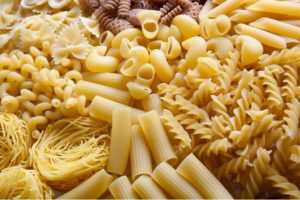
Macaroni Manufacturing Business in India
Macaroni production belongs to the category of food processing business ideas which are yet to be explored in India. It’s where consumer demand meets low barriers to entry and high export potential. Ten years ago, pasta and macaroni were mainly a food for the city folks and restaurant menus. Nowadays, they are a secret ingredient in many Tier 2 and Tier 3 cities.
This is the result of the urban youth’s preference for changing food habits, increasing fast food restaurants and exposure to the global food culture. Macaroni is a viable and capital-efficient food business opportunity for entrepreneurs who want to start a food manufacturing business. The formula is backed by science. It is a process that can be mechanised at a moderate scale. In addition, the trajectory of demand, both domestic and international, is clearly positive.
Why Macaroni Manufacturing Is a Viable Industrial Venture Right Now
The processed food industry in India has emerged significantly. In recent years, pasta products, such as macaroni, spaghetti and penne, enjoyed double-digit compound annual growth rates. In a short time, the consumption of packaged pasta in urban India has more than doubled. This demand is being fuelled by nuclear families, working professionals and college students, who seek quick-cook meal options.
Even today, modern retail chains and quick commerce platforms have three to five SKUs of pasta in their inventories, along with even the Kirana stores. This was unheard of only a few decades ago. In addition, raw material simplicity is a key feature of macaroni that make it interesting from a manufacturing economics perspective.
The main input of the product is semolina (‘sooji’), a product of durum wheat, but also water and — for fortified products — micronutrients like iron and folic acid. The Food Safety and Standards Authority of India (FSSAI) has set standards for the product quality. If achieved, these benchmarks enable macaroni products to be readily available on premium domestic retail and international export markets. In optimized raw material procurement and production efficiency, the margins can support a small or medium scale unit within three years of its operation.
Access Complete Business Plan: Macaroni Manufacturing Project Report
Export Momentum: A Critical Growth Driver
Another good reason to get into this sector now is export opportunity. Well-established demand pools are the Gulf Cooperation Council (GCC) countries, Southeast Asian markets, and Indian expatriates throughout the United States, United Kingdom and Canada. With its cost competitive manufacturing environment and the enhanced food safety certification like HACCP and ISO 22000, the MSMEs are gaining access to manufacturing opportunities which were once accessible only to the big conglomerates.(Macaroni Manufacturing Business in India)
Government Policies and Incentives Supporting This Sector
The Government of India has established a strong enabling ecosystem for food processing industries. The potential of multiple layers of support for macaroni production is very strong. Ministry of Food Processing Industries (MoFPI) operates Production Linked Incentive (PLI) Scheme, Food Processing. This scheme provides incentives to manufacturers which clearly show increase in sales from the base sales. A separate section specifically for SMEs helps smaller macaroni units to avail capital linked benefit.
Furthermore, an entrepreneur can avail margin money subsidy under the Ministry of MSME’s PMEGP (Prime Minister’s Employment Generation Programme), of up to 35% of the project cost for rural entrepreneurs and 25% of project cost for urban entrepreneurs. For a macaroni manufacturing unit, which requires a project cost ranging from ₹25–40 lakh, this scheme can prove to be an effective way to save the capital investment.
There are several channels of government assistance that aspiring macaroni manufacturers might be able to utilize, such as:
- PMEGP subsidy of 25-35% on the total project cost
- DPIIT Startup India — Exemptions in tax, and speedy regulatory clearance for registered food startups
- Government of India’s Pradhan Mantri Kisan Sampada Yojana (food processing park infrastructure will be plug-in-play)
- APEDA — financial support for packaging, market development and attending international trade fairs.
DPIIT Startup India initiative offers tax exemption and expedient regulatory compliances for startups entering food manufacturing. In the same manner, APEDA (Agricultural & Processed Food Products Export Development Authority) also offers financial aid for packaging development, market development expenditure and for participation in international food trade fairs. These schemes are directly applicable to the exporters of macaroni and pasta products.

Business Ideas for Startups: Multiple Entry Points in Macaroni Production
There is no one production model that entrepreneurs are restricted to when they begin in this arena. Indeed, there are five business ideas that can be developed around macaroni production, each appropriate to varying levels of capitalization, levels of risk and markets targeted.(Macaroni Manufacturing Business in India)
Standard Macaroni Manufacturing Unit (Small Scale)
The smallest scale of operation is the 300–500 kg/day small scale macaroni plant set-up. The basic process is simple: semolina is mixed with water in specific proportions, the dough is formed and kneaded in a controlled environment, and extruded through dies to form the familiar tubular macaroni.
The capital cost of the Semi-Automatic Production line (which includes the mixer, extruder with interchangeable dies, Drying tunnel and Packaging station) is ₹20-30 lakh for a facility of 2000-3000 Sq. Ft. Typical ROI for a unit with a typical 60-70% capacity utilisation is achieved in 18-24 months.
Read the Complete Book Here: Handbook on Fruits, Vegetables & Food Processing with Canning & Preservation (3rd Edition)
Fortified and Nutritional Macaroni Production
Fortification of macaroni with micronutrients like iron, folic acid, zinc and vitamin B12 is one of the rapidly emerging segments which has huge institutional demand. Fortified pasta products are being promoted increasingly as nutrition vehicles by government nutrition programmes, school mid-day meal schemes and Anganwadi supply chains because of its affordability and shelf-stable nature.(Macaroni Manufacturing Business in India)
Entrepreneurs who develop manufacturing capacity for FSSAI compliant fortified macaroni will gain government procurement contracts, which will bring more stability of income than retail. The additional premium price paid for fortified varieties (around 15-25% superior price compared to standard macaroni) further supports the economic justification.
Whole Wheat and Multigrain Macaroni for Health Markets
In urban India, the growing number of health-conscious consumers has led to the development of a distinct market for Italian whole wheat, multigrain and gluten-free pasta varieties. The retail price of whole wheat pasta in modern trade is consistently 40-60% higher than the standard semolina varieties. If your startup is targeting the organised retail channels like D Mart, BigBasket and health food stores, then having a different kind of product identity in this channel can bring better margins.
Contract Manufacturing for Private Label Brands
Direct-to-consumer (D2C) and private-label pasta brands which do not have manufacturing assets are booming in the Indian food industry. A FSSC 22000 or ISO 22000 certified macaroni plant with flexible packaging lines can become a preferred contract manufacturer. This model does not require a client to build its own consumer brand; instead, the client takes over the marketing for the manufacturer, whose attention is directed to production excellence.
Typically, revenue predictability is achieved in contract manufacturing arrangements via minimum orders. But with good production scheduling, experienced operators can handle three to five brand clients at a time.
Export-Oriented Macaroni Manufacturing
An export unit promises huge profits to entrepreneurs who can access good quality durum wheat from the growing areas of the country which are mainly in Punjab, Rajasthan and Madhya Pradesh. The global market price for Indian macaroni is significantly lower than that of the Italian or Turkish macaroni. Indian-origin pasta products are more and more accepted by consumers in the Middle East, Africa, and Southeast Asia region.(Macaroni Manufacturing Business in India)
Setting up an export unit involves investments in quality management systems, export grade packaging and registering the unit with APEDA. The benefits of the other compliance effort, however, are in the foreign exchange earnings and premium pricing.
Turn your budget into a successful business plan
Import–Export Opportunity Analysis
India’s global involvement in pasta trade has undergone significant changes. India is a major wheat-producing country with substantial semolina milling capacity, giving it a cost advantage in price-sensitive export markets. The Commerce Ministry’s export data (DGCI&S) shows that the volume of exports of processed cereal products has been growing steadily, and pasta and macaroni is a significant subcategory.
Main markets to:
- GCC region — UAE, Saudi Arabia, Kuwait, Qatar, Bahrain, and Oman
- Sub Saharan Africa — Kenya, Tanzania and Nigeria were the countries chosen.
- Demand for the product from the UK, US, Canada and Australia – driven by the diaspora.
On the import front, India imports high-value Italian pasta brands, mainly for the HoReCa segment and premium retail markets. This is a strong import substitution opportunity for Indian manufacturers targeting the ₹200–₹500 price segment. Businesses that reach out to customers in the domestic market as well as the export market from the outset are more likely to reach the volumes needed for manufacturing economies of scale.(Macaroni Manufacturing Business in India)
Indian MSME Success Stories in the Pasta and Processed Food Sector
Bambino Agro Industries Ltd – The Pioneer’s Model
One of the most illustrative success stories in Indian pasta industry is the Bambino Agro Industries with the headquarters at Hyderabad and founded by the Bhatt family. It began as a regional vermicelli producer, steadily expanded its product offerings to macaroni and other pasta products, developed a strong multi-state distribution system, and invested regularly in food safety certifications.
Bambino’s biggest piece of advice to aspiring entrepreneurs is to build a brand over decades by consistently delivering high-quality products and services. Commodity adjacent products where compromising on raw material quality is always there, their ability to control the price in competitive retail and keep the margins intact is a testament to the value of procurement efficiency and distribution optimisation.
Tasty Bite Eatables Ltd – Targeting Export Markets from Day One
The Poonawalla family’s Tasty Bite Eatables was promoted and later acquired by Mars, Incorporated. Its success demonstrated that an Indian food manufacturer could establish a strong foothold in Western export markets by consistently meeting international food safety standards and positioning its products as organic. Their export-first policy could be an important model for macaroni producers who are targeting markets in the Gulf Cooperation Council (GCC) and East Africa.
MTR Foods – Category Expansion as a Growth Strategy
MTR Foods was founded in Bangalore by the Maiya family and later acquired by the Orkla Group. The brand’s authenticity and steady growth helped establish both the product and the category. The launch of instant pasta and macaroni products was a smart move that’s a response to the evolving preferences of the consumer. MTR’s model is a great example of how category adjacency is also relevant to MSME entrepreneurs. A manufacturer of traditional cereal products that wants to expand into macaroni does not have to ‘reinvent the wheel’, but can make use of existing supply chain relationships, production infrastructure and retail relationships.
Related Article: Top 4 Manufacturing Opportunities in Concrete Poles, Baby Food, Pasta and Coal Washery Units
Key Project Metrics at a Glance
| Parameter | Small Scale Unit | Medium Scale Unit |
| Daily Production Capacity | 300–500 kg/day | 1,000–2,000 kg/day |
| Installed Machinery Cost | ₹12–18 lakh | ₹35–55 lakh |
| Total Project Cost (approx.) | ₹22–32 lakh | ₹65–90 lakh |
| Raw Material (Semolina) | ₹28–34/kg | ₹26–32/kg (bulk) |
| Estimated Ex-Factory Price | ₹55–80/kg | ₹50–75/kg |
| Gross Margin (approx.) | 28–35% | 32–40% |
| Break-even Point (approx.) | 18–24 months | 24–36 months |
| Employment Generated | 8–15 persons | 25–45 persons |
| Area Required | 2,000–3,000 sq. ft. | 6,000–10,000 sq. ft. |
Note: Numbers are approximate and based on industry standards. The actual cost may be different depending on the machine specification, location and market conditions.
Professional Feasibility Support for Macaroni Manufacturing Projects
Niir Project Consultancy Services (NPCS) offers professional consulting services to entrepreneurs for preparing Market Survey cum Detailed Techno-Economic Feasibility Reports (DPRs) for the establishment of macaroni and pasta manufacturing plant. Provide reports on the whole manufacturing process, including raw material specification, formulation procedure, process flow diagram, plant layout, and equipment’s required.
We provide services that are especially:
- Market research and demand analysis in detail, contextualised for your target geography
- Detailed cost of raw materials and utilities
- Optimization of product mix and capacity planning for various SKU combinations
- Guidance on procuring machinery and vendor evaluation.
- Complete project configurations, profitability analysis, break even analysis and estimation of payback period.
We want to make it as simple as possible for entrepreneurs and investors to conduct a thorough due diligence process and analyse a startup or investment opportunity to assess feasibility and profitability before investing. A well-drafted DPR is essential in making a decision, whether you are a start-up business or an established manufacturer looking to expand your capacity.
Frequently Asked Questions (FAQs) for aspiring macaroni manufacturers
Q1. What is the minimum investment required for setting up a macaroni manufacturing unit in India?
A small-scale macaroni manufacturing unit with a capacity of 300–500 kg per day can be set up at a total project cost of ₹22–32 lakh. This includes machinery, working capital, premises renovation, and licensing costs. The upfront investment can be greatly reduced with benefits from PMEGP subsidies. The units aiming for medium-scale capacity of 1-2 tonnes per day must account for total project costs between 65-90 lakh.
Q2. What are the principal raw materials required for the production of macaroni, and from where do they originate?
The principal raw material required is durum wheat semolina (rava/sooji) which can be sourced from the flour mills across Punjab, Haryana, Rajasthan, and Madhya Pradesh. Salt, refined and clean water are the other inputs; with additional micronutrient premixes when manufacturing fortified pasta. The consistency of quality of semolina such as protein content and particle size distribution is crucial for a good macaroni product.
Q3. What are the necessary licenses and permits required to commence operations?
Ideally, a macaroni unit must have FSSAI Central License, State license, GST registration, Udyam registration for MSME related facilities, local factory license and BIS certification if export and institution marketing is also included in scope. An export-oriented unit must additionally have APEDA registration, RCMC, food safety certifications (HACCP/ISO 22000) etc.
Q4. What is the average shelf life and packaging standards expected for macaroni?
The standard shelf-life of macaroni at ambient temperature if appropriately dried (moisture < 12.5% according to FSSAI guidelines) generally is 12-18 months. It is usually packed in multilayer polyethylene or polypropylene pouches. High-value-added products are packed in the same type of pouches using nitrogen as the purging gas, followed by placement in corrugated boxes.
Q5. How competitive is the Indian macaroni market and how could a new player compete?
The market for branded pasta in India is largely cornered by national giants Luketic’s SunFest Pasta Treat, Bambino and Patanjali with very few strong regional players. Although the market is competitive, entrepreneurs can differentiate themselves through value-added products, stronger regional distribution, private labeling, and export-focused marketing.
Q6. Is it possible to acquire government supply contracts for the macaroni unit?
Yes, Government procurement is a large and often underutilised area that includes mid-day meal programmes, ICDS, defence canteens, and prison welfare departments. All MSME manufacturers of food products may register on the Government e-Marketplace (GeM) to bid for government tenders and supply macaroni. Government procurement programs for fortified macaroni and pasta are becoming popular, as they cater to the nation-wide push to provide fortified food through public distribution systems.
Conclusion: Why Macaroni Manufacturing Deserves Serious Consideration
India’s pasta market isn’t saturated and mature. It’s a sector enjoying structural tailwinds from growing disposable income, urbanization, changing tastes and preferences, and a government regime encouraging food processing investments. For entrepreneurs evaluating food manufacturing opportunities, macaroni production is a highly attractive option. It offers a proven formulation, mechanized manufacturing, a growing local market, export potential, and access to government funding.
Entry barriers are limited and entry points, in terms of differentiation, are many. Existing examples like Bambino, Tasty Bite and MTR have proven that Indian food manufacturers can build sustainable and scalable businesses within this segment. The imperative is entry with a definite focus: commodity, fortified or health food; contract or export based – and with consistent quality.
An NPCS professional feasibility report and techno-economic analysis provides the critical business and quantitative back-up entrepreneurs need to proceed from plan to investment.


