Introduction: Diabetic Food Manufacturing Business
The lifestyle diseases especially diabetes are increasing drastically in India. The demand of specialized foods to regulate the blood sugar level is rapidly increasing because more than 100 million people live with diabetes. This increasing demand is a golden opportunity to the entrepreneurs, the owners of MSMEs and investors to venture into the diabetic food manufacturing industry.
Consumers are also demanding healthy foods like low GI flours, sugar-free snacks, high-fiber cereals and ready-to-eat diabetic meals. Even with increasing demand, organized supply in India is still minimalistic, which provides new manufacturers with a major first-mover advantage.
This sector is not only financially appealing but also a serious entrepreneur can strategically consider investing there because of government incentives, export potential, and premium pricing.
Get Detailed Insights from This Book: Manufacture of Food & Beverages with Project Profiles (3rd Edn.)
Market Potential
The proliferation of diabetic food industry is increasing at a high rate through urbanization, increase in disposable incomes and increased awareness about health. Individuals are becoming more aware of their diet, and medical workers tend to prescribe low-sugar and high-fiber food. This generates high daily demand especially within urban locations.
Indian diabetic foods also have promising markets in export. There are huge numbers of the Indian-origin consumers in countries like the United States, the United Kingdom, Canada, Australia, and UAE who are fond of their familiar foods but need diabetic-friendly products. Compliant manufacturers are able to enter these markets and increase profits.(Diabetic Food Manufacturing Business)
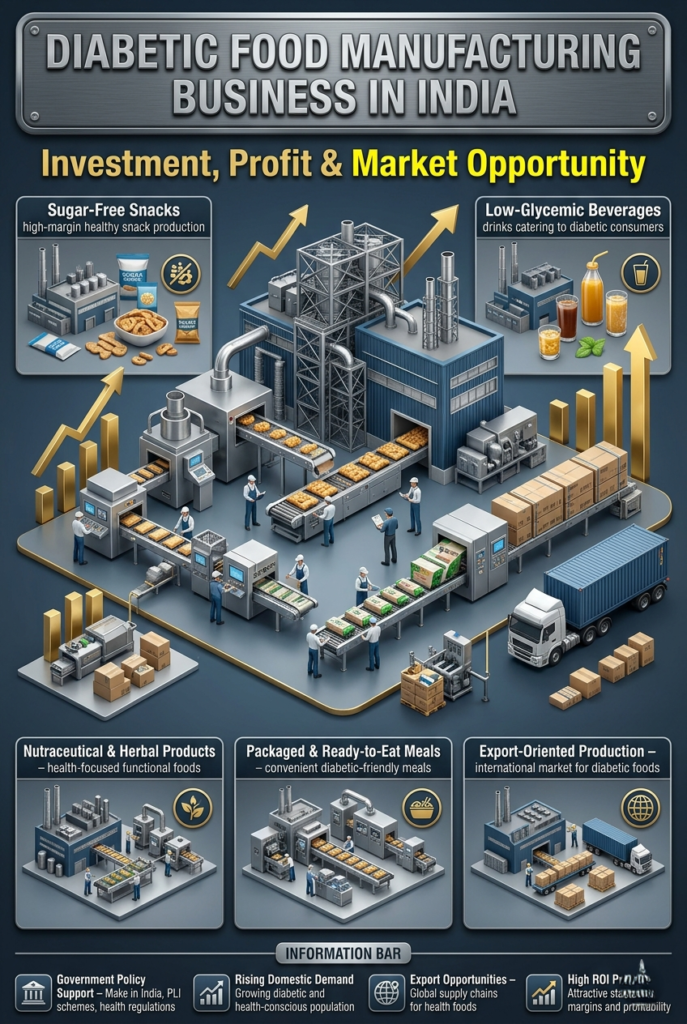
Popular Product Categories
The selection of the appropriate product is very important to a new manufacturing unit. Entrepreneurs usually begin by having one category and branch out.
1. Low-GI Multigrain Flour (Atta):
It is an ideal mix of wheat, barley, oats, and chickpea among other high-fiber products, and can be used in everyday house chores. The demand is steady and the frequency of repeat purchases is high.
2. Sugar-Free Biscuits and Cookies:
Customers desire sugary pleasures that are free of sugar. Food companies market these foods as high-quality snacks with better profit margins by substituting sugar with sweeteners such as stevia or erythritol.
3. Diabetic Breakfast Cereals and Muesli:
City customers are fond of convenient and healthy breakfast. Low-sugar granola, oat cereals, and fortified muesli blends dominate the health-conscious segment.
4. Ready-to-Eat Diabetic Meals:
Portion controlled meals, high value meals at the expense of patients who need to maintain a steady level of carbohydrates. These goods frequently involve the sale through subscription or B2B like hospitals and business wellness programs.
5. Ayurvedic and herbal Diabetic Supplements:
Functional benefits are offered by products that include bitter gourd, fenugreek, jamun, cinnamon and Gymnast sylvestre. This segment is specially regulated but is highly differentiated.
Get Detailed Project Report (DPR): Diabetic Food Manufacturing Guide – short, clear, and descriptive
Machinery and Equipment
Food products available in the market that are used by most diabetic patients undergo comparable processing procedures, which include raw material preparation, milling/blending, roasting/baking, quality testing, and packaging. The choice of machinery will be determined by the product, however, generic needs include:
- Flour mixers and blenders.
- Pulverizers or grinders
- Roasting or baking equipment.
- Sealing packaging machines.
- Quality testing equipment
- Weighing machines
Small to medium scale set ups tend to cost between 15 lakh and 60 lakh depending on automation and capacity.
Space and Infrastructure
The size of production facility (1000-3000 sq ft) is adequate in most cases of MSME level operations. It would be advisable to choose a food processing zone or industrial area so that the approvals provided by the regulating bodies are easier to obtain, logistics is easier, and availability of skilled labor. The basic infrastructure is clean water, electricity, ventilation, and waste management systems.
Licenses and Legal Requirements
The production of diabetic food must be properly regulated:
- FSSAI license (state or central, depending on the scale)
- GST registration
- MSME registration
- Local trade license and factory approval.
- In the case of exports: IEC and APEDA registration.
Labeling and documentation are extremely important since diabetic products are associated with health-related claims.
Find high-return business ideas based on your budget & ROI
Investment and Profitability
How much you have to invest at the beginning is determined by the product and scale:
- Small flour/cereal unit: 2535 lakh.
- Sugar-free biscuits: ₹60–90 lakh
- Ready-to-eat meals: ₹1–2 crore
Common costs are machinery, raw materials, packaging, licenses, labor and working capital. Operations break-even after 12-18 months, and the profit margin is of 22-40 percent based on the product and marketing efficiency.
Marketing and Distribution
We need to educate people with diabetes about food products. The customers should be aware of the advantages prior to making a purchase. The effective marketing strategies involve:
- Marketplaces (Amazon, Flipkart, health platforms) online.
- Social media and content marketing.
- Direct-to-consumer subscriptions
- Cooperation with physicians, dieticians, and pharmacies.
- Corporate wellness (institutional sales, hospitals)
Government Support
Government schemes that can benefit the entrepreneurs include PMFME, MSME subsidies and other food processing incentives. The government will provide subsidies of up to 35 percent of the project costs, which will enormously lower financial risk. Credit guarantee programs also offer loans by banks which do not require collateral.
Related Article: Diabetic Food Manufacturing Business in India: Investment, Machinery, Market Demand and Profit Potential
Why Choose NPCS
Niir Project Consultancy Services (NPCS) is one of the most reputable industrial consultancies in India, which focuses on feasibility studies, project reports, and business planning. NPCS assists entrepreneurs in:
- Detailed Project Reports (DPR)
- Market research and financial analysis.
- Plant layout and machinery selection.
- Government subsidy guidance
- Bank loan documentation
NPCS will provide you with a strong technical and financial foundation to work with, minimizing risk and enhancing long-term success of your diabetic food business.
Conclusion
Indian diabetic food business is a unique opportunity that has a combination of increased demand, government subsidies and premium pricing. Entrepreneurs are able to create profitable and scalable businesses with proper planning, quality production, regulatory compliance, and proper marketing. First mover with credibility and consistency have the best opportunities of a long-term success.
Frequently Asked Questions
- Minimum investment required?
₹25 35 lakh small-scale flour/cereal units.
- Profitability?
Margins will normally be between 22-40 based on product and scale.
- Does FSSAI license have to be mandatory?
Yes, it is mandatory to all Indian food manufacturers.
- Break-even period?
The majority of the units break even in 12- 18 months.
- Can products be exported?
Yes, having correct IEC/APEDA registration and adhering to international standards.