
What is a desiccated coconut powder project report?
A desiccated coconut powder project report is a detailed project report (DPR) for a unit that pares fresh coconut kernel, grinds it and dries it to about 3% moisture as fine or medium powder. It sets out the process, machinery, raw materials, market, project cost, means of finance, five-year projections, DSCR and break-even that a bank or subsidy office needs.
Entrepreneurs in coconut-growing districts use it to size the unit and apply for a term loan or food processing subsidy; lenders use it to check whether the unit can repay.
Also known as: DC powder, desiccated coconut, coconut powder, dried coconut powder.
What a bank checks in a desiccated coconut powder project report
A desiccated coconut unit lives or dies on the price of fresh nuts and how many days it can run. Lenders test the report against a few numbers like these, taken from our sample report.
Coconut prices swing with the harvest. A banker will compare the nut price behind this figure with prices paid in your district over the last year.
Nut arrivals dip in the lean season and dryers need cleaning. A report that assumes year-round full running overstates output.
Powder picks up moisture and turns rancid if poorly packed. Lined bulk bags and retail pouches cost real money, so this line must not be skipped.
The debt service coverage ratio is cash available for loan payments divided by the payments due. It dips in Year 2, the first full year of principal repayment.
Values are the assumptions and results of our illustrative sample. Your report uses figures for your capacity, nut sources and buyers.
Desiccated coconut powder manufacturing plant cost in India
Cost depends mostly on daily nut intake and the type of dryer. Tray dryers suit small batches; belt dryers suit continuous runs of a tonne or more a day. The large tier is the unit in our sample report; the other two are indicative ranges.
Small unit
₹35–80 lakh
About 300–600 kg per day, tray dryer
- Machinery₹15–35 lakh
- Shed and fit-out (or rent)₹10–25 lakh
- Working capital margin₹5–12 lakh
Fits PMEGP or PMFME, subject to limits
Mid-size unit
₹1.5–3 crore
About 1,000–1,500 kg per day
- Machinery₹0.7–1.4 crore
- Land and building₹0.5–1.2 crore
- Working capital margin₹10–20 lakh
Term loan, with Coconut Development Board subsidy where eligible
Large unit
₹488.87 lakh
2,800 kg per day, 7,56,000 kg per year
- Plant and machinery₹230.82 lakh
- Land and building₹170.48 lakh
- Working capital margin₹26.53 lakh
Term loan ₹366.65 lakh (75%), promoter ₹122.22 lakh
Small and mid-size ranges are indicative and exclude land unless stated. The sample's land and building figure adds land and site development (₹45.15 lakh) and building and civil works (₹125.33 lakh).
Desiccated coconut powder manufacturing process
The process turns white coconut kernel into a dry, free-flowing powder with no added ingredients. Speed matters: once the shell is off, the kernel starts to spoil, so a good unit pares, grinds and dries the same day's nuts the same day.
- Dehusking and deshelling
Mature nuts are dehusked, the shell is split away and the coconut water is drained and collected.
- Paring
The thin brown skin (testa) is pared off so the powder stays white; parings are kept aside for oil.
- Washing and blanching
White kernel is washed and steam blanched, for about 20 minutes as described by the International Coconut Community, to cut the microbial load.
- Grinding
A wet grinder or disintegrator breaks the kernel into small particles of even size so it dries evenly.
- Drying
Particles are dried with hot air at 80–90°C, roughly 10 hours in a batch dryer, to about 3% moisture. Underdrying invites mould; overdrying browns the powder.
- Sifting and grading
The dry powder is cooled and sieved into grades such as extra fine, fine and medium by particle size.
- Packing
Each grade is packed in lined bulk bags for industrial buyers or in sealed pouches for retail, then stored dry.
Coconuts, consumables and by-products
Fresh mature coconuts are almost the entire material cost. CSIR-CFTRI puts a mature nut at about 55% kernel, 28% shell and 17% water by weight. Only the white kernel becomes powder, and it loses much of its weight again in the dryer. So the price you pay per nut sets the cost of every kilogram you sell.
| Raw material | Share of cost | Year 3 (₹ lakh) |
|---|---|---|
| Fresh coconuts | 90% | 378.56 |
| Consumables | 10% | 42.06 |
| Total | 100% | 420.62 |
By-products are part of the plan: CFTRI lists three. Parings hold 55–60% oil and can be expelled for oil, shells go to activated charcoal makers, and coconut water can be used for vinegar or bottled drinks.
Machinery for a desiccated coconut powder unit
The dryer is the heart of the plant and the largest single cost. In our sample it takes about 35% of the plant and machinery budget, so its capacity sets the output of the whole line.
| Machine | What it does | Sample cost (₹ lakh) |
|---|---|---|
| Dehusking and deshelling machines | Remove husk and shell from mature nuts | 34.63 |
| Paring machines | Strip the brown testa from the kernel | 23.08 |
| Wet grinder | Breaks kernel into even particles | 34.62 |
| Belt dryer | Dries particles to about 3% moisture | 80.79 |
| Sifter and grader | Separates fine, medium and other grades | 23.08 |
| Packing machine | Fills and seals bags and pouches | 34.62 |
| Total plant and machinery | 230.82 | |
Costs are the sample report's estimates for a 2,800 kg per day line. Get current quotations before you finalise.
Who buys desiccated coconut powder
Most powder goes to food makers rather than shops. Biscuit, chocolate and sweet makers buy fine and medium grades in bulk and want the same colour, oil content and particle size in every lot. Households in states far from coconut belts buy retail packs as a substitute for freshly grated coconut.
Units are best placed close to coconut-growing areas, where mature nuts can be bought fresh every day. A new unit wins bulk orders on steady quality and on-time delivery more than on price.
- Biscuit and confectionery manufacturers
- Sweet and mithai makers
- Bakeries and ice cream makers
- Ready-mix and spice brands
- Wholesale and retail grocery trade
- Exporters of coconut products
Price swings are real: the International Coconut Community's February 2026 review reports a sharp rise in desiccated coconut prices across Asia in 2025. Sri Lankan prices hit about USD 4,437 per tonne in the first half of the year, then eased to about USD 2,825 by early 2026.
Licences and quality standards for desiccated coconut
Desiccated coconut is a standardised food in India, so the product itself is regulated, not only the factory.
| Food licence | FSSAI licence for food manufacturing; FSSAI sets the tier (registration, state or central licence) by daily production capacity, so confirm the current limit for your planned output |
|---|---|
| FSSAI product standard | Desiccated coconut has its own product standard under the FSS (Food Products Standards and Food Additives) Regulations; FSSAI revised it, along with other products, in an amendment notified in February 2023 |
| Indian Standard | IS 966 : 1999 (second revision) sets requirements and test methods for desiccated coconut |
| Export quality | The International Coconut Community standard sets moisture at 3% maximum for regular grades, oil at 60% minimum, and Salmonella absent in 25 g |
| Business registration | Udyam (MSME) registration and GST registration |
| Pollution board consent | Consent to establish and operate from the State Pollution Control Board; the category and conditions vary by state |
| Packaged sales | Legal Metrology registration and label declarations for retail packs |
Loans and subsidies for a desiccated coconut unit
Coconut processing has a scheme of its own on top of the general MSME routes. Each one needs a project report with projections and DSCR.
Technology Mission on Coconut
25% of project cost, up to ₹50 lakhCoconut Development Board subsidy for new or modernised processing units. It is credit-linked and paid in three instalments, the last on commercial production.
PMFME
35% of eligible cost, up to ₹10 lakhCredit-linked subsidy for micro food processing units. Suits a small powder unit or a first expansion.
PMEGP
Manufacturing projects up to ₹50 lakhMargin-money subsidy of 15–35% depending on category and location, for new units started by first-time entrepreneurs.
Scheme terms change, and not every scheme can be combined with another for the same project. Confirm current terms with the bank or scheme office before applying.
Mistakes that weaken a desiccated coconut powder project report
- Pricing nuts at a good-season rate
Using the cheapest month's price for all five years hides swings like the one seen across Asia in 2025. Test a higher nut price and show the DSCR still holds.
- Sizing the dryer by hope
Grinding is quick; drying is not. If the dryer cannot take a full day's kernel, output falls and wet kernel spoils overnight.
- No budget for testing
Bulk buyers reject lots for high moisture, rancid smell or microbes. A small lab and outside tests for Salmonella belong in the cost.
- Using retail pack prices for all sales
Most output sells in bulk at lower ex-factory rates. Pricing every kilogram at the retail rate inflates revenue.
- Ignoring by-products
Parings, shells and coconut water have buyers. Leaving them out understates income; valuing them too high overstates it.
How NPCS helps you set up a desiccated coconut powder unit
- Capacity and grade mixMatch daily nut intake, dryer size and grades to your buyers and budget.
- Nut sourcing and by-productsPlan buying across seasons and the use of parings, shells and coconut water.
- Bank-ready project reportProjections, DSCR and working capital in the format your lender or the Coconut Development Board wants.
- Approvals and plant layoutFSSAI, pollution consent and a hygienic flow from deshelling to packing.
NPCS's client list records 67 assignments in fruit and vegetable processing, and the NPCS project team has prepared project reports and feasibility studies for food units since 1994.
What's inside the desiccated coconut powder sample report
- Introduction
- Uses and applications
- Market potential
- Manufacturing process
- Raw materials
- Plant and machinery
- Land, building and utilities
- Manpower
- Licences and approvals
- Project cost and means of finance
- Working capital
- Projected profitability
- Cash flow statement
- Projected balance sheet
- Depreciation
- Term loan repayment
- Debt service coverage
- Break-even analysis
- Financial ratios
- Key assumptions
- Conclusion
- Monthly loan repayment schedule
18 pages, five-year projections, illustrative figures.
Open sample reportFree sample or a report for your project?
| What you get | Free sample | NPCS report for your project |
|---|---|---|
| Capacity and location | Typical unit | Your capacity, site and state |
| Figures | Illustrative | Built on current prices and quotations |
| Machinery suppliers and quotations | No | Yes |
| Market survey for your region | No | Yes |
| Bank or scheme format (PMEGP, term loan) | No | Yes |
| Use for a loan application | No | Yes |
Real NPCS desiccated coconut powder project reports
These are desiccated coconut powder project reports NPCS has prepared, with the plant capacity, total capital investment, rate of return and break-even worked out in each. Costs have moved since some were written, so we bring any of them up to date for your capacity and location.
| Project report | Plant capacity | Total investment | Rate of return | Break-even | Action |
|---|---|---|---|---|---|
| Desiccated Coconut Powder | 75,000 Kgs/Annum | ₹1.51 crore | 26% | 57% | Get this report |
| Desiccated Coconut Powder | 16 MT/day | ₹14 crore | 51% | 29% | Get this report |
Figures as worked out in each NPCS report. Total investment includes plant and machinery, land and building, and working capital.
What clients say about NPCS
4.7
264 Google reviews, as of 20 Oct 2026
Clients most often mention
- feasibility reports 18
- project report 16
- helpful for startups 15
- detailed reports 8
-
Excellent experience with Niir Project Consultancy Services. Their Techno-Economic Feasibility Reports are incredibly detailed and backed by solid market data.
Piyush Singh, Google review, 2026
-
Niir Project Consultancy Services offers excellent guidance for business setup. Their market survey and feasibility reports saved us a lot of time and helped us make informed decisions. Highly recommended
Saroj Yadav, Google review, 2026 View on Google
-
In an era of information overload, NIIR stands out for its precision. Their technical consultancy and market feasibility studies are world-class.
Shrishti Gautam, Google review, 2026
-
NIIR Project Consultancy Services provides useful books and reports for students, entrepreneurs, and small businesses. Their content is easy to understand and focuses on practical ideas for starting and managing industries. Overall, NIIR is helpful for learning about business and project planning.
Raj Yadav, Google review, 2026
Desiccated Coconut Powder project report: frequently asked questions
How much does it cost to start a desiccated coconut powder unit?
A small unit making 300–600 kg a day needs roughly ₹35–80 lakh, and a 1,000–1,500 kg per day unit about ₹1.5–3 crore, including working capital margin. Our sample report models a 2,800 kg per day unit at ₹488.87 lakh. These are indicative figures; your project report works out the cost for your capacity, land and dryer choice.
What is the main raw material for desiccated coconut powder?
Fresh mature coconuts are the main raw material. In our sample report they make up 90% of raw material cost, with consumables making up the rest. Nuts are bought daily from farmers or traders, so units sit close to growing areas and keep only a short stock, because fresh kernel spoils within days.
Which machines are needed to make desiccated coconut powder?
You need dehusking and deshelling machines and paring machines to remove the brown skin. After that come a wet grinder or disintegrator, a hot air dryer, a sifter and grader for particle sizes, and a packing machine. The dryer is the costliest item: in our sample it is ₹80.79 lakh of the ₹230.82 lakh spent on plant and machinery.
Is a desiccated coconut powder business profitable?
In our illustrative sample, a 2,800 kg per day unit earns a net profit of ₹82.88 lakh on sales of ₹936.68 lakh in Year 3. Break-even is at 45.4% of capacity and payback takes 4.1 years. Real profit depends mostly on the price you pay for nuts, the grade mix you sell and what you earn from parings oil and shells.
Which licences are needed for a desiccated coconut powder unit?
You need an FSSAI licence, Udyam and GST registration, consent from the State Pollution Control Board and Legal Metrology registration for retail packs. The product must meet the FSSAI standard for desiccated coconut, and IS 966 is the Indian Standard used as the quality reference. Export buyers also test for moisture, oil content and microbes.
Is there a subsidy for a desiccated coconut unit?
Yes, several routes exist. The Coconut Development Board's Technology Mission on Coconut gives a back-ended subsidy of 25% of project cost, up to ₹50 lakh. PMFME gives micro food units 35% of eligible cost, up to ₹10 lakh, and PMEGP supports manufacturing projects up to ₹50 lakh. Terms change, so confirm with the scheme office or bank.
Is the desiccated coconut powder project report PDF free, and can I use it for a loan?
The sample PDF is free to view and download. It is an illustrative report that shows the format and depth of an NPCS report. Its figures are representative and not based on a real project, so it should not be submitted to a bank. For a loan, NPCS prepares a report for your own capacity, location and scheme.
Sources and references
- IS 966 : 1999 Desiccated coconut, specification (second revision)Bureau of Indian Standards, checked Oct 2026
- FSSAI amends food product standards and food additives regulations, FAIRS subject report IN2023-0026 (April 2023, hosted by APEDA)APEDA, Ministry of Commerce and Industry, checked Oct 2026
- Eligibility and applicability criteria for FSSAI registration and licenceFood Safety and Standards Authority of India, checked Oct 2026
- Desiccated coconut: technology profileCSIR-Central Food Technological Research Institute, Mysuru, checked Oct 2026
- Desiccated coconut: product and processInternational Coconut Community, checked Oct 2026
- Quality standard for desiccated coconutInternational Coconut Community, checked Oct 2026
- Market review of desiccated coconut, February 2026International Coconut Community, checked Oct 2026
- Technology Mission on Coconut: processing and product diversificationCoconut Development Board, Government of India, checked Oct 2026
- Inspection report replies, Technology Mission on Coconut (November 2023)Coconut Development Board, Government of India, checked Oct 2026
- PM Formalisation of Micro Food Processing Enterprises (PMFME)District Administration Khordha, Government of Odisha, checked Oct 2026
- Prime Minister's Employment Generation Programme (PMEGP)Industries, Investment Promotion and Commerce Department, Government of Tamil Nadu, checked Oct 2026
Recommended reading on desiccated coconut powder
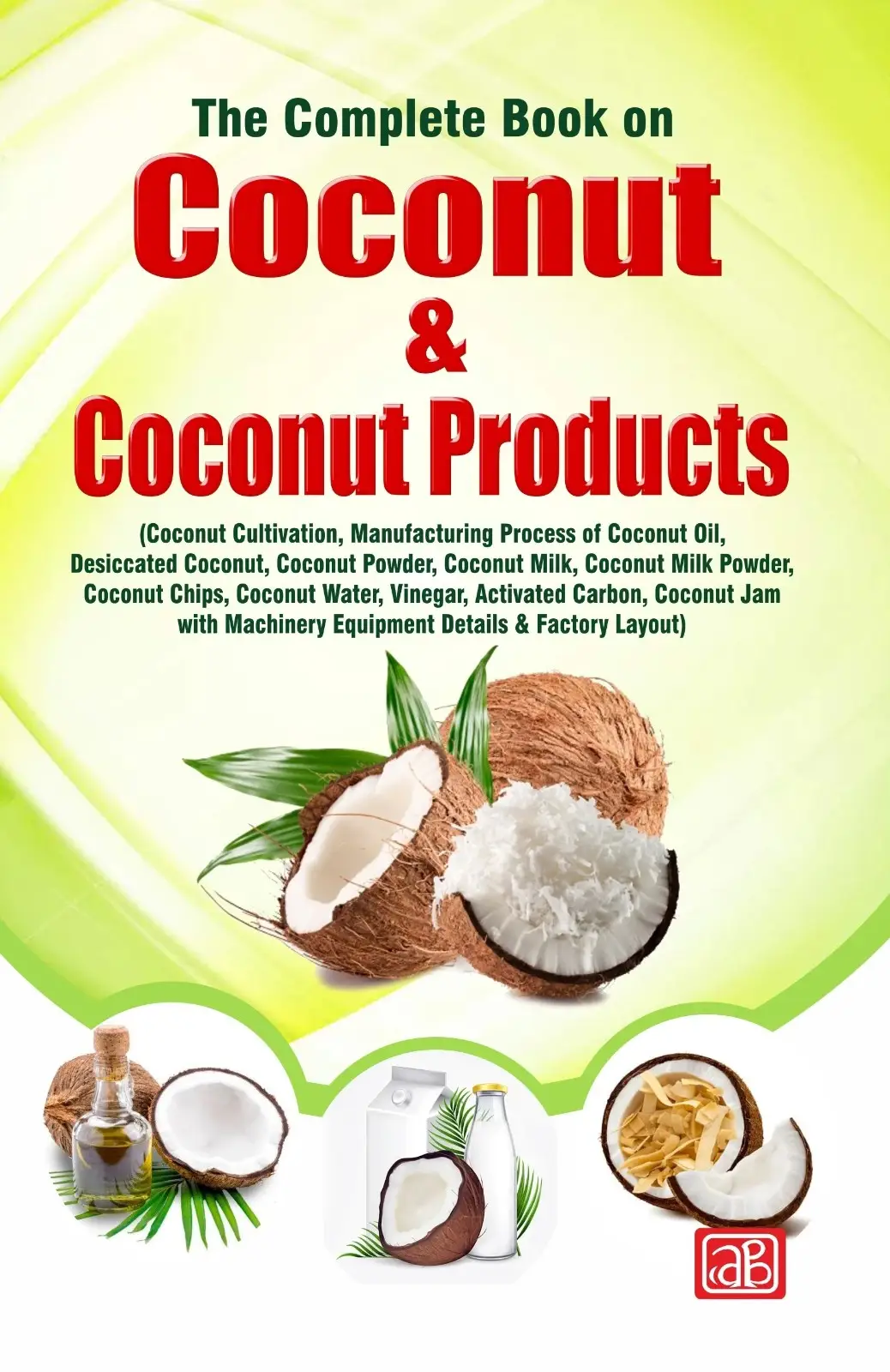

The NPCS project team, led by Ajay Kumar Gupta
This page and its sample report are prepared and reviewed by the NPCS project team, which has written techno-economic feasibility studies and detailed project reports since 1994.
Ajay Kumar Gupta founded Niir Project Consultancy Services (NPCS) and leads the organisation. With 40 years of experience in MSME project consulting, he has built the team that has delivered more than 28,000 project reports for clients worldwide, helping entrepreneurs plan and finance profitable manufacturing businesses.
- Published
- Last updated
- Next review
- Oct 2027
- Reviewed by
- NPCS project team
This page is reviewed every 12 months, or sooner when scheme limits, GST rates, BIS rules or pollution categories change. The sample report is illustrative: its figures are generated from industry-typical ratios for a unit of this size, checked so every statement balances, and are not taken from any client project.