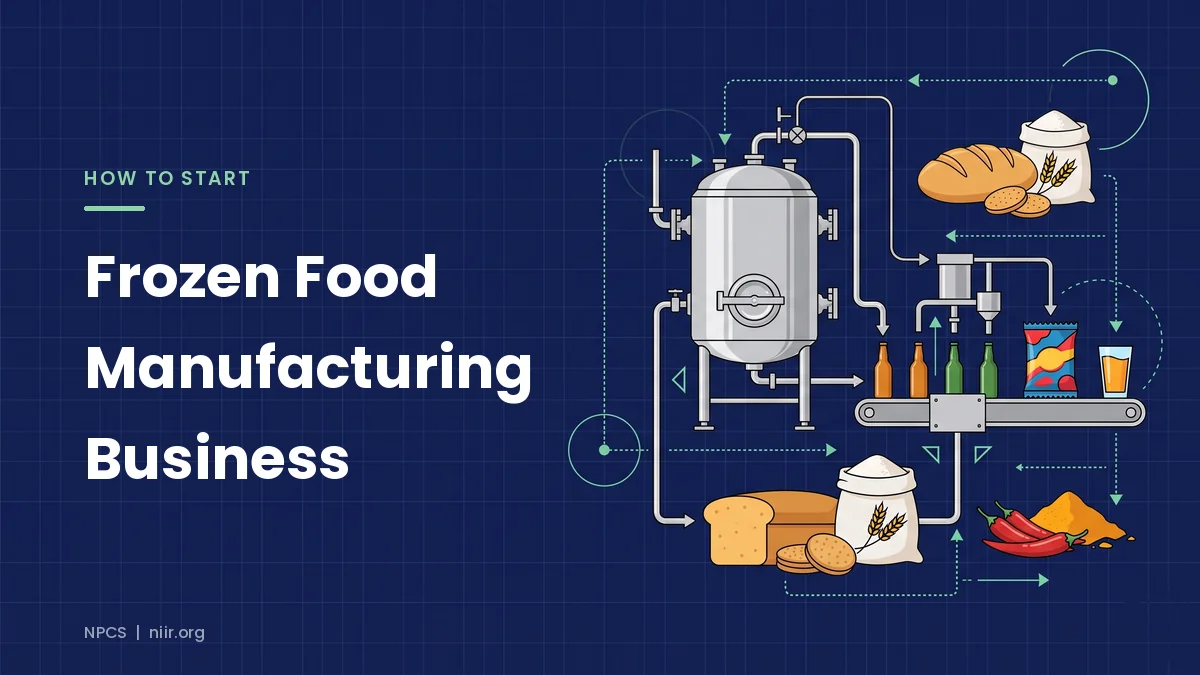
How to Start a Frozen Food Business in India
Contents 9 sections
- Which frozen food business idea should you start: trading, small batches or a plant?
- Which frozen products sell most in India?
- What does a frozen food plant cost, and how profitable is it?
- How are frozen foods made, and which machines do the work?
- Which FSSAI licence does a frozen food business need in 2026?
- What goes wrong in a frozen food business?
- Where do you sell, and what help is there with funding?
- What should you do in the next 30 days?
- Frequently asked questions
A frozen food business in India comes in three sizes, and the size you pick sets the money, the licence and the cold equipment you need. A trader buys branded frozen products and delivers them from freezers and a refrigerated vehicle. A small-batch maker cooks, freezes and packs items such as momos, samosas or kababs in a licensed kitchen. A plant freezes vegetables, fruit or ready meals by the tonne, and the NPCS project reports for such plants list total capital investment of ₹703 lakh to ₹786 lakh.
Whichever route you choose, you need approval from the Food Safety and Standards Authority of India (FSSAI). Since 1 April 2026, a business with turnover up to ₹1.5 crore needs only a registration under FSSAI's revised turnover limits, not a licence. Every route also lives or dies on one habit: holding the product at -18°C from the freezer to the customer.
Which frozen food business idea should you start: trading, small batches or a plant?
Decide the route first, because the phrase covers a freezer-and-van trader and a plant costing several crore. Unless you already have buyers for tonnes of output, start with trading or small batches: freezing capacity costs money whether the tunnel is full or empty.
| Route | What you need | Where the money goes | Suits |
|---|---|---|---|
| Trading frozen products | Chest freezers or a small cold room, a refrigerated vehicle, supply tie-ups with brands | Freezers, the vehicle, stock bought on credit terms | First-time owners with a local customer base |
| Small-batch production | A licensed kitchen, a blast freezer, a cold room, packing | Equipment, packaging, skilled cooks | Cooks and cloud-kitchen owners moving into packs |
| Plant-scale freezing | A factory, an individually quick frozen (IQF) or blast freezing line, a cold store, power backup | Building, machinery, cold store, working capital | Entrepreneurs with farm sourcing or institutional buyers |
If power costs worry you, vegetable dehydration preserves produce without freezing it.
Which frozen products sell most in India?
India's frozen foods market was ₹21,659 crore in 2025 and is forecast to reach ₹64,364 crore by 2034, about 12.9% a year, according to IMARC. Its 2025 split puts frozen vegetable snacks at 52%, frozen fruits and vegetables at 28% and frozen meat at 20%.
IMARC names McCain India and Venky's among the leading players, so pick a gap they leave, such as regional dishes, restaurant pack sizes or private-label supply. Meat is harder to start with: FSSAI's FAQs of 27 March 2026 keep meat, dairy and fishery products under continued hygiene and testing requirements. Weigh frozen against other food processing business ideas.
What does a frozen food plant cost, and how profitable is it?
Machinery is only part of what a plant needs. Two NPCS project reports on frozen foods show the gap:
| NPCS project report | Capacity | Plant and machinery | Total capital investment | Return | Break-even |
|---|---|---|---|---|---|
| Deep freezing of vegetables | 1,100 MT a year | ₹367 lakh | ₹786 lakh | 38% | 45% |
| Frozen convenience and ready-to-eat foods, purees and sauces | 5 tonnes of frozen foods, plus canned meals, purees and sauces | ₹56 lakh | ₹703 lakh | 50% | 35% |
Total capital investment also covers land, building, cold store, power and working capital, so a machinery quote alone understates the project. Return and break-even are as listed in each report's project stats and move with capacity, location and the year of the data.
These are the only sourced costs here. For trading or small batches, price freezers, vehicle and a first month of stock from supplier quotes.
How are frozen foods made, and which machines do the work?
- Grade raw material on arrival and reject bruised or overripe produce.
- Wash, peel and cut to a uniform size, so pieces freeze evenly. A vegetable processing unit covers this front half.
- Blanch vegetables briefly in hot water or steam to stop the enzyme action that spoils colour and flavour. Snacks and meals are cooked and cooled instead.
- Freeze fast. Loose pieces go through an IQF tunnel, while trays and packed snacks go to a blast freezer. The World Food Logistics Organization manual says product should reach -18°C before it moves to still-air storage.
- Weigh, seal in moisture-proof packs, pass through a metal detector and label.
- Move the packs straight into the -18°C cold store, and load vehicles from the cold dock.
Main machinery
| Machine | What it does | Ask the supplier |
|---|---|---|
| Washer, peeler, cutter | Cleans and sizes produce | Throughput on your product, not a sample |
| Blancher with cooling tank | Heat-treats vegetables, then cools them | Water use per hour and drainage |
| IQF tunnel or blast freezer | Freezes the product | Time to reach -18°C at the centre of your pack |
| Packing and sealing machine with metal detector | Fills, seals and checks packs | Pack sizes it handles and spares |
| Cold room or cold store | Holds frozen stock | Standby power and dock design |
| Refrigerated vehicle | Delivers stock | Pre-cooling before loading |
Which FSSAI licence does a frozen food business need in 2026?
FSSAI sorts food businesses by annual turnover, and the limits changed on 1 April 2026. Older articles still quote ₹12 lakh and ₹20 crore.
| Category | Annual turnover |
|---|---|
| Registration | Up to ₹1.5 crore |
| State licence | Above ₹1.5 crore, up to ₹50 crore |
| Central licence | Above ₹50 crore |
Per FSSAI's FAQs of 27 March 2026, licences and registrations issued from 1 April 2026 stay valid until suspended, cancelled or surrendered, so there is no yearly renewal. Existing holders move to the new categories through the FSSAI portal at no fee.
Your accountant will confirm GST and Udyam registration. A factory needs further local clearances, so ask the district industries centre which apply before you buy land.
What goes wrong in a frozen food business?
The cold chain is the main risk. The same manual sets -18°C or colder as the baseline, warns that temperature swings form ice crystals, and notes that transport refrigeration does little to cool the product, so goods must be loaded already at -18°C.
A power cut, an open dock door or a van that was not pre-cooled each undoes the freezer's work. Budget for a standby generator, a temperature logger in every cold room and vehicle, and a written rule for stock that warms up. For your own cold room, read the cold storage business guide first.
Where do you sell, and what help is there with funding?
IMARC lists modern retail, quick-commerce, e-commerce, food service and institutional buyers as channels. Start with cloud kitchens, restaurants and caterers, who reorder on a schedule. Retail chains and apps bring their own onboarding checks and margins, so get terms in writing before you fix your price.
The Ministry of Food Processing Industries runs PM FME, a credit-linked subsidy for micro food units, and PMKSY, which gives grants for cold chain projects. PMKSY's outlay was approved up to 31 March 2026, and PTI reported on 24 August 2026 that PM FME was on a temporary extension to 30 September, with a five-year continuation proposed. As of October 2026 we found no newer announcement, so check the ministry's portals before building a loan plan around either.
What should you do in the next 30 days?
- Pick one route and one starting product.
- Ask at least five buyers, such as cloud kitchens and caterers, what pack size and price they would accept.
- Get quotes from two freezer suppliers for your exact product and quantity, including the time to reach -18°C.
- Estimate first-year turnover and apply for the FSSAI registration or licence that matches it.
Lenders ask for a project report when you plan a plant. An NPCS project report on frozen foods covers the process, machinery with suppliers, raw material costs, plant layout, manpower and financials including project cost, working capital, break-even and cash flow. NPCS has prepared project reports since 1994, with an ISO 9001:2015 certified research process, in the format banks typically ask for.
Frequently asked questions
Do I need an FSSAI licence to sell frozen food from home?
You need at least an FSSAI registration, the lowest tier, which covers turnover up to ₹1.5 crore from 1 April 2026. Hygiene and safety duties still apply, and your freezers must hold stock at -18°C.
Does an FSSAI licence need yearly renewal now?
No, not for licences and registrations issued from 1 April 2026, which stay valid until suspended, cancelled or surrendered, per FSSAI's FAQs of 27 March 2026. Existing holders move to the new categories through the FSSAI portal at no fee.
Is a frozen food business profitable?
It can be, but no single margin applies. The two NPCS plant reports list returns of 38% and 50% and break-even of 45% and 35%, on capital of ₹786 lakh and ₹703 lakh. Your result depends on freezer utilisation, power cost and stock lost to thawing.
What is the main disadvantage of running a frozen food business?
Dependence on an unbroken cold chain. Stock must stay at -18°C or colder from freezer to customer, and a power cut or an uncooled van can ruin a batch. Standby power, loggers and refrigerated transport are running costs, not extras.
Planning a new manufacturing unit?
NIIR prepares detailed project reports and feasibility studies for new projects. Share your requirement and the team will get in touch.