
 Aditya Birla Management Corporation
 UPL
 DCM Shriram Industries
 Tata Steel
 JSW Steel
 ITC (Agri Business Division)
 Godrej & Boyce
 Grasim Industries (Century Rayon)
A tomato processing plant turns fresh tomatoes into paste, puree, ketchup and powder for sauce makers, QSR chains and food processors. Entrepreneurs choose it because processing steadies the price swings that hit fresh tomato sales. An experienced tomato processing plant consultant helps you fix capacity, technology and location before money is committed. Our team at NPCS supports this with a detailed project report, machinery guidance and an approvals plan suited to your state.
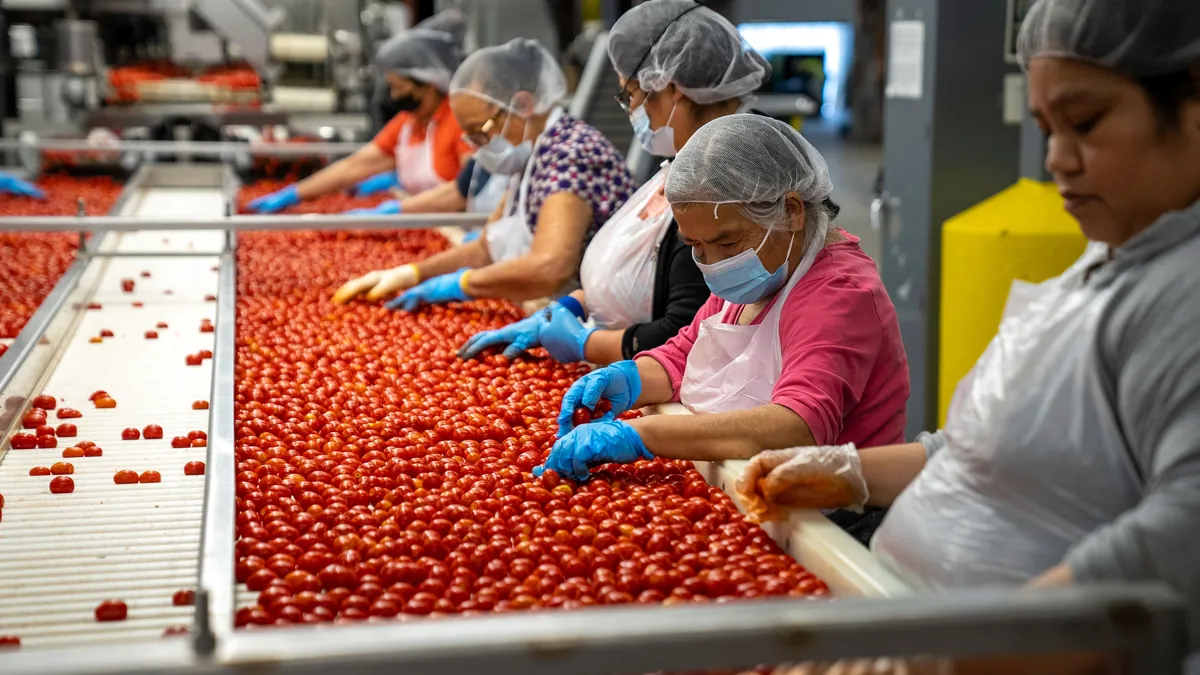
Tomato Processing Plant at a Glance
| Typical capacity | ~50–500 TPD fresh tomato (paste); smaller for ketchup-only |
|---|---|
| Land | ~2–8 acres |
| Power load | ~300 kW–2 MW |
| Water | High |
| Manpower | ~30–200 |
| Indicative investment | ~₹5–60 crore |
Investment basis: paste plant cost depends heavily on evaporator capacity; excludes land.
Figures are indicative ranges. Your project report works them out for your capacity and location.
Market Demand for Tomato Processing Plants in India
Demand for processed tomato comes mainly from branded food makers and restaurants. QSR growth and rising processed food use keep ketchup, sauce and paste orders steady, while processing also helps stabilise tomato prices. Production is concentrated in Andhra Pradesh around Madanapalle, and in Karnataka, Maharashtra and Madhya Pradesh. Export potential is medium.
- Sauce and ketchup brands buying paste in bulk
- QSR and HoReCa buyers needing consistent sauces
- Food processors making ready meals
- Exporters and snack seasoning makers using powder
Tomato Products You Can Make
Paste suits bulk buyers such as sauce brands, while ketchup and sauces serve retail and food service directly. Many new units start with paste or ketchup and add powder or diced tomatoes once the market is established.
- Tomato paste (hot and cold break), puree, ketchup and sauces, tomato powder, diced tomatoes
Tomato Processing Plant Process
The tomato processing plant process starts with washing and sorting, then crushing by hot or cold break, which decides paste thickness and colour. Pulping removes seeds and skins before evaporation concentrates the pulp. Quality is checked at several points, including Brix, colour, Bostwick consistency, mould count and microbial limits, against FSSAI standards for tomato products. For technology, forced-circulation evaporators suit paste, aseptic lines allow year-round use, and spray drying makes powder.
- Washing and sorting
- Crushing (hot or cold break)
- Pulping and refining
- Evaporation to paste
- Sterilisation
- Aseptic filling; ketchup: blending, cooking, bottling; powder: spray drying
Raw Materials and Machinery for a Tomato Plant
Processing-grade tomatoes are the main input, supported by sugar, salt, vinegar, spices and packaging such as aseptic bags, bottles and pouches. Supply typically comes from Andhra Pradesh, Karnataka, Maharashtra, Madhya Pradesh, Odisha and Gujarat. Among the machines, the evaporator and aseptic filler matter most, because they set capacity and shelf life.
- Flume and washer
- Sorting conveyor
- Crusher
- Pulper-finisher
- Evaporator
- Sterilizer
- Aseptic filler
- Ketchup kettles
- Bottling line
- Spray dryer
Tomato Processing Plant Licence and Approvals
Start with business registration, then take consent to establish from the State Pollution Control Board before construction. Fruit and vegetable processing is Orange with 10 KLD+ wastewater or a boiler, and Green below that. An FSSAI licence is needed, and it becomes Central above the specified capacity. Consent to operate follows commissioning.
- Boiler approval under IBR
- APEDA RCMC for exports
- Legal Metrology registration
- Factory licence
| Pollution category | Fruit and vegetable processing: Orange with 10 KLD+ wastewater or boiler (CPCB S.No. 56.1); Green below that (56.2) |
|---|---|
| HSN code | 2002 (tomatoes prepared or preserved); 2103 20 (ketchup and sauces) |
| GST | Paste and ketchup/sauces: 5% under GST 2.0 |
| BIS / quality control order | No QCO |
| FSSAI | FSSAI licence (Central licence above specified capacity) |
| Other licences | Boiler (IBR); APEDA RCMC; Legal Metrology; factory licence |
Securing Tomatoes for Your Plant
Tomato is a strongly seasonal fruit, so your plant's economics depend on securing supply in a short window. Contract farming for processing varieties is the most reliable route, since table varieties give poor yield and colour. Plan your location near growing regions such as Andhra Pradesh or Karnataka, and agree prices in advance to reduce exposure to price swings.
Managing Seasonality and Working Capital
A tomato plant earns during a short season but sells all year, so working capital needs careful planning. Aseptic paste stores for the year, which lets you sell steadily instead of dumping stock. However, you must fund the season's tomato purchases upfront. Your project report should model this cash cycle and the stock you need to carry.
Government Schemes and Project Finance
Tomato projects may look at Operation Greens, PMKSY, PMFME and the Agriculture Infrastructure Fund, depending on size and location. NPCS reports are used for bank loans and government programmes such as PMEGP, MSME schemes, Mudra and NABARD-linked projects, subject to each lender's requirements. A well-built report gives lenders the numbers they ask for.
What Decides Success in a Tomato Processing Plant
Good operators secure farmers early, run efficient evaporators and use aseptic storage. The main risks need planning from the start.
- Short season limits running days
- Imported paste competition affects pricing
- Price swings in fresh tomatoes
- Seeds and skins need a disposal or sale route
How NPCS Helps You Set Up a Tomato Processing Plant
NPCS guides the decisions that matter most: capacity, paste or ketchup focus, evaporator selection and plant layout. Our team supports machinery selection, vendor selection, installation and commissioning assistance. We also prepare a tomato processing plant project report with financials tailored to your location, budget and raw material availability.
NPCS's published client list records 6 assignments on tomato processing projects between 2013 and 2021 for clients in 6 states, including detailed project reports and techno-economic feasibility studies.
What Your Tomato Processing Plant Project Report Covers
- Project introduction and BIS specifications
- Manufacturing process with flow sheet
- Market survey (demand, imports/exports, existing units)
- Personnel
- Plant and machinery with suppliers
- Land and building with layout
- Raw materials with sources and rates
- Financials (project cost, working capital, cost of production, profitability, break-even, 5–10 year cash flow, projected balance sheet, IRR/NPV/payback)
Tomato Processing Plant: Frequently Asked Questions
What is the tomato processing plant setup cost in India?
An indicative range is ₹5–60 crore, excluding land. Paste plant cost depends heavily on evaporator capacity, and ketchup-only units are smaller. Your project report works out the figure for your capacity and location.
Which licences are needed for a tomato processing plant?
You need an FSSAI licence, which is Central above the specified capacity, plus a factory licence, Legal Metrology registration and boiler approval under IBR. Pollution category is Orange with 10 KLD+ wastewater or a boiler, otherwise Green.
How much land and power does a tomato plant need?
Typically around 2–8 acres of land and about 300 kW–2 MW of power, depending on capacity. Water requirement is high, so check supply at your site before finalising the location.
How to start a tomato processing plant business?
Begin with a project report covering capacity, technology and finance. Then secure tomato supply through contract farming, obtain consent to establish and FSSAI approval, select machinery, and commission the plant. Location near growing regions helps.
How can NPCS help with my tomato processing project?
NPCS prepares detailed project reports and feasibility studies, and supports machinery selection, vendor selection and commissioning. Share your capacity and location, and our team will outline costs and approvals.