
 Tata Steel
 JSW Steel
 ITC (Agri Business Division)
 Godrej & Boyce
 Aditya Birla Management Corporation
 Grasim Industries (Century Rayon)
 Thermax (Chemical Division)
 UPL
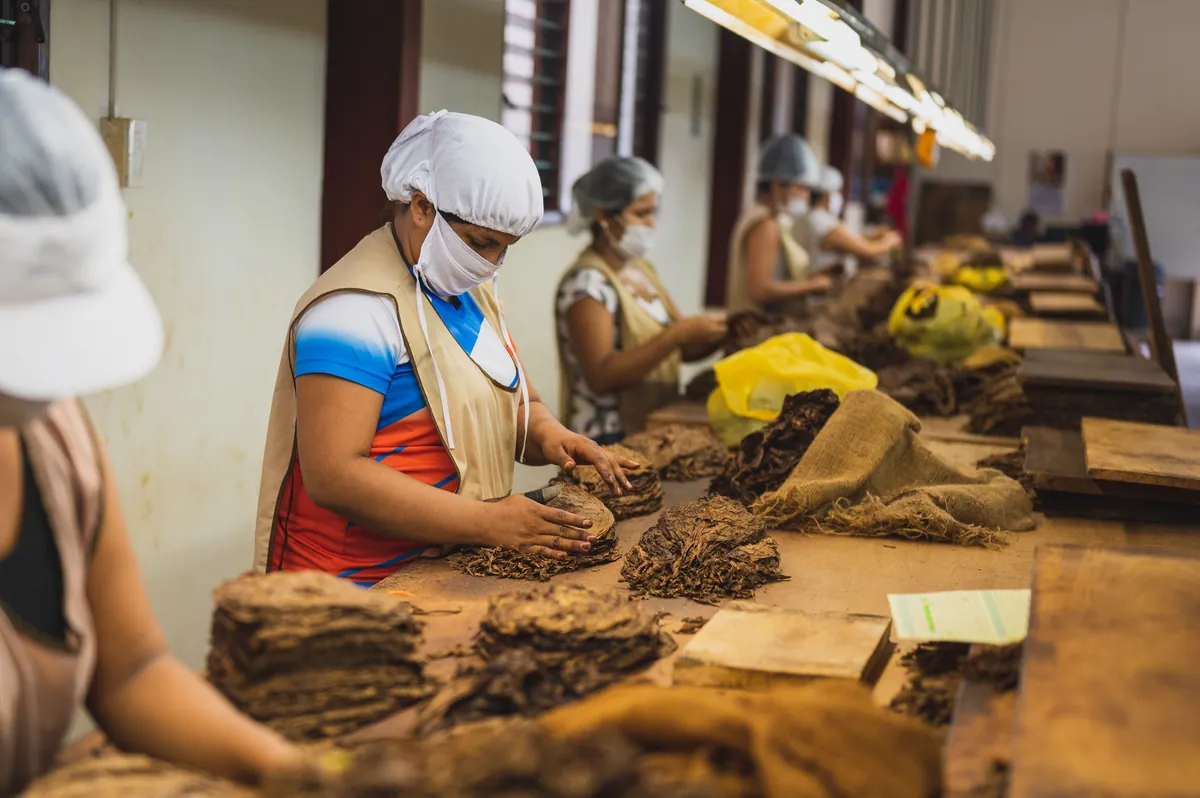
A tobacco processing plant threshes and redries cured leaf into strips and stems for cigarette makers and exporters. Entrepreneurs and leaf trading firms set these plants up to serve buyers who need graded, consistent leaf. A tobacco processing plant consultant helps you size the threshing line, plan leaf purchases at auction and fit the unit to the regulations that apply. NPCS has supported such projects since 1994, with detailed reports built around your capacity and location.
Tobacco Processing Plant at a Glance
| Typical capacity | ~5–20 tonnes per hour |
|---|---|
| Land | ~10–25 acres |
| Power load | ~1–3 MW |
| Water | Low |
| Manpower | ~100–500 (seasonal) |
| Indicative investment | ~₹40–150 crore |
Investment basis: excludes land.
Figures are indicative ranges. Your project report works them out for your capacity and location.
Market Demand for Tobacco Processing Plants in India
Demand for processed Indian leaf comes mainly from export buyers and cigarette manufacturers. Export potential is high, and that is the main reason investors look at this segment. The industry is concentrated in Andhra Pradesh, Karnataka and Gujarat, close to the leaf-growing belts and the auction platforms. Because buying is tied to the auction season, plants are planned around a short, intense period of leaf intake.
- Cigarette manufacturers buying graded strips
- Leaf exporters shipping processed Indian leaf
- Tobacco product makers needing stems and scraps
Tobacco Products You Can Make
Most plants produce threshed and redried strips, along with stems and scraps. You can also choose between FCV and other tobacco types. Strips usually suit cigarette makers, while buyer grade specifications decide how each lot is sorted and packed.
- Threshed and redried strips, stems, scraps
- FCV and other tobacco types
Tobacco Processing Plant Process
The tobacco processing plant process turns graded cured leaf into uniform strips ready for storage and shipment. Leaf is conditioned first so it can be handled without breaking. Threshing then separates the lamina from the stem, and the redryer brings moisture to the level buyers expect.
Quality is controlled at several points. Teams check moisture, strip size, nicotine and sugars against buyer grade specifications. Green leaf threshing lines are sized by tonnes per hour, so your chosen throughput shapes the whole layout.
- Leaf receiving and grading
- Conditioning
- Threshing (separating lamina from stem)
- Redrying
- Packing into cases
- Storage and ageing
Raw Materials and Machinery for a Tobacco Processing Plant
Your main input is cured leaf tobacco bought from auction platforms. Sourcing centres on Andhra Pradesh (Prakasam, Guntur), Karnataka (Mysuru) and Gujarat. The machines that matter most are conditioning cylinders, threshers, separators and the redryer, followed by the packing press. Their capacity must match each other, or the slowest unit limits the line.
- Conditioning cylinders
- Threshers
- Separators
- Redryer
- Packing press
Tobacco Processing Plant Licence and Approvals
Approvals start with business registration, then the State Pollution Control Board consent before construction. Leaf processing is generally Orange because of dust, though the State PCB fixes the category. Product and trade permissions follow, and consent to operate comes before production.
- Tobacco Board registration for FCV tobacco trade and export
- COTPA compliance for any products
- Factory licence
| Pollution category | Leaf processing is generally Orange (dust); the State PCB fixes the category |
|---|---|
| HSN code | 2401 (unmanufactured tobacco) |
| GST | Tobacco and tobacco products fall in the special-rate category under GST 2.0; the rate and cess depend on the product, applied in the project financials |
| BIS / quality control order | No QCO |
| Other licences | Tobacco Board registration (for FCV tobacco trade and export); COTPA compliance for any products; factory licence |
Export Opportunity for Processed Tobacco
Export demand for Indian leaf is the main driver, and the facts rate export potential as high. Leaf exporters are a core customer group, so many projects are planned around export grades. Tobacco Board registration applies to FCV tobacco trade and export. Buyers set their own grade specifications, so your plant must be able to meet them lot after lot.
Managing Seasonality and Working Capital
This business is strongly seasonal, because leaf is bought during the auction season. Most of your cash goes into leaf stock in a short window, so working capital needs careful planning. Storage and ageing then hold that stock until buyers collect it. Seasonal manpower also rises and falls, from about 100 to 500 people, which affects cost planning.
Project Finance for a Tobacco Processing Plant
This project is not scheme-driven, so funding usually comes from promoter capital and bank finance. Investment is indicative and excludes land, so lenders will want to see the full cost clearly. NPCS reports are used for bank loans and government programmes, subject to each lender's requirements. A tobacco processing plant project report sets out cost, working capital and cash flow in a form a lender can assess.
What Decides Success in a Tobacco Processing Plant
Strong buyer contracts and dependable leaf sourcing decide most outcomes. The main risk is regulation and health policy pressure, which you should reflect in your planning.
- Secure buyer contracts before committing to capacity
- Build reliable leaf sourcing from auction platforms
- Sell tobacco dust and stems for nicotine extraction
- Plan for policy changes affecting tobacco products
How NPCS Helps You Set Up a Tobacco Processing Plant
NPCS supports the decisions that shape this project: line capacity, machinery selection, vendor choice, plant layout and approvals. Our team prepares detailed project reports, feasibility studies and bankable reports tailored to your capacity and location. We also guide production process planning, installation and commissioning, so your plant is ready before the auction season.
NPCS's published client list records 9 assignments on tobacco processing projects between 2013 and 2024 for clients in 6 states and 2 countries, including detailed project reports, bankable project reports and techno-economic feasibility studies.
What Your Tobacco Processing Plant Project Report Covers
- Project introduction and BIS specifications
- Manufacturing process with flow sheet
- Market survey (demand, imports/exports, existing units)
- Personnel
- Plant and machinery with suppliers
- Land and building with layout
- Raw materials with sources and rates
- Financials (project cost, working capital, cost of production, profitability, break-even, 5–10 year cash flow, projected balance sheet, IRR/NPV/payback)
Tobacco Processing Plant: Frequently Asked Questions
How much does it cost to set up a tobacco processing plant?
Tobacco processing plant setup cost in India is typically about ₹40–150 crore, depending on capacity. This is an indicative range and excludes land. Your project report works out the exact figure for your tonnes per hour and location.
Which licences are needed for a tobacco processing plant?
You need Tobacco Board registration for FCV tobacco trade and export, a factory licence, and COTPA compliance for any products. Leaf processing is generally Orange for dust, but the State Pollution Control Board fixes the category.
How much land and power does a tobacco processing plant need?
A plant typically needs about 10–25 acres and a power load of about 1–3 MW. Water requirement is low. These figures are indicative and change with your capacity, which usually runs about 5–20 tonnes per hour.
How to start a tobacco processing plant business?
Begin by fixing capacity and securing buyer contracts, then choose a location near leaf sourcing in Andhra Pradesh, Karnataka or Gujarat. Next, prepare a project report, obtain approvals and order machinery. Plan leaf purchases around the auction season.
How can NPCS help with a tobacco processing plant project?
NPCS prepares detailed and bankable project reports, feasibility studies and market research for your plant. Our team also advises on machinery, vendors, layout and approvals. Share your planned capacity and location, and we will outline the next steps.