
 Aditya Birla Management Corporation
 UPL
 DCM Shriram Industries
 Tata Steel
 JSW Steel
 ITC (Agri Business Division)
 Godrej & Boyce
 Grasim Industries (Century Rayon)
Beverage makers, pharma companies and exporters buy refined sugar at ICUMSA 45 colour, and a refinery turns raw sugar into that grade. A sugar refinery consultant helps investors decide on location, technology and approvals before committing large capital. Promoters usually come from sugar mills, trading houses or export businesses. NPCS prepares the sugar refinery project report, works out the economics for your capacity and supports you from planning to commissioning.
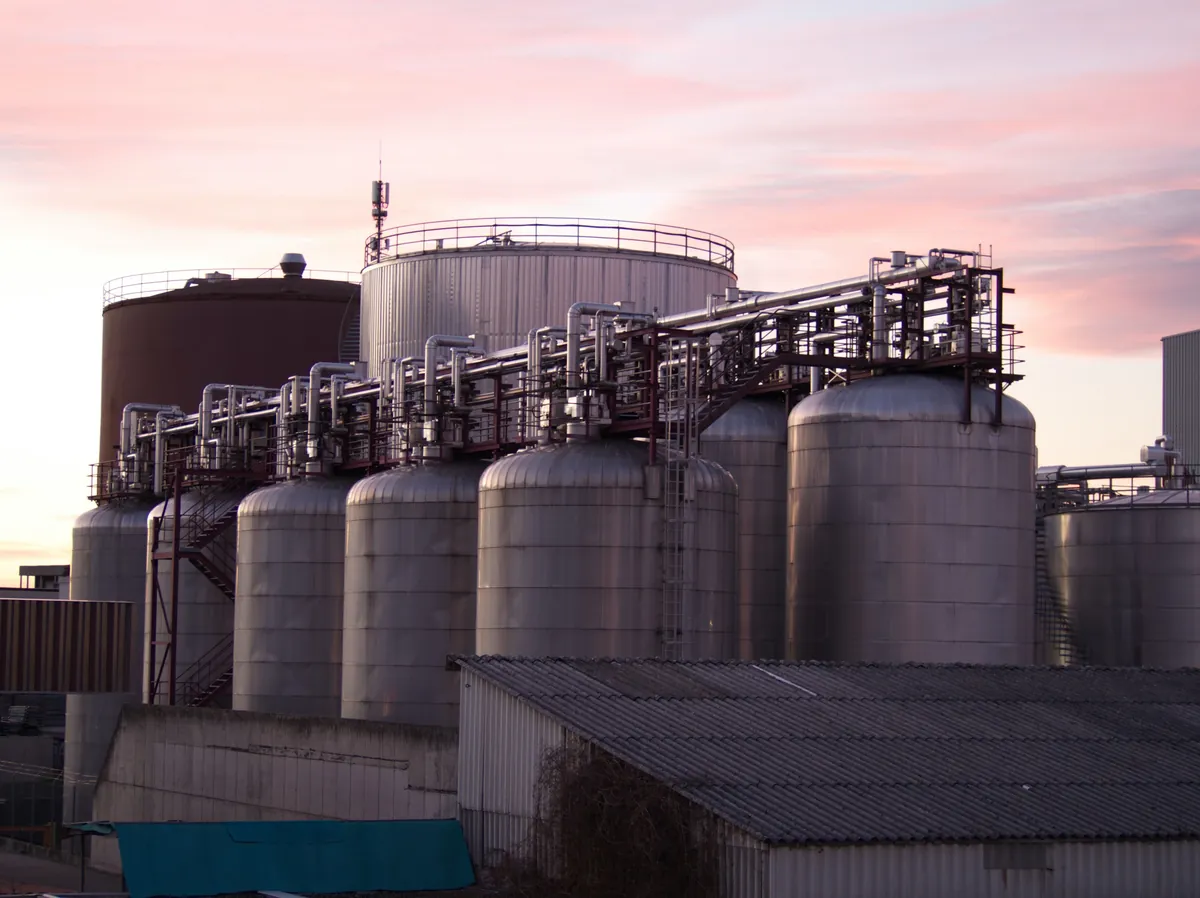
Sugar Refinery at a Glance
| Typical capacity | ~1,000–3,000 TPD |
|---|---|
| Land | ~20–50 acres |
| Power load | ~5–15 MW |
| Water | High |
| Manpower | ~150–400 |
| Indicative investment | ~₹300–1,000 crore |
Investment basis: excludes land.
Figures are indicative ranges. Your project report works them out for your capacity and location.
Market Demand for Sugar Refineries in India
Demand for refined sugar comes mainly from industrial users rather than households. Beverage and confectionery makers need consistent colour and purity, and pharma buyers need an even higher specification. Export windows add further volume, though they depend on policy.
Most refineries sit at port locations in Gujarat, Maharashtra, Andhra Pradesh and Tamil Nadu, where imported raw sugar arrives easily.
- Beverage majors buying bulk refined sugar
- Confectionery and food manufacturers
- Pharma companies needing pharma-grade sugar
- Exporters serving overseas buyers
Sugar Refinery Products You Can Make
Most plants start with ICUMSA 45 refined sugar, which serves beverage and confectionery buyers. Pharma-grade sugar suits a narrower customer base with stricter testing. Icing sugar is a finishing step you can add later for confectionery users.
- Refined sugar ICUMSA 45, pharma-grade sugar, icing sugar
Sugar Refinery Process and Quality Control
The sugar refinery process begins with affination, which washes the molasses film off raw sugar crystals, and ends with drying and bagging. In between, the syrup is cleaned in a clarification stage using either carbonatation (lime and CO2) or phosphatation (phosphoric acid).
Colour is then removed through resin or carbon columns. Your choice affects chemical use, regeneration needs and running cost. Quality is checked at each stage for ICUMSA colour, ash, moisture and polarisation, and the final crystals are conditioned in silos before packing.
- Affination
- Melting
- Clarification (carbonatation or phosphatation)
- Decolourisation (resin or carbon)
- Evaporation
- Crystallisation
- Centrifuging
- Drying and conditioning
- Bagging
Raw Materials and Machinery for a Sugar Refinery
Raw sugar is the main input, sourced from domestic mills or imported from Brazil and Thailand. Lime, CO2 or phosphoric acid, and activated carbon or resins support clarification and decolourisation. Among the machines, vacuum pans and centrifugals decide crystal quality and throughput, so specifications and suppliers need careful comparison before you order.
- Melters
- Clarifiers
- Decolourisation columns
- Evaporators
- Vacuum pans
- Centrifugals
- Dryers
- Conditioning silos
Sugar Refinery Licence and Approvals
Sugar refining falls in the Red category, so approach the State Pollution Control Board early, and check whether Environmental Clearance applies. Obtain consent to establish before construction and consent to operate before production. The sugar refinery licence and approvals list also includes an FSSAI Central licence, boiler approval under IBR and compliance with import and export policy.
| Pollution category | Sugar refining is Red; Environmental Clearance may apply |
|---|---|
| HSN code | 1701 99 (refined sugar) |
| GST | 5% on sugar |
| BIS / quality control order | No QCO |
| FSSAI | FSSAI Central licence |
| Other licences | Import and export policy compliance for raw and refined sugar; boiler (IBR) |
Choosing the Right Sugar Refinery Technology
A standalone port-based refinery buys raw sugar from the import market or domestic mills and needs port access. A refinery attached to a sugar mill can draw on its own raw sugar and share utilities, though it ties you to the mill's operations.
Port-based units suit investors focused on exports and imported supply. Mill-attached units suit existing sugar producers. Clarification and decolourisation routes should also be compared on cost.
Securing Raw Sugar for Your Refinery
Raw sugar sourcing is the biggest operating decision in a refinery. Domestic mills and imports from Brazil and Thailand are the two supply routes, and each carries its own price and policy exposure.
Advance authorisation for raw sugar imports can matter for export-linked plants. Plan supplier relationships, storage and contract terms before finalising capacity, because a gap in supply idles an expensive plant.
Government Schemes and Project Finance for a Sugar Refinery
Export policy largely decides viability, and advance authorisation for raw sugar imports is the key scheme named for this project. Lenders will want a bankable report that shows costs, cash flow and policy assumptions. NPCS reports are used for bank loans and government programmes, subject to each lender's requirements.
What Decides Success in a Sugar Refinery
Good operators secure raw sugar supply early and keep energy use under control. The main risk is a change in sugar trade policy, which can shift export windows quickly.
- Reliable raw sugar sourcing
- Energy efficiency across melting and evaporation
- Saleable refinery molasses and filter cake
- Planning for trade policy changes
How NPCS Helps You Set Up a Sugar Refinery
Our team supports the decisions that shape a refinery: capacity, technology route, machinery selection and vendor choice. We also help with plant layout, production process guidance and installation and commissioning assistance. Your project report is tailored to your capacity, location and raw sugar sourcing, and prepared for lenders and approvals.
NPCS's published client list records 223 assignments across food and agro processing projects between 2009 and 2026, for clients in 28 states and 26 countries.
What Your Sugar Refinery Project Report Covers
- Project introduction and BIS specifications
- Manufacturing process with flow sheet
- Market survey (demand, imports/exports, existing units)
- Personnel
- Plant and machinery with suppliers
- Land and building with layout
- Raw materials with sources and rates
- Financials (project cost, working capital, cost of production, profitability, break-even, 5–10 year cash flow, projected balance sheet, IRR/NPV/payback)
Sugar Refinery: Frequently Asked Questions
How much does a sugar refinery setup cost in India?
A sugar refinery setup typically needs an indicative ₹300–1,000 crore, excluding land. The figure depends on capacity, technology and location. Your project report works out the cost for your plant size and site.
Which licences and pollution category apply to a sugar refinery?
Sugar refining is a Red category activity, and Environmental Clearance may apply. You will also need an FSSAI Central licence, boiler approval under IBR and compliance with import and export policy. There is no QCO for this product.
How much land and power does a sugar refinery need?
A refinery typically needs about 20–50 acres and a power load of about 5–15 MW, depending on capacity. Water requirement is high, so check supply at the site before you commit to any location.
How to start a sugar refinery business?
Begin with a feasibility study covering capacity, raw sugar sourcing and export policy. Then choose a site, finalise technology, obtain consents and approvals, arrange finance and order machinery. A detailed project report ties these steps together.
How can NPCS help with my sugar refinery project?
NPCS prepares a detailed project report and supports machinery selection, vendor choice, plant layout and commissioning assistance. Share your planned capacity and location, and our team will outline the project cost and approvals.