
 Aditya Birla Management Corporation
 UPL
 DCM Shriram Industries
 Tata Steel
 JSW Steel
 ITC (Agri Business Division)
 Godrej & Boyce
 Grasim Industries (Century Rayon)
A sugar mill turns cane into plantation white sugar, raw sugar and brown sugar, while bagasse-fired boilers supply power and molasses feeds distilleries. Promoters, cane growers' cooperatives and investors usually set these units up because the revenue comes from three streams: sugar, power and ethanol feedstock. A sugar mill consultant helps you size the plant, secure cane area and test the numbers before you commit capital. NPCS supports you from the first feasibility check through to machinery and approvals.
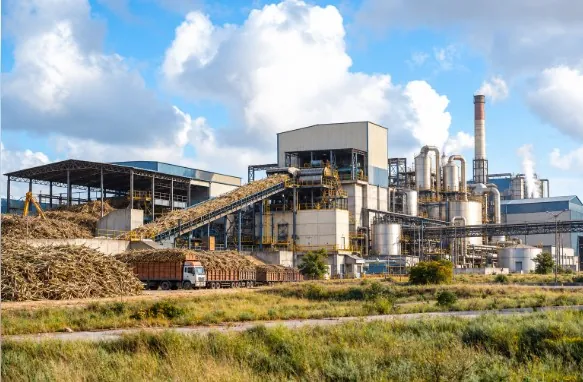
Sugar Mill at a Glance
| Typical capacity | ~2,500–10,000 TCD (tonnes cane per day) |
|---|---|
| Land | ~50–150 acres |
| Power load | Self-sufficient; cogeneration exports surplus power |
| Water | High (recycled condensate) |
| Manpower | ~300–800 (seasonal) |
| Indicative investment | ~₹150–700 crore including cogeneration |
Investment basis: excludes land and cane development.
Figures are indicative ranges. Your project report works them out for your capacity and location.
Market Demand for Sugar Mills in India
Sugar demand in India rests on household use, food and beverage makers, and exports, which are medium in potential and depend on export policy. Ethanol diversion and cogeneration add further revenue beyond the sugar itself. Most capacity sits in a few cane belts, so location matters as much as technology.
- Sugar traders and wholesalers buying plantation white sugar
- Beverage and confectionery makers needing steady grades
- Exporters, subject to export policy
- Oil companies buying ethanol
- State DISCOMs buying surplus power
Sugar Mill Products You Can Make
Most new mills start with plantation white sugar and add other products as the plant matures. Raw sugar and brown sugar suit different buyers, while refined sugar needs a separate refinery. Cogeneration power and molasses are sold to DISCOMs and distilleries.
- Plantation white sugar (S-30, M-30), raw sugar, brown sugar, refined sugar (with refinery), cogeneration power, molasses
Sugar Mill Process and Quality Control
The sugar mill process starts with cane preparation, then extracts juice either by milling or by diffusion. The juice is clarified by sulphitation or defecation, concentrated, and crystallised in vacuum pans before centrifuging. Sulphitation is the usual route for plantation white sugar, while defecation-melt suits refined sugar.
Quality is controlled at the clarification, crystallisation and drying stages. Buyers check ICUMSA colour, polarisation, moisture and grain size, and the sugar must meet Food Safety standards. Bagasse goes straight to the boiler, so steam and power are produced on site.
- Cane unloading and preparation
- Milling or diffusion
- Juice clarification (sulphitation or defecation)
- Evaporation
- Crystallisation in vacuum pans
- Centrifuging
- Drying and grading
- Bagging; bagasse to boiler for steam and power
Raw Materials and Machinery for a Sugar Mill
Sugarcane is the main input, with lime, sulphur and process chemicals alongside. Cane typically comes from the belts of Uttar Pradesh, Maharashtra, Karnataka, Tamil Nadu, Gujarat and Bihar. Among the machinery, the milling tandem or diffuser, vacuum pans and the high-pressure boiler and turbine shape both output and power revenue most.
- Cane carrier
- Knives and shredder
- Milling tandem or diffuser
- Juice heaters
- Clarifiers
- Evaporators
- Vacuum pans
- Centrifugals
- Dryers
- High-pressure boiler and turbine
Sugar Mill Licence and Approvals
Approvals begin with cane-area reservation from the state, because new mills must keep the minimum distance from existing mills under the Sugarcane (Control) Order. Sugar mills are Red category, so consent from the State Pollution Control Board is needed, and Environmental Clearance applies above specified capacities. Plan the boiler (IBR) approval, FSSAI Central licence and grid connectivity in parallel.
- Cane-area reservation and distance norms
- Pollution Board consent and Environmental Clearance
- Boiler approval under IBR
- Molasses control under state excise
| Pollution category | Sugar mills are Red; Environmental Clearance applies above specified capacities |
|---|---|
| HSN code | 1701 (cane sugar); 1703 (molasses) |
| GST | 5% on sugar; molasses classification-dependent, applied in the project financials |
| BIS / quality control order | No QCO |
| FSSAI | FSSAI Central licence |
| Other licences | Sugarcane (Control) Order: new mills must meet the minimum distance from existing mills and get cane-area reservation from the state; molasses control under state excise; boiler (IBR); grid connectivity for cogeneration |
Choosing the Right Sugar Mill Technology
Mills and diffusers both extract juice, and the choice depends on cane quality and your capital. Sulphitation gives plantation white sugar, while defecation-melt is the route to refined sugar. High-pressure boilers cost more, but they let you export surplus power. In practice, a feasibility study should compare these routes against your cane supply before machinery is ordered.
Managing Seasonality and Working Capital in a Sugar Mill
Crushing runs roughly from November to April, so cash is needed early and returns come in stages. Cane payments fall due while sugar stocks are still being sold. Seasonal manpower of about 300–800 adds to the load. Plan your working capital limit around the crushing season, and match cane payment dates to expected sugar and power receipts.
Government Schemes and Sugar Mill Project Finance
The Ethanol Blended Petrol programme supports diversion of B-heavy molasses and juice to ethanol, and soft-loan and interest-subvention schemes apply to ethanol capacity. State cogeneration tariffs affect power revenue. Lenders expect a bankable sugar mill project report, and NPCS reports are used for bank loans and government programmes, subject to each lender's requirements.
What Decides Success in a Sugar Mill
Good operators secure cane early, keep recovery high and pay farmers on time. The main risks are listed below.
- Cane price (FRP/SAP) moving against sugar price
- Export restrictions
- Seasonal working capital pressure
- Weak cane availability near the plant
How NPCS Helps You Set Up a Sugar Mill
NPCS helps you decide capacity, technology and machinery before money is spent. Our team supports vendor selection, plant layout, and the approvals sequence. We also prepare the financials a lender will ask for. If you're working out how to start a sugar mill business, we can shape the plan around your cane area and budget.
NPCS's published client list records 9 assignments on sugar mill projects between 2012 and 2022 for clients in 6 states and 1 country, including bankable project reports, techno-economic feasibility studies and market research reports.
What Your Sugar Mill Project Report Covers
- Project introduction and BIS specifications
- Manufacturing process with flow sheet
- Market survey (demand, imports/exports, existing units)
- Personnel
- Plant and machinery with suppliers
- Land and building with layout
- Raw materials with sources and rates
- Financials (project cost, working capital, cost of production, profitability, break-even, 5–10 year cash flow, projected balance sheet, IRR/NPV/payback)
Sugar Mill: Frequently Asked Questions
What is the sugar mill setup cost in India?
A sugar mill typically needs about ₹150–700 crore including cogeneration, depending on capacity. This is indicative and excludes land and cane development. Your project report works out the figure for your capacity, technology and location.
Which licences and pollution category apply to a sugar mill?
Sugar mills fall in the Red pollution category, and Environmental Clearance applies above specified capacities. You also need cane-area reservation, IBR boiler approval, an FSSAI Central licence and grid connectivity if you plan to export power.
How much land and power does a sugar mill need?
A mill typically needs about 50–150 acres, depending on capacity. It is self-sufficient in power because bagasse-fired cogeneration runs the plant, and surplus can be exported. Water need is high, so condensate is recycled.
How do I start a sugar mill business?
Begin with a feasibility study covering cane availability, capacity and technology. Then secure cane-area reservation, apply for pollution and other approvals, arrange finance, and order machinery. Capacity usually ranges from about 2,500–10,000 TCD.
How does NPCS help with a sugar mill project?
NPCS prepares bankable project reports, feasibility studies and market research for sugar mills. Our team also guides machinery selection, vendor choice and approvals, so your plan is ready for lenders and regulators.