
 Aditya Birla Management Corporation
 UPL
 DCM Shriram Industries
 Tata Steel
 JSW Steel
 ITC (Agri Business Division)
 Godrej & Boyce
 Grasim Industries (Century Rayon)
A soya food products plant turns soybean into soya milk, tofu, soya chunks and flour for health stores, vegan brands and institutional kitchens. Entrepreneurs choose it because protein demand is rising and soybean is grown close by in Madhya Pradesh, Maharashtra and Rajasthan. A soya food products plant consultant helps you pick the right products, size the plant and prepare a project report that lenders can read. NPCS has supported such projects with feasibility studies and detailed planning.
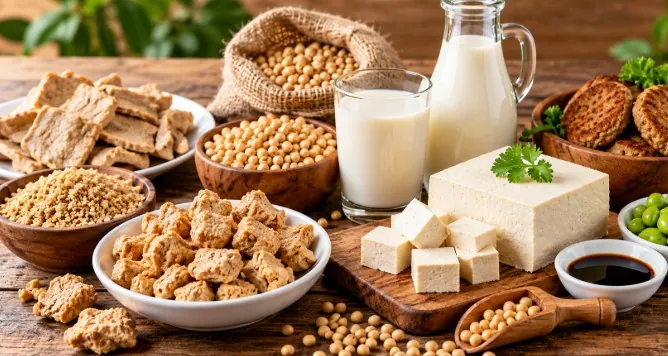
Soya Food Products Plant at a Glance
| Typical capacity | ~1–20 TPD soybean |
|---|---|
| Land | ~0.5–3 acres |
| Power load | ~50–500 kW |
| Water | High |
| Manpower | ~10–60 |
| Indicative investment | ~₹50 lakh–₹20 crore |
Investment basis: excludes land.
Figures are indicative ranges. Your project report works them out for your capacity and location.
Market Demand for Soya Food Products in India
Demand for soya foods comes mainly from buyers who want affordable protein and plant-based alternatives to dairy. Retail health stores and vegan brands pay for soya milk and tofu, while institutions use soya chunks for mid-day meals and catering. Production and sourcing are concentrated around Indore and Bhopal in Madhya Pradesh, with further activity in Maharashtra and Rajasthan. Export potential is low, so plan around domestic buyers.
- Retail and health stores buying soya milk and tofu
- Vegan brands needing dairy alternatives
- Institutions such as mid-day meal and catering kitchens
Soya Food Products You Can Make
Soya milk and tofu suit retail and vegan buyers, but both need cold chain. Soya chunks and flour keep longer and suit institutional catering. Many units start with one line and add the others once sales are steady.
- Soya milk (plain, flavoured), tofu, soya chunks and granules (TVP), full-fat and defatted soya flour
Soya Food Products Plant Process
The soya food products plant process starts with cleaning and dehulling, then soaking and grinding the beans. Cooking and deodorising follows, and this step matters most for removing the beany flavour. After that, the line splits: filtration gives milk, coagulation and pressing give tofu, and extrusion gives chunks.
Quality control focuses on protein content, trypsin inhibitor inactivation and microbial limits, all within FSSAI standards. Under-cooked soya leaves anti-nutritional factors, so cooking temperature and time need regular checks.
- Cleaning and dehulling
- Soaking
- Grinding
- Cooking and deodorising
- Filtration (milk)
- Coagulation and pressing (tofu)
- Extrusion (chunks)
- Packing
Raw Materials and Machinery for Soya Foods
Soybean is the main input, along with flavours, tofu coagulants and packaging. Most buyers source from Madhya Pradesh, Maharashtra and Rajasthan. Among the machines, the decanter, homogeniser and pasteuriser decide soya milk quality, while the tofu press and extruder define the tofu and chunk lines.
- Dehuller
- Grinder
- Cooker
- Decanter
- Homogeniser
- Pasteuriser
- Tofu press
- Extruder (chunks)
- Packing
Soya Food Products Plant Licence and Approvals
Start with business registration, then obtain consent to establish from the State Pollution Control Board before construction. Food processing is Green below 10 KLD wastewater without a boiler, and Orange with a boiler or 10 KLD or more. Apply for the FSSAI licence before production, and complete consent to operate once the plant is ready.
- FSSAI licence for all products
- Legal Metrology registration for packed goods
- Factory licence
- No QCO applies
| Pollution category | Food processing: Green below 10 KLD wastewater without boiler (CPCB S.No. 56.2); Orange with boiler or 10 KLD+ wastewater (56.1) |
|---|---|
| HSN code | 2106 (food preparations), 2202 (soya drinks), 1208 (flour) |
| GST | Classification-dependent by product; applied in the project financials |
| BIS / quality control order | No QCO |
| FSSAI | FSSAI licence |
| Other licences | Legal Metrology; factory licence |
Choosing the Right Soya Plant Technology
Small soya milk and tofu units suit entrepreneurs who want lower investment and local retail sales. Extrusion lines for chunks need more capital and power, but they serve institutional buyers and store well. Capacity typically runs from about 1–20 TPD soybean, so decide your target buyers before you decide the technology.
Making Money from Okara
Okara, the fibre left after soya milk filtration, is a saleable by-product. It can go to feed makers or be processed into flour. Planning its sale from the start improves the economics of a milk and tofu unit and reduces waste handling, which matters because water use is high.
Government Schemes and Project Finance
PMFME, PMEGP and state agro-processing incentives may apply to a soya food products plant, depending on size and location. A bankable project report supports your application with costs, margins and cash flow. NPCS reports are used for bank loans and government programmes, subject to each lender's requirements.
What Decides Success in a Soya Food Products Plant
Good operators control the beany flavour and keep a steady cold chain for tofu and milk. The main risks are consumer acceptance and shelf life, so test your products with buyers early.
- Beany-flavour control through proper cooking and deodorising
- Cold chain for tofu and milk
- Shelf life planning before launch
- Sourcing soybean around the October to November harvest
How NPCS Helps You Set Up a Soya Food Products Plant
Our team supports the decisions that shape your plant: product mix, capacity, machinery selection and technical specifications. We help with vendor selection, plant layout and production process guidance. We also prepare feasibility studies and detailed project reports, and assist with installation and commissioning.
NPCS's published client list records 5 assignments on soya food products projects between 2020 and 2023 for clients in 2 states and 2 countries, including techno-economic feasibility studies.
What Your Soya Food Products Plant Project Report Covers
- Project introduction and BIS specifications
- Manufacturing process with flow sheet
- Market survey (demand, imports/exports, existing units)
- Personnel
- Plant and machinery with suppliers
- Land and building with layout
- Raw materials with sources and rates
- Financials (project cost, working capital, cost of production, profitability, break-even, 5–10 year cash flow, projected balance sheet, IRR/NPV/payback)
Soya Food Products Plant: Frequently Asked Questions
How much investment is needed to start a soya food products plant?
Investment typically ranges from about ₹50 lakh–₹20 crore, excluding land. The figure depends on capacity, product mix and whether you add an extrusion line. Your project report works out the cost for your capacity and location.
Which licences are needed for a soya food products plant?
You need an FSSAI licence, Legal Metrology registration and a factory licence. Pollution category is Green below 10 KLD wastewater without a boiler, and Orange with a boiler or 10 KLD or more. No QCO applies.
How much land and power does a soya food products plant need?
Land typically needs about 0.5–3 acres, and power load about 50–500 kW, depending on capacity. Water requirement is high, so check supply and wastewater handling before you finalise the site.
How to start a soya food products plant business?
Decide your products and buyers first, then fix capacity and location. Prepare a project report, register the business, take consent to establish and the FSSAI licence, order machinery, and apply for finance or schemes such as PMFME or PMEGP.
How does NPCS help with a soya food products plant project?
NPCS prepares detailed project reports and feasibility studies, and advises on machinery, vendors, layout and approvals. Share your planned capacity and location, and our team will outline the project in line with your budget and technology choice.