
 Grasim Industries (Century Rayon)
 Tata Steel
 JSW Steel
 ITC (Agri Business Division)
 Godrej & Boyce
 Aditya Birla Management Corporation
 Thermax (Chemical Division)
 UPL
Caterers, cloud kitchens and retailers are looking for plates, bowls and cups that replace plastic disposables, and that demand is pushing entrepreneurs towards rice husk tableware. A rice husk tableware plant consultant helps you decide capacity, press and die configuration, binder choice and approvals before you commit money. NPCS has worked with entrepreneurs since 1994, and our team prepares project reports that turn this idea into a costed, bankable plan.
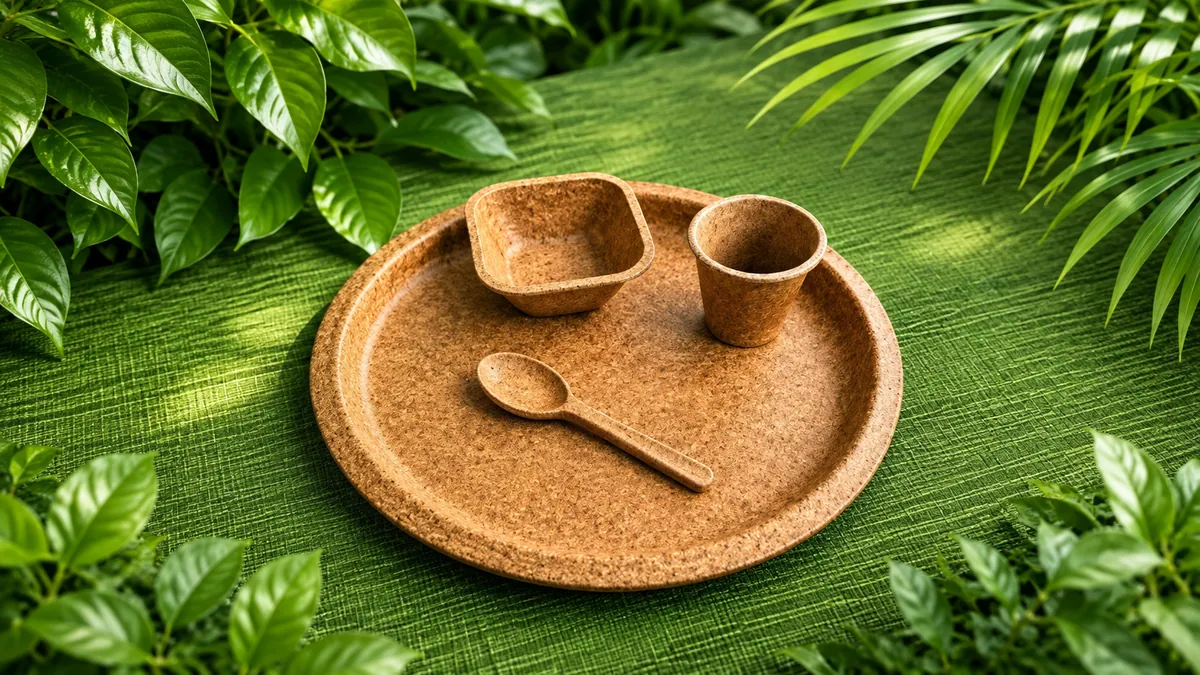
Rice Husk Tableware Plant at a Glance
| Typical capacity | ~10,000–1 lakh pieces per day |
|---|---|
| Land | ~0.5–2 acres |
| Power load | ~100–400 kW |
| Water | Low |
| Manpower | ~10–40 |
| Indicative investment | ~₹50 lakh–₹5 crore |
Investment basis: excludes land.
Figures are indicative ranges. Your project report works them out for your capacity and location.
Market Demand for Rice Husk Tableware in India
Demand for rice husk tableware rests mainly on the single-use plastic ban, which has made buyers look for compostable-style alternatives. Supply is easiest near rice-growing belts, with Punjab, Andhra Pradesh, Tamil Nadu and Gujarat the main clusters. Export potential is medium, so most new units start with domestic buyers.
- Caterers and event organisers buying in bulk
- Cloud kitchens and food delivery brands
- Retailers selling to households
- Exporters looking for natural-fibre tableware
Rice Husk Tableware Products You Can Make
Most new units begin with plates and bowls, because caterers and delivery brands buy them in the highest volumes. Cups and cutlery can follow on the same pressing line with new dies. Reusable tableware and food containers suit retail buyers who accept a higher price per piece.
- Plates and bowls, cups, cutlery, reusable rice husk tableware, food containers
Rice Husk Tableware Manufacturing Process
The rice husk tableware process turns ground husk into finished pieces through hot compression moulding. Husk is ground and sieved to a fine powder, then mixed with a natural or food-safe binder. Hydraulic hot presses with multi-cavity dies shape the mix, and more cavities per die raise output per cycle.
Quality control matters most after moulding. Pieces are trimmed, cured and UV sterilised before packing. Testing covers food-contact migration, heat and leak resistance and strength, and any compostability claim needs test evidence behind it.
- Husk grinding and sieving
- Mixing with binder
- Hot compression moulding
- Trimming
- Curing
- Sterilising (UV)
- Packing
Raw Materials and Machinery for Rice Husk Tableware
The main input is rice husk powder, supported by food-safe binders and release agents. Husk is usually bought from rice mills in Punjab, Haryana, Andhra Pradesh and Chhattisgarh. The machines that decide output and quality are the hot compression presses and their dies, followed by the pulveriser, sifter and mixer.
- Pulveriser
- Sifter
- Mixer
- Hot compression presses
- Dies
- UV steriliser
- Packing
Licences and Approvals for a Rice Husk Tableware Plant
Rice husk tableware plant licence and approvals start with Udyam registration, followed by consent to establish from the State Pollution Control Board before construction. The unit generally falls in the Green category. Consent to operate comes once the plant is ready. EPR isn't required for non-plastic products.
- Udyam registration first
- Consent to establish before building
- Food-contact suitability under FSSAI packaging regulations
- Consent to operate before production
| Pollution category | Generally Green |
|---|---|
| HSN code | 4602 or 4823 (by material and binder) |
| GST | Classification-dependent; applied in the project financials |
| BIS / quality control order | No QCO |
| FSSAI | Food-contact suitability under FSSAI packaging regulations |
| Other licences | Udyam; EPR not required for non-plastic products |
Choosing the Right Rice Husk Tableware Plant Size
Plant size decides both risk and return, since capacity runs from ~10,000 to 1 lakh pieces per day and investment from ~₹50 lakh–₹5 crore, excluding land. A smaller unit with a few presses lets you test buyers and binder performance. A larger unit needs more land, power and manpower, and works best once orders from caterers or exporters are firm.
Securing Rice Husk Supply
Rice husk is an agricultural by-product, so supply depends on rice mill output and local competition for husk. Setting up near mills in Punjab, Haryana, Andhra Pradesh or Chhattisgarh keeps transport cost low. In practice, agreeing supply with more than one mill and storing dry husk protects you from price swings and moisture problems.
Government Schemes and Project Finance
PMEGP is the main scheme to explore for a rice husk tableware unit, while the single-use plastic ban supports demand. Reports from NPCS are used for bank loans and government programmes such as PMEGP, MSME schemes, Mudra and NABARD-linked projects, subject to each lender's requirements. A rice husk tableware plant project report gives lenders costs, margins and repayment in one place.
What Decides Success in a Rice Husk Tableware Plant
Binder safety and cost per piece decide most outcomes in this business. The main risk is competition from bagasse and areca tableware, which are already established.
- Use food-safe binders with test records
- Keep cost per piece below competing materials
- Rework trim by regrinding it
- Plan around wedding and event seasons
How NPCS Helps You Set Up a Rice Husk Tableware Plant
NPCS supports the decisions that shape this project: capacity, press and die selection, vendor choice, plant layout and approvals. Our team also guides production process, installation and commissioning. Reports are tailored to your capacity, budget, raw material availability and market area, so the figures reflect your plan.
NPCS's published client list records 3 assignments on rice husk tableware projects between 2020 and 2022 for clients in 2 states, including techno-economic feasibility studies and project identification studies.
What Your Rice Husk Tableware Plant Project Report Covers
- Project introduction and BIS specifications
- Manufacturing process with flow sheet
- Market survey (demand, imports/exports, existing units)
- Personnel
- Plant and machinery with suppliers
- Land and building with layout
- Raw materials with sources and rates
- Financials (project cost, working capital, cost of production, profitability, break-even, 5–10 year cash flow, projected balance sheet, IRR/NPV/payback)
Rice Husk Tableware Plant: Frequently Asked Questions
How much does a rice husk tableware plant setup cost in India?
Indicative investment is ~₹50 lakh–₹5 crore, excluding land. The figure depends on capacity, number of presses and die cavities. A project report works out the cost for your size and location.
Which licences and pollution category apply to a rice husk tableware plant?
You need Udyam registration, State Pollution Control Board consents and food-contact suitability under FSSAI packaging regulations. The unit is generally Green category. There is no QCO, and EPR isn't required for non-plastic products.
How much land and power does a rice husk tableware unit need?
A unit typically needs ~0.5–2 acres and a power load of ~100–400 kW, depending on capacity. Water requirement is low. Exact needs depend on the number of presses and your layout.
How to start a rice husk tableware plant business?
Start by fixing capacity, products and location near rice mills, then prepare a project report. Next, register under Udyam, get consent to establish, order machinery and secure husk and binder supply. Finance and testing plans should be ready early.
How can NPCS help with a rice husk tableware project?
NPCS prepares the project report and helps with machinery selection, vendor choice, plant layout, approvals and finance planning. Our team also supports installation and commissioning. Share your capacity and location to begin.