
 ITC (Agri Business Division)
 Thermax (Chemical Division)
 SRF
 DCM Shriram Industries
 Deepak Nitrite
 Gujarat Ambuja Exports
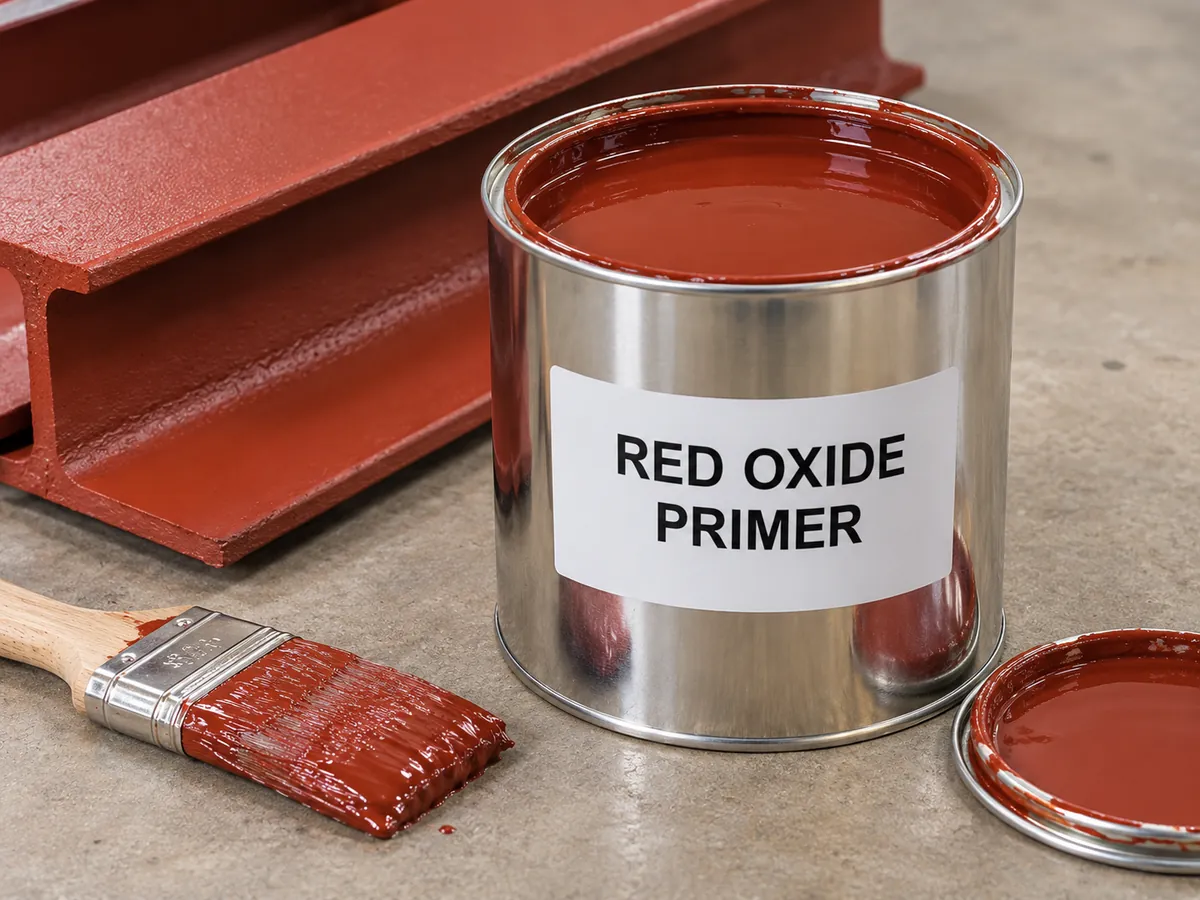
Hardware dealers, fabricators and contractors buy red oxide primer in steady volumes for steel structures, gates, grills and machinery. A red oxide primer manufacturing consultant helps you turn that demand into a workable plant plan. NPCS has worked with entrepreneurs since 1994 on project reports, feasibility studies and market research. Our team helps you decide capacity, grinding technology, approvals and funding before you commit capital, so the unit you build suits your market and budget.
Red Oxide Primer Manufacturing at a Glance
| Typical capacity | ~500–5,000 KL per year |
|---|---|
| Land | ~0.5–2 acres |
| Power load | ~50–300 kW |
| Water | Low |
| Manpower | ~10–40 |
| Indicative investment | ~₹50 lakh–₹5 crore |
Investment basis: excludes land.
Figures are indicative ranges. Your project report works them out for your capacity and location.
Market Demand for Red Oxide Primer in India
Demand for red oxide primer follows construction and fabrication activity. Every steel gate, shed or machine frame needs a protective coat before the final finish. Gujarat, Maharashtra, Delhi-NCR and West Bengal are the main industry clusters, so buyers and raw material suppliers are easy to reach there. Export potential is low and seasonality is low, which means your sales depend mostly on domestic dealers and local contractors.
- Hardware dealers who stock primers and enamels
- Fabricators working on steel structures and gates
- Contractors buying for construction projects
- Machinery makers who need a protective base coat
Red Oxide Primer Products You Can Make
Most new units start with the standard red oxide primer and add other lines later. Zinc chromate-free and zinc phosphate primers suit buyers who want a better anti-corrosive base. Synthetic enamels, grey primers and yellow primers let you serve the same dealers with more products.
- Red oxide zinc chromate-free primer, zinc phosphate primer, synthetic enamels, grey and yellow primers
Red Oxide Primer Manufacturing Process
The red oxide primer manufacturing process is a pigment dispersion process, and quality is controlled at the grind and again before filling. Iron oxide, resin and solvent are premixed, then ground until the pigment is fine and even. Ball mills keep the cost low, while bead mills give a finer grind. After let-down and tinting, each batch is checked for fineness, viscosity, drying time and adhesion. Buyers and tenders refer to IS 2074 for red oxide primer, so your lab should test against it from the first batch.
- Premixing
- Grinding (bead mill or ball mill)
- Let-down
- Tinting
- Quality testing
- Filling
Raw Materials and Machinery for Primer Production
Your main inputs are synthetic or natural red iron oxide, alkyd resin, mineral turpentine, extenders and additives. Iron oxide is usually sourced from Gujarat and Maharashtra, while resins and solvents are available domestically. The machines that matter most are the high-speed disperser and the ball or bead mill, backed by mixing tanks, a filling line and a lab.
- High-speed disperser
- Ball or bead mill
- Mixing tanks
- Filling line
- Lab
Licences and Approvals for a Red Oxide Primer Unit
Approvals should follow a fixed order so construction isn't delayed. Register the business first, then apply to the State Pollution Control Board for consent to establish before building. Paint formulation with solvents is generally Orange, so plan for that category. Solvent storage needs PESO approval, and you'll also need a fire NOC and a factory licence before consent to operate.
| Pollution category | Paint formulation with solvents is generally Orange |
|---|---|
| HSN code | 3208 (paints based on synthetic polymers) |
| GST | 18% |
| BIS / quality control order | IS 2074 used by buyers and tenders; lead limits apply to paints |
| Other licences | PESO for solvent storage; fire NOC; factory licence |
Choosing Between Ball Mill and Bead Mill
The grinding route is the biggest technical choice in a primer plant. A ball mill costs less and suits a new entrant selling price-sensitive primers to local dealers. A bead mill gives a finer grind, which helps if you plan to make enamels or premium zinc phosphate primers. Many founders start with a ball mill and add a bead mill once the dealer network grows. Your project report can compare both routes at your planned capacity.
Choosing the Right Plant Size for Red Oxide Primer
Plant size changes cost sharply, since capacity runs from about 500 to 5,000 KL per year and investment from about ₹50 lakh to ₹5 crore, excluding land. A small unit needs roughly 0.5 acre and fewer workers, and suits a single-region dealer base. A larger plant needs more power, land and manpower, and only pays off with wide distribution. These figures are indicative and depend on your location and machinery.
Government Schemes and Project Finance
PMEGP is the scheme named for this project, and smaller units may be able to apply under it. Lenders usually ask for a detailed report covering costs, working capital and returns. NPCS reports are used for bank loans and government programmes such as PMEGP, MSME schemes, Mudra and NABARD-linked projects, subject to each lender's requirements.
What Decides Success in a Red Oxide Primer Unit
Units that do well build a reliable dealer network and price carefully. Brand competition is the main risk, since established paint makers already hold shelf space. Wash solvent is also a by-product to plan for, because it needs proper handling.
- Build dealer relationships before launching production
- Price against established brands without cutting quality
- Plan for wash solvent handling and storage
How NPCS Helps You Set Up a Red Oxide Primer Unit
Our team ties each decision to your project. We help you fix capacity, choose between ball and bead mills, and select machinery and vendors. We also support plant layout, approvals planning and the financial model a lender will review. Where needed, we assist with installation and commissioning, so your red oxide primer manufacturing project report becomes a working plant.
NPCS's published client list records 3 assignments on red oxide primer projects between 2018 and 2023 for clients in 2 states and 1 country, including techno-economic feasibility studies and market research reports.
What Your Red Oxide Primer Manufacturing Project Report Covers
- Project introduction and BIS specifications
- Manufacturing process with flow sheet
- Market survey (demand, imports/exports, existing units)
- Personnel
- Plant and machinery with suppliers
- Land and building with layout
- Raw materials with sources and rates
- Financials (project cost, working capital, cost of production, profitability, break-even, 5–10 year cash flow, projected balance sheet, IRR/NPV/payback)
Red Oxide Primer Manufacturing: Frequently Asked Questions
How much does it cost to set up a red oxide primer manufacturing unit?
Investment is typically about ₹50 lakh–₹5 crore, depending on capacity and machinery. This range is indicative and excludes land. Your project report works out the exact figure for your capacity, location and choice of ball or bead mill.
Which licences are needed for red oxide primer manufacturing?
You'll need PESO approval for solvent storage, a fire NOC and a factory licence. Paint formulation with solvents is generally Orange under pollution norms, so State Pollution Control Board consent is required. Buyers and tenders also refer to IS 2074.
How much land and power does a red oxide primer plant need?
A plant typically needs about 0.5–2 acres and a power load of about 50–300 kW, depending on capacity. Water requirement is low. These are indicative figures, and your layout and machinery choice will refine them.
How to start red oxide primer manufacturing?
Start by fixing your capacity, grinding technology and target dealers. Then prepare a project report, register the business, secure pollution and safety approvals, and order machinery. Arrange iron oxide, resin and solvent supply before trial production.
How does NPCS help with a red oxide primer project?
NPCS prepares project reports and feasibility studies, and supports machinery selection, vendor selection, layout and approvals planning. Our team can customise the report to your capacity, budget and market area, and answer your queries within 24 hours.