
 Aditya Birla Management Corporation
 UPL
 DCM Shriram Industries
 Tata Steel
 JSW Steel
 ITC (Agri Business Division)
 Godrej & Boyce
 Grasim Industries (Century Rayon)
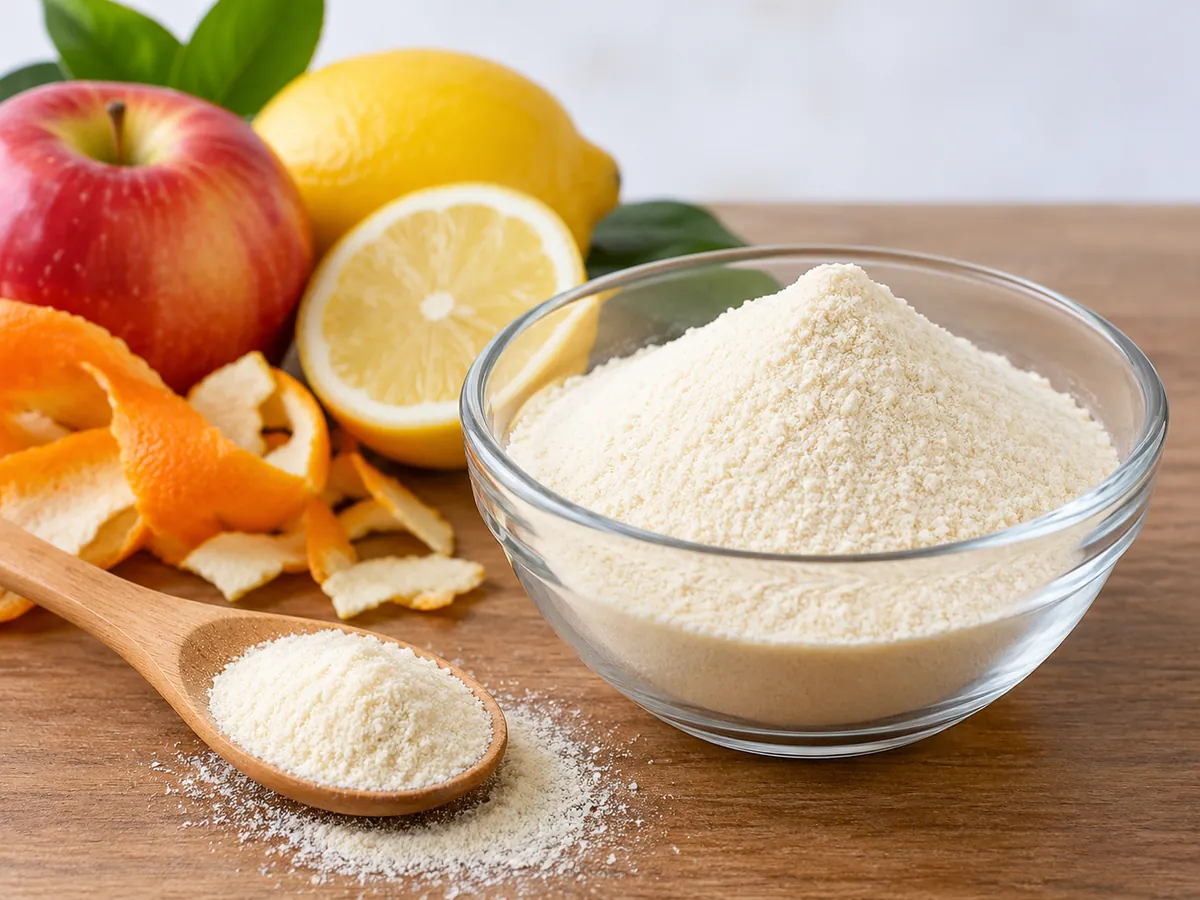
A pectin manufacturing plant extracts pectin from citrus peel or apple pomace with dilute acid, precipitates it with alcohol and dries it into powder. Entrepreneurs, juice processors and food-ingredient companies set these plants up to supply jam makers, dairy units, confectioners and pharma buyers. India imports most of its pectin, which makes local production attractive. As a pectin manufacturing plant consultant, NPCS helps you test viability, choose technology and prepare the approvals and finance file.
Pectin Manufacturing Plant at a Glance
| Typical capacity | ~200–2,000 TPA |
|---|---|
| Land | ~2–5 acres |
| Power load | ~300 kW–1.5 MW |
| Water | High |
| Manpower | ~25–80 |
| Indicative investment | ~₹15–80 crore |
Investment basis: excludes land.
Figures are indicative ranges. Your project report works them out for your capacity and location.
Market Demand for Pectin in India
Demand for pectin in India is driven mainly by import substitution, since most of the pectin used here is brought in. Food brands also prefer clean-label gelling agents, which favours a plant-derived ingredient like pectin. Raw material clusters sit in Maharashtra, Punjab and Himachal Pradesh, so plants near juice processors or apple growers gain on peel supply. Export potential is medium.
- Jam and confectionery makers
- Dairy and yoghurt producers
- Pharma and nutraceutical companies
- Exporters
Pectin Grades You Can Make
Most new plants start with high-methoxyl pectin, which suits jams and jellies, then add other grades as buyers ask. Low-methoxyl and amidated pectin serve dairy and specialised uses. Your choice should follow the customers you can reach first.
- High-methoxyl pectin, low-methoxyl pectin, amidated pectin
Pectin Manufacturing Process
The pectin manufacturing process is a wet extraction route that turns washed, dried peel into a standardised powder. Batch acid extraction is the usual technology, followed by filtration and clarification to remove solids. Alcohol precipitation then separates the pectin, and the pressed mass is dried and milled.
Quality is controlled at several points. Plants test degree of esterification, gel strength (SAG), moisture and heavy metals against FSSAI and JECFA specifications. Standardisation at the milling stage keeps each lot consistent for buyers.
- Peel washing and drying
- Acid extraction
- Filtration and clarification
- Concentration
- Alcohol precipitation
- Pressing
- Drying
- Milling and standardisation
- Packing
Raw Materials and Machinery for Pectin Production
Dried citrus peel or apple pomace is the main input, along with food-grade acid, isopropyl or ethyl alcohol and packaging. Peel usually comes from juice processors in Maharashtra, Punjab and Andhra Pradesh, and pomace from Himachal and J&K. The alcohol recovery column matters most for cost, because recovered alcohol is reused.
- Peel washer and dryer
- Extraction tanks
- Filter press
- Evaporator
- Precipitation tanks
- Press
- Dryer
- Mill
- Alcohol recovery column
Licences and Approvals for a Pectin Plant
A pectin plant needs registration first, then pollution consent before construction begins. Wet extraction with alcohol recovery and effluent is generally Orange, but the State PCB fixes the category. An FSSAI licence for food additives applies, and no QCO is required.
Plan these separately as well:
- PESO and excise permits for alcohol use and storage
- Boiler approval under IBR
- Factory licence
- Consent to operate after commissioning
| Pollution category | Wet extraction with alcohol recovery and effluent: generally Orange; the State PCB fixes the category |
|---|---|
| HSN code | 1302 20 (pectic substances, pectinates) |
| GST | Classification-dependent under 1302; applied in the project financials |
| BIS / quality control order | No QCO |
| FSSAI | FSSAI licence (food additive) |
| Other licences | PESO/excise permits for alcohol use and storage; boiler (IBR); factory licence |
Securing Peel Supply for Your Pectin Plant
Peel supply follows citrus and apple seasons, so sourcing is the main operating risk. Raw peel quality also varies between suppliers. Signing supply contracts with juice processors in Maharashtra, Punjab and Andhra Pradesh, or with apple processors in Himachal and J&K, steadies your input.
Dried peel can be stored through the off-season, which spreads purchases across the year. Plan drying and storage capacity alongside the main plant.
Making Money from Pectin By-Products
Spent peel is the main by-product of a pectin plant and it has a market. It can be sold as animal feed or used as compost. Selling it reduces waste handling and adds a small income line. Your project report can include this revenue in the financials, so the cost of production reflects it.
Government Schemes and Project Finance for Pectin Plants
Pectin projects may qualify for PMKSY and state food-processing incentives, depending on location and eligibility. A bankable project report helps lenders assess cost, cash flow and repayment. NPCS reports are used for bank loans and government programmes such as PMEGP, MSME schemes, Mudra and NABARD-linked projects, subject to each lender's requirements.
What Decides Success in a Pectin Plant
Good operators secure peel early, recover alcohol efficiently and hold a steady gel grade. The risks to plan for are below.
- Raw peel quality varying between lots
- Competition from imports from Europe and China
- Alcohol losses raising cost of production
- Gel grade drifting between batches
How NPCS Helps You Set Up a Pectin Plant
NPCS supports the decisions that shape a pectin project: capacity, extraction technology, alcohol recovery design and machinery selection. Our team also assists with vendor selection, plant layout, approvals and the financial model lenders review. We can guide installation and commissioning once you move ahead.
NPCS's published client list records 223 assignments across food and agro processing projects between 2009 and 2026, for clients in 28 states and 26 countries.
What Your Pectin Manufacturing Plant Project Report Covers
- Project introduction and BIS specifications
- Manufacturing process with flow sheet
- Market survey (demand, imports/exports, existing units)
- Personnel
- Plant and machinery with suppliers
- Land and building with layout
- Raw materials with sources and rates
- Financials (project cost, working capital, cost of production, profitability, break-even, 5–10 year cash flow, projected balance sheet, IRR/NPV/payback)
Pectin Manufacturing Plant: Frequently Asked Questions
How much investment is needed to start a pectin manufacturing plant?
Indicative investment is about ₹15–80 crore, excluding land, depending on capacity and technology. Plants typically range from about 200–2,000 TPA. Your project report works out the exact cost for your capacity and location.
Which licences and pollution category apply to a pectin plant?
You need an FSSAI licence for a food additive, PESO and excise permits for alcohol, boiler approval and a factory licence. Wet extraction with alcohol recovery is generally Orange, but the State PCB fixes the category.
How much land and power does a pectin plant need?
A pectin plant typically needs about 2–5 acres and a power load of about 300 kW–1.5 MW. Water requirement is high. These are indicative figures and change with your capacity and the process route you choose.
How do I start a pectin manufacturing plant business?
Start by securing peel supply and choosing a grade and capacity. Then prepare a detailed project report, apply for registration and pollution consent, and finalise machinery. Alcohol recovery design should be settled early because it affects both cost and permits.
How does NPCS help with a pectin project report?
NPCS prepares a detailed project report covering process, machinery, raw materials, approvals and financials. Our team also advises on technology, vendors and layout. Reports can be tailored to your capacity, budget and location, and used for bank applications.