
 Grasim Industries (Century Rayon)
 Tata Steel
 JSW Steel
 ITC (Agri Business Division)
 Godrej & Boyce
 Aditya Birla Management Corporation
 Thermax (Chemical Division)
 UPL
Textile mills, film makers and paper mills all wind their products on cores, and most buy them from converters close to their plants. A paper core and tube manufacturing consultant helps you size such a unit, pick the right winders and estimate costs before you commit. The unit winds recycled paperboard into cores, tubes, composite cans and edge protectors. NPCS has advised entrepreneurs on industrial projects since 1994, and our team prepares reports that cover technology, market and finance for your capacity and location.
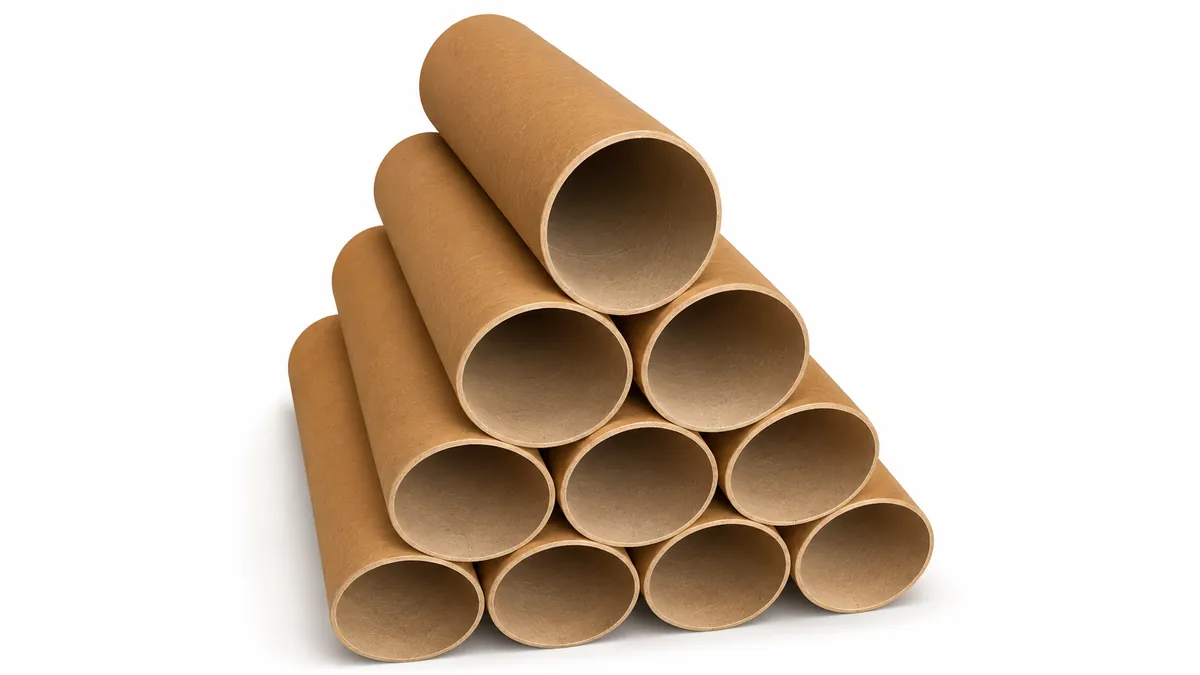
Paper Core and Tube Manufacturing at a Glance
| Typical capacity | ~1,000–15,000 TPA |
|---|---|
| Land | ~0.5–3 acres |
| Power load | ~50–400 kW |
| Water | Low |
| Manpower | ~10–50 |
| Indicative investment | ~₹50 lakh–₹8 crore |
Investment basis: excludes land.
Figures are indicative ranges. Your project report works them out for your capacity and location.
Market Demand for Paper Core and Tube Units in India
Demand for paper cores and tubes follows textile and packaging output. Every spool of yarn, roll of film or reel of paper needs a core, and palletised goods need edge protectors. Converters are concentrated near these users, mainly in Gujarat, Tamil Nadu, Punjab and Maharashtra. Export potential is low, so your market is regional and your buyers are the mills around you.
- Textile mills winding yarn
- Film makers and paper makers
- Packers who palletise goods
Paper Core and Tube Products You Can Make
You can start with plain cores and tubes, which suit textile and film buyers, and add other lines later. Edge protectors serve packers and palletising users, while composite cans and honeycomb boards open different customers. Pick the range that matches the buyers near your site.
- Paper cores and tubes, composite cans, edge protectors (angle boards), honeycomb paper boards
Paper Core and Tube Manufacturing Process
The paper core and tube manufacturing process turns reels of recycled kraft paperboard into finished, cut-to-length tubes. Paperboard is first slit to width, then wound with adhesive on a spiral or parallel winder. The choice of winder affects tube diameter, wall thickness and output. After cutting, tubes are dried and finished.
Quality control focuses on three checks: crush strength, dimensions and moisture. Crush strength matters most, because a weak core collapses under yarn or film tension. Testing each batch protects your reputation with mills that buy repeatedly.
- Slitting paperboard
- Spiral or parallel winding with adhesive
- Cutting to length
- Drying
- Finishing
Raw Materials and Machinery for Paper Core Production
Your main inputs are recycled kraft paperboard and adhesives. Paperboard is usually sourced from paper mills that use waste paper, so a location near them lowers cost. The key machines are slitters, a spiral winding machine, cutters and a dryer. An edge-protector machine is needed only if you add that line.
- Slitters
- Spiral winding machine
- Cutters
- Edge-protector machine
- Dryer
Licences and Approvals for a Paper Core and Tube Unit
Paper core and tube manufacturing licence and approvals are light compared with many industries. Start with Udyam registration, then apply to the State Pollution Control Board, since paper converting is in the White category under CPCB S.No. 31. No Quality Control Order applies, and FSSAI is not relevant. Confirm GST classification before you finalise your pricing.
| Pollution category | Paper converting: White (CPCB S.No. 31) |
|---|---|
| HSN code | 4822 (bobbins, spools, cores) |
| GST | Classification-dependent; applied in the project financials |
| BIS / quality control order | No QCO |
| Other licences | Udyam |
Choosing the Right Paper Core Plant Size
Plant size for this project spans roughly 1,000–15,000 TPA, with investment from about ₹50 lakh to ₹8 crore, excluding land. A small unit of around 10 workers can serve a few nearby mills with standard cores. Larger plants need up to 3 acres, power of about 400 kW and a workforce near 50. In practice, start at the size your local buyers can absorb, and plan space for added lines.
Choosing Between Spiral and Parallel Winders
Spiral winders and parallel winders are the two routes, and the better one depends on your products. Spiral winding suits continuous tubes cut to length for textile and film buyers. Parallel winding suits cores made to specific wall thickness and diameter. Edge-protector lines are a separate addition for packers. Your project report compares these options against your target customers and budget.
Government Schemes and Project Finance for Paper Core Units
PMEGP is the scheme named for this project, and smaller units may qualify depending on eligibility. Banks and scheme agencies ask for a clear project report with costs, working capital and profitability. NPCS reports are used for bank loans and programmes such as PMEGP, MSME schemes, Mudra and NABARD-linked projects, subject to each lender's requirements.
What Decides Success in a Paper Core and Tube Unit
Successful operators sit close to their buyers and deliver cores with consistent crush strength. The main risk is freight, since tubes are bulky and cost a lot to move over long distances.
- Set up inside a local demand cluster
- Test crush strength on every batch
- Keep delivery radius short to control freight
- Sell trim as scrap to reduce waste
How NPCS Helps You Set Up a Paper Core and Tube Unit
NPCS supports the decisions that shape this project: capacity, winder type, machinery and vendors, plant layout and approvals. Our team prepares the paper core and tube manufacturing project report and techno-economic feasibility study, with financials your bank can review. We also help with installation and commissioning assistance once you move ahead.
NPCS's published client list records 3 assignments on paper core and tube projects between 2017 and 2018 for clients in 3 states, including techno-economic feasibility studies.
What Your Paper Core and Tube Manufacturing Project Report Covers
- Project introduction and BIS specifications
- Manufacturing process with flow sheet
- Market survey (demand, imports/exports, existing units)
- Personnel
- Plant and machinery with suppliers
- Land and building with layout
- Raw materials with sources and rates
- Financials (project cost, working capital, cost of production, profitability, break-even, 5–10 year cash flow, projected balance sheet, IRR/NPV/payback)
Paper Core and Tube Manufacturing: Frequently Asked Questions
What is the paper core and tube manufacturing setup cost in India?
Indicative investment is about ₹50 lakh to ₹8 crore, excluding land. The figure depends on capacity, which runs roughly 1,000–15,000 TPA, and on whether you add edge-protector lines. A project report works out the exact cost for your plan.
Which licences and pollution category apply to a paper core unit?
You need Udyam registration and State Pollution Control Board consent. Paper converting falls in the White category under CPCB S.No. 31. No Quality Control Order applies. GST treatment depends on classification and is built into the project financials.
How much land and power does a paper core plant need?
Land typically ranges from about 0.5 to 3 acres, and power load from about 50 to 400 kW, depending on capacity. Water need is low. Your machinery list and layout decide the final requirement.
How to start paper core and tube manufacturing?
Begin by identifying nearby textile, film and paper buyers, then choose capacity and winder type. Register on Udyam, secure pollution board consent, select machinery and arrange paperboard supply. A feasibility study helps you test these choices before investing.
How can NPCS help with my paper core project?
NPCS prepares project reports and feasibility studies, and guides machinery selection, vendor selection and plant layout. Share your planned capacity and location, and our team will outline costs and approvals. Enquiries are answered within 24 hours.