
 Grasim Industries (Century Rayon)
 Tata Steel
 JSW Steel
 ITC (Agri Business Division)
 Godrej & Boyce
 Aditya Birla Management Corporation
 Thermax (Chemical Division)
 UPL
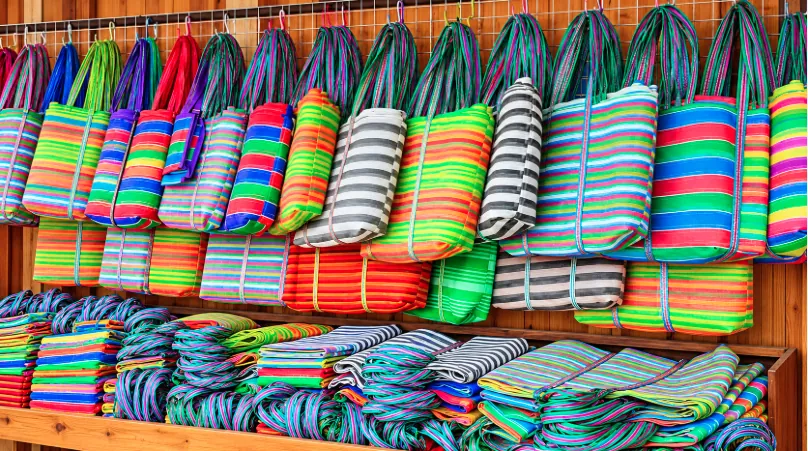
Retail and garment shops, grocery chains and promotional buyers now rely on non-woven polypropylene bags after the ban on thin plastic carry bags. A non-woven bag manufacturing consultant helps you turn that demand into a plant that cuts, prints and ultrasonically seals fabric into D-cut, W-cut, loop-handle and box bags. The investment is modest, water use is nil, and the process is simple. NPCS supports you with capacity planning, machinery selection and a project report that suits your location and budget.
Non-Woven Bag Manufacturing at a Glance
| Typical capacity | ~5,000–50,000 bags per day |
|---|---|
| Land | ~1,500 sq ft–0.5 acre |
| Power load | ~20–100 kW |
| Water | Nil |
| Manpower | ~5–25 |
| Indicative investment | ~₹15 lakh–₹2 crore |
Investment basis: excludes land.
Figures are indicative ranges. Your project report works them out for your capacity and location.
Market Demand for Non-Woven Bags in India
Demand for non-woven bags in India is driven mainly by the ban on thin plastic carry bags, which pushed shops toward reusable alternatives. Buyers are steady and local, so a good retail network often matters more than scale. Production is concentrated in Gujarat, Tamil Nadu, Delhi-NCR and Maharashtra. Export potential is low, and orders rise around festive peaks.
- Retailers and showrooms ordering printed branded bags
- Promotional and gifting buyers needing custom prints
- Grocery chains buying plain loop-handle or D-cut bags
Non-Woven Bag Products You Can Make
Most new units begin with D-cut and W-cut bags because they suit grocery and garment shops. Loop-handle and box bags serve showrooms and gifting, while printed promotional and laminated bags usually fetch better margins from brand buyers.
- D-cut, W-cut, loop-handle and box bags
- Printed promotional bags
- Laminated bags
Non-Woven Bag Manufacturing Process
The non-woven bag manufacturing process starts with rolls of spunbond fabric and ends with counted, packed bags. Printing is done by flexo or screen, depending on volume and design detail. Cutting and ultrasonic sealing join the seams without thread, and handles are fixed afterwards.
Quality is checked at three points: fabric GSM, seam strength and print quality. GSM matters most, since it must be at least 60 GSM under the Plastic Waste Management Rules. Your plant can run fully automatic machines or semi-automatic lines with stitching, which affects labour and output.
- Fabric roll feeding
- Printing (flexo or screen)
- Automatic cutting and ultrasonic sealing
- Handle fixing
- Counting and packing
Raw Materials and Machinery for Non-Woven Bags
Your main input is spunbond PP non-woven fabric of 60 GSM and above, along with inks and handles. Fabric is commonly sourced from Gujarat, Tamil Nadu and Maharashtra. The fully automatic non-woven bag machine is the core investment, and the flexo printer and handle loop machine decide print quality and finishing speed.
- Fully automatic non-woven bag machine
- Flexo printer
- Handle loop machine
- Packing
Licences and Approvals for a Non-Woven Bag Unit
Non-woven bag manufacturing licence and approvals are light, but the order matters. Start with Udyam registration, then check with the State Pollution Control Board, since bag making from fabric is White or Green. Register with the State PCB as a plastic bag producer where required. No QCO applies, and brand owners carry EPR obligations.
| Pollution category | Bag making from fabric: White or Green |
|---|---|
| HSN code | 6305 or 3923 (by construction) |
| GST | Classification-dependent by construction; applied in the project financials |
| BIS / quality control order | No QCO |
| Other licences | Registration with the State PCB as a plastic bag producer where required; EPR obligations for brand owners; Udyam |
Choosing the Right Non-Woven Bag Technology
You can choose fully automatic bag-making machines or semi-automatic lines with stitching. Automatic machines suit buyers who want high daily output, consistent seams and lower labour per bag, though they cost more. Semi-automatic lines suit smaller starters serving local shops with mixed bag styles. Many entrepreneurs begin semi-automatic and add an automatic machine once orders become steady.
Managing Seasonality and Working Capital
Orders from retailers and gifting buyers rise during festive peaks, so fabric stock must be ready before then. Fabric is your biggest cost, which ties up working capital quickly. Plan purchases around expected orders, and keep print stock limited to repeat customers. Your project report should show working capital clearly, since lenders look at it closely.
Government Schemes and Project Finance
PMEGP and state MSME incentives can support a non-woven bag unit, depending on eligibility. A detailed project report helps in loan and subsidy applications. NPCS reports are used for bank loans and programmes such as PMEGP, MSME schemes, Mudra and NABARD-linked projects, subject to each lender's requirements.
What Decides Success in a Non-Woven Bag Unit
Good operators buy fabric well, keep print quality steady and build a local retail network. The main risks are price competition and GSM compliance. Fabric trim can be recycled, which cuts waste.
- Buy fabric in volumes that match orders
- Check GSM on every incoming roll
- Price against local competitors before quoting
How NPCS Helps You Set Up a Non-Woven Bag Unit
Our team works through the decisions that shape your plant: capacity, automatic or semi-automatic technology, machinery and vendors, plant layout and approvals. We also prepare the financials lenders ask for, including a non-woven bag manufacturing project report built around your budget and market. Installation and commissioning assistance is available when you're ready.
NPCS's published client list records 3 assignments on non-woven bag projects between 2019 and 2023 for clients in 3 states, including detailed project reports, bankable project reports and techno-economic feasibility studies.
What Your Non-Woven Bag Manufacturing Project Report Covers
- Project introduction and BIS specifications
- Manufacturing process with flow sheet
- Market survey (demand, imports/exports, existing units)
- Personnel
- Plant and machinery with suppliers
- Land and building with layout
- Raw materials with sources and rates
- Financials (project cost, working capital, cost of production, profitability, break-even, 5–10 year cash flow, projected balance sheet, IRR/NPV/payback)
Non-Woven Bag Manufacturing: Frequently Asked Questions
How much does non-woven bag manufacturing setup cost in India?
An indicative range is ₹15 lakh–₹2 crore, excluding land, depending on capacity and machinery. A semi-automatic line costs less than a fully automatic one. Your project report works out the exact figure for your plant.
Which licences are needed for a non-woven bag unit?
You'll need Udyam registration and, where required, State PCB registration as a plastic bag producer. Bag making from fabric is White or Green for pollution. No QCO applies. Brand owners carry EPR obligations.
How much land and power does a non-woven bag plant need?
Land typically ranges from about 1,500 sq ft to 0.5 acre, and power load from about 20–100 kW, depending on capacity. Water requirement is nil. Your layout and machinery choice fix the final figures.
How to start non-woven bag manufacturing?
Start by choosing capacity and technology, then register under Udyam and check State PCB requirements. Next, finalise machinery, fabric suppliers and buyers. A project report ties these steps to costs and helps with finance.
How can NPCS help with a non-woven bag project?
NPCS prepares detailed and bankable project reports and feasibility studies. We also advise on machinery, vendors, layout and approvals. Share your planned capacity and location, and our team will outline the next steps.