
 ITC (Agri Business Division)
 Aditya Birla Management Corporation
 UPL
 Gujarat Ambuja Exports
 Tata Steel
 JSW Steel
 Godrej & Boyce
 Grasim Industries (Century Rayon)
A neem oil and neem cake plant crushes neem seed kernels into oil and manure-grade cake, and many promoters add a biopesticide line. Demand comes from fertiliser companies, organic farmers, soap makers and exporters. As a neem oil and neem cake plant consultant, NPCS helps you choose between an expeller-only unit and one with solvent extraction, then works out machinery, approvals and finance for your capacity and location.
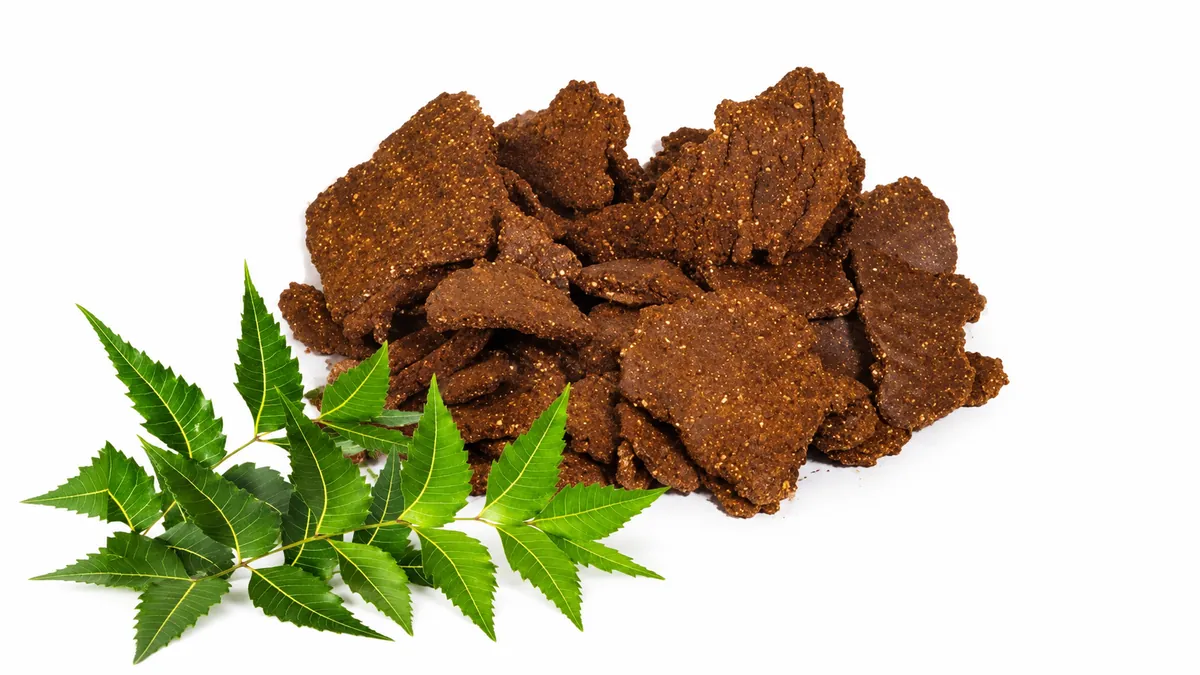
Neem Oil and Neem Cake Plant at a Glance
| Typical capacity | ~5–100 TPD seed |
|---|---|
| Land | ~1–4 acres |
| Power load | ~100–600 kW |
| Water | Low |
| Manpower | ~15–60 |
| Indicative investment | ~₹1–20 crore |
Investment basis: excludes land.
Figures are indicative ranges. Your project report works them out for your capacity and location.
Market Demand for Neem Oil and Neem Cake in India
Neem products sell steadily because farm input buyers are moving towards natural options. Three drivers matter most: the push for natural farming, neem-coated urea, and exports of neem products. Production and seed supply are concentrated in Rajasthan, Gujarat, Madhya Pradesh and Uttar Pradesh, so units there sit close to raw material. Export potential is medium, which suits a plant that sells mainly in India first.
- Fertiliser and agri-input companies buying cake and oil
- Organic farmers using manure and biopesticides
- Cosmetic and soap makers needing oil
- Exporters of neem products
Neem Oil and Neem Cake Products You Can Make
Most new units start with cold-pressed oil and neem cake, since both come from the same expeller line. Solvent-extracted oil and azadirachtin-based biopesticide in EC formulations suit promoters ready for extra approvals and capital.
- Cold-pressed neem oil, solvent-extracted neem oil, neem cake (manure), azadirachtin-based biopesticide (EC formulations)
Neem Oil and Neem Cake Plant Process
The neem oil and neem cake plant process starts with dried seed, which is decorticated to free the kernels before they go to the expellers. The pressed oil is filtered, and the cake is dried and ground for sale as manure. If you choose solvent extraction, the cake goes through a solvent plant to recover remaining oil. Quality is checked at several points: azadirachtin content by HPLC, free fatty acids and moisture for oil, and FCO standards for cake. Biopesticides must also meet Insecticides Act specifications.
- Seed collection and drying
- Decortication
- Expeller pressing
- Filtration
- (cake solvent extraction)
- Cake drying and grinding
- Formulation of biopesticide (optional)
- Packing
Raw Materials and Machinery for a Neem Plant
Neem seed kernels are the main input, with hexane needed only on the solvent route and emulsifiers for formulations. Seed typically comes from Rajasthan, Gujarat, Madhya Pradesh, Uttar Pradesh, Karnataka and Andhra Pradesh. The decorticator and expellers set your throughput, while the filter press affects oil clarity.
- Decorticator
- Expellers
- Filter press
- Solvent plant (optional)
- Cake grinder
- Formulation mixers
- Packing
Licences and Approvals for a Neem Oil and Neem Cake Plant
Start with business registration, then apply to the State Pollution Control Board for consent to establish before construction. Expeller oil mills are generally Green or Orange, while solvent extraction raises the category, and the board fixes it. Product approvals follow, and consent to operate comes before commercial production.
- CIB&RC registration and manufacturing licence for biopesticides
- FCO registration for neem cake sold as manure
- PESO approval if you use solvent
| Pollution category | Expeller oil mills are generally Green or Orange; solvent extraction raises the category; the State PCB fixes it |
|---|---|
| HSN code | 1515 90 (neem oil); 2306 (oilcake); 3808 (biopesticides) |
| GST | Classification-dependent; biopesticides 5% under GST 2.0, applied product-wise in the financials |
| BIS / quality control order | No QCO |
| Other licences | CIB&RC registration and manufacturing licence for biopesticides; FCO registration for neem cake as manure; PESO for solvent |
Securing Neem Seed Supply
Neem seed is collected only from June to August, so your annual output depends on how much you buy and store in that window. Build a collection network across seed-producing states before you commit to capacity. Dry the seed properly and keep stock in ventilated storage to protect oil quality. Plan working capital for the buying season, because most of the year's raw material is paid for in a few weeks.
Choosing the Right Neem Processing Technology
An expeller-only plant costs less and clears approvals faster, which suits first-time promoters selling oil and cake. Adding solvent extraction of the cake recovers more oil but brings hexane handling, PESO approval and a higher pollution category. A formulation unit for biopesticides is a separate decision, because it needs CIB&RC registration. Many promoters begin with expellers and add the other lines later.
Government Schemes and Project Finance for Neem Plants
Paramparagat Krishi Vikas Yojana and the National Mission on Natural Farming support the organic demand your product serves, while PMEGP may help smaller units with funding. A bankable project report with costs, margins and cash flow is what lenders review. NPCS reports are used for bank loans and government programmes, subject to each lender's requirements.
What Decides Success in a Neem Oil and Neem Cake Plant
Good operators build a dependable seed collection network and protect azadirachtin quality. They also secure CIB registration early. The main risks are listed below, and neem cake sold as manure helps recover part of the cost.
- Seasonal seed supply that strains cash flow
- Registration timelines for biopesticides
- Variable azadirachtin content in oil
How NPCS Helps You Set Up a Neem Oil and Neem Cake Plant
NPCS supports the decisions that shape this project: capacity, expeller or solvent route, and whether to add biopesticides. Our team assists with machinery selection and specifications, vendor selection, plant layout, and installation and commissioning. We also prepare the detailed project report and feasibility study that your lender and approvals will rely on.
NPCS's published client list records 4 assignments on neem oil and neem cake projects between 2015 and 2019 for clients in 3 states and 1 country, including techno-economic feasibility studies and project identification studies.
What Your Neem Oil and Neem Cake Plant Project Report Covers
- Project introduction and BIS specifications
- Manufacturing process with flow sheet
- Market survey (demand, imports/exports, existing units)
- Personnel
- Plant and machinery with suppliers
- Land and building with layout
- Raw materials with sources and rates
- Financials (project cost, working capital, cost of production, profitability, break-even, 5–10 year cash flow, projected balance sheet, IRR/NPV/payback)
Neem Oil and Neem Cake Plant: Frequently Asked Questions
How much does it cost to set up a neem oil and neem cake plant?
Setup cost is typically about ₹1–20 crore, excluding land, depending on capacity and technology. An expeller-only plant sits at the lower end. Solvent extraction and a biopesticide line add to it. Your project report works out the figure for your plan.
Which licences are needed for a neem oil and neem cake plant?
You need State Pollution Control Board consent, FCO registration for neem cake as manure, and CIB&RC registration with a manufacturing licence for biopesticides. PESO approval applies if you use solvent. The board fixes your pollution category, which is generally Green or Orange for expeller mills.
How much land and power does a neem oil plant need?
A plant typically needs about 1–4 acres and a power load of about 100–600 kW, depending on capacity. Water need is low. These are indicative figures, and your layout and machinery choice will settle the final requirement.
How do I start a neem oil and neem cake plant business?
Begin by fixing capacity and technology, then line up seed sourcing before the June to August season. Next, register the business and apply for pollution consent and product approvals. A detailed project report ties these steps to cost and finance.
How can NPCS help with my neem plant project?
NPCS prepares the project report and feasibility study, and guides machinery selection, vendor choice and plant layout. Our team also supports installation and commissioning. Share your planned capacity and location, and we'll outline the approach for your project.