
 Tata Steel
 JSW Steel
 ITC (Agri Business Division)
 Godrej & Boyce
 Aditya Birla Management Corporation
 Grasim Industries (Century Rayon)
 Thermax (Chemical Division)
 UPL
A molasses distillery ferments sugar mill molasses or cane juice and distils it into fuel ethanol, extra neutral alcohol (ENA) and rectified or denatured spirit. Sugar mill groups and investors set these plants up mainly to supply oil marketing companies under the E20 blending target. A molasses distillery consultant helps you size the plant, secure feedstock, meet zero liquid discharge norms and prepare a molasses distillery project report that lenders can assess.
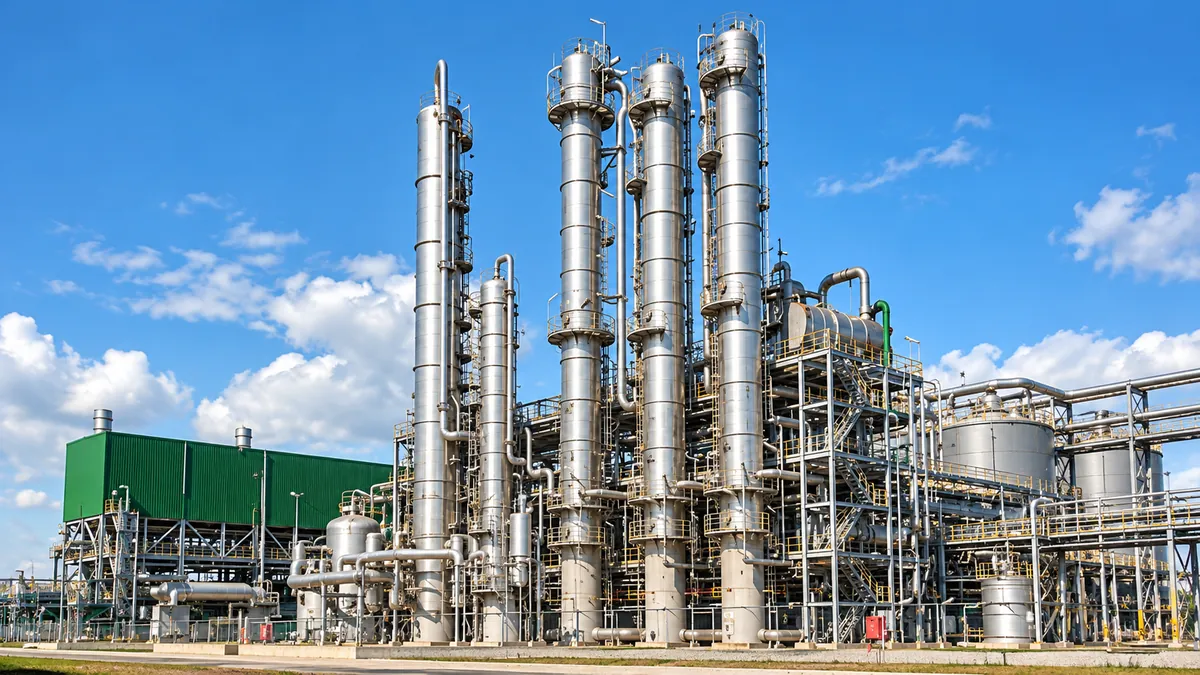
Molasses Distillery at a Glance
| Typical capacity | ~60–500 KLPD |
|---|---|
| Land | ~20–60 acres |
| Power load | Mostly self-generated |
| Water | High (recycled under ZLD) |
| Manpower | ~80–250 |
| Indicative investment | ~₹150–600 crore |
Investment basis: excludes land.
Figures are indicative ranges. Your project report works them out for your capacity and location.
Market Demand for Molasses Distilleries in India
Demand for ethanol from molasses is driven mainly by the E20 blending target, which gives distilleries a steady buyer in oil marketing companies. Plants cluster where sugar mills are, so Uttar Pradesh, Maharashtra, Karnataka and Tamil Nadu lead. Export potential is low, so your market is domestic.
- Oil marketing companies buying fuel ethanol for blending
- Liquor makers buying ENA for potable alcohol
- Chemical and pharma buyers using industrial ethanol
Molasses Distillery Products You Can Make
Fuel ethanol suits oil company contracts, while ENA and rectified spirit serve liquor and industrial buyers. Many promoters design the plant to switch between them. Bio-CNG from spent wash is an allied product that adds a second revenue line.
- Fuel ethanol (anhydrous), ENA, rectified spirit, denatured spirit, bio-CNG from spent wash (allied)
Molasses Distillery Process and Technology
The molasses distillery process turns diluted molasses into alcohol through fermentation, then separates and dries it to the required purity. Yeast converts the sugars, and multi-pressure distillation concentrates the alcohol. For fuel ethanol, a molecular sieve removes the remaining water.
Technology choices include continuous fermentation, which keeps output steady, and incineration boilers, which help the plant meet zero liquid discharge. Quality is checked at the end against IS 15464 for fuel ethanol, while ENA is tested to its own specifications.
- Molasses dilution
- Fermentation
- Multi-pressure distillation
- Dehydration by molecular sieve (fuel ethanol)
- Storage; spent wash concentrated and incinerated or composted (zero liquid discharge)
Raw Materials and Machinery for a Molasses Distillery
Your main input is C-heavy or B-heavy molasses, with cane juice or syrup as alternatives, plus yeast and process chemicals. Most supply comes from sugar mills in Uttar Pradesh, Maharashtra, Karnataka and Tamil Nadu. The costliest machinery decisions are the distillation columns, the molecular sieve unit and the incineration boiler.
- Fermenters
- Distillation columns
- Molecular sieve dehydration
- Evaporators
- Incineration boiler
- Storage tanks
Licences and Approvals for a Molasses Distillery
Molasses distillery licence and approvals start with Environmental Clearance, because distilleries fall in the Red pollution category and need zero liquid discharge. Secure the molasses allocation and state excise licence early, since they shape the plant design. Storage needs PESO approval, and ENA for potable use brings FSSAI requirements. Fuel ethanol must meet IS 15464.
| Pollution category | Distilleries are Red; Environmental Clearance and zero liquid discharge are required |
|---|---|
| HSN code | 2207 (ethyl alcohol) |
| GST | Ethanol supplied to oil companies for blending: 5%; other industrial ethanol: 18%; ENA for liquor is outside GST |
| BIS / quality control order | Fuel ethanol to IS 15464 |
| FSSAI | FSSAI requirements apply to ENA for potable use |
| Other licences | State excise licence; Environmental Clearance; PESO for storage; molasses allocation |
Securing Molasses for Your Distillery
Molasses availability follows the crushing season, so a distillery without stored feedstock can sit idle for months. Tie up supply with nearby sugar mills and plan tank storage to bridge the off-season. Price and policy shifts on molasses can change margins quickly, so your project report should test the plant against higher feedstock costs. Cane juice or syrup can add flexibility where the facts and local supply allow.
Choosing the Right Molasses Distillery Plant Size
Indicative capacity runs from about 60 to 500 KLPD, with investment of about ₹150–600 crore excluding land. A smaller plant needs less land and fewer staff, but a larger one spreads fixed costs of ZLD systems over more output. Land needs range from about 20 to 60 acres, and manpower from about 80 to 250. Match size to your assured molasses supply and offtake contract.
Government Schemes and Project Finance for Distilleries
The Ethanol Blended Petrol programme offers long-term offtake, and interest-subvention support exists for ethanol capacity. A bankable report helps lenders see feedstock, offtake and compliance in one place. NPCS reports are used for bank loans and government programmes, subject to each lender's requirements.
What Decides Success in a Molasses Distillery
Good operators lock in feedstock linkage, run ZLD reliably and hold firm OMC contracts. The main risks are molasses price and policy shifts and effluent management. Spent wash can earn income as potash-rich ash or CBG, and CO2 is also a by-product.
- Secure feedstock linkage before finalising capacity
- Budget properly for ZLD and incineration
- Plan for molasses price swings
How NPCS Helps You Set Up a Molasses Distillery
NPCS supports the decisions that matter most in a distillery: capacity, technology route, machinery selection and vendor choice. Our team also helps with plant layout, approvals planning and the financial model lenders review. We can guide installation and commissioning once your project moves ahead.
NPCS's published client list records 11 assignments on molasses distillery projects between 2013 and 2025 for clients in 6 states and 2 countries, including bankable project reports, techno-economic feasibility studies and project identification studies.
What Your Molasses Distillery Project Report Covers
- Project introduction and BIS specifications
- Manufacturing process with flow sheet
- Market survey (demand, imports/exports, existing units)
- Personnel
- Plant and machinery with suppliers
- Land and building with layout
- Raw materials with sources and rates
- Financials (project cost, working capital, cost of production, profitability, break-even, 5–10 year cash flow, projected balance sheet, IRR/NPV/payback)
Molasses Distillery: Frequently Asked Questions
How much does it cost to set up a molasses distillery?
Molasses distillery setup cost in India is typically about ₹150–600 crore for about 60–500 KLPD, excluding land. The figure is indicative. Your project report works out the cost for your capacity, technology and location.
Which pollution category applies to a molasses distillery?
Distilleries fall in the Red category. You need Environmental Clearance and a zero liquid discharge system. Plan the incineration or composting route early, since it affects both cost and layout.
How much land and power does a molasses distillery need?
Land typically ranges from about 20 to 60 acres, depending on capacity. Power is mostly self-generated, and water demand is high, though it is recycled under zero liquid discharge. Confirm both against your chosen capacity.
How to start a molasses distillery business?
Begin by securing molasses supply and fixing capacity and product mix. Then prepare a project report, apply for Environmental Clearance and excise licence, and arrange finance. NPCS can guide each of these steps.
How can NPCS help with a molasses distillery project?
NPCS prepares detailed and bankable project reports, feasibility studies and market research. Our team also supports machinery selection, vendor selection, plant layout and approvals planning. Share your capacity and location to begin.