
 Aditya Birla Management Corporation
 UPL
 DCM Shriram Industries
 Tata Steel
 JSW Steel
 ITC (Agri Business Division)
 Godrej & Boyce
 Grasim Industries (Century Rayon)
Importers in the Middle East and South-East Asia, domestic distributors and QSR chains buy from integrated abattoirs that handle chilled and frozen buffalo meat, sheep and goat meat, or poultry meat. A meat processing plant consultant helps you decide the species, capacity and export route before you commit land and capital. NPCS supports you with feasibility work, machinery selection, approvals and a bankable report for your plant.
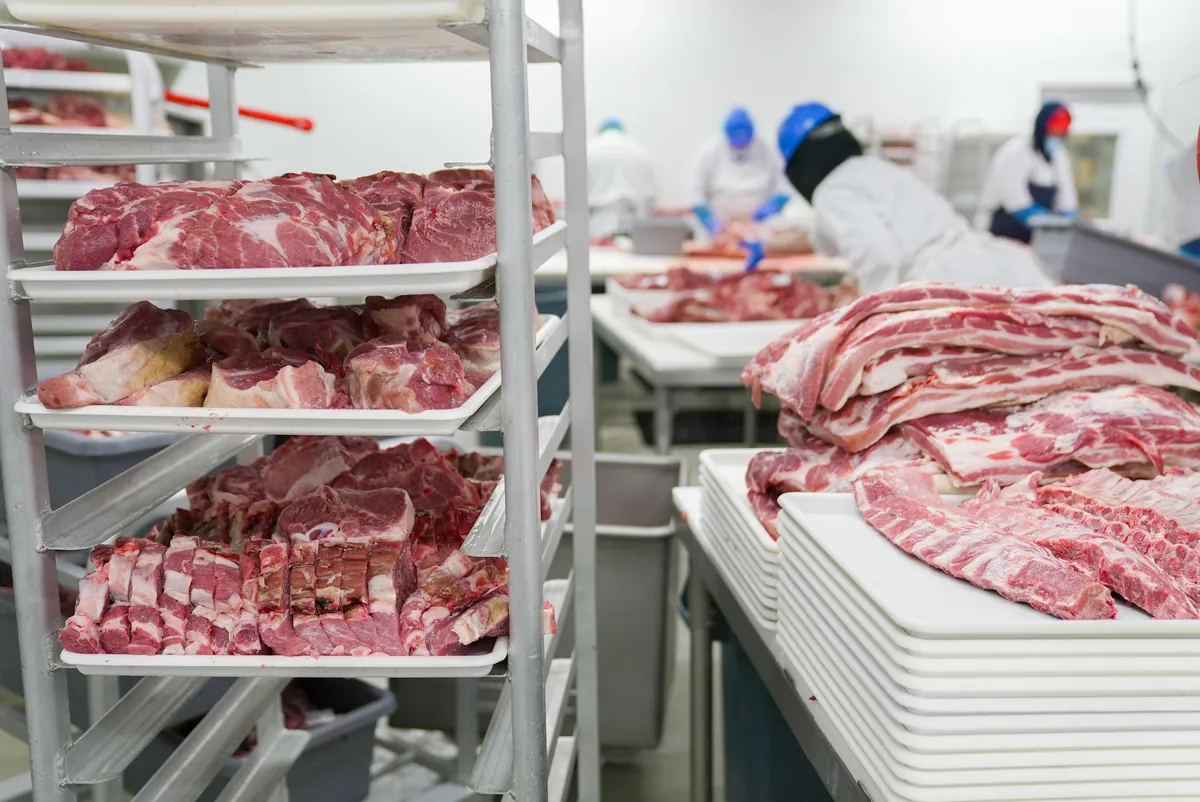
Meat Processing Plant at a Glance
| Typical capacity | ~100–1,000 animals per day (buffalo) or ~2,000–20,000 birds per hour |
|---|---|
| Land | ~10–30 acres |
| Power load | ~1–5 MW |
| Water | Very high |
| Manpower | ~150–600 |
| Indicative investment | ~₹50–250 crore |
Investment basis: excludes land.
Figures are indicative ranges. Your project report works them out for your capacity and location.
Market Demand for Meat Processing Plants in India
Demand for processed meat in India is pulled by meat exports and organised retail. Export potential is high, and seasonality is low, so a plant can run through the year. Production is concentrated in Uttar Pradesh (Aligarh, Unnao), Maharashtra, Andhra Pradesh, Telangana and Punjab, close to animal supply.
Your buyers will usually fall into three groups:
- Importers in the Middle East and South-East Asia
- Domestic distributors handling chilled and frozen cuts
- QSR chains and HoReCa kitchens
- Organised retail stores
Meat Products You Can Offer
Export-focused plants usually start with deboned frozen buffalo meat, while domestic-focused units tend to begin with chilled carcasses and cuts. Poultry processing and processed meats can follow once your cold chain and hygiene systems are stable.
- Chilled and frozen carcasses and cuts, deboned frozen buffalo meat (export), poultry processing, processed meats
Meat Processing Plant Process Explained
The meat processing plant process starts with ante-mortem inspection of live animals and ends with cold storage of packed product. Quality is controlled at several points, not just at the end. Veterinary inspection happens before and after slaughter, and chilling must bring carcasses down to safe temperature quickly.
Microbial and residue testing then confirms the product meets buyer limits, including export-country requirements. Your main technology decision is between an integrated abattoir with rendering and a meat-processing-only unit. The first handles by-products on site, while the second needs a reliable outside source of carcasses.
- Ante-mortem inspection
- Humane slaughter
- Dressing
- Post-mortem inspection
- Chilling
- Deboning and cutting
- Packing
- Freezing
- Cold storage
Raw Materials and Machinery for a Meat Plant
Your main input is healthy animals or birds bought from licensed markets, along with packaging. Sourcing usually draws on Uttar Pradesh, Maharashtra, Andhra Pradesh, Telangana and Punjab. Among the machinery, the slaughter line, chillers, blast freezers and the effluent treatment plant (ETP) deserve the closest attention, because they drive hygiene, shelf life and compliance.
- Stunning and slaughter line
- Dressing rails
- Chillers
- Deboning tables
- Blast freezers
- Cold stores
- Rendering plant
- ETP
Meat Processing Plant Licence and Approvals
Slaughterhouses and meat processing fall in the Red pollution category, so the State Pollution Control Board consent to establish must come before construction. Plan the other approvals in this order:
- Local body licence and animal welfare approvals
- Environmental Clearance where applicable
- FSSAI Central licence for food safety
- APEDA registration for export of an integrated abattoir
- Consent to operate before commercial production
| Pollution category | Slaughterhouses and meat processing are Red |
|---|---|
| HSN code | 0201/0202 (bovine meat), 0207 (poultry) |
| GST | Fresh and chilled meat: Nil; frozen meat in unit containers follows its own entry |
| BIS / quality control order | No QCO |
| FSSAI | FSSAI Central licence |
| Other licences | APEDA registration of integrated abattoir for exports; animal welfare approvals; local body licence; Environmental Clearance where applicable |
Choosing the Right Meat Plant Technology
An integrated abattoir with rendering suits you if you want control over carcass quality and want to sell hides, bones and blood. It needs more land, water and effluent capacity. A meat-processing-only unit has a lighter footprint, but it depends on outside slaughter supply and on consistent carcass quality from that source. Your export plans and site will usually settle the choice.
Making Money from Meat Plant By-Products
Hides, bones, rendering products and blood can add a second revenue line to a meat processing plant. They are sold to by-product industries, so stable buyers should be lined up before commissioning. A rendering plant also reduces the waste load that reaches your effluent treatment system, which helps with pollution compliance.
Government Schemes and Project Finance for Meat Plants
PMKSY supports abattoir modernisation, and schemes from the Agriculture and Processed Food Products Export Development Authority apply to export-oriented units. NPCS reports are used for bank loans and government programmes, subject to each lender's requirements. A detailed meat processing plant project report sets out costs, cash flow and compliance in the form lenders expect.
What Decides Success in a Meat Processing Plant
Good operators secure export approvals early, keep hygiene tight and treat effluent as a core system. The risks you should plan for are:
- Regulatory and social sensitivity around slaughter
- Effluent load from very high water use
- Delays in export approvals
- Weak hygiene discipline in the cold chain
How NPCS Helps You Set Up a Meat Processing Plant
Our team works through the decisions that shape your plant: capacity, integrated or processing-only technology, machinery and vendors, plant layout and approvals. We also prepare the financial model your bank will study. Support continues into installation and commissioning, so the plan and the plant stay aligned.
NPCS's published client list records 223 assignments across food and agro processing projects between 2009 and 2026, for clients in 28 states and 26 countries.
What Your Meat Processing Plant Project Report Covers
- Project introduction and BIS specifications
- Manufacturing process with flow sheet
- Market survey (demand, imports/exports, existing units)
- Personnel
- Plant and machinery with suppliers
- Land and building with layout
- Raw materials with sources and rates
- Financials (project cost, working capital, cost of production, profitability, break-even, 5–10 year cash flow, projected balance sheet, IRR/NPV/payback)
Meat Processing Plant: Frequently Asked Questions
How much does meat processing plant setup cost in India?
An indicative investment is about ₹50–250 crore, and this excludes land. The figure depends on capacity, species and whether you add rendering and cold storage. Your project report works out the cost for your capacity and location.
Which pollution category applies to a meat processing plant?
Slaughterhouses and meat processing are in the Red category. You need consent to establish from the State Pollution Control Board before construction and consent to operate before production. Environmental Clearance may also apply, depending on the project.
How much land and power does a meat processing plant need?
Typically about 10–30 acres of land and a power load of about 1–5 MW, depending on capacity. Water use is very high, so your site must have a dependable supply and space for effluent treatment.
How to start a meat processing plant business?
Begin with a feasibility study covering species, capacity, export markets and site. Then secure consent to establish, FSSAI Central licence and other approvals, finalise machinery, and arrange finance. Export units also need APEDA registration for the integrated abattoir.
How does NPCS help with a meat processing plant?
NPCS prepares the detailed project report, helps with technology and machinery selection, vendor choice and plant layout, and guides you on approvals. We can also support installation and commissioning. Share your capacity and location to start.