
 Grasim Industries (Century Rayon)
 Tata Steel
 JSW Steel
 ITC (Agri Business Division)
 Godrej & Boyce
 Aditya Birla Management Corporation
 Thermax (Chemical Division)
 UPL
Caterers, temples and exporters buy disposable leaf plates in steady volumes, and a small hot-press unit can supply them. A leaf plate manufacturing consultant helps you decide the capacity, die type, raw material source and approvals before you spend on machines. NPCS has advised entrepreneurs since 1994, and our team prepares project reports that show costs, sourcing and finance for your location. The plastic ban and areca plate exports keep interest in this project high.
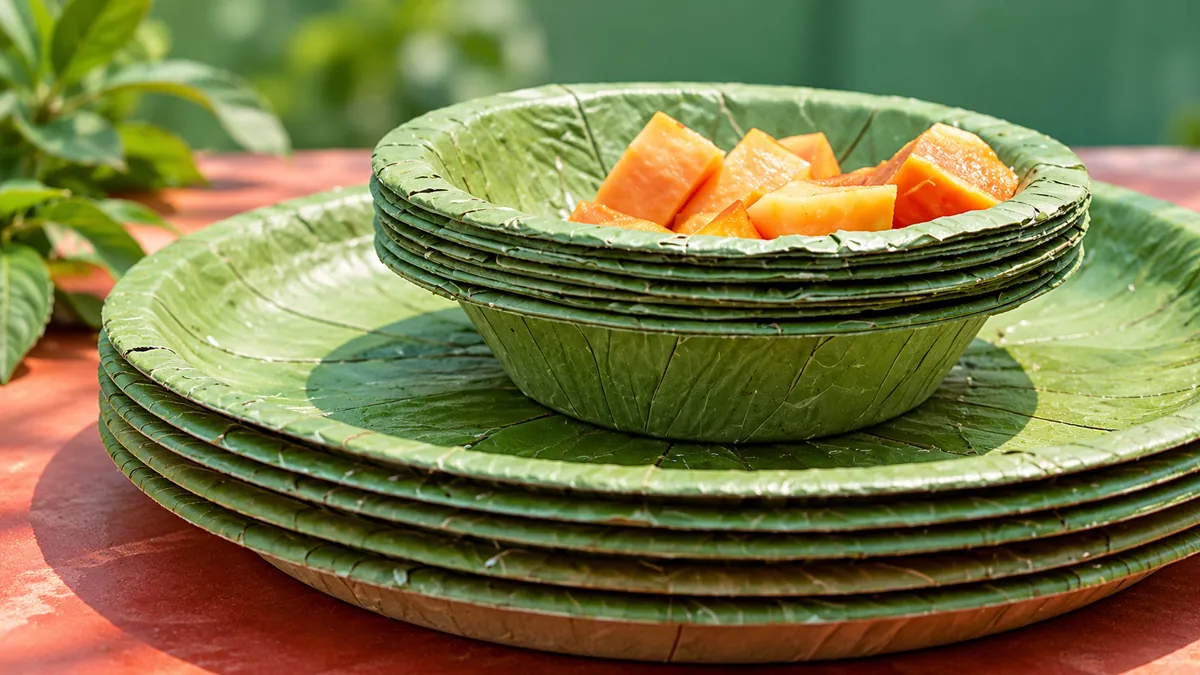
Leaf Plate Manufacturing at a Glance
| Typical capacity | ~2,000–30,000 plates per day |
|---|---|
| Land | ~1,000 sq ft–0.5 acre |
| Power load | ~10–60 kW |
| Water | Low |
| Manpower | ~4–20 |
| Indicative investment | ~₹5 lakh–₹1 crore |
Investment basis: excludes land.
Figures are indicative ranges. Your project report works them out for your capacity and location.
Market Demand for Leaf Plates in India
Demand for leaf plates comes mainly from the plastic ban and from export orders for areca plates. Buyers include caterers, distributors, exporters and temples, along with wedding organisers and food stalls. Production is concentrated in Karnataka (Shivamogga), Kerala, Odisha and Jharkhand, close to areca and sal leaf supply. Export potential is high for areca plates, so a unit that meets buyer hygiene needs can look beyond local orders.
- Caterers and wedding organisers buying in bulk
- Temples and langars needing sal leaf pattal and dona
- Food stalls replacing plastic and foam plates
- Exporters sourcing areca plates
Leaf Plate Products You Can Make
Areca plates and bowls, in round and square shapes, suit exporters and caterers who want a firm, uniform finish. Sal leaf pattal and dona fit temples, local events and food stalls. Banana leaf plates add a lighter option. Most new units start with one material and add others once sourcing is stable.
- Areca leaf plates and bowls (round, square), sal leaf plates (pattal, dona), banana leaf plates
Leaf Plate Manufacturing Process
The leaf plate manufacturing process moves from collection and washing to hot pressing, trimming, drying, UV sterilising and packing. Washing and soaking make the sheaths or leaves pliable and remove dirt. The hot press then shapes them in heated dies. You can choose single or double die hydraulic presses, depending on output and budget.
Quality control matters most after pressing. Plates are checked for moisture, mould, strength and cleanliness before packing, because damp stock spoils quickly.
- Collection
- Washing and soaking
- Hot pressing in dies
- Trimming
- Drying
- UV sterilising
- Packing
Raw Materials and Machinery for a Leaf Plate Unit
Areca palm sheaths come mainly from Karnataka, Kerala and Assam, while sal leaves come from Odisha, Jharkhand and Chhattisgarh. Banana leaves are the third option. The hydraulic hot press with dies is the machine that sets your capacity and plate quality. Washing tanks, trimmers, a dryer and a UV steriliser complete the line.
- Washing tanks
- Hydraulic hot press with dies
- Trimmers
- Dryer
- UV steriliser
Licences and Approvals for a Leaf Plate Unit
Leaf plate manufacturing licence and approvals are light, because the project falls in the White pollution category. Start with Udyam registration, then confirm local factory and trade requirements with your state authorities. No BIS quality control order applies, and FSSAI is not applicable. Check HSN classification early, since it depends on the material used.
| Pollution category | White category (no pollution) |
|---|---|
| HSN code | 4602 or 4823 (by material) |
| GST | Classification-dependent; applied in the project financials |
| BIS / quality control order | No QCO |
| Other licences | Udyam |
Securing Raw Material for Leaf Plates
Sheath collection is seasonal, so your supply network decides how steadily the press runs. Areca sheaths are sourced in Karnataka, Kerala and Assam, and sal leaves in Odisha, Jharkhand and Chhattisgarh. Build ties with collectors or local suppliers before buying machines. Stock enough dry material for lean months, and store it away from damp so mould doesn't enter the line.
Export Opportunity for Areca Leaf Plates
Export potential is high for areca plates, so a unit can plan for overseas buyers alongside domestic caterers. Export orders usually demand clean, mould-free, uniformly pressed plates, which is why UV sterilising and moisture checks matter. Exporters and distributors are named buyer groups for this project. A market study in your project report helps you judge which customers to approach first.
Government Schemes and Project Finance for Leaf Plates
PMEGP, Van Dhan Yojana for sal leaf collectors and state rural livelihood missions are the schemes linked to this project. NPCS reports are used for bank loans and government programmes such as PMEGP, MSME schemes, Mudra and NABARD-linked projects, subject to each lender's requirements. A clear project report makes your application easier to assess.
What Decides Success in a Leaf Plate Unit
Good operators build a reliable collection network and keep tight control over moulds and dies. Monsoon mould is the main risk, so plan drying and storage carefully. Trim from the process can be used as fuel.
- Dependable sheath or leaf collection network
- Consistent mould control and plate finish
- Dry storage during monsoon months
- Trim reused as fuel
How NPCS Helps You Set Up a Leaf Plate Unit
NPCS supports the decisions that shape your unit: capacity, single or double die press, vendor selection and plant layout. Our team prepares a detailed project report and a bankable version for lenders. We also guide machinery specifications, installation and commissioning, and help you plan approvals. Reports are tailored to your capacity, budget and raw material availability.
NPCS's published client list records 66 assignments across packaging projects between 2009 and 2026, for clients in 18 states and 6 countries.
What Your Leaf Plate Manufacturing Project Report Covers
- Project introduction and BIS specifications
- Manufacturing process with flow sheet
- Market survey (demand, imports/exports, existing units)
- Personnel
- Plant and machinery with suppliers
- Land and building with layout
- Raw materials with sources and rates
- Financials (project cost, working capital, cost of production, profitability, break-even, 5–10 year cash flow, projected balance sheet, IRR/NPV/payback)
Leaf Plate Manufacturing: Frequently Asked Questions
How much does leaf plate manufacturing setup cost in India?
An indicative investment is ~₹5 lakh–₹1 crore, excluding land. The figure depends on capacity, which typically runs ~2,000–30,000 plates per day, and on press and die choice. Your project report works out the cost for your plan.
Which licences are needed for a leaf plate unit?
Udyam registration is the main requirement. The unit falls in the White pollution category, no BIS quality control order applies and FSSAI is not applicable. Confirm any local requirements with your state authorities.
How much land and power does a leaf plate unit need?
Land typically ranges from ~1,000 sq ft to 0.5 acre, and power load from ~10–60 kW, depending on capacity. Water need is low. These are indicative figures, and your project report fixes them for your plant.
How to start leaf plate manufacturing?
Begin by choosing the material, capacity and press type, then secure a raw material source. Next, prepare a project report, register on Udyam, arrange finance and buy machinery. NPCS can guide each of these steps.
How does NPCS help with a leaf plate manufacturing project report?
NPCS prepares a detailed project report covering process, machinery, raw materials, costs and profitability for your capacity and location. Our team can also support machinery selection, vendor choice and commissioning, and answers enquiries within 24 hours.